
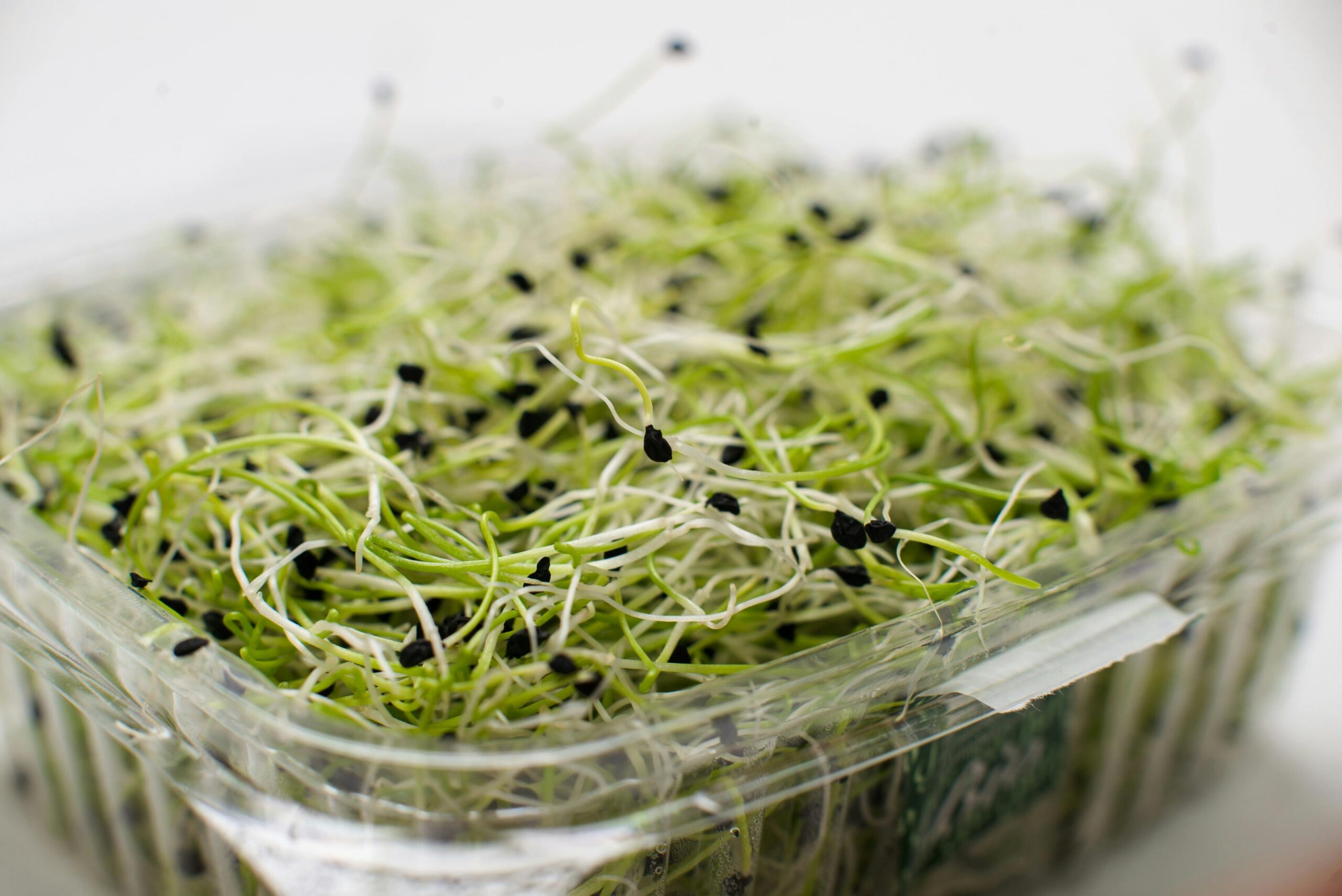
Alfalfa, also called lucerne, is a common forage crop in many countries and is used as silage and hay for livestock. It comes from the Arabic word ‘al-fasfasa,’ meaning ‘fresh fodder.’ There have been reports that alfalfa leaf preparations were used in the relief of kidney and prostate disorders. It is also a commercial source of chlorophyll and carotene.
Alfalfa aids in:
- Supporting digestion through its high fiber content
- May aid in lowering bad cholesterol in the body
- May alleviate menstruation symptoms due to the presence of phytoestrogens
- Helps reduce oxidative stress to the body
- May improve blood sugar levels
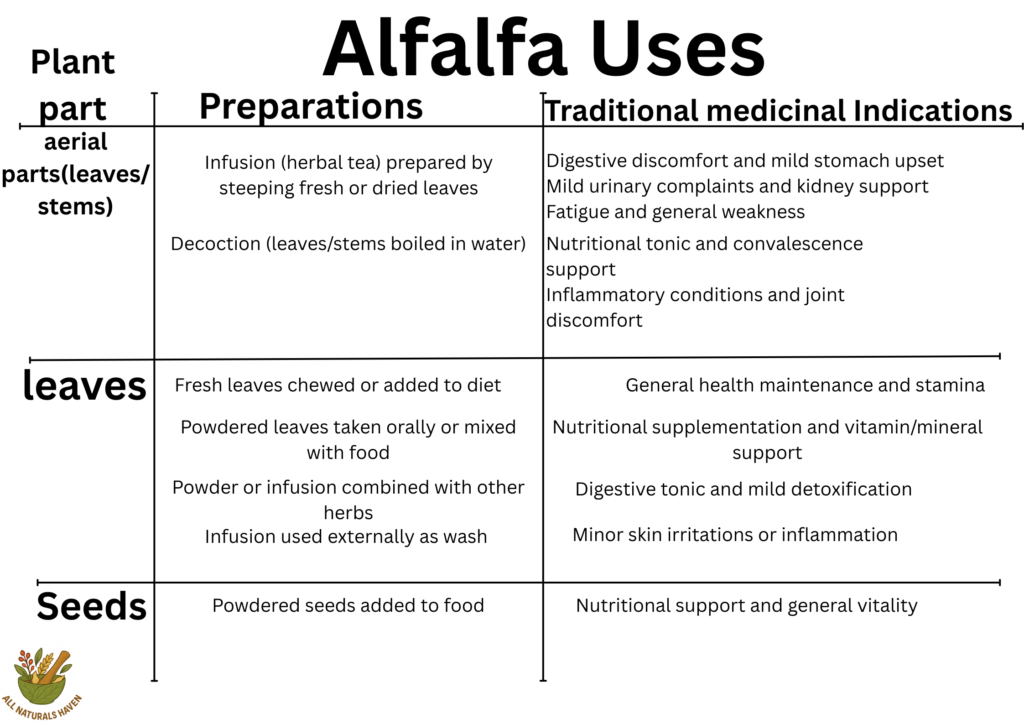
Medical Uses and ethnopharmacological profile of Alfalfa
Traditional uses
Ancient Arabs used it as a diuretic in various bladder problems. The leaves were also used for relieving dyspepsia and as an antiasthmatic. It has also been used herbally to reduce arthritis inflammation and lower sugar. It was also used to promote lactation traditionally.
Clinical Uses and Research
Menopausal relief– It was found to reduce hot flushes and night sweats in menopausal women when used in combination with sage, a direct effect of the phytoestrogens found within alfalfa.
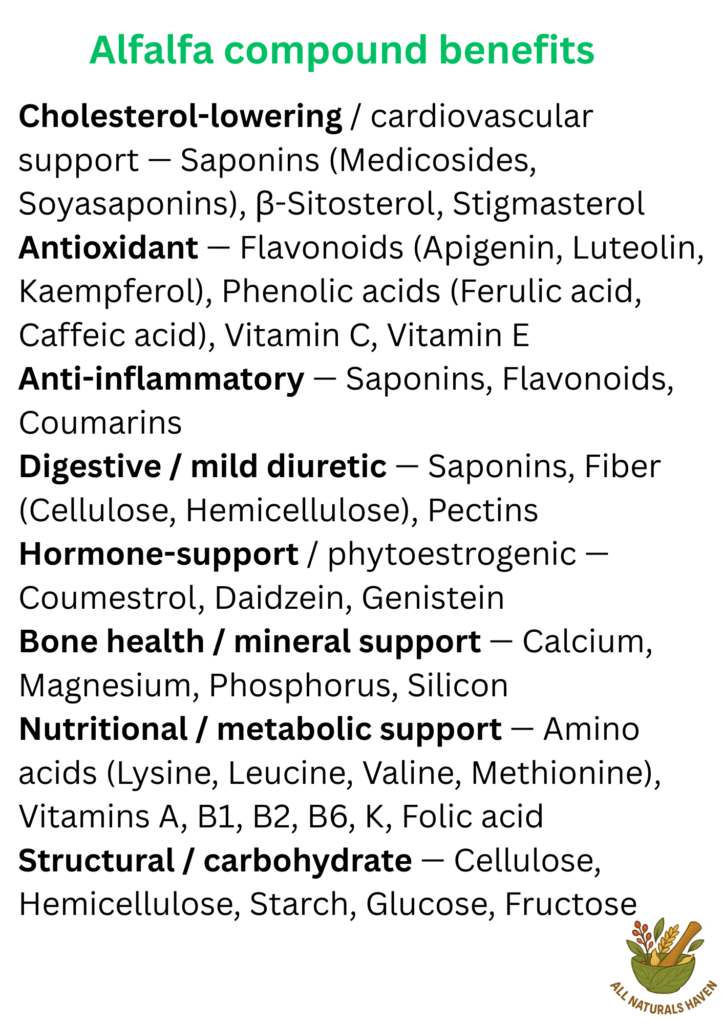
Aids in cholesterol reduction-The saponins and fiber bind in vitro to cholesterol, reducing reabsorption and lowering cholesterol. Alfalfa seeds help to normalize serum cholesterol concentrations in patients with type 2 hyperlipoproteinemia. Al Sanafi 2021
Type 1 and 2 diabetes: In both randomized and clinical case studies, 8 grams of leaf powder and capsule administration reduced post-meal glucose levels in both type 1 and type 2 diabetes, respectively. (Salih 2019) (Kimia 2022)
Nutraceutical support: Observational clinical review with whole herbs was used effectively as support treatment for nutritional deficiencies and anemia. Freeze-dried juice was high in protein and mineral content like iron, calcium, zinc, magnesium, and vitamin C and K.
Anxiolytic effect-methanolic extract of 100 mg/kg produced an anxiolytic effect in mice in comparison to diazepam 2 mg. Flavonoids and the stachydrine alkaloid were speculated to act via modulation of the monoaminergic system or interaction with the GABA-A receptor complex.
Reduces blood sugars- The manganese content in a serving of 62.5 g/kg decreases hyperglycemia, as studied in diabetic mice. A study of aqueous extract 250-500 mg/kg for 4 weeks in diabetic rats also reduced fasting glucose levels.
Antioxidant- Chlorophyll acts as a scavenger of free radicals in the body, supports antioxidant defense, and protects cells from oxidative and inflammatory damage.
Anti-inflammatory- In vitro studies found a chloroform extract of alfalfa to reduce stimulation of interleukin-6 and tumor necrosis factor that modulates inflammation.
Safety and Dosing Profile of Alfalfa
Forms and Dosing
Powders– dried leaves dried and crushed
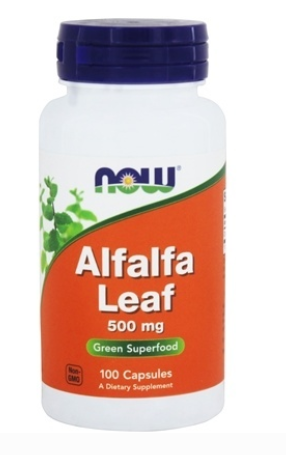
Tablets/capsules– powdered leaves are compacted into tablets
Teas- 2 teaspoons of dried powder mixed with 200 ml of water and boiled for 10 minutes.
- 5-10 grams of dried herbs (leaves) thrice a day for general health.
- Seeds (40 grams) three times a day for high cholesterol.
- 8 grams of dried leaf powder once daily with meals for type 2 diabetes.
- 500 mg-1 gram of encapsulated leaf powder thrice daily for type 1 diabetes.
- 40-160 mg of aqueous/ethanolic extract once daily for menopausal symptom relief.
Side Effects and Interactions
Common side effects, especially if not well cleaned and prepared, are:
- Diarrhea and abdominal cramping
- Bacterial infections like salmonella
- Hyperkalemia
- Gas, bloating and loose stools in high doses due to saponin content
Avoid it in autoimmune diseases due to the presence of L-canavanine, which interferes with the immune system.
Avoid use in pregnancy due to possible uterine stimulation.
NB-Alfalfa often harbors pathogens like Escherichia coli and salmonella; hence, it should be thoroughly cleaned and prepared before consumption.
Alfalfa description and composition
Alfalfa belongs to the family Fabaceae and is native to America, Europe, China, South Africa, and the Middle East. The primary reason for cultivation is to produce feed for dairy cows due to its high protein content and digestible fiber, but it has found medicinal value over the years.
Alfalfa contains saponins, phytoestrogens (coumestans and isoflavones), vitamins A, C, E, and K1, minerals calcium, magnesium, and potassium, chlorophyll, and carotenoids.
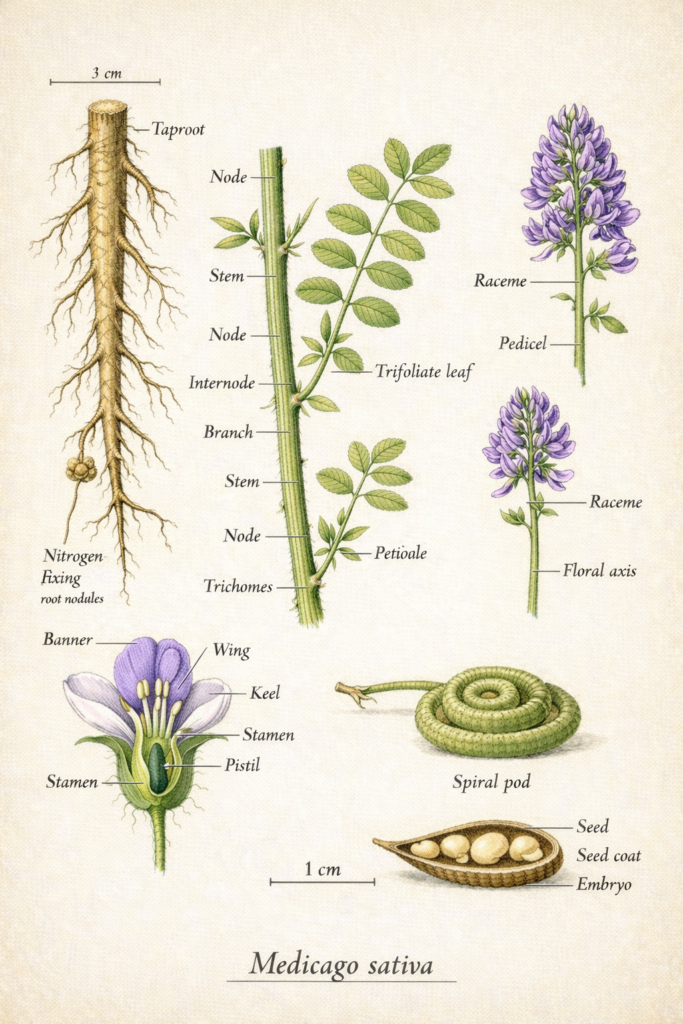
The roots of alfalfa go deep into the soil, making it drought-resistant, and the outer roots branch outward and aid the plant in fixing nitrogen through nodules that support nitrogen-fixing bacteria. The leaves grow as trios and are greenish in color, narrow, and toothed towards the tip. The flowers are purplish in color and occur in clusters with notable spirals. The stems are thin, branching, and flexible.
Alfalfa cultivation
Alfalfa does well in temperate/subtropical regions with deep, well-drained loamy soils of neutral pH of 6.8-7.5. It requires full sun. Alfalfa is propagated from seeds; sometimes farmers inoculate seeds with rhizobium bacteria to encourage nitrogen fixing. Loosen the soil first before sowing, and sow close to the surface because it needs light to grow. Consistently water the soil, but not too much to avoid waterlogging.
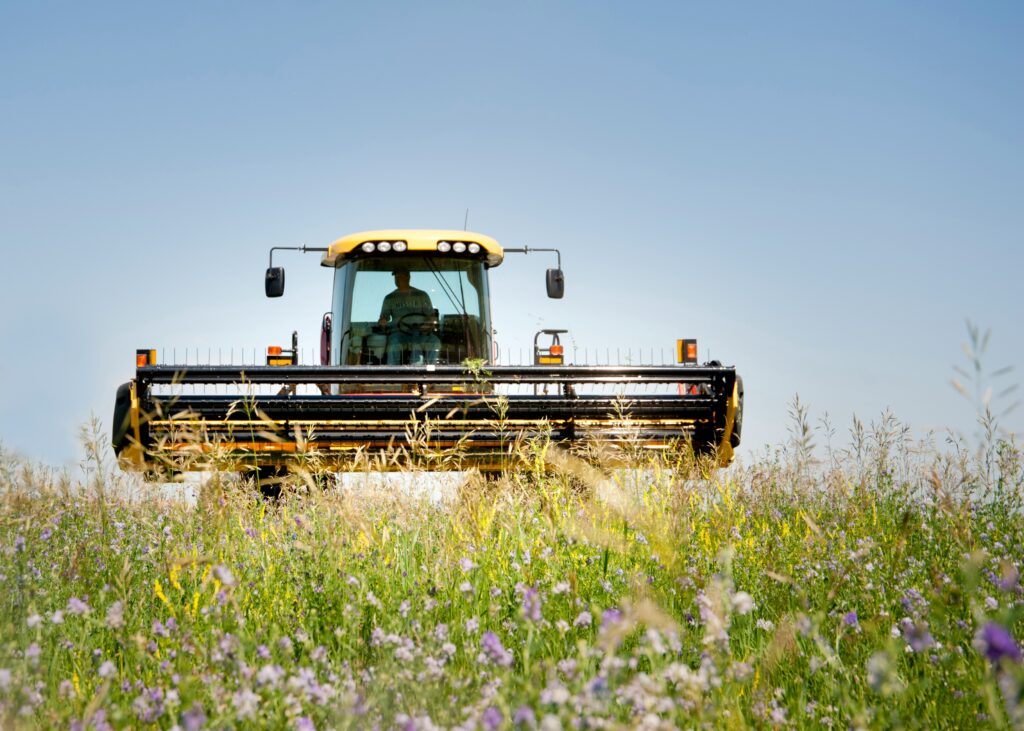
Alfalfa is harvested when a tenth of the plants’ strands have open flowers. Use a shear, sickle, or scythe to cleanly cut the top part (leaves and young flowering tops) about 10 centimeters from the soil. Dry the alfalfa and store it in breathable bags or small bales as long as they stay dry. Avoid leaving moisture content, as it encourages mold, and direct sunlight degrades vitamin content.
REFERENCES
De Leo V, Lanzetta D, Cazzavacca R, Morgante G. Trattamento dei disturbi neurovegetativi della donna in menopausa con un preparato fitoterapico [Treatment of neurovegetative menopausal symptoms with a phytotherapeutic agent]. Minerva Ginecol. 1998 May;50(5):207-11. Italian. PMID: 9677811.
Soto-Zarazúa MG, Bah M, Costa ASG, Rodrigues F, Pimentel FB, Rojas-Molina I, Rojas A, Oliveira MBPP. Nutraceutical Potential of New Alfalfa (Medicago sativa) Ingredients for Beverage Preparations. J Med Food. 2017 Oct;20(10):1039-1046. doi: 10.1089/jmf.2017.0046. Epub 2017 Jul 27. PMID: 28749738.
Singh Bora K, Sharma A. Evaluation of anxiolytic effect of Medicago sativa in mice. Pharm Biol. 2012 Jul;50(7):878-82. doi: 10.3109/13880209.2011.641227. Epub 2012 Apr 10. PMID: 22489538.
Farsani MK, Amraie E, Kavian P, Keshvari M. Effects of aqueous extract of alfalfa on hyperglycemia and dyslipidemia in alloxan-induced diabetic Wistar rats. Interv Med Appl Sci. 2016 Sep;8(3):103-108. doi: 10.1556/1646.8.2016.3.5. PMID: 28203391; PMCID: PMC5283756.
Raeeszadeh M, Moradi M, Ayar P, Akbari A. The Antioxidant Effect of Medicago sativa L. (Alfalfa) Ethanolic Extract against Mercury Chloride (HgCl2) Toxicity in Rat Liver and Kidney: An In Vitro and In Vivo Study. Evid Based Complement Alternat Med. 2021 Aug 25;2021:8388002. doi: 10.1155/2021/8388002. PMID: 34484406; PMCID: PMC8413032.
Choi KC, Hwang JM, Bang SJ, Kim BT, Kim DH, Chae M, Lee SA, Choi GJ, Kim DH, Lee JC. Chloroform extract of alfalfa (Medicago sativa) inhibits lipopolysaccharide-induced inflammation by downregulating ERK/NF-κB signaling and cytokine production. J Med Food. 2013 May;16(5):410-20. doi: 10.1089/jmf.2012.2679. Epub 2013 Apr 30. PMID: 23631491.
Leave a Reply