
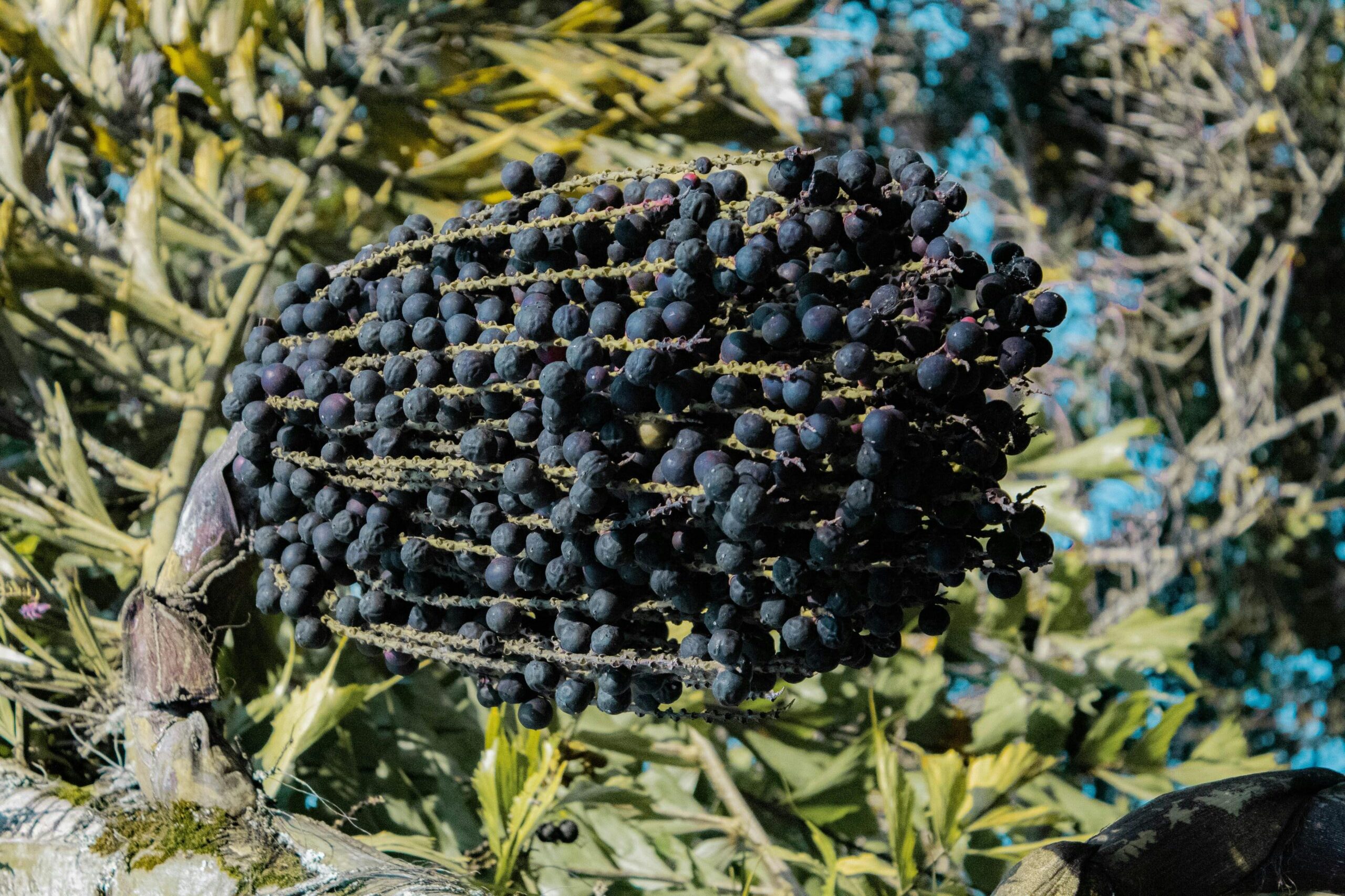
The acai berry is a fruit mainly taken as a delicacy by being eaten raw. It is used in juices, syrups, liqueurs, ice cream, sweet jelly, and energy drinks. It has a creamy texture with a tart flavor that makes it popular as an ingredient in snacks. Its deep purple color comes from the compound anthocyanidin.
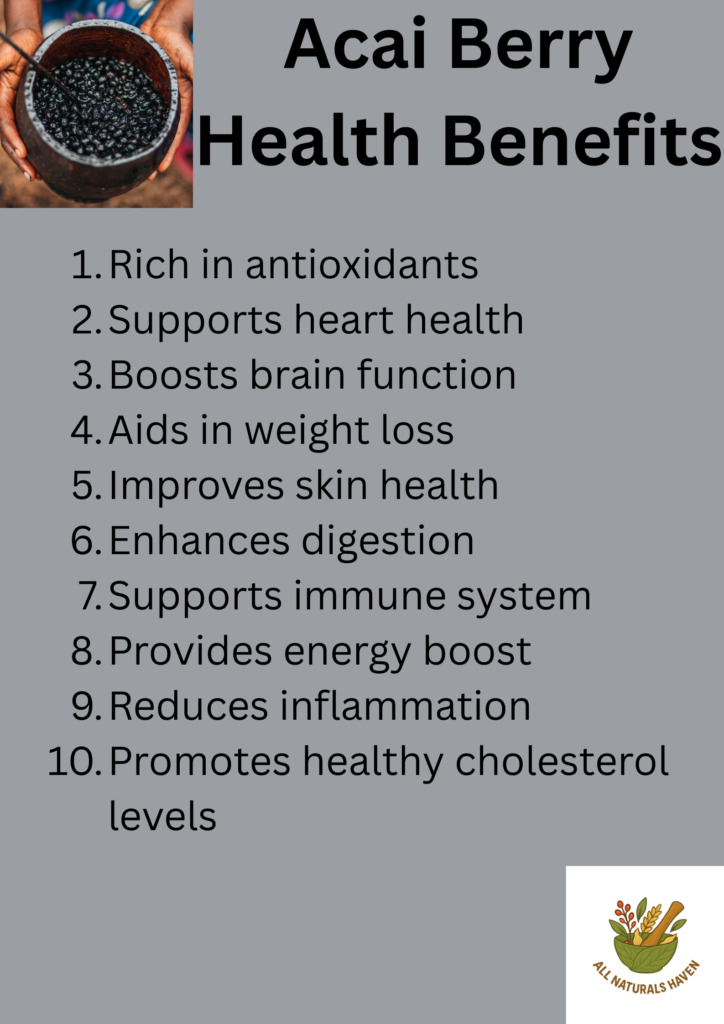
Acai berry uses are listed in the image below.
Jump to: Medicinal Uses and ethnopharmacological profile
Acai Berry Description
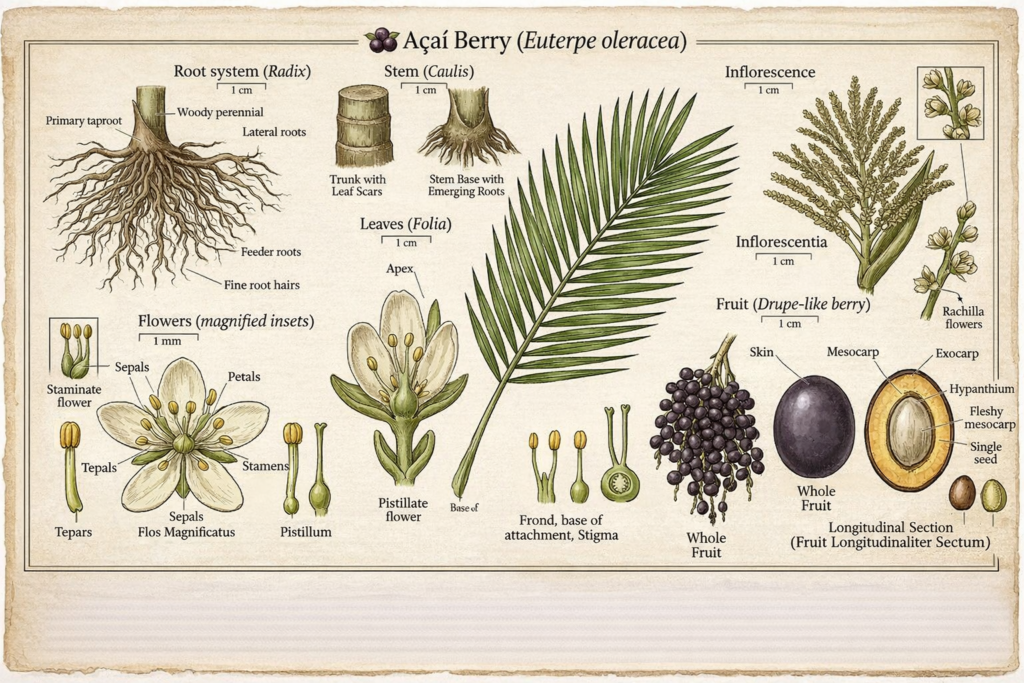
The acai berry is native to Central and South America. It is also cultivated in Brazil, Peru, Colombia, Bolivia, and Ecuador. The varieties found in the market are Branco, BRS-Para, BRS-Pai d’Egua, and Para dwarf. It contains lipids, proteins, dietary fibers, oleic acid, palmitic acid, and linolenic acid. It also has vitamins A, B1, and C and anthocyanidins.
The fruits are small, about 2 centimeters, and are green when unripe but turn deep purple or maroon when ripe. Some species maintain the green color even when ripe, and they occur in clusters. Each berry has a single large seed inside. The pulp is pale yellowish to white and is slightly fibrous but still soft.
Acai Berry (Tree) medicinal Uses and ethnopharmacological profile
Traditional uses
In folk medicine, it was used to treat fever (crushed/roasted seed infusion), pain (as a general restorative tonic), and flu-like symptoms. The oil preparation from the fruit was traditionally used as an antidiarrheal agent. It was also used as a topical wash (using a grated rind) to manage minor skin wounds and inflammations.

Clinical Uses and Research
Antidiabetic properties- a small study of administering 100 g of acai pulp twice daily for thirty days showed a decrease in fasting glucose and insulin levels. This was linked to the phytochemicals that are believed to improve insulin sensitivity by reducing oxidative stress and inflammation.
Antioxidant properties-a study in athletic males revealed improvements in biomarkers of oxidative stress with consumption of acai beverage. This was through reduction of lipid peroxidation and free radical scavenging. The active compounds were anthocyanins and polyphenolic compounds like rutinoside and orientin. Peixoto 2015
Effects on Lipids- Acai pulp of 100g daily for over one month showed a decreased level in total cholesterol serum. This was linked to dietary fiber that competes with cholesterol to reduce the amount being absorbed in the bloodstream and phytoestrols that lessen the incorporation of cholesterol, reducing overall uptake.
As a dye– anthocyanin are used as dyes in staining the eye and in magnetic resonance imaging. These compounds absorb certain wavelengths between 500 and 550 nm that allow for clear contrast on tissues. Its natural origin also makes it biocompatible, hence its exploration and use. Chen 2013
Acai contributes to metabolic functions and musculoskeletal system strengthening– Its potassium and calcium content contributes to a normal heart rhythm and aids in muscular movement, fluid balance, and strengthening of bones and teeth. Magnesium and vitamins A, E, and B1 aid in boosting strength, vision, skin health, and immune functions.
NB– Acai berry juice has been reported to contain the parasite Trypanosoma cruzii, which transmits Chagas disease, particularly in the Amazonas and Para regions of Brazil. Only consume products from safe sources.
REFERENCES
Udani JK, Singh BB, Singh VJ, Barrett ML. Effects of Açai (Euterpe oleracea Mart.) berry preparation on metabolic parameters in a healthy overweight population: a pilot study. Nutr J. 2011 May 12;10:45. doi: 10.1186/1475-2891-10-45. PMID: 21569436; PMCID: PMC3118329.
Udani JK, Singh BB, Singh VJ, Barrett ML. Effects of Açai (Euterpe oleracea Mart.) berry preparation on metabolic parameters in a healthy overweight population: a pilot study. Nutr J. 2011 May 12;10:45. doi: 10.1186/1475-2891-10-45. PMID: 21569436; PMCID: PMC3118329.
Leave a Reply