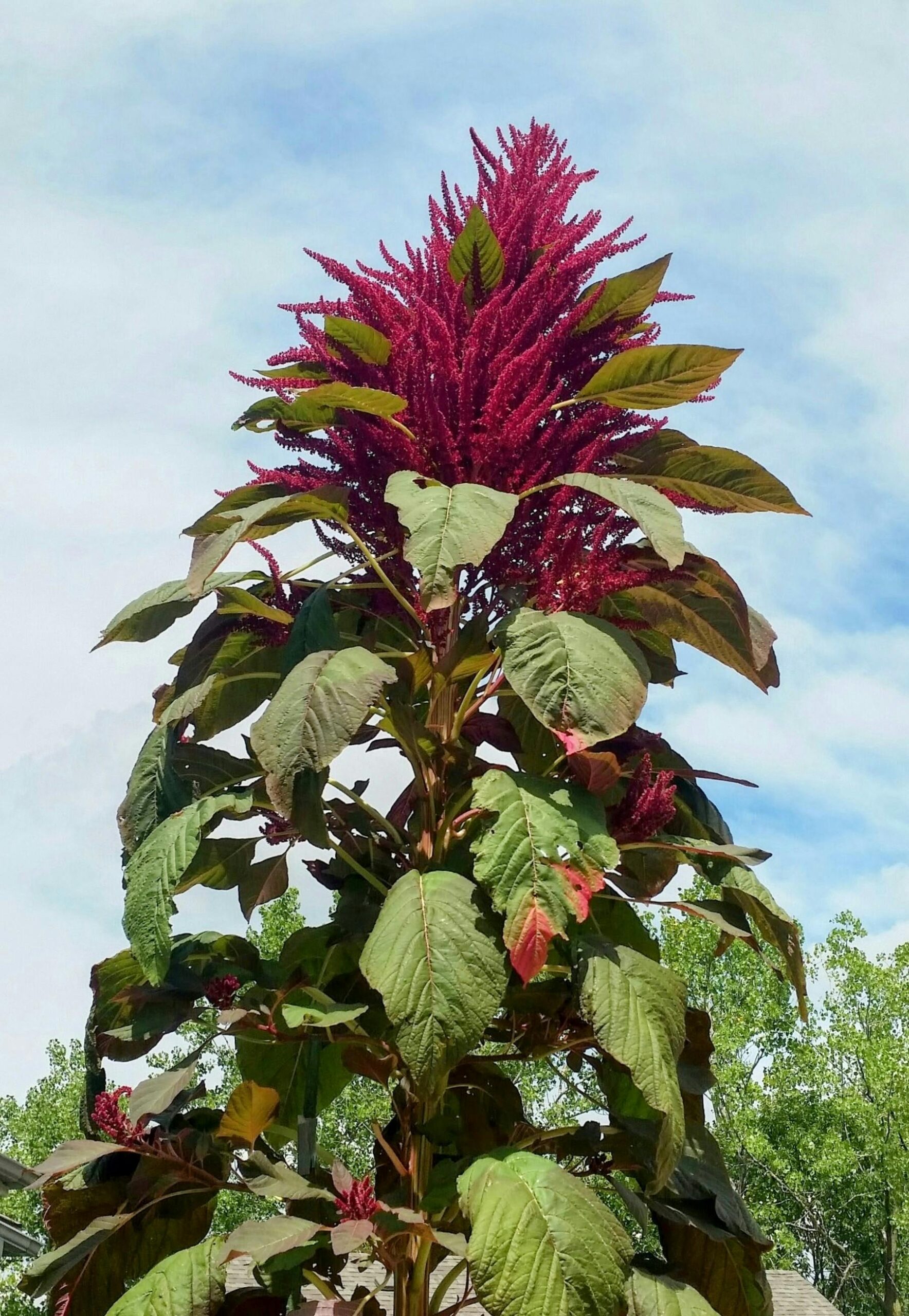
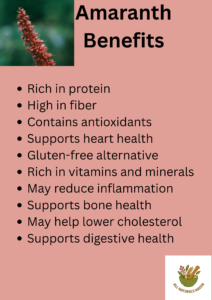
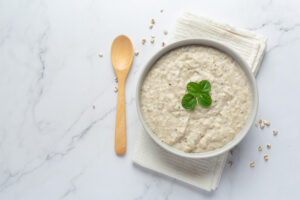
Amaranth is a general term used for more than 50 species of plants that are leafy vegetables, pseudocereals, and ornamental. In the eaten species, all parts are considered edible. The seeds can be ground into flour used in dishes like porridge or prepared like popcorn. The leaves, stems, and roots are edible vegetables. Its uses are outlined in the image below.
Jump to: Health uses and ethnopharmacological profile
Amaranth Description
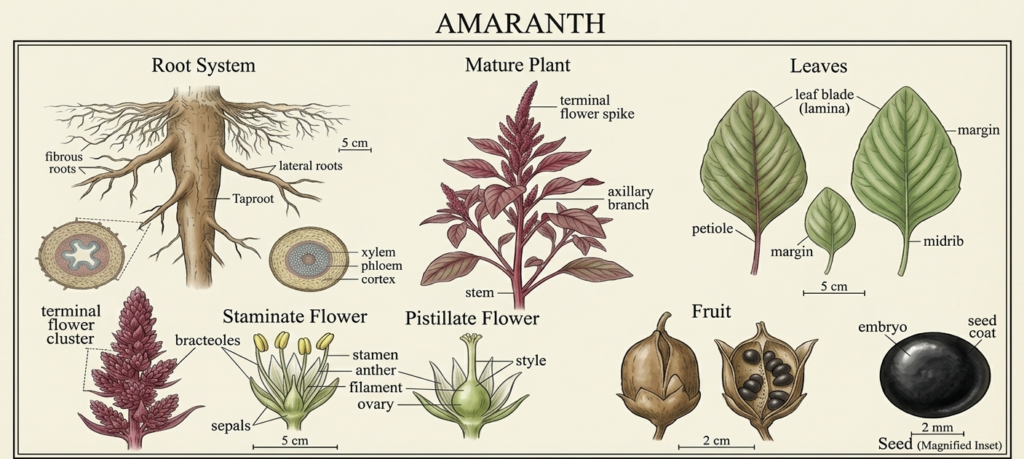
The dense flowers of amaranth have drooping tassels and are plume-like with spikes with color variations from reddish, golden, greenish, or purplish. The stems are smooth with tiny hairs, and the seeds are small, round, and black, gold, or white in color. It was native to the Aztecs but is currently grown in Asia, Africa, and the United States.
Amaranth contains polyphenols, saponins, tannins, oxalates, vitamins, and minerals (B6, magnesium, selenium, manganese, and calcium). Amaranth is also gluten-free. Species of importance include A. caudatus, A. cruentus, A. hypochondriacus, A. tricolor, A. dubius, A. blitum, and A. viridis.
Health Uses and ethnopharmacological profile of Amaranth
Traditional uses
The squalene oil of amaranth is used as a vegetable oil alternative to shark oil. It was also used as a dye due to its betalains, which contain natural pigments. It was also used as a digestive aid for troubled stomachs. Species like love-lies-bleeding, or princess feather, are grown as ornamental species.
Health uses and Research
Improved bone health– vitamins and minerals like calcium, phosphorus, and manganese found in amaranth contribute towards maintaining good bone density and porosity. They aid in the production of hydroxyapatite and collagen, which are both essential in maintaining bone strength and matrix.
Digestive aid– Its leafy vegetable acts as a source of fiber that aids in digestion by increasing stool bulk, speeding transit time, and avoiding constipation. Soluble fiber maintains gut flora by being metabolized into fatty acids that strengthen the gut barrier and encourage healthy natural gut bacteria. Maties 2024
Reduction in cholesterol– studies of rats with protein isolate of A. mategazzianus for 28 days elicited a 16% decrease in total cholesterol concentration, while the seed or sprout extract after 28 days elicited a decrease in weight, LDL, and total cholesterol. Phytoestrols in these extracts compete with lipids, reducing their absorption while simultaneously promoting the fecal excretion of bile.
Antioxidant capacity– In vitro studies of protein isolates from A. cruentus exhibited free radical scavenging potential. Rutin and vitamin C also aid in strengthening capillary veins and improving collagen scores. Daramy 2020
Anti-Inflammation capacity– The seed and sprout extracts of A. cruentus worked against inflammation by reducing production of interleukin 6, an inflammation agent. This is due to the betacyanin compound. The betacyanin plus carotenoids also aids in vision improvement.
Amaranth’s main use remains as a food and can also be a nutraceutical supplement.
NB: Concerning the leaves of amaranth: They contain oxalates that often bind to calcium; high or frequent consumption could slightly increase the risk of kidney stones, especially if one is already prone to stones. Cooking the leaves reduces oxalate (and nitrate) content significantly.
The seeds contain phytates, which reduce absorption of iron if consumed raw or not well prepared. This risk can be reduced by fermenting, soaking, or sprouting seeds.
REFERENCES
Sarker U, Oba S, Daramy MA. Nutrients, minerals, antioxidant pigments and phytochemicals, and antioxidant capacity of the leaves of stem amaranth. Sci Rep. 2020 Mar 3;10(1):3892. doi: 10.1038/s41598-020-60252-7. PMID: 32127553; PMCID: PMC7054523.
Lado MB, Burini J, Rinaldi G, Añón MC, Tironi VA. Effects of the Dietary Addition of Amaranth (Amaranthus mantegazzianus) Protein Isolate on Antioxidant Status, Lipid Profiles and Blood Pressure of Rats. Plant Foods Hum Nutr. 2015 Dec;70(4):371-9. doi: 10.1007/s11130-015-0516-3. PMID: 26497504.
Tyszka-Czochara M, Pasko P, Zagrodzki P, Gajdzik E, Wietecha-Posluszny R, Gorinstein S. Selenium Supplementation of Amaranth Sprouts Influences Betacyanin Content and Improves Anti-Inflammatory Properties via NFκB in Murine RAW 264.7 Macrophages. Biol Trace Elem Res. 2016 Feb;169(2):320-30. doi: 10.1007/s12011-015-0429-x. Epub 2015 Jul 12. PMID: 26162623; PMCID: PMC4717175.
Leave a Reply