
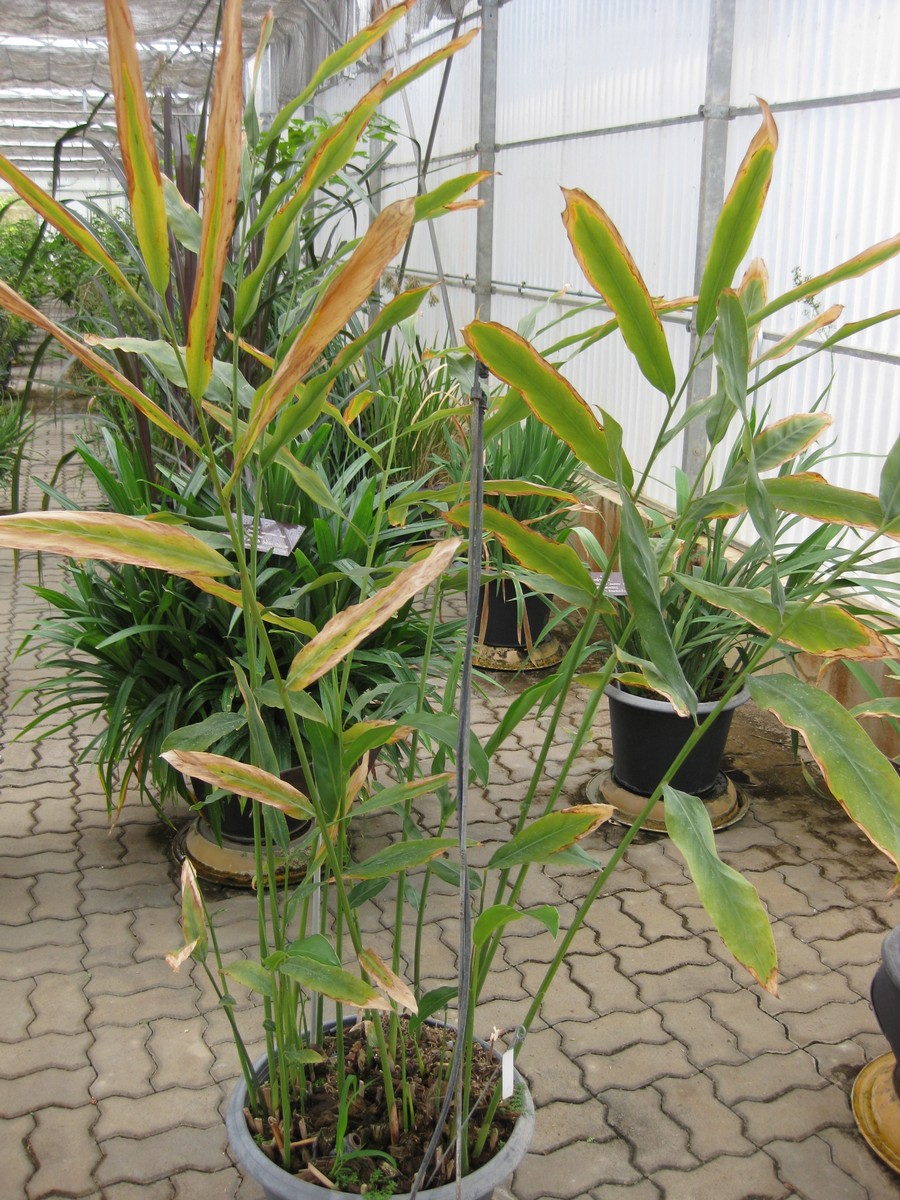
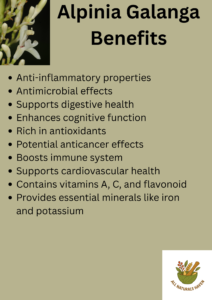
Alpinia galanga plant leaves have been used for flavoring dishes. It has also been used herbally as a digestive aid. It contains flavonoids (galangin), phenylpropanoid, essential oils, polyphenols, diarylheptanoids, and carbohydrates. Its uses are outlined in the image below.
Jump to: Health Uses and ethnopharmacological profile
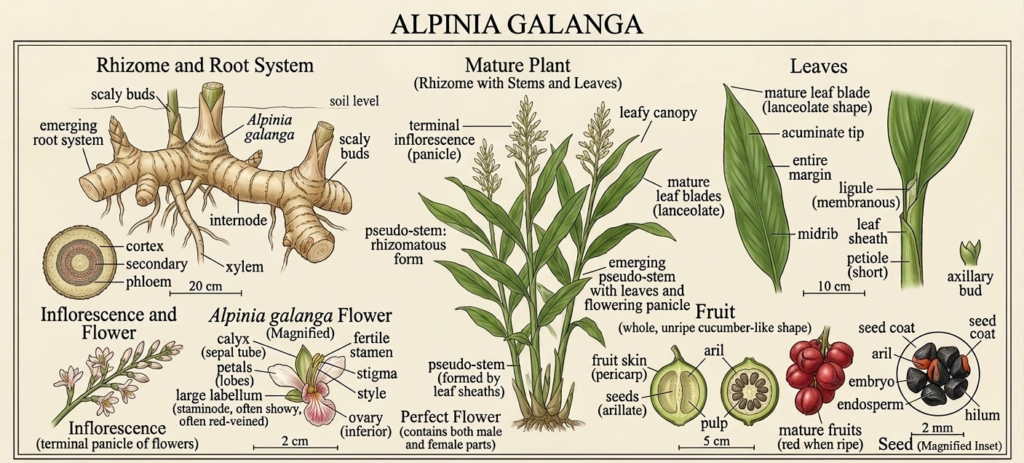
Alpinia Galanga Description
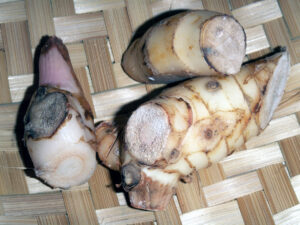
The leaves are long and green with a smooth and slightly glossy texture. The rhizomes are knobby, cylindrical, and aromatic, with pale yellow insides and a reddish-brown skin. The flowers are whitish-pinkish in color, perched on terminal inflorescence spikes, and are fragrant. The roots are used fresh, dried, or powdered.
The plant, which belongs to the family Zingiberaceae, is native to Southeast Asia (Thailand) and is cultivated in other areas like India, South America, Bangladesh, Sri Lanka, and parts of Africa (Kenya, Ghana, and Nigeria). The species of importance include A. galanga, A. officinarum, and A. purpurata, cultivated for ornamental purposes.
Health Uses and ethnopharmacological profile of Alpinia Galanga
Traditional uses
Alpinia has been used as a natural remedy for digestive issues like bloating and dyspepsia, inflammation (in rheumatic pain), respiratory support, and circulatory support.
Health Uses and Research
Antimicrobial potential– acetone crude rhizome extract (ACA) showed activity against Salmonella typhi, Staphylococcus aureus, Bacillus subtilis, Escherichia coli, and faecalis by disrupting bacterial cell membranes with measurable minimum inhibitory concentrations.
Antioxidant potential– ethanolic extract exhibited antioxidant activity through radical scavenging action, boosting of nitric oxide, and lipid peroxidation inhibition in vitro. The activity is linked to phenolic and flavonoid compounds. Subash 2016
Anticancer potential– acetone rhizome extract showed activity against human colorectal adenocarcinoma cell lines by suppressing proliferation of SW80 cells. The extract also showed lower toxicity towards noncancerous cells.
Antidiabetic potential– In streptozocin-induced diabetic rats, there were observed hypoglycemic effects from methanolic extracts of the aerial plant part. There was a recorded decrease in fasting blood sugars and improved lipid profiles linked to the action of pancreatic beta cell protection and regeneration.
Its essential oil also produced this effect through alpha-glucosidase inhibition that slows down carbohydrate metabolism and reduces post-meal sugar spikes.
Central nervous system effects potential– Methanolic and ethyl acetate extracts at 500 mg/kg were administered to mice in an animal study. The results recorded were increased locomotor activity and improved motor coordination, an indication of central stimulation.
Induced neuroprotective effects were also reported in a rat brain aging model, where the extract was able to improve memory and learning performance related to reduced oxidative stress markers and increased antioxidants in brain tissue. Pillai 2024.
In another amyloid beta-induced amnesia model, there was observed improved habituation memory and reduced escape latency linked to the improved neurotransmission of cholinergic enzymes. Singh 2011
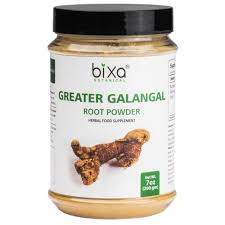
NB: Due to reported mild antiplatelet and vasodilatory effects, extracts should be taken cautiously or avoided if one is on drugs like warfarin or aspirin. This extends to antidiabetics due to mild hypoglycemic activity. Excess consumption may irritate the stomach, causing heartburn and diarrhea.
There is limited research on Alpinia and no definitive clinical studies yet. Consumption should be limited to culinary uses such as flavoring, small slices, and teas, which are considered safe for human consumption.
REFERENCES
Rao K, Ch B, Narasu LM, Giri A. Antibacterial activity of Alpinia galanga (L) Willd crude extracts. Appl Biochem Biotechnol. 2010 Oct;162(3):871-84. doi: 10.1007/s12010-009-8900-9. Epub 2010 Apr 13. PMID: 20387130.
Baradwaj RG, Rao MV, Senthil Kumar T. Novel purification of 1’S-1′-Acetoxychavicol acetate from Alpinia galanga and its cytotoxic plus antiproliferative activity in colorectal adenocarcinoma cell line SW480. Biomed Pharmacother. 2017 Jul;91:485-493. doi: 10.1016/j.biopha.2017.04.114. Epub 2017 May 4. PMID: 28477464.
Verma RK, Mishra G, Singh P, Jha KK, Khosa RL. Anti-diabetic activity of methanolic extract of Alpinia galanga Linn. aerial parts in streptozotocin induced diabetic rats. Ayu. 2015 Jan-Mar;36(1):91-5. doi: 10.4103/0974-8520.169006. PMID: 26730146; PMCID: PMC4687247.
Saha S, Banerjee S. Central nervous system stimulant actions of Alpinia galanga (L.) rhizome: a preliminary study. Indian J Exp Biol. 2013 Oct;51(10):828-32. PMID: 24266107.
Leave a Reply