
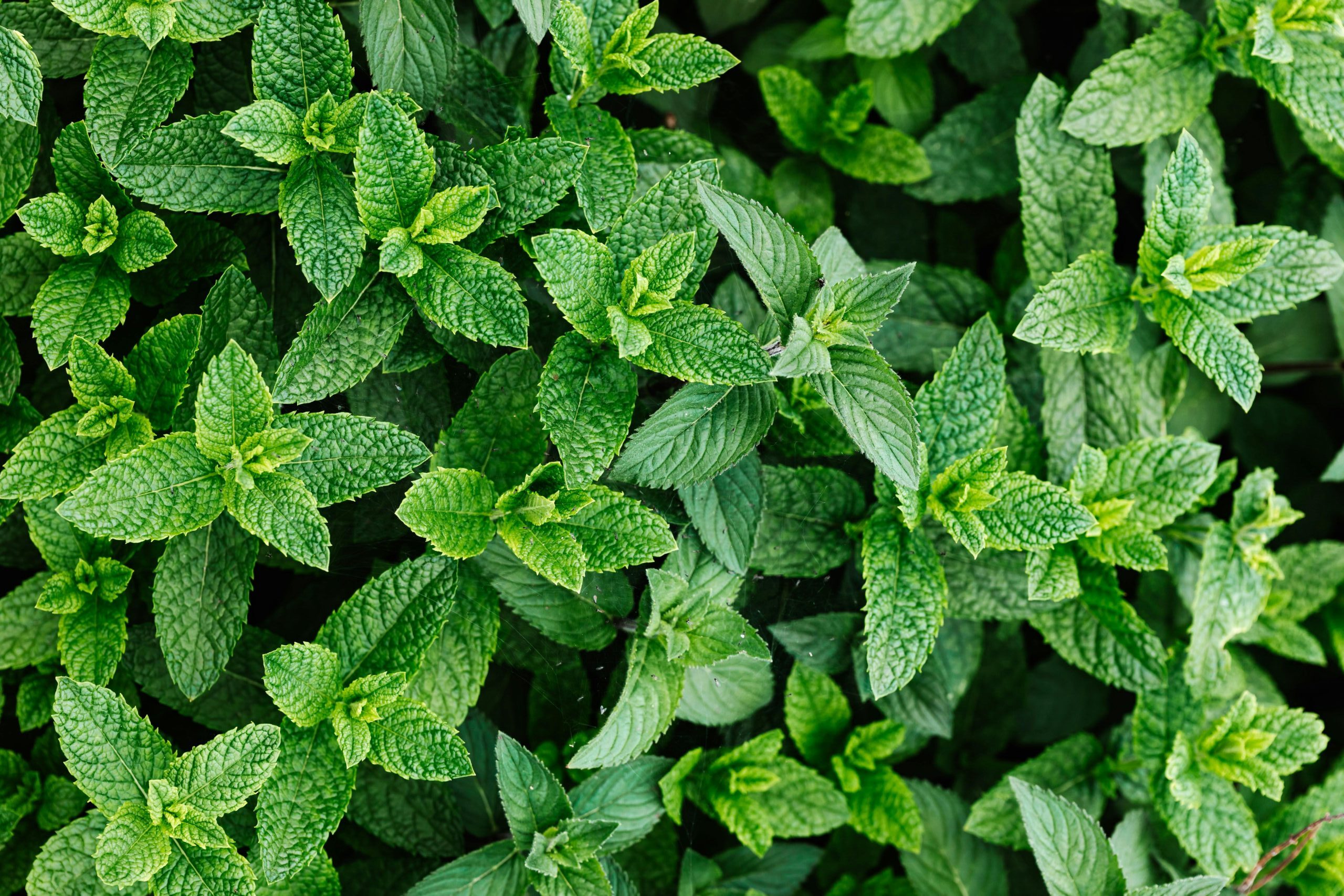
Peppermint, commonly known as brandy or balm mint, is a hybrid between water mint (Mentha aquatica) and spearmint (Mentha spicata). It belongs to the family Lamiaceae and is native to Europe and the Middle East. It is currently cultivated in Oregon, Washington, Egypt, Morocco, parts of Asia, and partially in Australia.
Peppermint has been used in the following ways:
- Improve symptoms of irritable bowel syndrome like pain and bloating
- Improve tension headaches when applied topically
- aid in endoscopy/diagnostic procedures as an antispasmodic
- Reducing postoperative nausea as an aromatherapy
- Improving memory and alertness
- Improving physical performance like grip strength
Jump to section
Medical Uses and ethnopharmacological profile of Peppermint
Traditional Uses
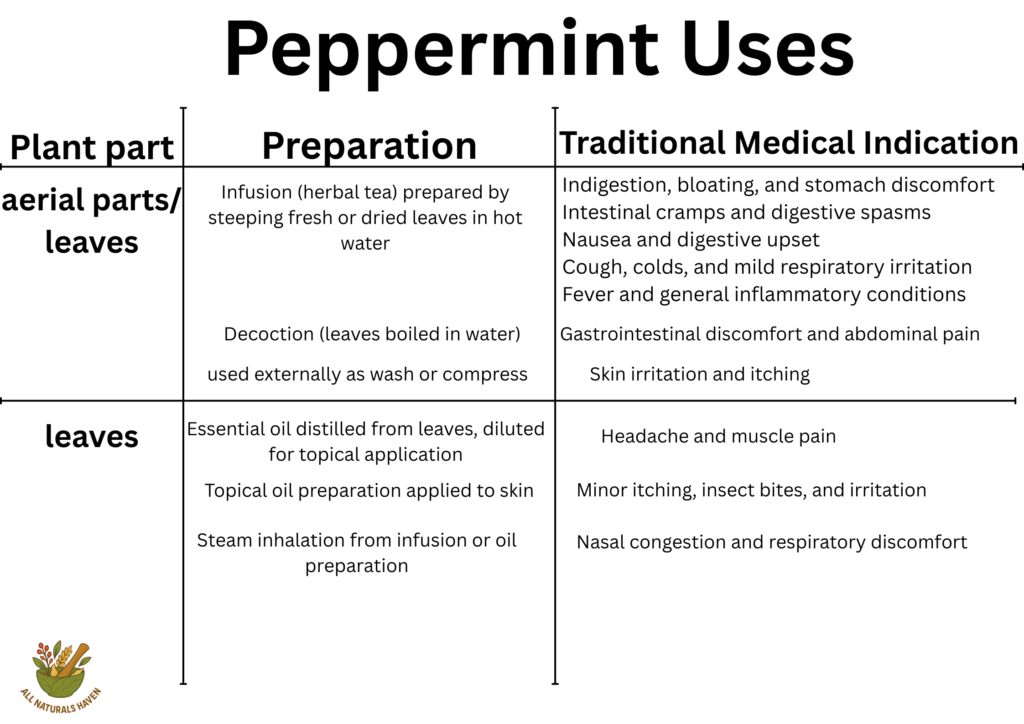
It was used as a carminative for gas and flatulence, an antispasmodic agent in relieving cramps, and a diaphoretic in promoting sweating in fever episodes. It was also used as a nasal decongestant, to alleviate tension headaches, chewed for relief of toothache, and in lethargy and fainting spells. It was occasionally used to improve focus.
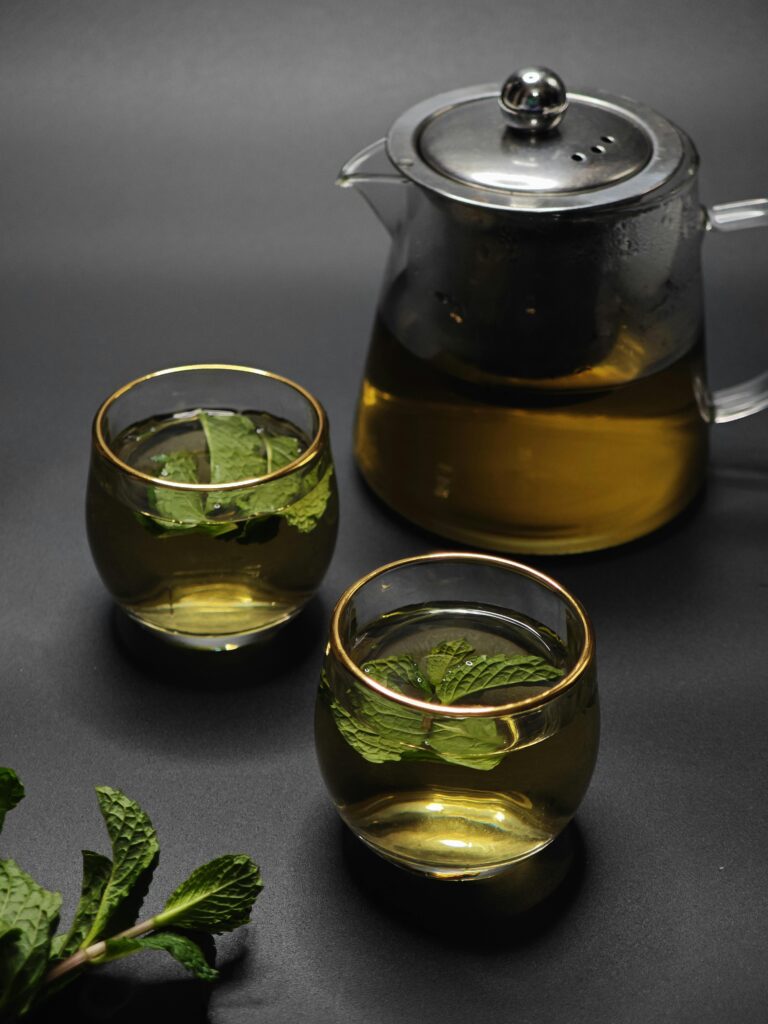
Clinical uses and Research
Irritable bowel syndrome: Enteric-coated oil capsules at a dose of 180-225 mg 2-3 times daily for 4-8 weeks enhanced the reduction in abdominal pain and bloating. L-menthol acts as a calcium channel blockade, thus inducing gut relaxation by inhibiting calcium influx into smooth muscles.
Allergic rhinitis: Whole leaf extract administered 1 gram daily decreased nasal congestion and itchy eyes by reducing local inflammation. Rosmarinic acid acted by inhibiting leukotriene (white blood cell and eosinophil) activity.
Tension headache: 10% oil in an ethanol solution applied topically on the forehead or temples on repeat every 15 or 30 minutes showed pain relief comparable to acetaminophen 1 gram within 15-60 minutes. Menthol acted via TRPM8 activation and vasodilation, which triggers cold receptors and increases blood flow to the skin, distracting pain signals.
Oral microflora: Essential oil mouthwash (0.1-0.2%) decreased Streptococcus mutans count and increased gum health scores. The menthol acted as an antiseptic by inhibiting the formation of bacterial biofilms and as an antiplaque agent on the teeth and gums.
GI endoscopy: A menthol oil solution spray (0.5-1.6%) utilized at 20-40 mL sprayed on direct mucosa decreased cramping by 56%, allowing for better visualization and faster procedures. L-menthol had a spasmolytic effect through direct relaxation of the smooth muscle of the colon or stomach. (Asao 2003),(Shan 2019)
Gut microbial flora: Coated essential oils showed selective bactericidal activity with low toxicity to Lactobacillus, which makes up natural flora. Menthol and menthone were able to reduce bacterial overgrowth, achieving microbiome balance.
Functional dyspepsia: oil in combination with caraway oil (ratio 90:50) twice daily witnessed a decrease in abdominal pain, ‘fullness,’ and ‘heaviness’ after 4 weeks. The compounds menthol and carvone elicited visceral sensitivity modulation through reducing nerve hypertonics in the stomach lining.
Postoperative nausea: In oil aromatherapy, it is utilized as 3 drops on a cotton wool swab when nauseous, eliciting fast-acting anti-nausea, but it is temporary. Menthol/menthone acted via vagal nerve modulation and olfactory stimulation by altering the vomiting center, hence relaxing the pyloric valve.
In Vivo Uses and Research
Radioprotection: In a murine mouse model, leaf aqueous extract increased survival rates and protection of the hematopoietic system against gamma radiation. Polyphenols and flavonoids elicited free radical scavenging activity.
Anti-androgen: In rats, leaf infusion reduced plasma testosterone concentration. Flavonoids decreased free testosterone levels and increased LH/FSH.
Hepatoprotection: In rats administered hydroalcoholic, there was a decrease in liver enzymes through the action of rosmarinic acid increasing antioxidant defense via increased glutathione and SOD levels. (Khaled 2018)
In Vitro Uses and Research
Heavy metal chelation: Leaf dry extract showed efficacy in resolving cadmium and lead toxicity. Tannins and phenolics acted via adsorption via carboxyl/hydroxyl plant group binding to metal ions.
Anti-fungal: Essential oil had a strong inhibition of Candida albicans and food-spoiling Aspergillus species. Menthol and menthofuran acted by disrupting ergosterol synthesis, altering membrane permeability, and leading to fungal death. (Ghartavol 2022)
Safety and Dosing Profile of Peppermint
Forms and Dosing
Infusions/teas– 3 cups daily
Capsules and tablets-02-0.4 ml up to 3 times a day
Tincture (1:5)- 2-3mls thrice daily
Ointments and balms (1-10%)- applied up to thrice daily
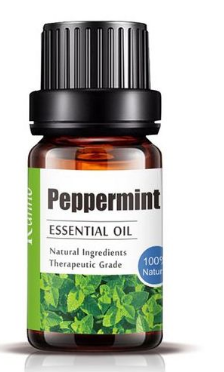
Essential oils– 2 drops in carrier oil
- Irritable bowel syndrome- 180-225 mg up to thrice a day
- Functional dyspepsia- oil(90 mg) in caraway oil, 2-3 times a day
- Headaches( Tension)- 10% topical application as needed
- Nausea- inhaltion of 1-3 drops on a gauze as needed
- Gastrointestinal cramps- 180-225mg up to thrice a day
Note: The dose can go up to 1200 mg a day, and for the raw powders, 12 grams a day, not to be taken daily.
Interactions
- Cyclosporine, statins, calcium channel blockers- increase drug to dangerous levels
- Antacids – may dissolve peppermint too early; to be taken 2 hours apart
- Blood thinners- may increase risk of bleeding
- Diabetes medication- may lead to hypoglycemia
- Iron supplements- may decrease absorption
Side effects
- Indigestion, nausea, and vomiting
- Anal irritation
- Contact dermatitis
- Headache
- Nasal irritation and bronchospasm
- Muscle tremor (rare in high doses)
Contraindications
- Gallstones
- Bile duct obstruction
- Pregnancy and breastfeeding (extracts)
- Infants and toddlers
- Kidney and liver diseases
Peppermint Description and constitution
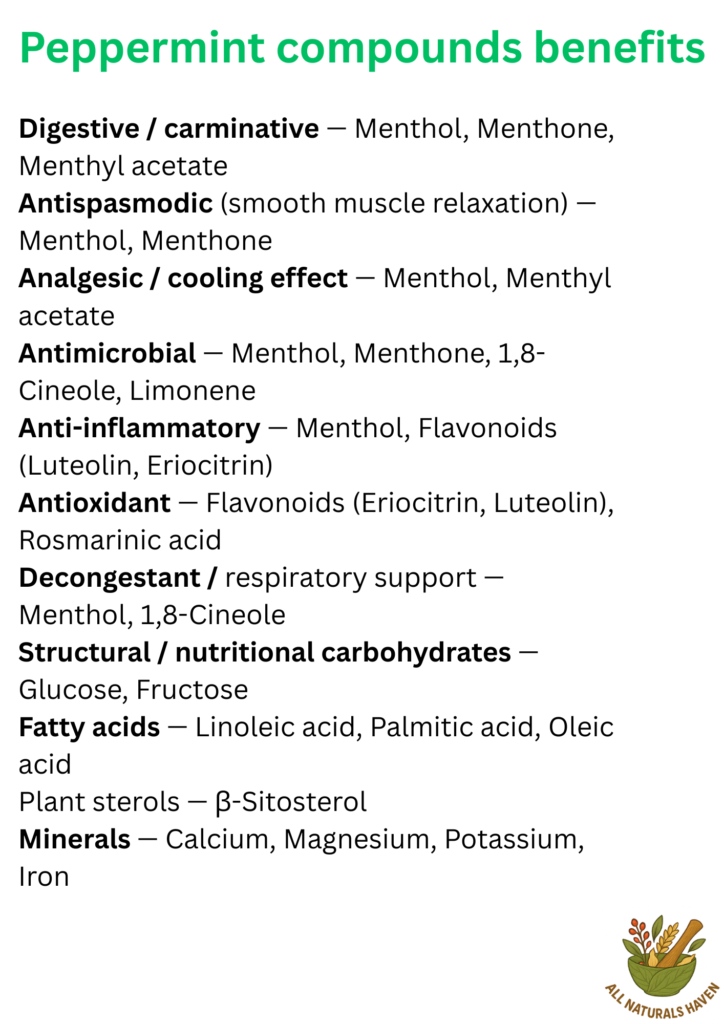
The compounds in peppermint include essential oils (menthol, 1-8 cineole, and limonene), rosmarinic acid, flavonoids (eriocitrin and hesperidin), tannins, menthone, menthyl acetate, minerals, and vitamins C and A; iron; magnesium; and calcium.
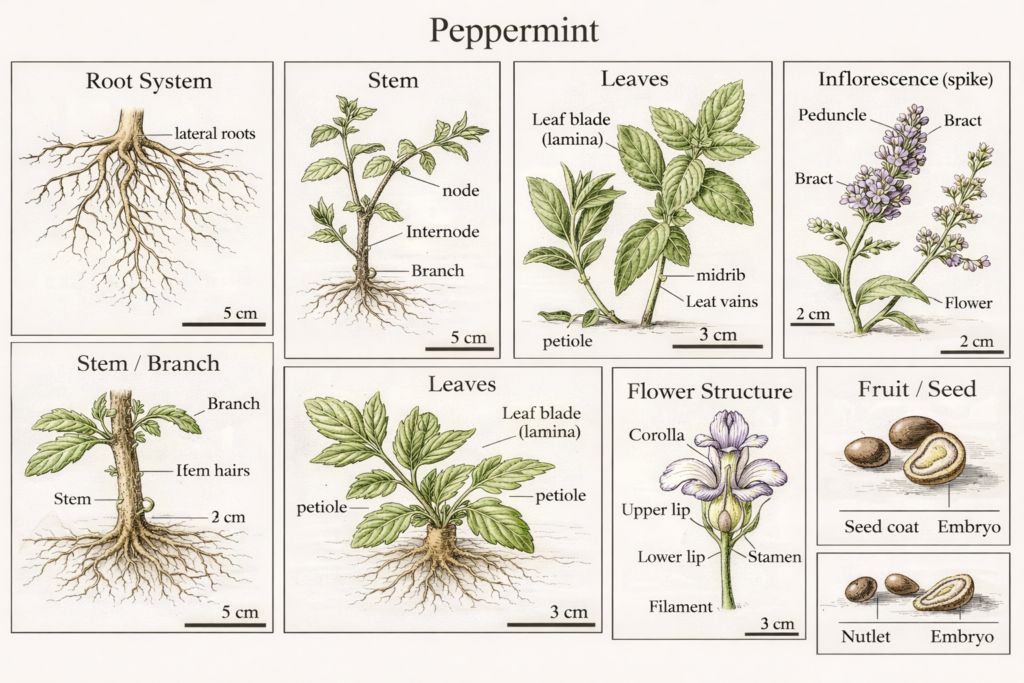
The plant stem is quadrangular with a reddish, purplish, or violet color. The leaves are ovate or lanceolate with serrated edges and a pubescent texture. The flowers form a thick terminal spike. It has four tiny tubular lobes with violet, purplish, or lilac colors. It has roots that run both above and below ground with runny rhizomes and stolons
Peppermint Cultivation
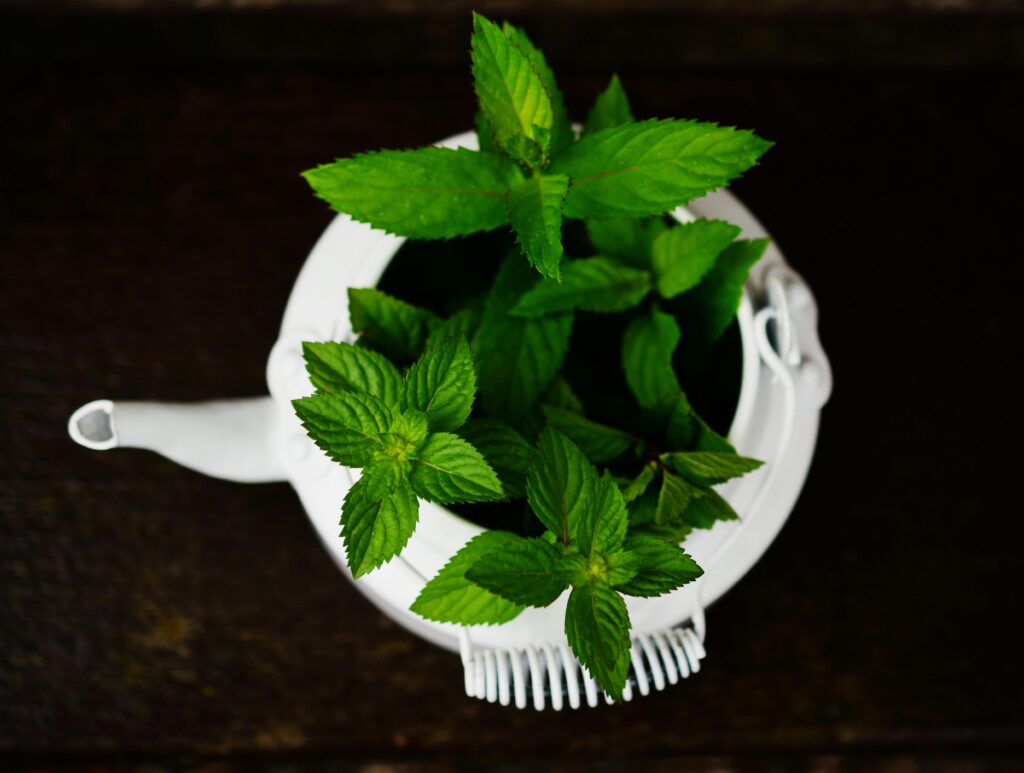
The plant is propagated through seeds. It is planted in spring or autumn in partial shade to full sun around 18-24 inches apart. It thrives in rich, moist, and well-draining soils of pH 6-7.5. It can be grown in containers to prevent runners from jumping out. The plant is ready for harvesting just before the plant flowers. Use shears to cut the plant 1-2 inches above the ground. Older leaves are more medicinal.
After harvesting, plant stems can be dipped in water and can last a week provided the water is changed. It can also be refrigerated (wrapped in a damp paper towel around the stem and put in a reusable silicone bag) or frozen (chopped and preserved in water/oil in ice cube trays). It can also be dried in a dark, well-ventilated area and preserved in airtight glass jars or vacuum sealed for up to 2 years.
REFERENCES
Weerts, Zsa Zsa & Masclee, Ad & Witteman, Ben & Clemens, Cees & Winkens, Bjorn & Brouwers, Jacobus & Frijlink, Henderik & Muris, Jean & de Wit, Niek & Essers, Brigitte & Tack, Jan & Snijkers, Johanna & Bours, Andrea & Ploeg, A.S. & Jonkers, Daisy & Keszthelyi, Daniel. (2019). Efficacy and Safety of Peppermint Oil in a Randomized, Double-Blind Trial of Patients With Irritable Bowel Syndrome. Gastroenterology. 158. 10.1053/j.gastro.2019.08.026.
Inoue T, Sugimoto Y, Masuda H, Kamei C. Effects of peppermint (Mentha piperita L.) extracts on experimental allergic rhinitis in rats. Biol Pharm Bull. 2001 Jan;24(1):92-5. doi: 10.1248/bpb.24.92. PMID: 11201253.
Park N, Chung JY, Kim MH, Yang WM. Protective effects of inhalation of essential oils from Mentha piperita leaf on tight junctions and inflammation in allergic rhinitis. Front Allergy. 2022 Dec 12;3:1012183. doi: 10.3389/falgy.2022.1012183. PMID: 36578435; PMCID: PMC9790934.
Göbel H, Fresenius J, Heinze A, Dworschak M, Soyka D. Effektivität von Oleum menthae piperitae und von Paracetamol in der Therapie des Kopfschmerzes vom Spannungstyp [Effectiveness of Oleum menthae piperitae and paracetamol in therapy of headache of the tension type]. Nervenarzt. 1996 Aug;67(8):672-81. German. doi: 10.1007/s001150050040. PMID: 8805113.
Abdelrahman, S. M., El Samak, M., El-Baz, L. M. F., Hanora, A. M. S., Satyal, P., & Dosoky, N. S. (2024). Effects of Mint Oils on the Human Oral Microbiome: A Pilot Study. Microorganisms, 12(8), 1538. https://doi.org/10.3390/microorganisms12081538
Thapa S, Luna RA, Chumpitazi BP, et al. Peppermint oil effects on the gut microbiome in children with functional abdominal pain. Clin Transl Sci. 2022;15:1036-1049. doi:10.1111/cts.13224
Li, Juanjuan, Lv, Lin, Zhang, Jiaqi, Xu, Lin, Zeng, Enjin, Zhang, Zedan, Wang, Fengyun, Tang, Xudong, A Combination of Peppermint Oil and Caraway Oil for the Treatment of Functional Dyspepsia: A Systematic Review and Meta-Analysis, Evidence-Based Complementary and Alternative Medicine, 2019, 7654947, 8 pages, 2019. https://doi.org/10.1155/2019/7654947
Parvizi, Arman MDa; Pour Mohammad, Reza MScb,*; Haddadi, Soudabeh MDa,*; Kia, Shaghayegh Rezaei MScb; Akbari, Maryam MDc; Yazdanipour, Mohammad Ali MScb. The effect of peppermint essential oil on postoperative nausea, vomiting, and pain in rhinoplasty patients: a randomized clinical trial. Annals of Medicine & Surgery 87(5):p 2689-2695, May 2025. | DOI: 10.1097/MS9.0000000000003032
Samartha, Dr. Ravindra & Saini, Rajesh & Maharwal, J & Dhaka, A. (2002). Mentha piperita (Linn) leaf extract provides protection against radiation induced alterations in intestinal mucosa of Swiss albino mice. Indian journal of experimental biology. 40. 1245-9.
Akdogan M, Ozguner M, Kocak A, Oncu M, Cicek E. Effects of peppermint teas on plasma testosterone, follicle-stimulating hormone, and luteinizing hormone levels and testicular tissue in rats. Urology. 2004 Aug;64(2):394-8. doi: 10.1016/j.urology.2004.03.046. PMID: 15302514.
Pavlić B, Teslić N, Zengin G, Đurović S, Rakić D, Cvetanović A, Gunes AK, Zeković Z. Antioxidant and enzyme-inhibitory activity of peppermint extracts and essential oils obtained by conventional and emerging extraction techniques. Food Chem. 2021 Feb 15;338:127724. doi: 10.1016/j.foodchem.2020.127724. Epub 2020 Aug 2. PMID: 32795878.
Leave a Reply