

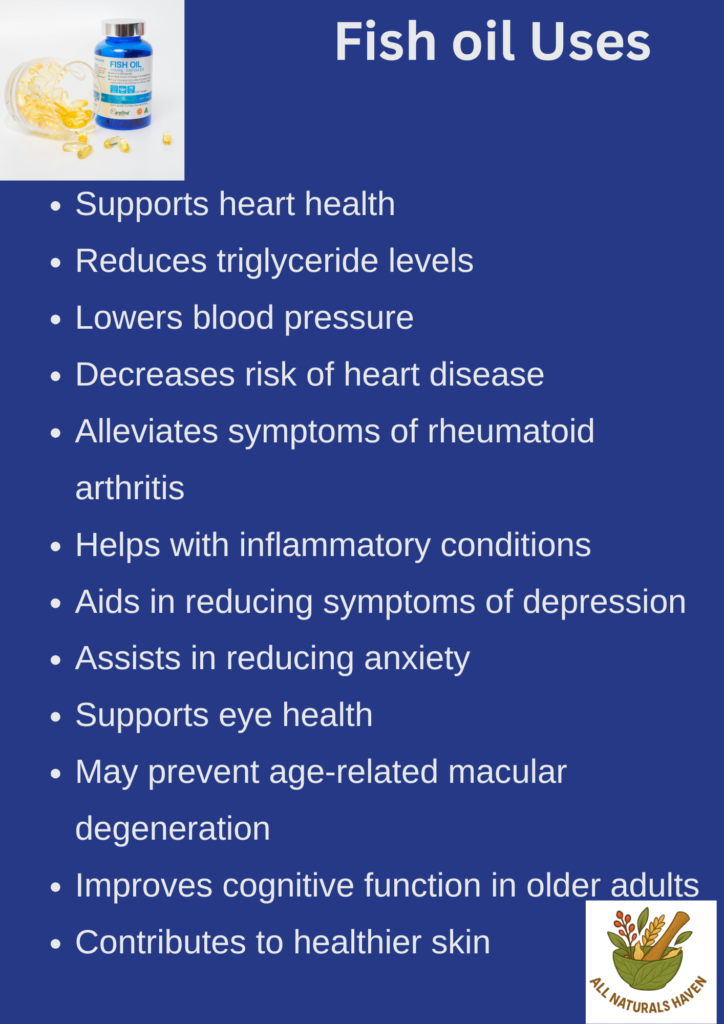
Fish oil is an extract from certain fish tissues like liver and flesh. It is found in various fish like herring, tuna, anchovies, mackerel, salmon, trout, and sardines. It is a mixture of fats and minerals. Fish oil consists of polyunsaturated fats EPA (eicosatetraenoic acid) and DHA (docosahexaenoic acid) and trace amounts of selenium, vitamins A and D, saturated and monounsaturated fats, and cholesterol.
The main compound is referred to as Omega 3 (EPA and DHA). The omega end gives it their numbering in relation to the position of the double bond, hence the omegas (omega 3-5-6-7-9). These different omegas, due to their composition, have different benefits and uses. In supplements, fish oil can be found alone, fortified with other minerals and antioxidants like vitamin E, or it can be formulated as a full range of the omegas.
Jump to section
OMEGA 3
Omega-3 consists of EPA and DHA. EPA is primarily anti-inflammatory, while DHA aids in maintaining brain structure and eye retina. The standard concentration is 300 mg, and the concentrated/tripled version is 800-900 mg. The dosing for general health is 250-500 mg, for heart 1000 mg, and for triglycerides 2000-3000 daily, with the limit being 3000 mg.
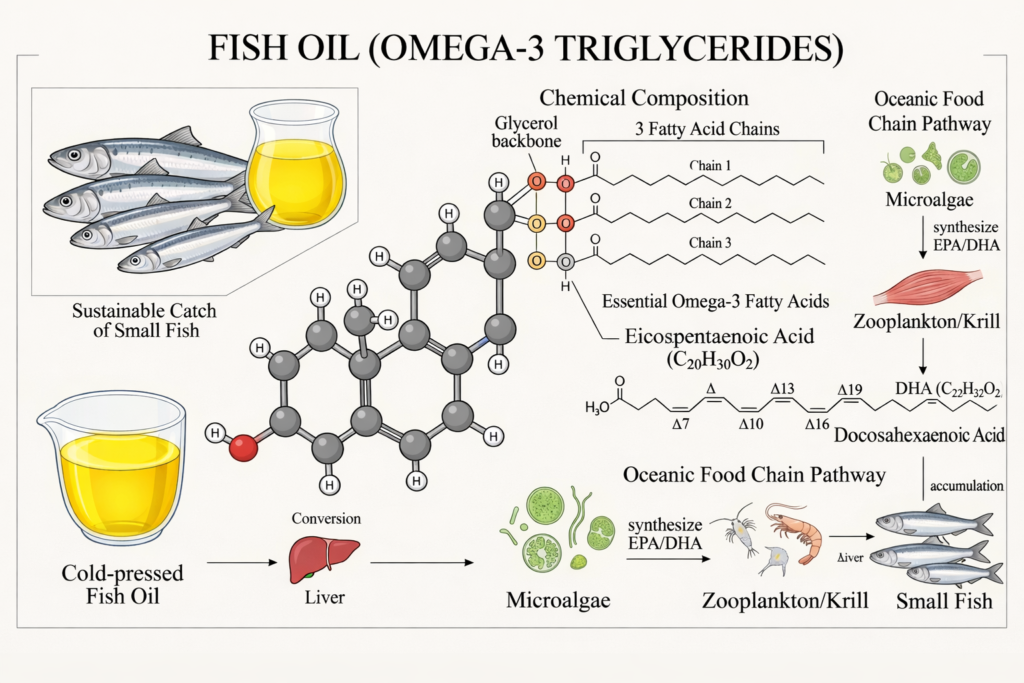
- Heart health: Omega-3 reduced very low-density lipoprotein by 25% in major cardiovascular events and reduced triglycerides. This was via stabilizing the heart cell membrane to prevent ‘misfiring’ arrhythmias.
- Brain and mental health: It reduced inflammation by competing with inflammatory molecules in the brain. This reduced depression and anxiety while increasing cognitive maintenance in aging. (Lange 2020)
- Fetal development: DHA is a structural component of the brain and eyes. It therefore exhibited better IQ scores, better hand-eye coordination, and decreased the risk of preterm birth.
- Metabolic health: It improved insulin sensitivity by remodeling adipose tissue and reducing fat in liver muscle. This resulted in a decrease in blood glucose levels and systematic inflammation in metabolic syndrome.
- Anti-inflammation: In rheumatoid arthritis, it reduces joint stiffness and pain while lowering the dependence on painkillers. This was through inhibiting the enzymes responsible for induction of inflammation and production of resolution that reduces swelling. (Ifigenia 2020)
OMEGA 5
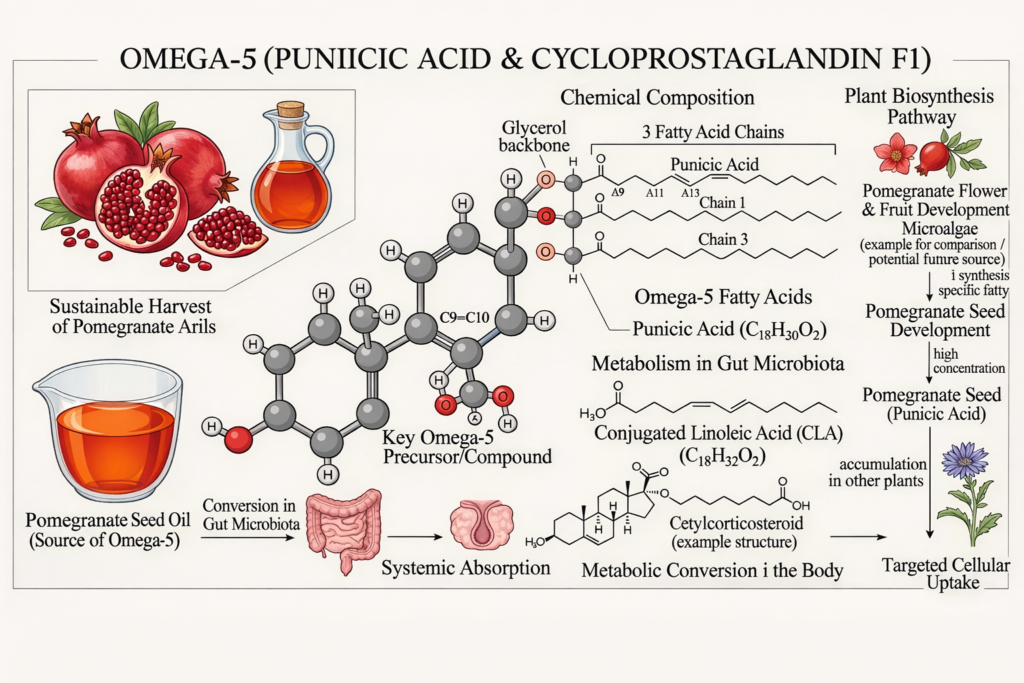
Omega-5 is primarily added from the plant source pomegranate seed oil but can also be found in trace amounts in saw palmetto berries, macadamia nuts, snake ground, salmon, and coconut oil. It contains myristoleic acid and punisic acid.
It is a potent antioxidant due to its triple bond that allows for free radical scavenging. For general health it can be taken in amounts between 10 and 50 mg and 250 and 500 mg for other metabolic benefits.
- Metabolic health: it decreases fasting blood sugar and enhances insulin sensitivity. This is via activating PPAR gamma receptors, which helps the cell utilize insulin more efficiently. (Raquel 2009)
- Anti-aging skin effects: It increases skin elasticity. Promotes faster wound healing and protects against UV-induced damage. This is via inhibition of MMP-1 collagen, hence inhibiting the breakdown of collagen.
- Weight management: It reduces visceral fats and improves the LDL:HDL ratio. This is through the suppression of lipogenesis and potentially increasing fat oxidation, which allows for weight control. (Njembe 2021)
- Anti-Inflammation: It reduces systemic inflammation markers like C-reactive protein via inhibition of the 5-lipoxygenase pathway.
OMEGA 6
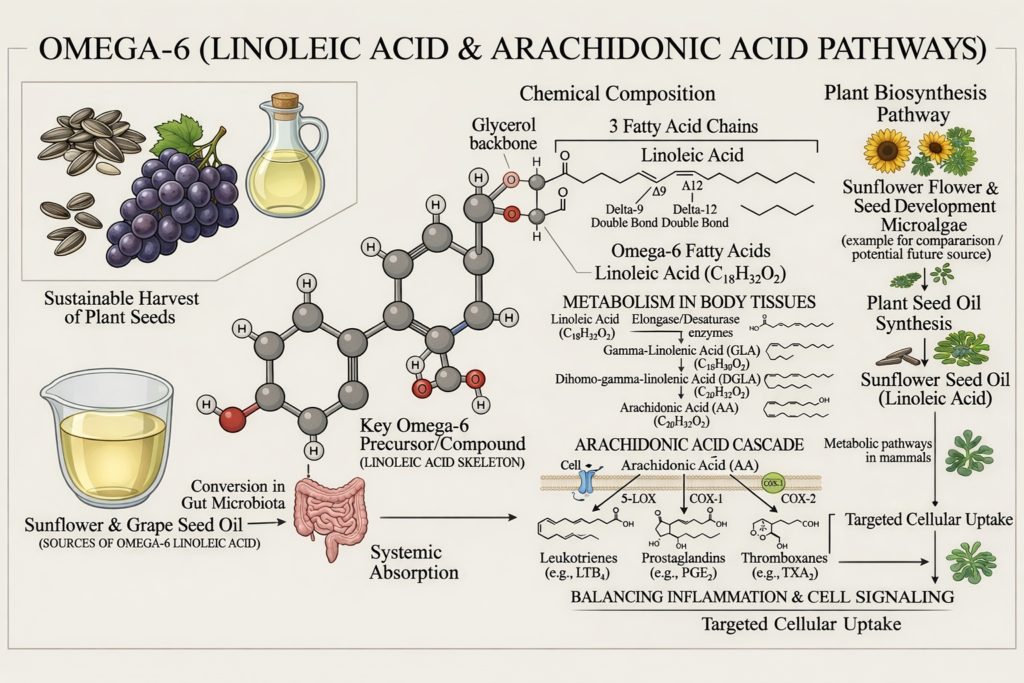
Omega 6, also known as oil, is a polyunsaturated fat consisting of linoleic acid and gamma-linoleic acid. Linoleic acid is mostly found in cooking oils, while gamma linoleic acid is the primary form found in supplements. It comes from vegetable oils (sunflower seeds, borage seeds, evening primrose seeds, soybeans, and nuts), eggs, and small amounts of marine sources (krill oil and shrimp).
It was commonly formulated as a ratio of 4:1 of omega 6 to 3. For dermatological purposes it is taken as 500-1000 mg, and for inflammation, as 1800-3000 mg.
- Skin integrity: It improves skin moisture content, firmness, and smoothness, which greatly helps in eczema or dermatitis. Omega-6 becomes part of ceramides, forming part of the skin barrier, which prevents transepidermal water loss.
- Hormonal balance: It reduces breast tenderness and pain, PMS symptoms, and menopausal hot flashes. It acts as a precursor to PGE-1 that keeps the smooth muscles relaxed. (Larki 2025)
- Anti-inflammation: It reduced joint tenderness and swelling in rheumatoid arthritis. This was via bypassing the inflammatory pathway to produce DGLA, blocking inflammatory signals.
- Diabetic nerve pain: it reduced symptoms of diabetic neuropathy like numbness and tingling after 6-12 months of usage. It acted by improving blood flow to nerves and enhancing nerve conduction velocity. (Prado 2024)
OMEGA 7
Omega 7 is rich in monounsaturated palmitoleic acid. It is derived from sea buckthorn oil, macachi oil (macachi nut), and some fish. It is commonly referred to as “metabolic” or “internal moisture omega” because of its capacity due to its benefits as a fuel source and signaling molecule for insulin as well as a component of sebum.
For metabolic purposes, it is taken as 210-420 mg, and for mucosal health, 500-1000 mg.
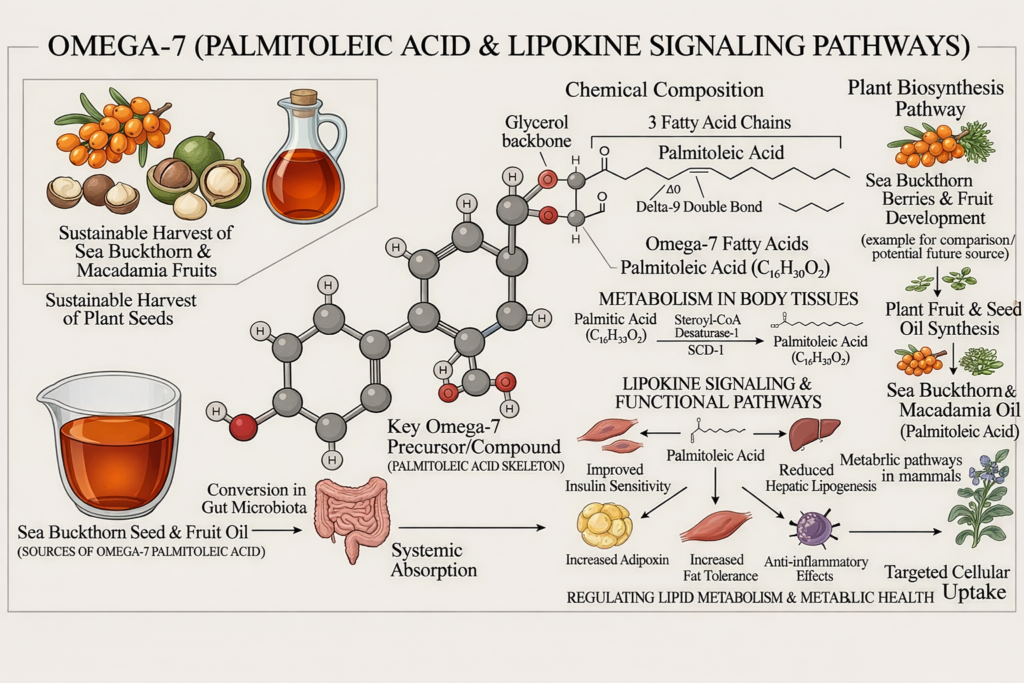
- Metabolic benefits: It exhibited a 44% reduction in CRP and low-density lipoprotein, reducing fatty liver accumulation as well as regulating blood sugar levels. This was via suppression of expression of inflammatory genes in fat tissue and inhibition of GLUT-4 in muscle cells. (Liang 2024)
- Dry eyes: It increased lubrication in dry eyes and resolved vaginal dryness. This is through stimulating the regeneration of the mucous membrane.
- Skin health: It boosts collagen production and protects against oxidative stress in the dermis.
OMEGA 9
Omega 9 is a form of unsaturated oleic acid. The body can make omega-9 naturally, and it is also found in salmon, cod liver, and olive, almond, and avocado oils and also in duck fat. It is used as a source of energy in the body. As a supplement, it is taken as 100-300 mg.
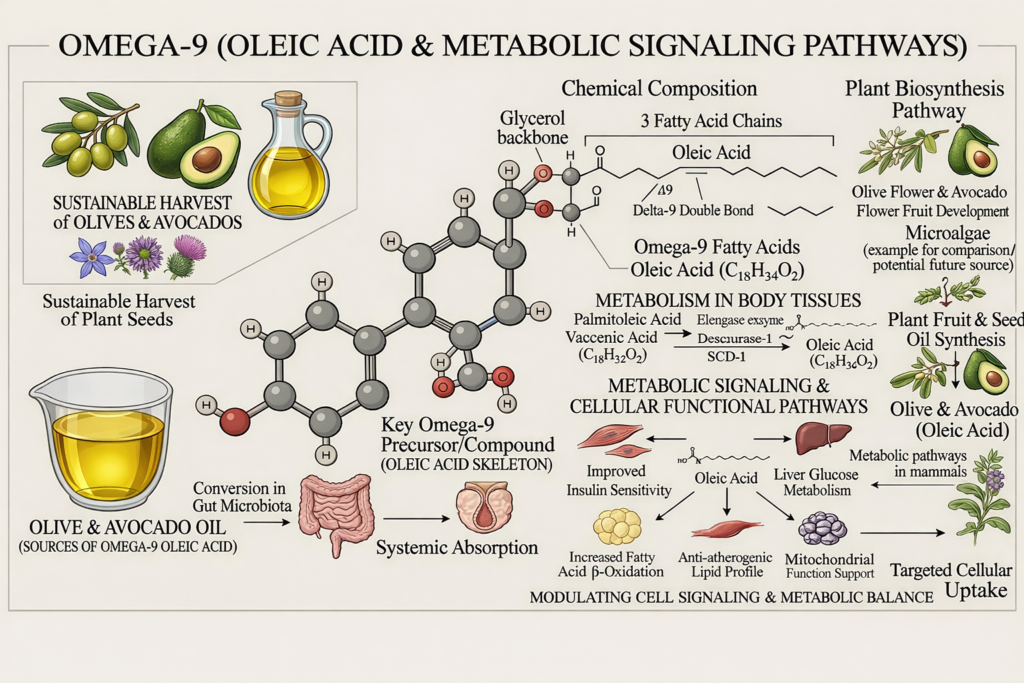
- Heart health: Decrease the risk of stroke and cardiovascular mortality and also increase levels of good fat (HDL). This was via replacing saturated fat in cell membranes, making them less likely to stiffen.
- Blood pressure: It modestly but consistently reduces both systolic and diastolic pressure. It does this by increasing oleoylethanolamide levels, which aid in relaxing walls of blood vessels.
- Brain function: As a component of the myelin sheath, it aids in better memory retention and slower cognitive decline. ( Snowden 2017)
OMEGA 4, 11, 12
Omega 4 is a polyunsaturated fat that comes from marine sources and acts to boost the function of omega 3.
Omega 11 is a monounsaturated fat that comes from herring and sand eel, which aids in the conversion of omega 3 from plant sources into EPA/DHA.
Omega 12 is a monounsaturated oil that helps in maintaining fluidity of cell membranes.
Side effects
- Fish burps
- Loose stools
- Nausea when taken on an empty stomach
- Vitamin A and D toxicity when taken in large amounts
REFERENCES
Abuknesha, Nada & O’Keefe, James & Qian, Frank & Tintle, Nathan & Lin, Yidie & Sun, Yue & Qian, Han-Zhu & Aisen, Paul & Albert, Christine & Aronson, William & Asbeutah, Abdul & Bischoff-Ferrari, Heike & Budoff, Matthew & Burns, Nicholas & Cardenas, Cecilia & Carlsson, Cynthia & Chew, Emily & Cohen, Neal & Fezeu, Leopold & Harris, William. (2025). Effects of Omega-3 Fatty Acid Treatment on Risk for Atrial Fibrillation: An Updated Meta-Analysis of 34 Trials including 114,326 Individuals. 10.64898/2025.12.14.25342167.
Spencer M, Finlin BS, Unal R, Zhu B, Morris AJ, Shipp LR, Lee J, Walton RG, Adu A, Erfani R, Campbell M, McGehee RE Jr, Peterson CA, Kern PA. Omega-3 fatty acids reduce adipose tissue macrophages in human subjects with insulin resistance. Diabetes. 2013 May;62(5):1709-17. doi: 10.2337/db12-1042. Epub 2013 Jan 17. PMID: 23328126; PMCID: PMC3636648.
Boussetta T, Raad H, Lettéron P, Gougerot-Pocidalo MA, Marie JC, Driss F, El-Benna J. Punicic acid a conjugated linolenic acid inhibits TNFalpha-induced neutrophil hyperactivation and protects from experimental colon inflammation in rats. PLoS One. 2009 Jul 31;4(7):e6458. doi: 10.1371/journal.pone.0006458. PMID: 19649246; PMCID: PMC2714468.
Zurier, R.B., Rossetti, R.G., Jacobson, E.W., Demarco, D.M., Liu, N.Y., Temming, J.E., White, B.M. and Laposata, M. (1996), Gamma-linolenic acid treatment of rheumatoid arthritis. A randomized, placebo-controlled trial. Arthritis & Rheumatism, 39: 1808-1817. https://doi.org/10.1002/art.1780391106
Kawamura, Asuka & Ooyama, Katsuhiko & Kojima, Keiichi & Kachi, Hisanori & Abe, Tatsuichirou & Amano, Kazutoshi & Aoyama, Toshiaki. (2011). Dietary Supplementation of Gamma-Linolenic Acid Improves Skin Parameters in Subjects with Dry Skin and Mild Atopic Dermatitis. Journal of Oleo Science. 60. 597-607. 10.5650/jos.60.597.
Petra S. Larmo, Riikka L. Järvinen, et al. 2010.Oral Sea Buckthorn Oil Attenuates Tear Film Osmolarity and Symptoms in Individuals with Dry Eye1,2,3,4,The Journal of Nutrition,Volume 140, Issue 8,2010,Pages 1462-1468,ISSN 0022-3166,
https://doi.org/10.3945/jn.109.118901.
Oliveira, M., Zhou, X., Correa, M., Athanasiadis, D., Lippmeier, C., Parker, L., Rakitsky, W., & Destaillats, F. (2026). Palmitoleic (16:1 n−7) Acid and Skin Health: Functional Roles and Opportunities for Topical and Oral Product Applications. Cosmetics, 13(1), 45. https://doi.org/10.3390/cosmetics13010045
Terés S, Barceló-Coblijn G, Benet M, Alvarez R, Bressani R, Halver JE, Escribá PV. Oleic acid content is responsible for the reduction in blood pressure induced by olive oil. Proc Natl Acad Sci U S A. 2008 Sep 16;105(37):13811-6. doi: 10.1073/pnas.0807500105. Epub 2008 Sep 4. PMID: 18772370; PMCID: PMC2544536.
Guasch-Ferré M, Hu FB, Martínez-González MA, Fitó M, Bulló M, Estruch R, Ros E, Corella D, Recondo J, Gómez-Gracia E, Fiol M, Lapetra J, Serra-Majem L, Muñoz MA, Pintó X, Lamuela-Raventós RM, Basora J, Buil-Cosiales P, Sorlí JV, Ruiz-Gutiérrez V, Martínez JA, Salas-Salvadó J. Olive oil intake and risk of cardiovascular disease and mortality in the PREDIMED Study. BMC Med. 2014 May 13;12:78. doi: 10.1186/1741-7015-12-78. PMID: 24886626; PMCID: PMC4030221.
Leave a Reply