
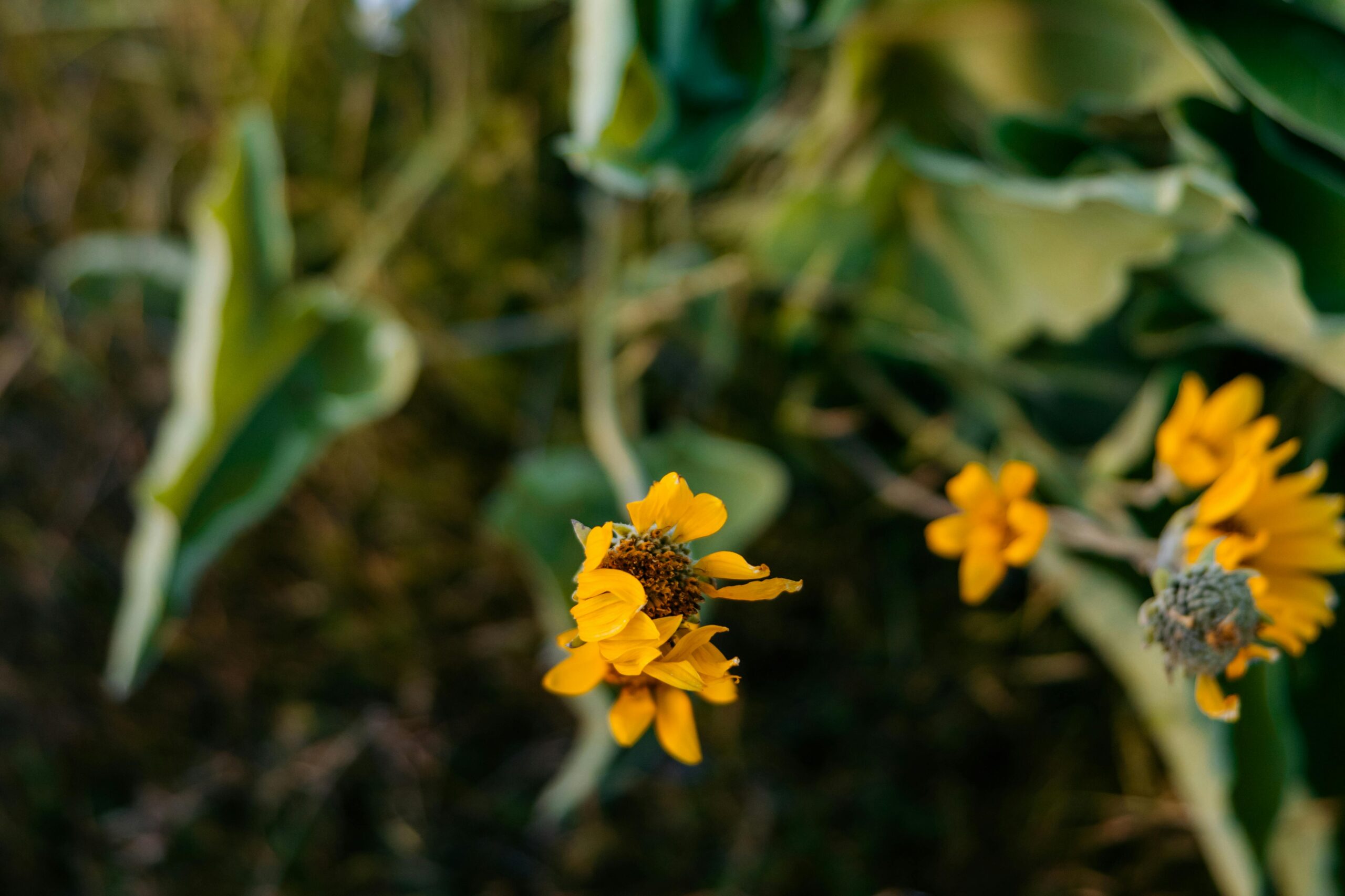
Arnica, also called leopard’s bane, mountain snuff/tobacco, or arnica floss, is an herb that was beneficial to early North Americans as a tincture for the treatment of sore throats. Today, arnica gel is gaining popularity as a topical pain relief for people suffering from osteoarthritis.
Arnica can be used as follows:
- Used topically to alleviate pain and stiffness in osteoarthritis
- Reducing bruising after surgery
Jump to section
Medical uses and ethnopharmacological profile
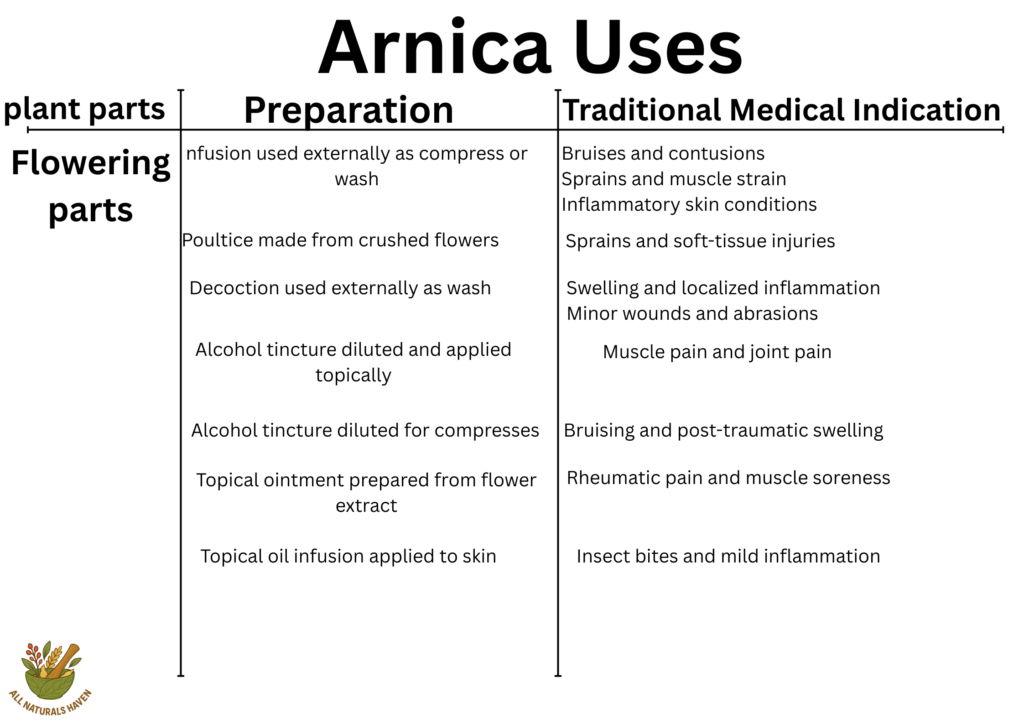
Traditional uses
Arnica has been used in folk medicine topically to manage acne, rashes, and boils and acts to soothe sprains and wounds. In North America, tinctures were used to treat sore throats, to reduce fever, and in the improvement of circulation. It has also been used as a hair tonic to aid in the treatment of dandruff and in making perfumes.

Clinical uses and Research
- Mild anti-inflammatory effects. Arnica extract, when used in post-rhinoplasty ecchymosis and edema, had patients who received arnica have less edema during the early postoperative period compared with controls, suggesting a beneficial effect on post-rhinoplasty inflammation.
- Used in pain relief. Arnica gel is used to manage pain from osteoarthritis as well as sprains and bruises. Anica gel applied twice daily for 6 weeks reduced symptoms of arthritis like stiffness and pain.
- Potential in in vitro immune modulation, antioxidant effects, and cytotoxic effects. Extracts with proanthocyanidins were found to have activity against Staphylococcus aureus, Escherichia coli, and Candida albicans at a concentration of 0.1-5.1 mg/ml and cytotoxic activity at 0.5 mg/ml. Zitec 2002
Safety and Dosing profile of Arnica
Forms and Dosing
Arnica can be used as:
Gels, creams, ointments and more traditionally poultices– cosmetic formulation to applied topically on intact skin
Tincture compress- tincture prepared by a ratio of 1:10 (arnica to ethanol), then diluted again 3:10 parts (tincture to water). The final solution is soaked in a cloth and pressed on the skin.
Tincture- Soaked in alcohol, if used internally, it has to be diluted thoroughly, approximately 1:1000 in water, for it not to be lethal.
Capsules-powdered and compacted, limited use.
Reports of the use of A. montana as 500 mg capsules taken orally every 8 hours on the day of facial plastic surgery and continued for 3 days have been reported.
Internal use is discouraged unless prescribed by a physician.
/product/33/0941723/1.jpg?7382)
Side Effects and Interactions
Arnica side effects (when ingested) include:
- Vomiting and diarrhea
- Coma and death in severe cases
- Dyspnea
- Gastroenteritis
- Cardiac arrest
- Dermatitis, topical effect
Arnica interacts with anticoagulants; hence, avoid concomitant use.
NB: Avoid use in pregnancy due to reported uterine stimulation.
Arnica Description and Composition
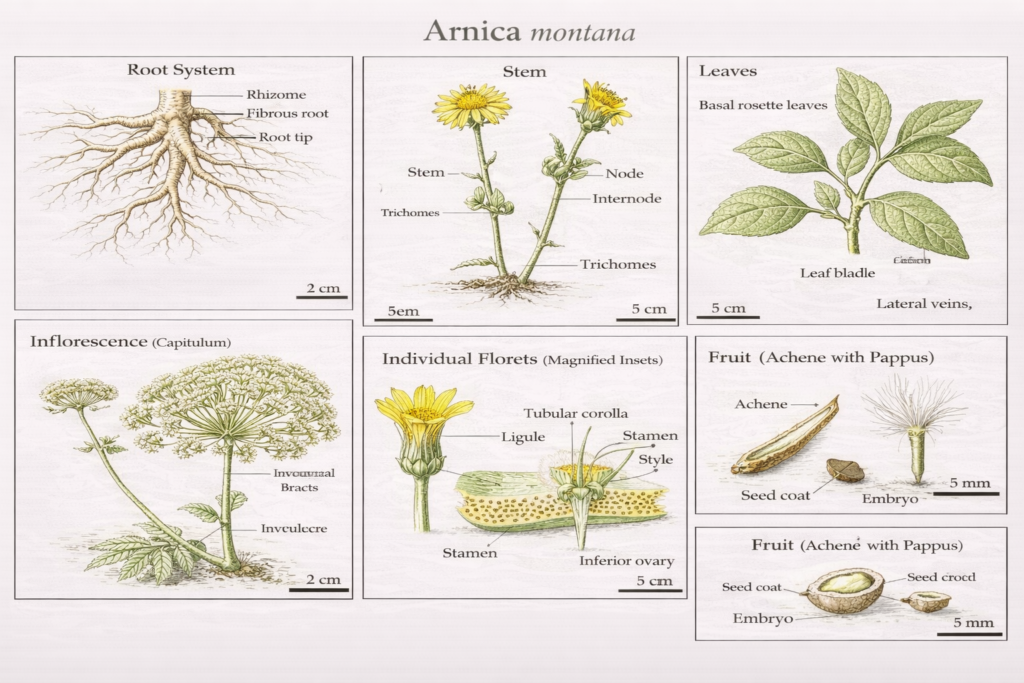
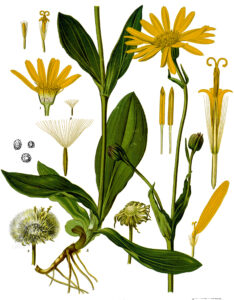
Arnica belongs to the family Asteraceae. Various medicinally active sub-species include Arnica chamissonis, A. cordifolia, A. montana, and A. fulgens. They are native to Europe and South Asia. Other subspecies are found cultivated in areas like Russia, California, Oregon, British Columbia, and Japan. The name ‘arnica’ is from the Greek word ‘arni,’ meaning ‘lamb,’ which is a pointer to the hairy characteristics of the soft and hairy leaves of the plant.
The leaves have a soft and hairy texture with a greenish color. Additionally, they are oval-shaped, slightly pointed, and form a basal rosette. The flowers are bright yellow and daisy-like. Its rhizomes have a brownish color and are horizontally formed. The roots are thin and fibrous and spread outwards rather than burrow deep into the soil. The stems are erect and slender with a hairy feel and can grow up to 6 centimeters tall.
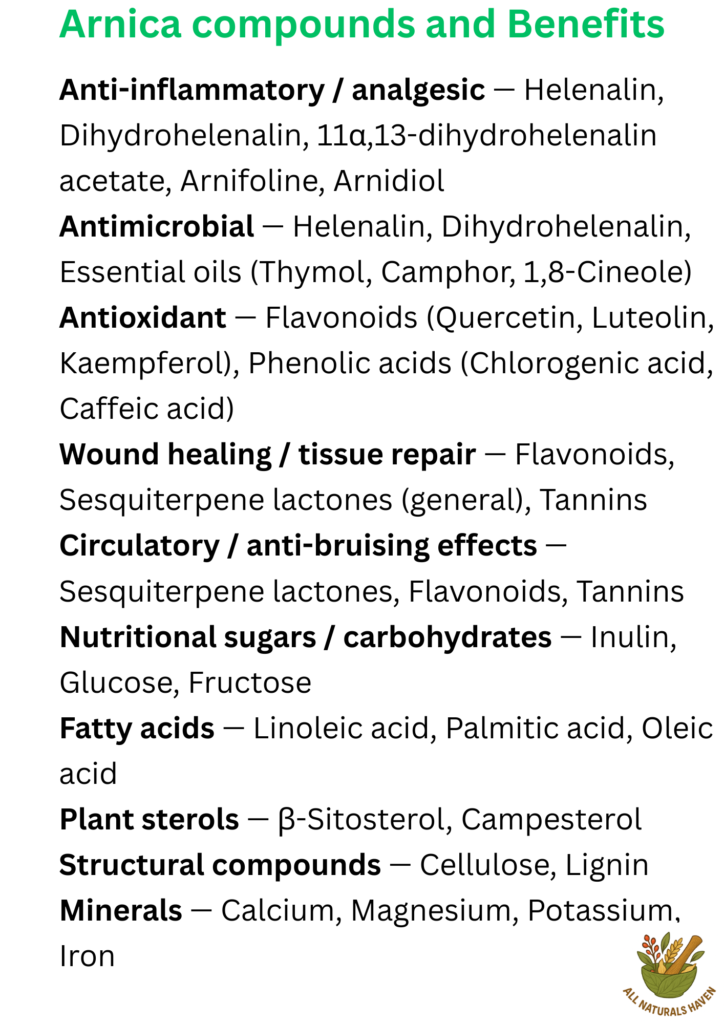
Anica contains flavonoids (betuletol, eupafolin, hispidulin, and tricin), isomeric alcohols (armidiol and foradiol), terpenoids (arniflin and arnicolide), the sesquiterpene helenalin, amines like choline, and coumarins such as scopoletine and umbelliferone.
Arnica cultivation
Arnica is commonly found in mountain meadows. It does well in acidic (pH 5.0-6.5), low-nutrient soils with good drainage, usually sandy. It needs sun but not excessively, hence partial shade in hot areas. Arnica is propagated from seeds or rhizome divisions, and germination can take up to 6 weeks. Water moderately and consistently to avoid drying out, and do not add any fertilizer or nutrients to the plant. If the soil is alkaline, add acidic compost, peat moss, or pine needles.
The flowers are the common part harvested when fully open by either cutting or being pinched off. Leaves can be harvested also by cutting, mainly by professionals. The harvested plants are dried in the shade and then stored in tightly closed jars.
REFERENCES
Chaiet SR, Marcus BC. Perioperative Arnica montana for Reduction of Ecchymosis in Rhinoplasty Surgery. Ann Plast Surg. 2016 May;76(5):477-82. doi: 10.1097/SAP.0000000000000312. PMID: 25954844.
Knuesel O, Weber M, Suter A. Arnica montana gel in osteoarthritis of the knee: an open, multicenter clinical trial. Adv Ther. 2002 Sep-Oct;19(5):209-18. doi: 10.1007/BF02850361. PMID: 12539881.
Leave a Reply