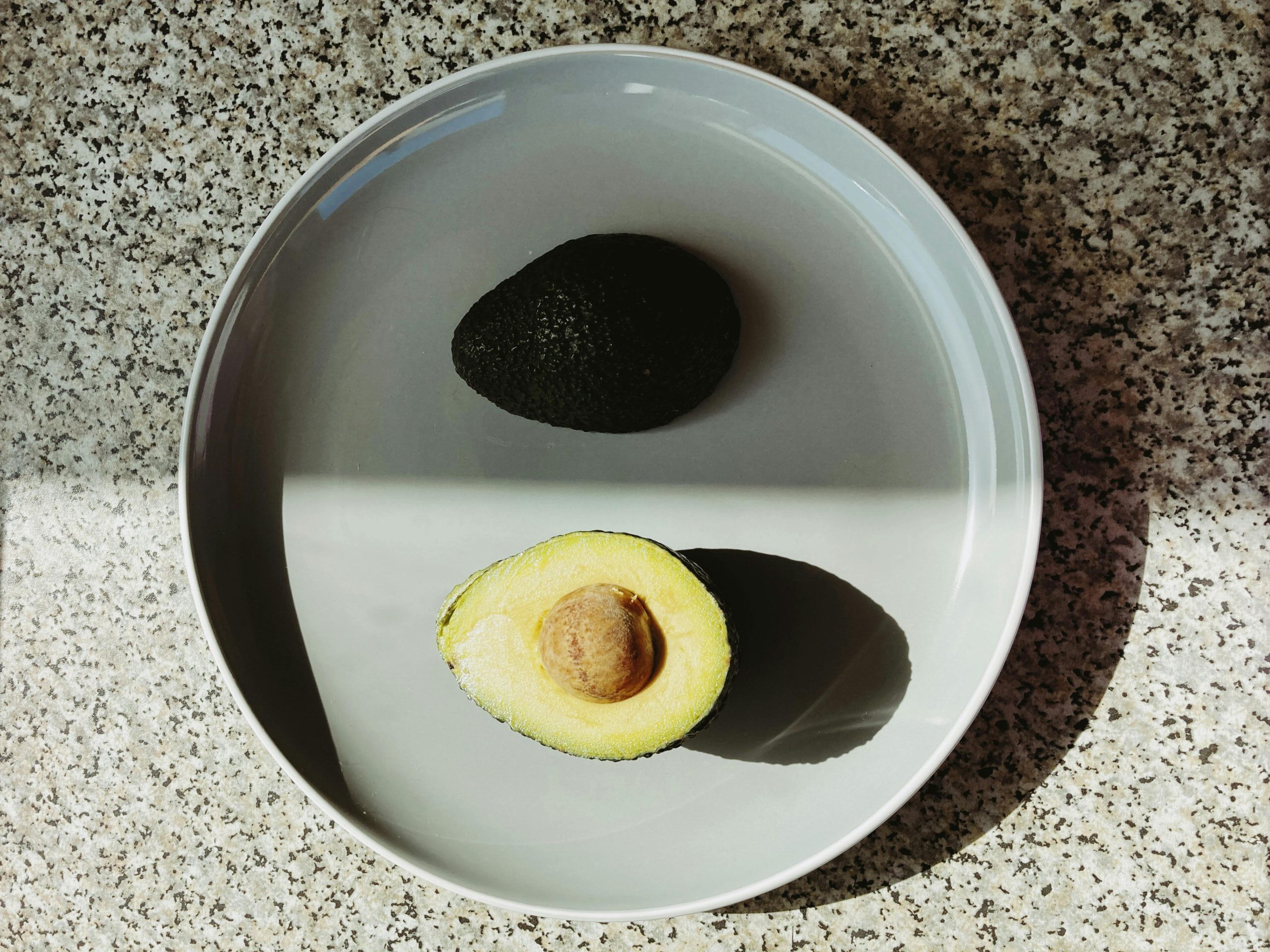
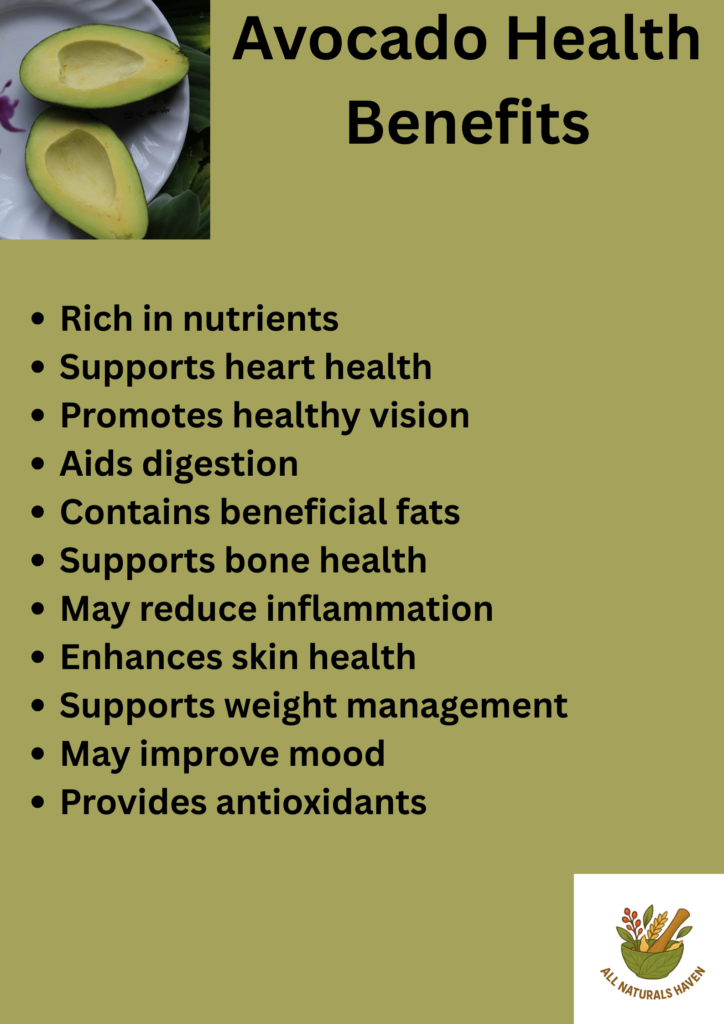
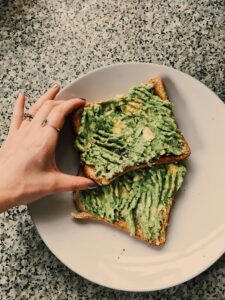
Avocado is a commonly used fruit in dishes like guacamole, eaten whole, or used as natural beauty products, i.e., organic face masks. Avocado products like avocado oils, serums, cleansers, and lotions are gaining popularity in the modern skin care industry. Avocado uses are listed in the image below.
Jump to: Medicinal Uses and ethnopharmacological profile
Avocado Description
Avocado was first cultivated in Mexico, and currently it is widespread in various countries like Kenya, America, Israel, Peru, Brazil, Colombia, South Africa, and Ghana. It consists of fibers, sugars, potassium, magnesium, riboflavin, folate, pantothenic acid, omega 3 and 6; vitamins C, E, K, B6, and D; oleic acid; sterols; and volatile oils. This robust composition makes it one of the superfruits.
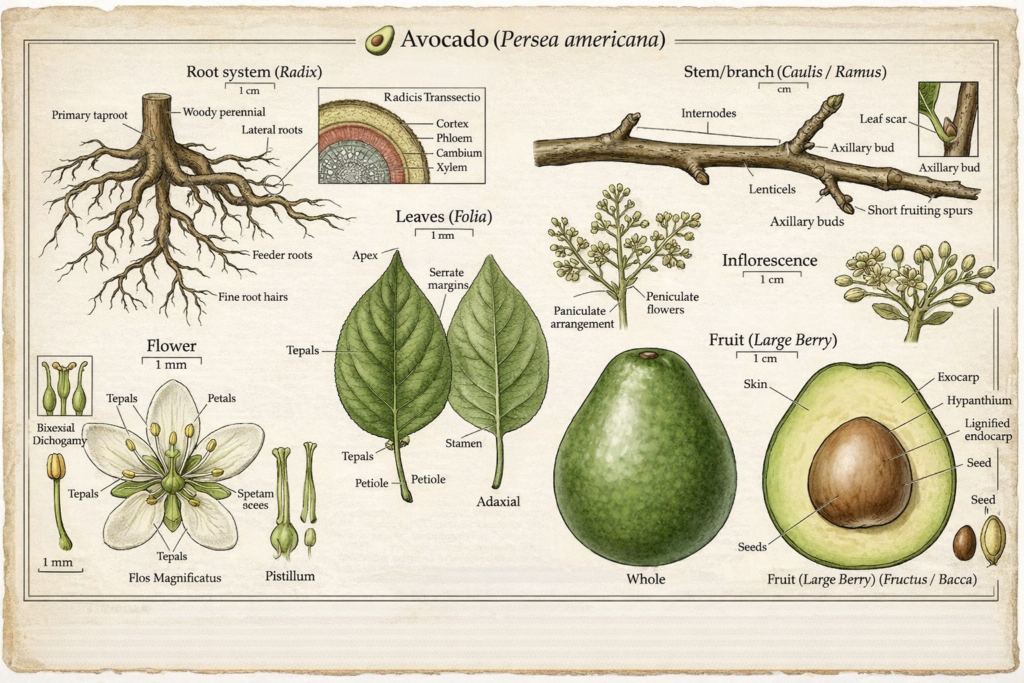
The common varieties are Hass, Fuerte, Bacon, Reed, Zutano, and Pinkerton. Avocado fruit is pear-shaped or oval/round, depending on the variety. The outer skin is thick and hard (leathery), varying from green to purplish black. The flesh is pulpy and green with a smooth, butter-like texture. On the inside there is a big round seed that is usually enclosed in a pit.
Avocado (tree) medicinal uses and an ethnopharmacological profile
Traditional uses
In Ghana, avocado was traditionally used as an anticonvulsant. Other traditions, like in India, used avocado pomade to stimulate hair growth and help in wound healing as an emmenagogue and aphrodisiac. Powdered seeds were used in the management of pyorrhea, diarrhea, and dysentery. It was also included in diets as a way of avoiding or relieving constipation.
Clinical Uses and Research
Antifungal effects-Glycolic extract has shown activity against Candida albicans in vitro through multiple mechanisms like fungal cell membrane disruption and oxidative stress induction. Oliveira 2015
Antimicrobial activity– extracted unsaturated oxygenated aliphatic compounds elicited in vitro activity against Staphylococcus aureus, Trichomonas vaginalis, Entamoeba histolytica, and Giardia lamblia. Another study found that the butanoic fraction extract exhibited activity against Bacillus cereus.
Anticancer effects– anticarcinogenic extracts from fruit, seed, leaf, and bark have shown inhibition of cell growth and apoptosis in in vitro studies and animal models of human cancer cell lines (leukemia, oral, breast, and esophageal cancers).
Antiviral effects– avocado extract (THHY) showed activity against dengue by inhibiting its replication by creating a hostile environment in a murine model.
Larvicidal effects– ethanolic and hexane extracts proved activity against Aedes aegypti by causing parasite paralysis and eventual death.
Topical effects– in animal studies, avocado oil increased collagen synthesis and decreased wound healing, as associated with its oleic acid content.
Antidiarrheal activity– methanol, chloroform, and ethanolic extracts improved clinical and histological parameters of colitis in rats and managed diarrhea. This included reducing gut motility and decreasing fluid secretion in the intestines.
Glycemic effects– small studies indicate that the addition of avocado to meals improves satiety and postprandial glycemic indices. It attenuated the early response by insulin after meals. Haddad 2013
NB– Avocado extracts may interact with warfarin by reducing its anticoagulant effect. Take with caution if on anticoagulants.
Avocado is best eaten as a fruit when ripe or in smoothies and juices. For extracts, kindly consult a physician before use.
REFERENCES
Akinpelu DA, Aiyegoro OA, Akinpelu OF, Okoh AI. Stem bark extract and fraction of Persea americana (Mill.) exhibits bactericidal activities against strains of bacillus cereus associated with food poisoning. Molecules. 2014 Dec 30;20(1):416-29. doi: 10.3390/molecules20010416. PMID: 25558854; PMCID: PMC6272733.
Paul R, Kulkarni P, Ganesh N. Avocado fruit (Persea americana Mill) exhibits chemo-protective potentiality against cyclophosphamide induced genotoxicity in human lymphocyte culture. J Exp Ther Oncol. 2011;9(3):221-30. PMID: 22070054.
Dabas D, Shegog RM, Ziegler GR, Lambert JD. Avocado (Persea americana) seed as a source of bioactive phytochemicals. Curr Pharm Des. 2013;19(34):6133-40. doi: 10.2174/1381612811319340007. PMID: 23448442.
Wu, Yu-Hsuan & Tseng, Chin-Kai & Wu, Ho-Cheng & Wei, Chih-Ku & Lin, Chun & Chen, Jih-Jung & Chang, Hsun-Shuo & Lee, Jin-Ching. (2019). Avocado (Persea americana) fruit extract (2R,4R)-1,2,4-trihydroxyheptadec-16-yne inhibits dengue virus replication via upregulation of NF-κB–dependent induction of antiviral interferon responses. Scientific Reports. 9. 10.1038/s41598-018-36714-4.
Torres RC, Garbo AG, Walde RZ. Larvicidal activity of Persea americana Mill. against Aedes aegypti. Asian Pac J Trop Med. 2014 Sep;7S1:S167-70. doi: 10.1016/S1995-7645(14)60225-X. PMID: 25312114.
de Oliveira AP, Franco Ede S, Rodrigues Barreto R, Cordeiro DP, de Melo RG, de Aquino CM, E Silva AA, de Medeiros PL, da Silva TG, Góes AJ, Maia MB. Effect of semisolid formulation of persea americana mill (avocado) oil on wound healing in rats. Evid Based Complement Alternat Med. 2013;2013:472382. doi: 10.1155/2013/472382. Epub 2013 Mar 19. PMID: 23573130; PMCID: PMC3614059.
Hong, Joo & Chung, Kyung-Sook & Shin, Ji-Sun & Park, Geonha & Jang, Young & Lee, Kyung-Tae. (2019). Anti-Colitic Effects of Ethanol Extract of Persea americana Mill. through Suppression of Pro-Inflammatory Mediators via NF-κB/STAT3 Inactivation in Dextran Sulfate Sodium-Induced Colitis Mice. International Journal of Molecular Sciences. 20. 177. 10.3390/ijms20010177.
Leave a Reply