
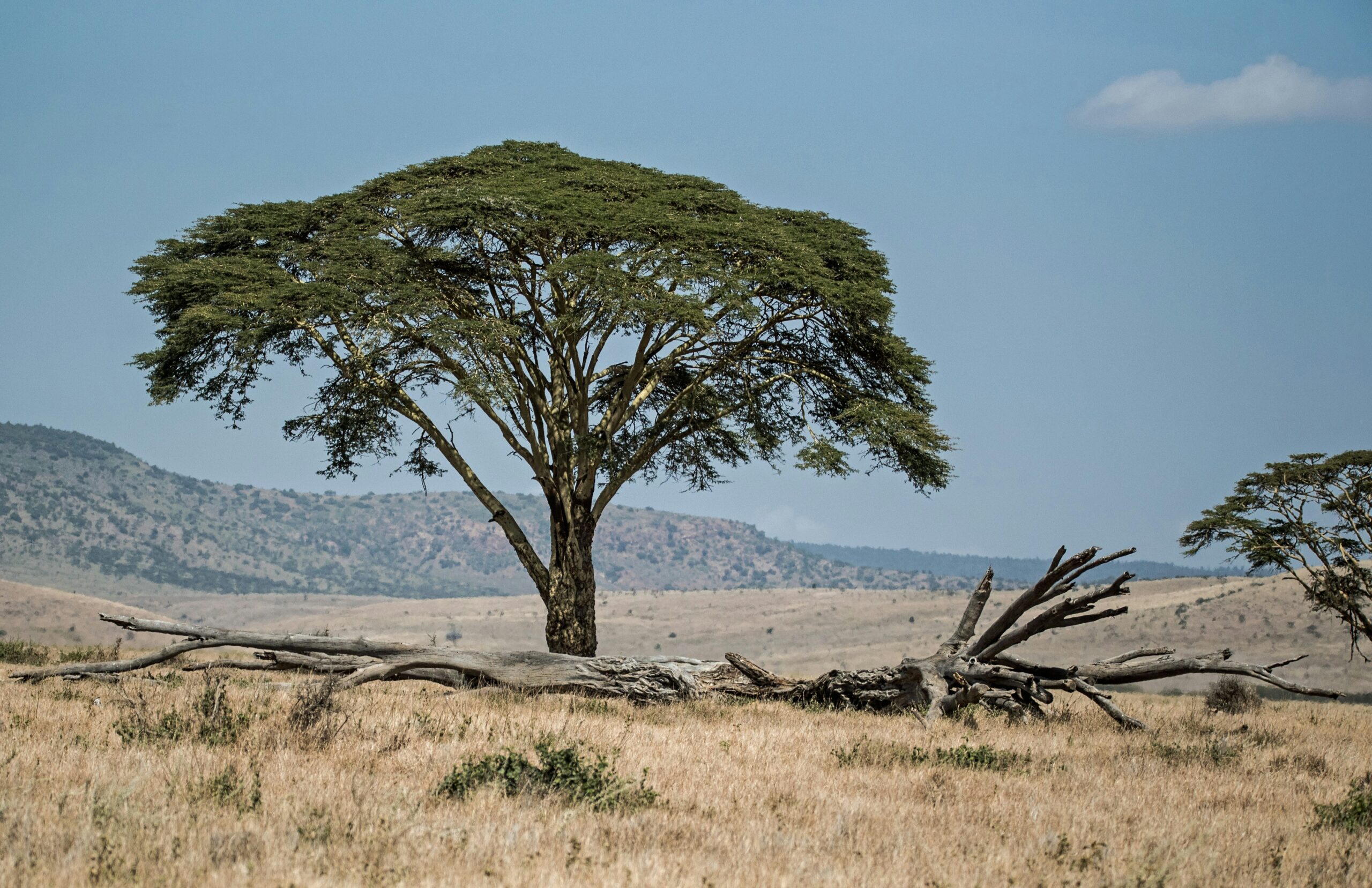
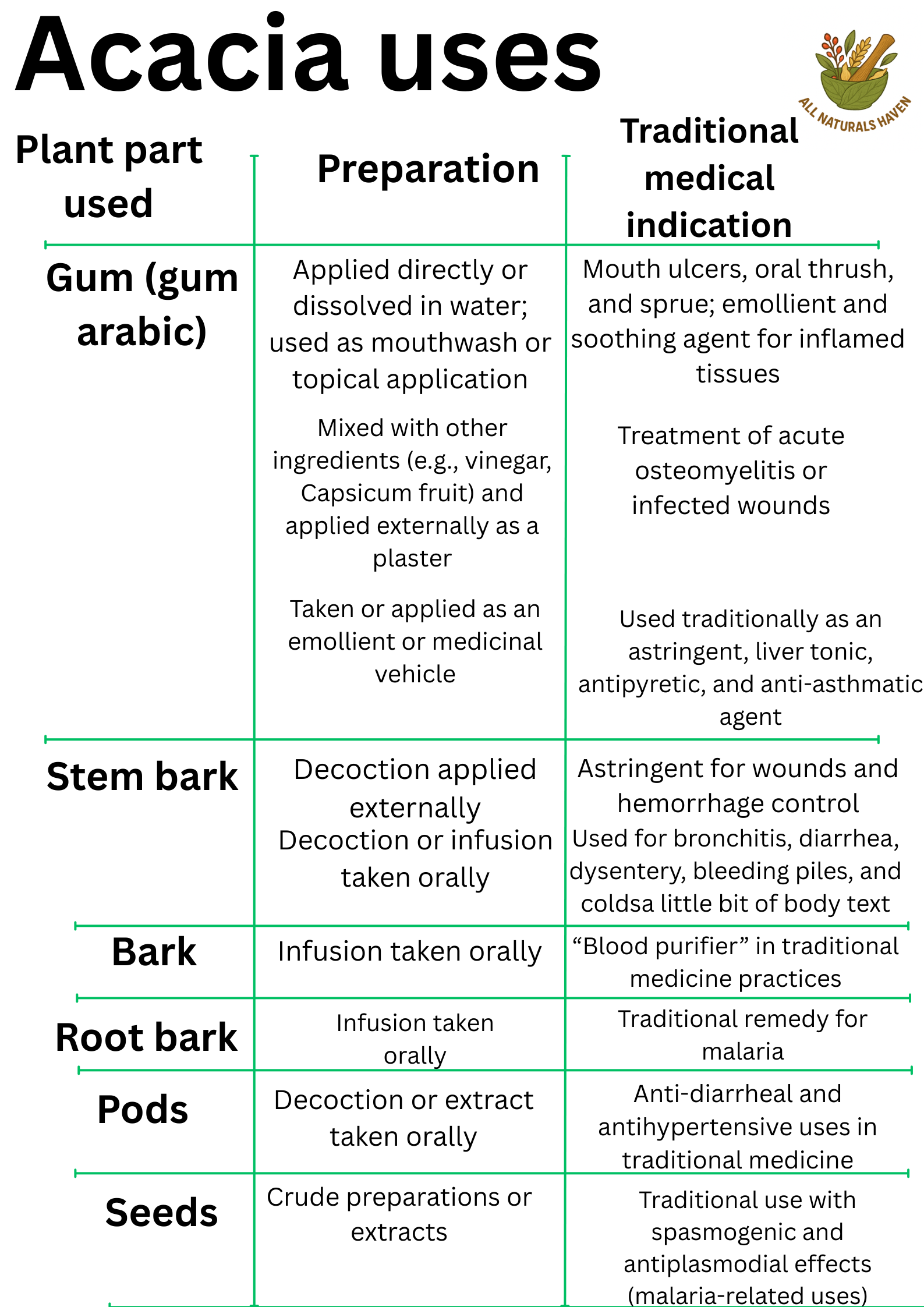
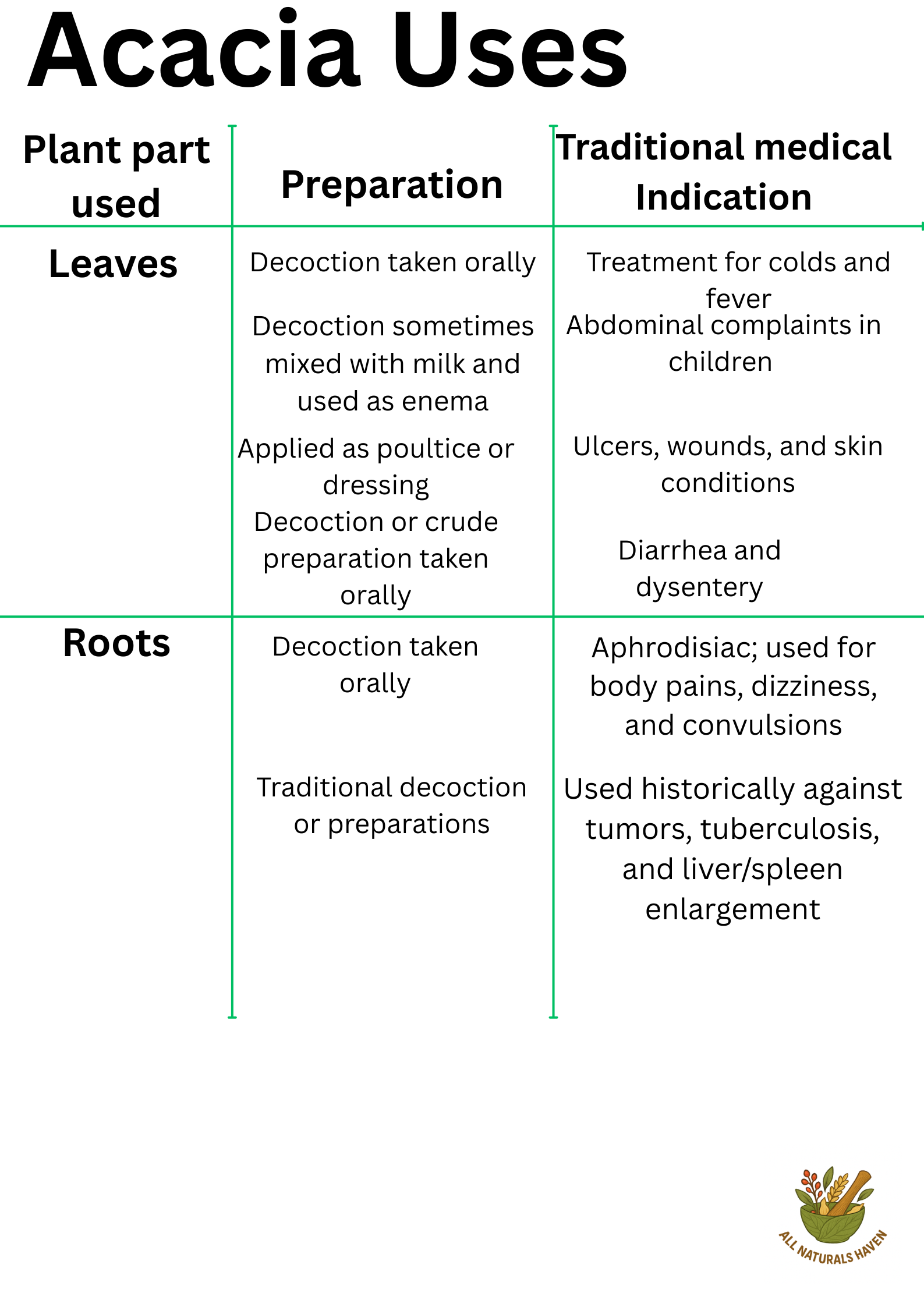
Also known as wattles, acacia is a term used to refer to roughly 1300 species of plants belonging to the family Fabaceae. They thrive in tropical and subtropical climates and are native to Australia, Africa, and parts of Asia. It is currently farmed in other parts like North America, Mexico, Europe, the Middle East, and Asia-Pacific. Its uses are outlined in the image below.
Jump to: Health uses and ethnopharmacological profile
Acacia Description
They include Gum acacia, Gum arabica, A. pycnatha (golden wattle), A. decurrens (green wattle), A. dealbata (silver wattle), A. omalophylla (Yaman), A. melanoxylon (Australian blackwood), and A. koa used in timber making. Other species used for ornamental purposes are
- Silver wattle/mimosa
- Cootamundra (baileyana)
- Shoestring (stenophylla)
- Sweet (Vachellia farnesiana)
- Weeping myall (pendula)
- Blue leaf (saligna)
- Prostate A redolens acacia (reddens)
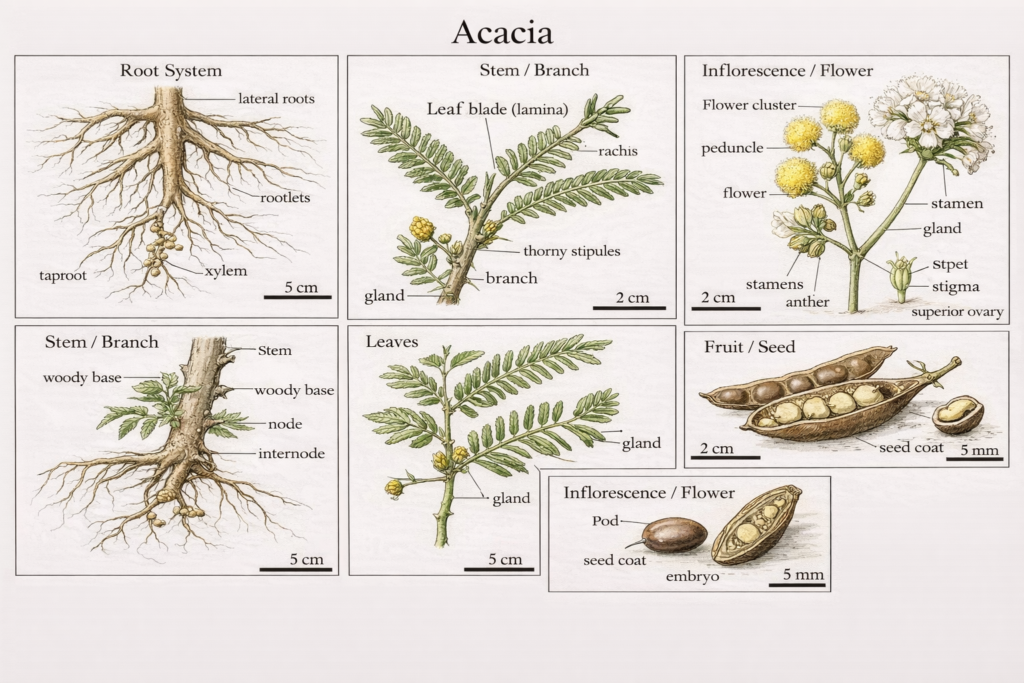
Active components
It consists of various active compounds like polyphenols, tannic acid, gallic acid, ellagic acid, and protocatechuic acid. Polysaccharides arabinogalactan, which acts as prebiotics. Flavonoids like quercetin, catechin, rutin, and apigenin. Alkaloids, vitamins, and minerals like vitamin K, calcium, magnesium, iron, and zinc.
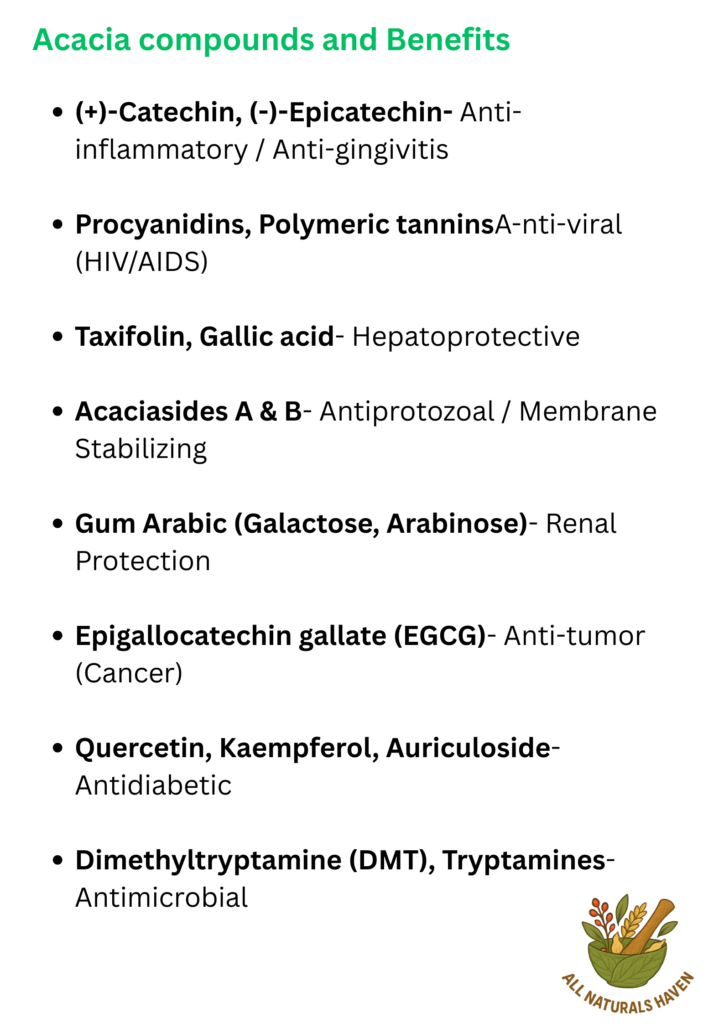
Heath uses and ethnopharmacological profile of Acacia
Traditional uses
In Senegal it was used as a demulcent in cases of diarrhea, dysentery, and irritable bowel syndrome. It was used to soothe coughs and throats and was formulated as a simple syrup. In Egypt it acted as an adhesive in wound dressing and was used as an ingredient in mummification. The bark was used as a chew stick to freshen the breath; the decoctions were used as a wash in skin conditions like leprosy and eczema. Internally, it was used to manage bleeding.
The leaves and pods were made into pastes used in conjunctivitis and epiphora. The powder was used to regulate sugar levels, while the infusions acted as a tonic for the liver and the gallbladder.
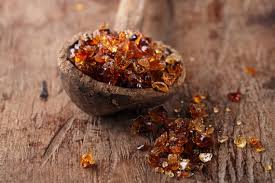
Clinical Uses and Research
Renal protection: In a randomized control trial of A. Senegal in chronic kidney disease, heteropolysaccharides showed renal protection. This was noted through improved total antioxidant capacity, reduced malondialdehyde, reduced C-reactive proteins, and speculated reduced levels of creatinine and urea in the urine believed to be linked to the reduction of nitrogenous waste by altering gut microbiota.
Gingivitis: research on catechu with isolations of catechin/epicatechins from aqueous heartwood showed activity against gingivitis. The compound inhibited the growth of streptococcus mutans through biofilm disruption and reduction of inflammatory cytokines. There was a recorded reduction in plaque index formation, comparable to the action of chlorhexidine. ( Rangarajun 2015)
Osteoarthritis: catechins from ethanolic extracts of catechu species (heartwood plus scutellaria), in addition to Morus alba, alleviated joint inflammation. This was through inhibition of inflammatory cyclooxygenase and lipoxygenase enzymes, which resulted in relief of joint pain and inflammation and improved mobility.
Dental caries: In a study of the nilotica species’ bark aqueous wash, tannins and alkaloids were isolated to have antibacterial activity. It was thought to disrupt bilayers of the bacterial cell wall, leading to cell death. ( Singh 2025)
In vivo Uses and Research
Antiprotozoal: In mice, the bark methanolic extract of nilotica containing saponins and terpenoids acted against trypanosomiasis (caused by T. brucei). This was through the interference of the parasite metabolic pathway that led to disease elimination with a dose of 400 mg/kg after 8 days.
Type 2 diabetes: Aqueous seeds of gum arabica rich in polyphenols stimulated insulin release from beta pancreatic cells in rats. Thus, there was a noted reduction in blood glucose in normoglycemic (but not alloxan-severely diabetic) rats. (Auwall 2013)
Hepatoprotection: In rodents with carbon tetrachloride-induced liver damage, methanolic heartwood extract containing taxifolin and catechins was able to mitigate the damage. This was via decreasing lipid peroxidation and restoration of antioxidants (SOD/CAT).
In vitro Uses and Research
HIV/AIDS: Enzyme assays of the HIV virus with aqueous/methanolic pod extract of nilotica rich in tannins were able to inhibit viral replication. The activity was linked to inhibition of reverse transcriptase enzymes with notable efficacy comparable to AZT.
Cancer: Catechu ethanolic bark extract rich in polyphenols was identified to have anti-tumor properties on human oral cancer cells. The polyphenols acted by inducing apoptosis and increasing marker gene expression.
Inflammation: In a study of the human red blood cells using hydroalcoholic leaf extract from auriculiformis spp., flavonoids/saponins were identified to have an inflammatory property. This was observed through protection of cell membranes via prevention of release of lysosomal enzymes during inflammation and membrane stabilization. (Elgorashi 2019)
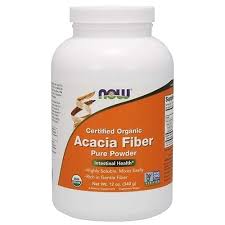
Reported dosing and side effects
10-30 grams (can be dissolved in water and taken up to 6 weeks)
Bark decoctions (5-10 grams in 200 ml twice a day)
Standardized capsule extract (250-500mg a day)

Side effects and interactions often occur with large doses and include:
- Dry mouth
- Bloating, gas and flatulence
- Abdominal rumbling
- constipation
- Allergies
- It decreases the bioavailability and efficiency of Amoxil drug
- Decreases the absorption of iron.
- Mild hypoglycemic effect; may cause hypoglycemia when on anti-diabetics.
NB: Avoid in pregnancy and breastfeeding due to limited data.
REFERENCES
Ali NE, Kaddam LA, Alkarib SY, Kaballo BG, Khalid SA, Higawee A, AbdElhabib A, AlaaAldeen A, Phillips AO, Saeed AM. Gum Arabic (Acacia Senegal) Augmented Total Antioxidant Capacity and Reduced C-Reactive Protein among Haemodialysis Patients in Phase II Trial. Int J Nephrol. 2020 Apr 9;2020:7214673. doi: 10.1155/2020/7214673. PMID: 32328307; PMCID: PMC7171621.
Burnett BP, Jia Q, Zhao Y, Levy RM. A medicinal extract of Scutellaria baicalensis and Acacia catechu acts as a dual inhibitor of cyclooxygenase and 5-lipoxygenase to reduce inflammation. J Med Food. 2007 Sep;10(3):442-51. doi: 10.1089/jmf.2006.255. PMID: 17887937.
Ogbadoyi, Emmanuel Olofu & Garba, Muhammad & Kabiru, Adamu & Mann, Abdullahi & Okogun, Joseph. (2011). Therapeutic evaluation of Acacia nilotica (Linn) stem bark extract in experimental African trypanosomiasis. International Journal of Applied Research in Natural Products. 4.
Yang CL, Lin YS, Liu KF, Peng WH, Hsu CM. Hepatoprotective Mechanisms of Taxifolin on Carbon Tetrachloride-Induced Acute Liver Injury in Mice. Nutrients. 2019 Nov 4;11(11):2655. doi: 10.3390/nu11112655. PMID: 31689986; PMCID: PMC6893565.
Tabassum N, Ahmad F. Role of natural herbs in the treatment of hypertension. Pharmacogn Rev. 2011 Jan;5(9):30-40. doi: 10.4103/0973-7847.79097. PMID: 22096316; PMCID: PMC3210006.
Devaraj, Ezhilarasan & Lakshmi, Dr & Vijayaragavan, Rajagopal & Bhullar, Sukhwinder & Rajendran, Ramasamy. (2017). Acacia catechu ethanolic bark extract induces apoptosis in human oral squamous carcinoma cells. Journal of Advanced Pharmaceutical Technology & Research. 8. 143. 10.4103/japtr.JAPTR_73_17.
Leave a Reply