
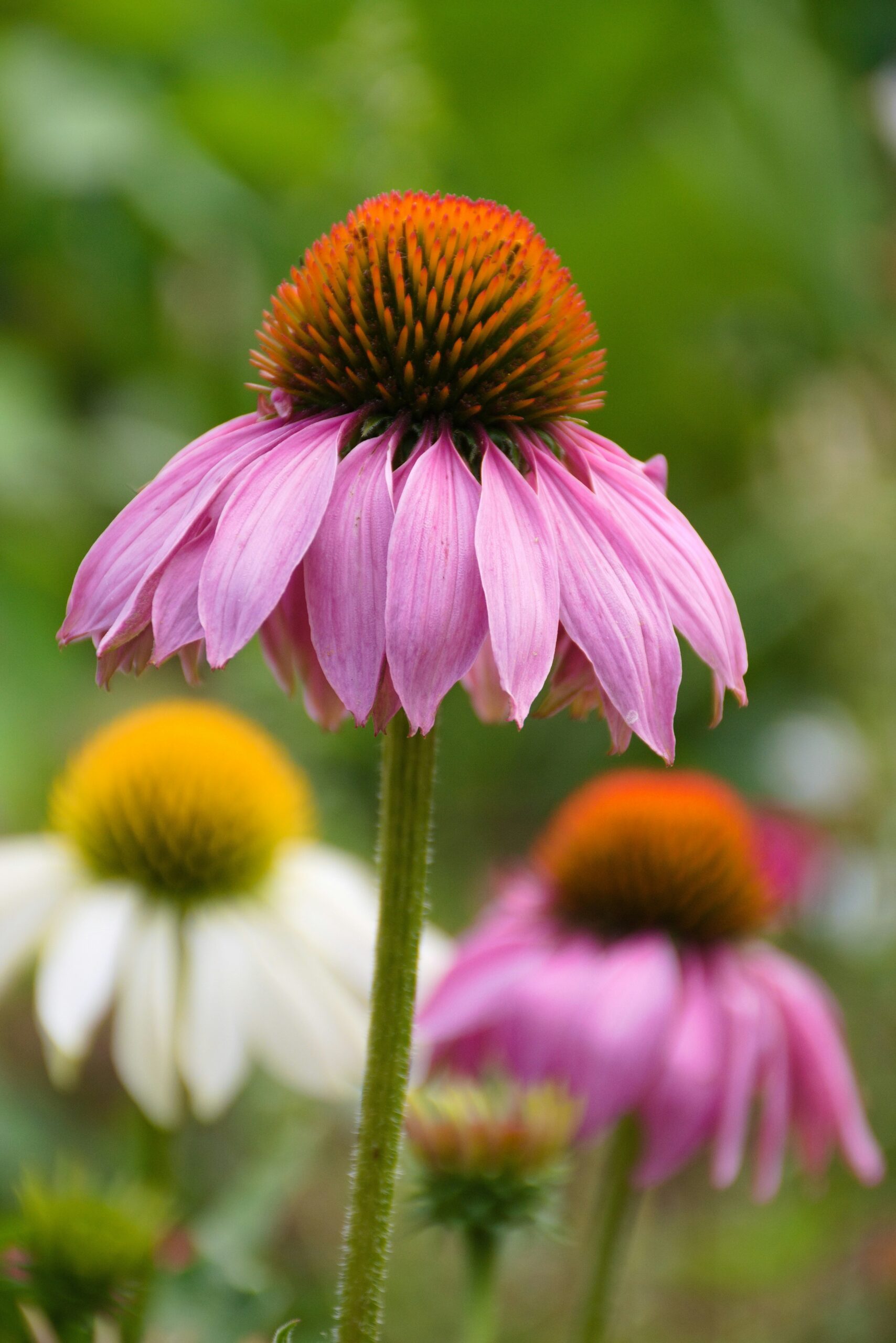
Echinacea is a plant belonging to the family Asteraceae. The most common types used are eastern purple coneflower (E. purpurea), narrow-leaf coneflower (E. angustifolia), and pale purple coneflower (E. pallida). Some of its common names are Black Samson, snakeroot hedgehog cone, and comb flowers.
Echinacea is native to North America and is currently cultivated in Canada, Germany, Australia, New Zealand, Russia, and France. It is used as follows:
- Relief of sore throat
- prevention of flu and colds
Jump to Section
Medical Uses and ethnopharmacological profile of echinacea
Traditional uses
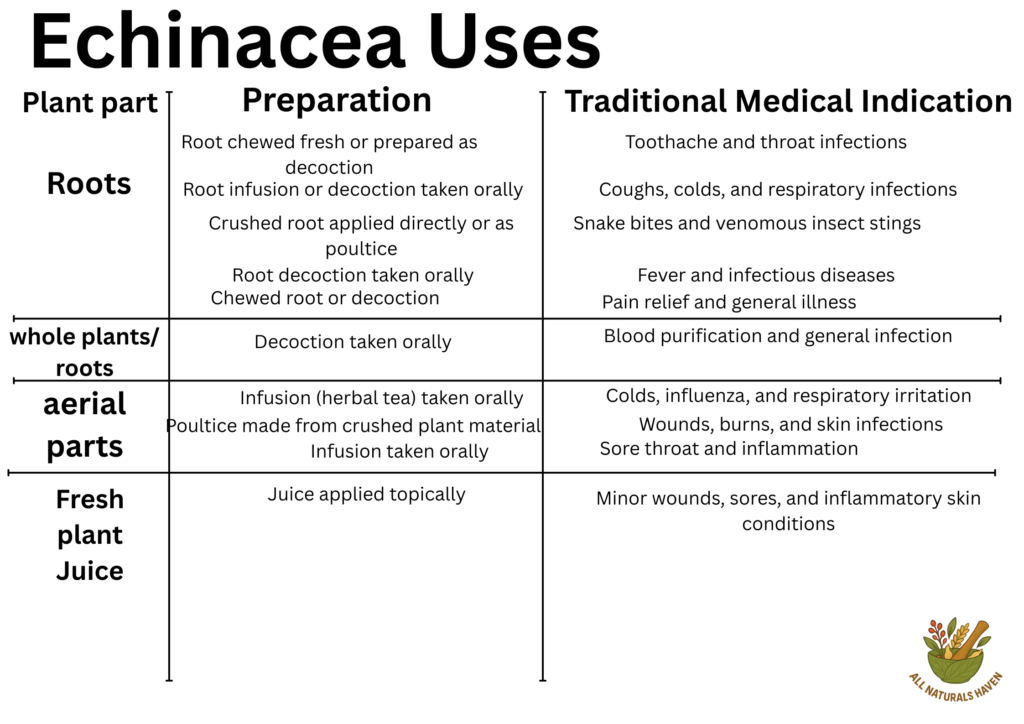
The poultice was used in snake bites and insect stings. It was also used in wound healing of burns and skin infections. It was also chewed as a way of relieving tooth pain and sores. It was brewed into tea and taken for fever and mumps. It was also believed to purify blood and treat symptoms of swollen lymph nodes.
Clinical Uses and Research
Immune boosting: In healthy adults, fresh root alcohol extract of E. purpurea, 9 ml, given thrice daily for 4 months, led to 26% fewer cold episodes and a 60% reduction in recurrent infections. This was speculated to be due to the modulation of CB2 receptors that primes innate immunity induced by alkylamine compounds.
Antiviral activity: In early flu patients, whole plant extract was given for 5-10 days. There was inhibition of viral adhesion and neuraminidase with effectiveness (symptom relief) comparable to oseltamivir but with fewer side effects. This was linked to the compounds alkylamides and cichoric acid. ( Raus 2015)
In another study in children using standardized tablets given 3-5 times daily for acute colds. The compound polysaccharides and alkylamides stimulate macrophage phagocytosis and cytokine regulation. This led to a decrease in cold duration by 1 and a half days and a drop in antibiotic use.
Anxiety disorder: In adults suffering from generalized anxiety disorder, hydroalcoholic extract of E. angustifolia at a dose of 40-80 mg twice daily was able to reduce psychic anxiety without sedation. This was recorded as a reduction in the state trait anxiety inventory with 3-7 days. This was due to the action of N-alkamides that bind to cannabinoid receptors in the hippocampus.
Skin hydration and eczema: In volunteers with dry skin or mild atopic dermatitis, topical application of the gel twice daily for 4-12 weeks increased skin hydration, reduced itchiness and redness, repaired the stratum corneum (protective outer layer of skin), and reduced wrinkle depth. This was due to the activity of echinacosides and caffeic acid derivatives that acted by stimulating expression of involucrin and keratinocyte differentiation. (Aleksandra 2025)
In Vivo uses and Research
Antibacterial: Purified polysaccharide extract of E. purpurea orally administered to rats with listeria showed reduced bacterial burden on the spleen. At a dose of 200 mg/kg for 21 days, it was able to activate TLR4-dependent signaling.
Anti-inflammatory: Root ethanolic extract of E. angustifolia at an oral dose of 12 mg/kg reduced paw edema swelling and pro-inflammatory cytokines in rats. The alkylamides acted by inhibiting cyclooxygenase and lipoxygenase enzymes. ( Neduraman 2024)
Antiviral: Fresh juice concentrates as part of oral dosing induced the production of interferon beta. This increased the survival rates in rats with influenza A and lowered the viral titers in lung tissues at a dose of 0.5 mg a day.
In vitro uses and Research
Tissue integrity: In a study of aqueous purpurea extract on human skin fibroblasts, there was prevention of degradation of hyaluronic acid, thus stabilizing the tissue barrier. This was through the echinacoside action of inhibiting the enzyme hyaluronidase. ( Kim 2024)
Immune cell signaling: When the purified root fraction of E. angustifolia was applied to human Jurkat T cells and macrophages, there was a shift in macrophages towards repair mode. This was noted to be through the agonistic action of alkyl amides for CB2 receptors.
Safety and Dosing profile of Echinacea
Forms and Dosing
Liquid extracts and tinctures– 2.5-5ml thrice a day
Standardized capsules and tablets– 300-600mg thrice daily
Dried root powder– 1-2 grams
Juices – 6-9 ml in daily divided doses
Infusions and decoctions– 1-2 grams boiled in water, taken up to 4 times daily.
- Common cold- 300mg thrice a day
- Acute cold symptoms- 300-400 mg up to 4 times a day
- Immune support in respiratory infection- 900-1500 mg a day

Interactions
- Immunosuppressants like tacrolimus and corticosteroids – drugs may have decreased efficiency.
- Stimulants like coffee and theophylline- may be increased in blood
- Clozapine- drugs levels may be elevated.
Side effects
- Nausea
- Diarrhea and abdominal pain
- Unpleasant taste in the mouth
- Allergic reactions i.e., mild rash
- Tingling sensation or numb tongue
- Dizziness and headache (in high doses)
- Elevated liver enzymes (long-term use)
Contraindications
- In pregnancy and breastfeeding
- Blood disorders like leukemia
- Children under 12 years
- Organ transplant recipients
- Autoimmune diseases (precaution)
Echinacea Description and Composition
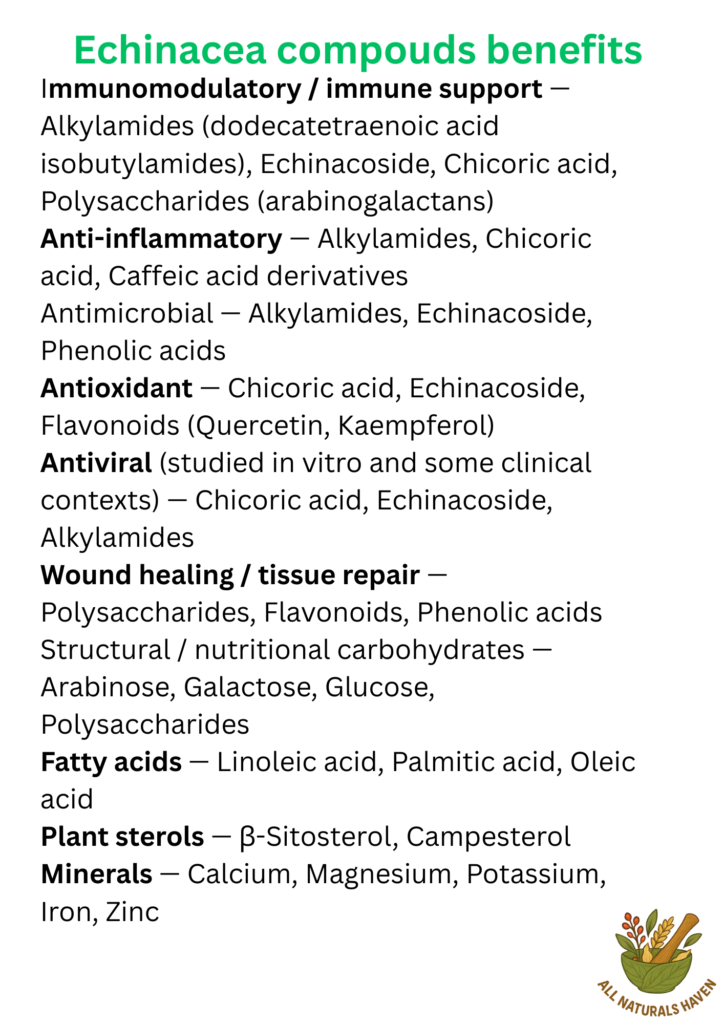
Active compounds found within echinacea include phenolics (echinacosides, caffeic acid, cichoric acid, cynarin, and caftanic acid) and alkylamides like isobutylamides, which are responsible for the tingling/numbing sensation. It also contains polysaccharides (arabinogalactans), glycoproteins, volatile oils (humulene, borneol), polyynes, and ketoalkenes.
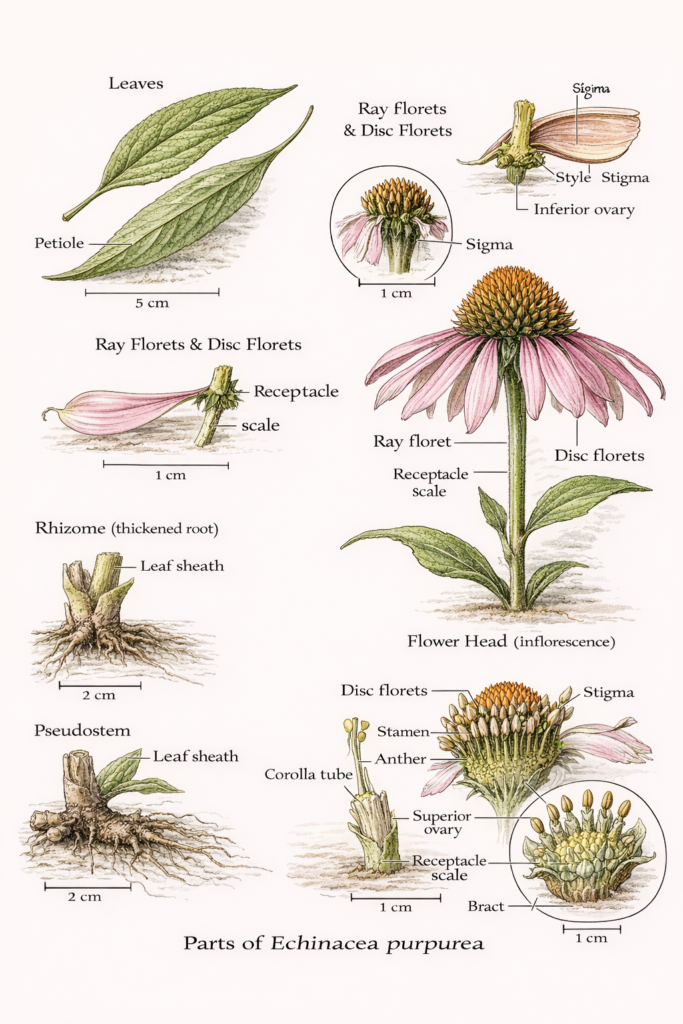
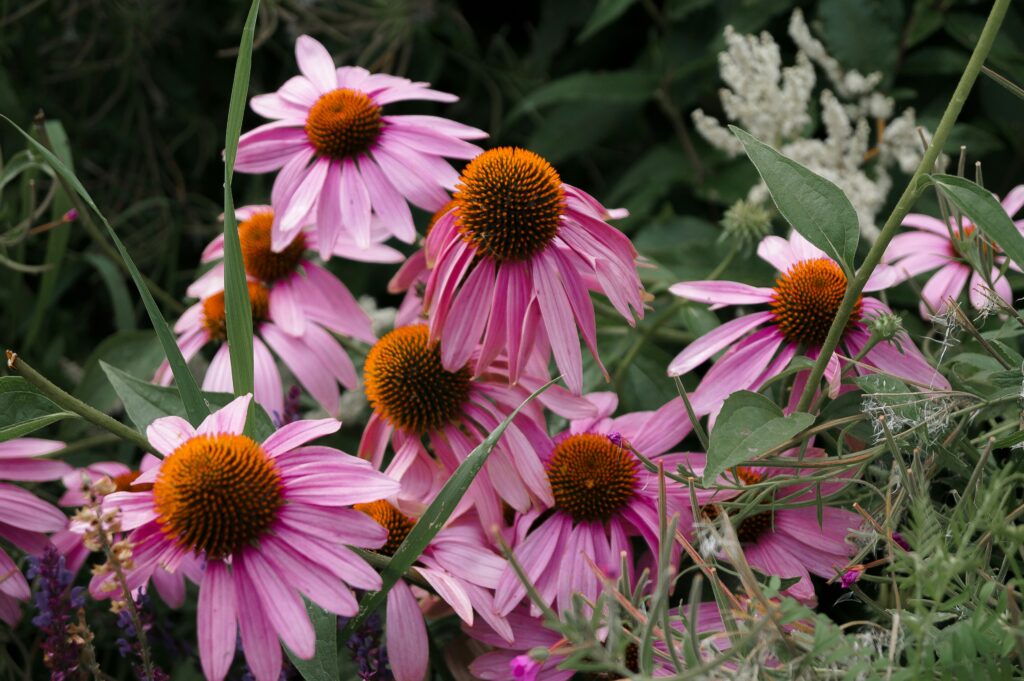
The flowers have a high conical and prickly (center) receptacle. Its petals are purple to pink and drooping (purpurea); pale pinkish to white (pallida); and pinkish to purplish and shorter, spreading (angustifolia). Leaves are dark green with serrate edges and ovate (purpurea), smooth margins covered with stiff bristly hairs and lanceolate (angustifolia), or lanceolate but rough and more linear (pallida). The fruits are small and inverted with a pyramid shape and one seed inside.
Echinacea Cultivation
It requires well-drained soil with a pH of 6.0-7.0 and temperatures ranging between 21 and 32 degrees Celsius. It is propagated through seeds, which must first be allowed to break the dormancy period through cold stratification. These take roughly 4 to 12 weeks. The seeds are planted 12 inches apart, and medical maturity begins from the third or fourth year.
The best time for harvesting the aerial part is in the summer when the flower is in full bloom but before the petals droop. For the root, late fall before the plant enters dormancy is best. Use a garden fork to lift the entire root, harvesting parts of the roots and ensuring to replant the crown. The seeds are best harvested in autumn when the cone has turned rusty brown.
Clean harvested parts. The roots are sliced thinly and dried in partial shade. The end product is stored in airtight glass amber jars. Dried aerial parts can last up to 1 year, while roots can last roughly 2-3 years.
REFERENCES
Jawad M, Schoop R, Suter A, Klein P, Eccles R. Safety and Efficacy Profile of Echinacea purpurea to Prevent Common Cold Episodes: A Randomized, Double-Blind, Placebo-Controlled Trial. Evid Based Complement Alternat Med. 2012;2012:841315. doi: 10.1155/2012/841315. Epub 2012 Sep 16. PMID: 23024696; PMCID: PMC3457740.
Karsch-Völk M, Barrett B, Kiefer D, Bauer R, Ardjomand-Woelkart K, Linde K. Echinacea for preventing and treating the common cold. Cochrane Database Syst Rev. 2014 Feb 20;2014(2):CD000530. doi: 10.1002/14651858.CD000530.pub3. PMID: 24554461; PMCID: PMC4068831.
Weber W, Taylor JA, Stoep AV, Weiss NS, Standish LJ, Calabrese C. Echinacea purpurea for prevention of upper respiratory tract infections in children. J Altern Complement Med. 2005 Dec;11(6):1021-6. doi: 10.1089/acm.2005.11.1021. PMID: 16398593.
Lopresti AL, Smith SJ. An investigation into the anxiety-relieving and mood-enhancing effects of Echinacea angustifolia (EP107™): A randomised, double-blind, placebo-controlled study. J Affect Disord. 2021 Oct 1;293:229-237. doi: 10.1016/j.jad.2021.06.054. Epub 2021 Jun 24. PMID: 34217960.
Oláh, Attila & Szabó-Papp, Judit & Soeberdt, Michael & Knie, Ulrich & Dähnhardt-Pfeiffer, Stephan & Abels, Christoph & Bíró, Tamás. (2017). Echinacea purpurea -derived alkylamides exhibit potent anti-inflammatory effects and alleviate clinical symptoms of atopic eczema. Journal of Dermatological Science. 88. 10.1016/j.jdermsci.2017.05.015.
Steinmüller C, Roesler J, Gröttrup E, Franke G, Wagner H, Lohmann-Matthes ML. Polysaccharides isolated from plant cell cultures of Echinacea purpurea enhance the resistance of immunosuppressed mice against systemic infections with Candida albicans and Listeria monocytogenes. Int J Immunopharmacol. 1993 Jul;15(5):605-14. doi: 10.1016/0192-0561(93)90078-d. PMID: 8375943.
Aucoin M, Cooley K, Saunders PR, Carè J, Anheyer D, Medina DN, Cardozo V, Remy D, Hannan N, Garber A. The effect of Echinacea spp. on the prevention or treatment of COVID-19 and other respiratory tract infections in humans: A rapid review. Adv Integr Med. 2020 Dec;7(4):203-217. doi: 10.1016/j.aimed.2020.07.004. Epub 2020 Aug 1. PMID: 32837894; PMCID: PMC7395221.
Matthias A, Banbury L, Bone KM, Leach DN, Lehmann RP. Echinacea alkylamides modulate induced immune responses in T-cells. Fitoterapia. 2008 Jan;79(1):53-8. doi: 10.1016/j.fitote.2007.07.012. Epub 2007 Aug 11. PMID: 17855021.
Leave a Reply