
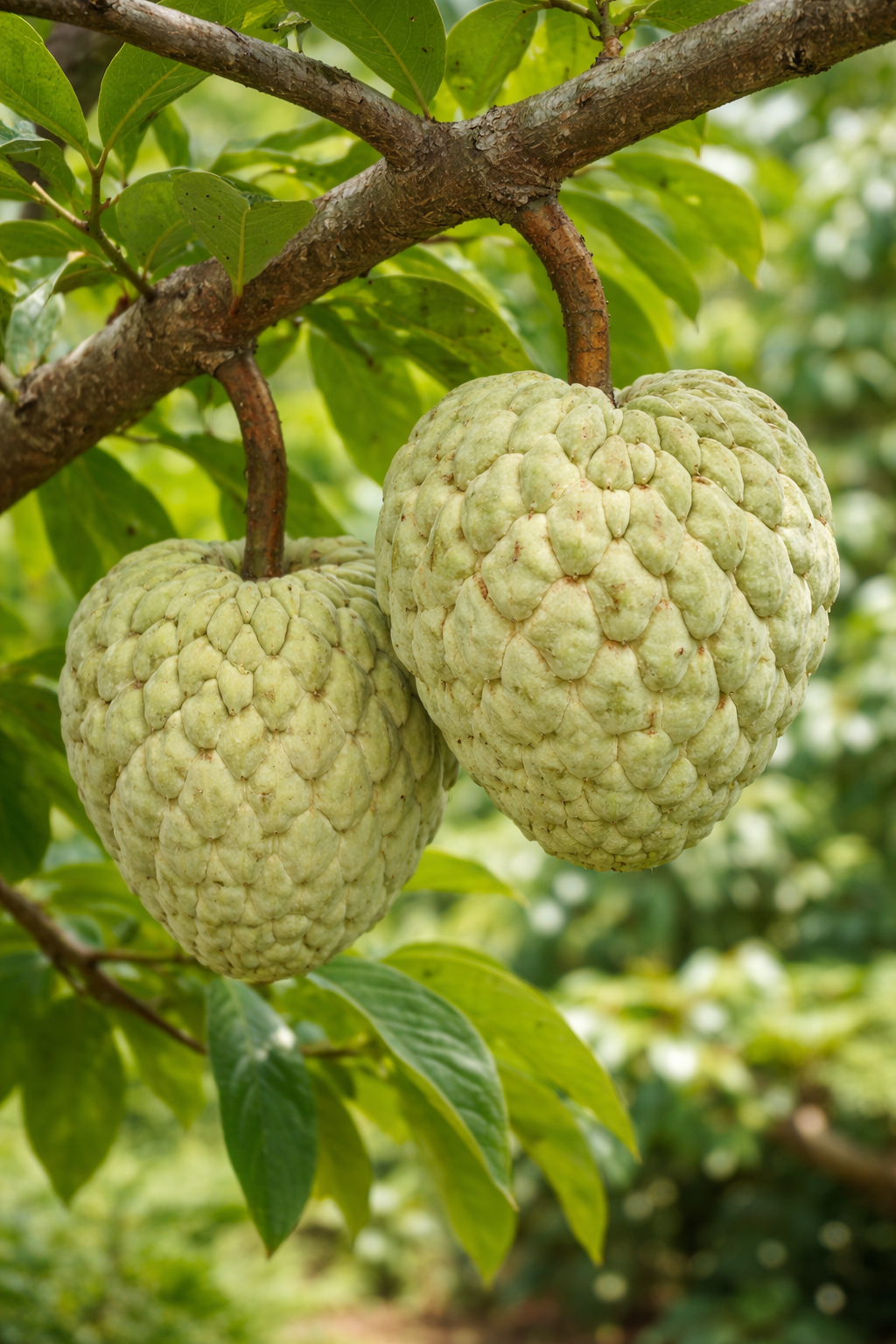
Atemoya is a hybrid of cherimoya and sugar apple. It is an edible fruit that can also be made into ice cream. The toxic black seeds are used in making pesticides. It contains vitamin C, phenolic compounds, and fiber.
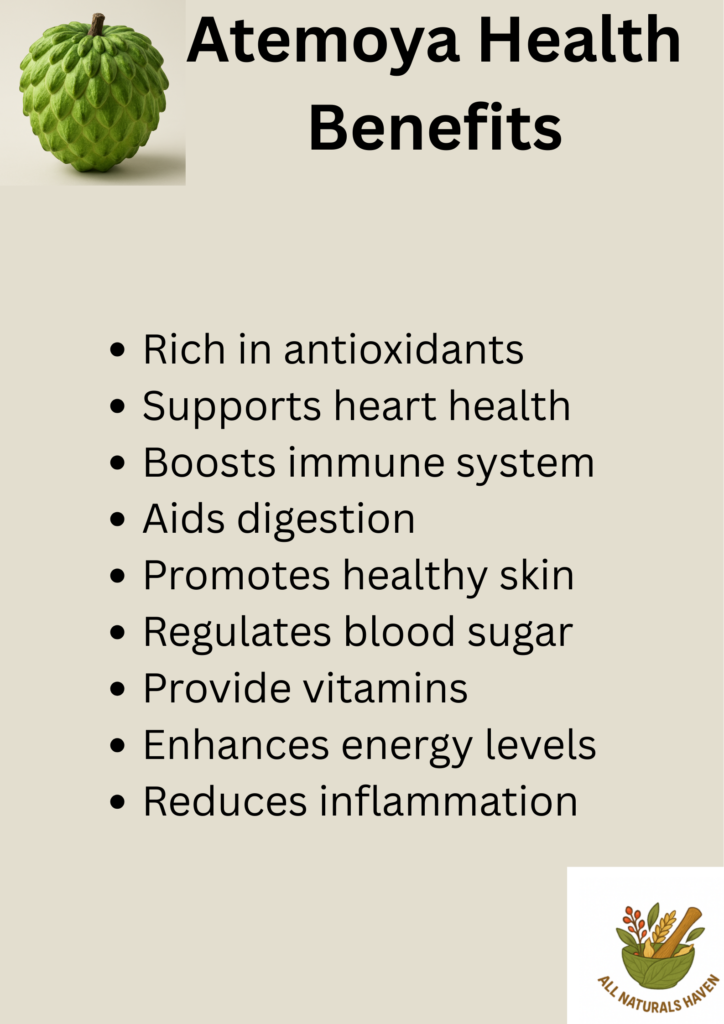
Atemoya uses are listed in the image below.
Jump to: Medicinal uses and ethnopharmacological profile
Atemoya Description
The fruit is common in Taiwan, Cuba, Venezuela, Brazil, Lebanon, and Tanzania, where it is called stafeli dogo. It has a round heart shape with bumpy skin. It is green in color and turns yellowish when ripe. It has a white-yellowish pulp with small shiny black seeds spread throughout the pulp.
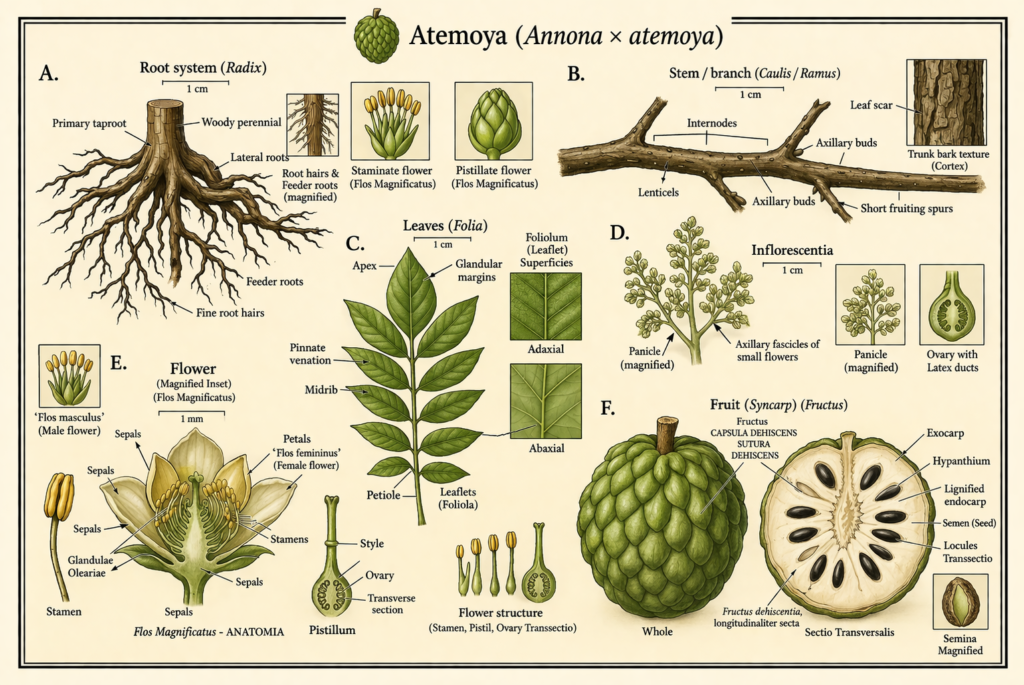
Atemoya (tree) medicinal uses and ethnopharmacological profile
Traditional uses
The leaves (of the Annona species) have been used traditionally to make teas believed to be anti-inflammatory. It was also used to relieve dysentery and cleanse parasites.

Clinical Uses and Research
Antioxidant profile– methanolic seed extract has exhibited free radical scavenging activity through the action of phenolic compounds. Kazman 2020
Anti-inflammatory profile– in vivo rodent studies at 25, 50, and 100 mg/kg revealed reduced leukocyte migration with ethanolic leaf extract, thereby acting as an anti-inflammatory agent. Flavonoids were isolated to be able to act by stabilizing membranes and suppressing pro-inflammatory agents like chemokines and tumor necrosis factor.
Analgesic– In mouse models. Ethanolic leaf extract was shown to reduce pain in a dose-dependent manner. This was witnessed by decreased writhing through a reduced number of abdominal constrictions by mice. Rutin and quercetin were the likely compounds to induce this effect through the mechanism of suppressing prostaglandin synthesis and release. Halison Do 2017
Neuroprotective and Renal activity – in a study on mice, leaf extract at 50-200 mg/kg improved performance on memory tests and countered oxidative stress and neuronal death in the hippocampus. There was improved memory and learning performance likely linked to compounds like saponins that prevent lipid peroxidation and DNA damage in neurons.
In mouse models at 2 g/kg daily for 25 days, pulp, seeds, and peel extract were able to improve renal markers like increased creatinine clearance. This is thought to be an effect of the combined antioxidant and anti-inflammatory effect on the renal unit.
Neuroprotective effect– In a rat model, the compound rutin from leaf extract inhibited amyloid‑β aggregation in Alzheimer’s disease and improved memory.
Antidiabetic potential– In in vivo trials in mouse models, ethanolic/aqueous leaf extracts at a dose of 50-200 mg/kg daily were able to elicit an increased tolerance to glucose, reduced fasting blood sugar levels, and a lipid profile. This is linked to the flavonoid mechanism of action of inhibiting the enzymes alpha-glucosidase and amylase, thus reducing postprandial sugar spikes.
Antimicrobial potential– ethanolic/aqueous seed/leaf extracts were tested against Staphylococcus aureus, Escherichia coli, Klebsiella pneumoniae, Salmonella typhi, and Bacillus cereus bacteria and the fungi Candida albicans. There was inhibition of both bacterial and fungal growth linked to the presence of saponin and flavonoids that destabilize microbial membranes and enzymes and also bind nucleic acids, limiting replication.

NB: Atemoya, being a newer variety, still lacks adequate clinical research and is best eaten as fruit. It is important to note that its seeds contain acetogenins, which are neurotoxic at high doses.
REFERENCES
Kazman, B. S. M. A., Harnett, J. E., & Hanrahan, J. R. (2020). The Phytochemical Constituents and Pharmacological Activities of Annona atemoya: A Systematic Review. Pharmaceuticals, 13(10), 269. https://doi.org/10.3390/ph13100269
Serquiz AC, Barros Gomes JADC, Farias NBDS, Mafra D, Pereira de Lima PM, de Oliveira Coutinho D, Ribeiro FPB, Rocha HAO, de Brito Alves JL. Protective Effects of Annona Atemoya Extracts on Inflammation, Oxidative Stress, and Renal Function in Cadmium-Induced Nephrotoxicity in Wistar Rats. Pharmaceuticals (Basel). 2024 Oct 18;17(10):1393. doi: 10.3390/ph17101393. PMID: 39459032; PMCID: PMC11510283.
Lim HS, Kim YJ, Sohn E, Yoon J, Kim BY, Jeong SJ. Annona atemoya leaf extract ameliorates cognitive impairment in amyloid-β injected Alzheimer’s disease-like mouse model. Exp Biol Med (Maywood). 2019 Dec;244(18):1665-1679. doi: 10.1177/1535370219886269. Epub 2019 Nov 3. PMID: 31679404; PMCID: PMC6963381.
Kazman BSMA, Harnett JE, Hanrahan JR. The Phytochemical Constituents and Pharmacological Activities of Annona atemoya: A Systematic Review. Pharmaceuticals (Basel). 2020 Sep 24;13(10):269. doi: 10.3390/ph13100269. PMID: 32987818; PMCID: PMC7598603.
AL-BARHAWEE, NAJWA & QASIM, WIJDAN & ABDLLA, YOUSRA. (2023). Phytochemical analysis of Annona atemoya seed extract by HPLC and their ability to inhibit the growth of Agrobacterium tumefaciens. Biodiversitas Journal of Biological Diversity. 24. 10.13057/biodiv/d240168.
Leave a Reply