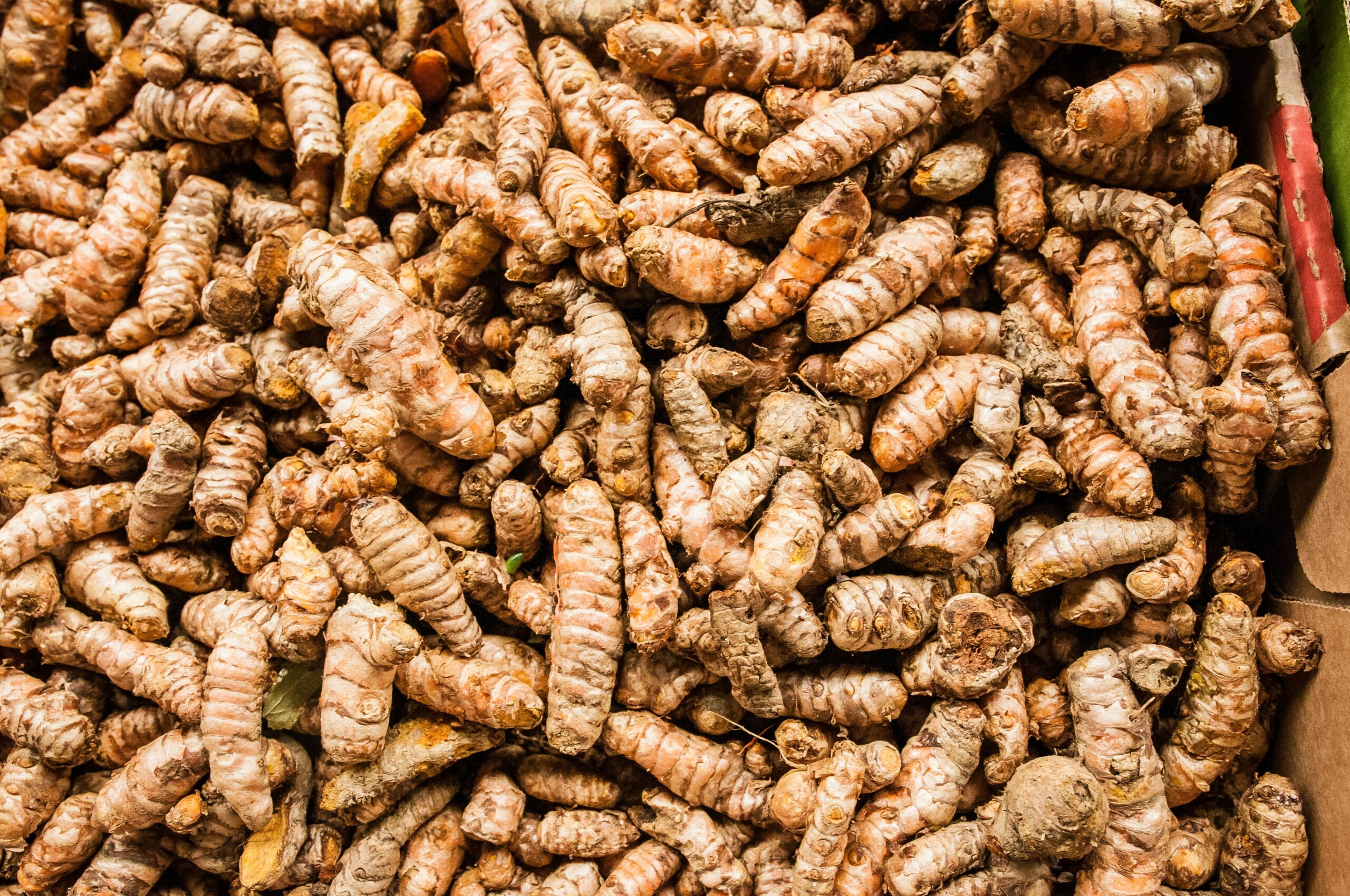
Turmeric, also known as Indian saffron, is a bulb herb with yellowish insides that has been used for its culinary and medicinal properties, like calming inflammation. It is mixed with black pepper and taken with milk or fatty foods to increase its absorption.
It is native to South and Eastern Asia. It belongs to the family Zingiberaceae and is currently grown in India, China, Vietnam, Myanmar, Jamaica, Peru, Nigeria, and Ethiopia. Turmeric is used as:
- Pain relief in arthritis and muscle recovery
- Reducing blood sugar levels
- Lowering bad cholesterols like triglycerides and low-density lipoproteins
- Improve endothelial functioning
- Alleviate symptoms of irritable bowel syndrome and ulcerative colitis.
- Some antidepressant activity
- Alleviates symptoms of psoriasis
- Improvement in cognition
Jump to section
Medical Uses and ethnopharmacological profile of Turmeric
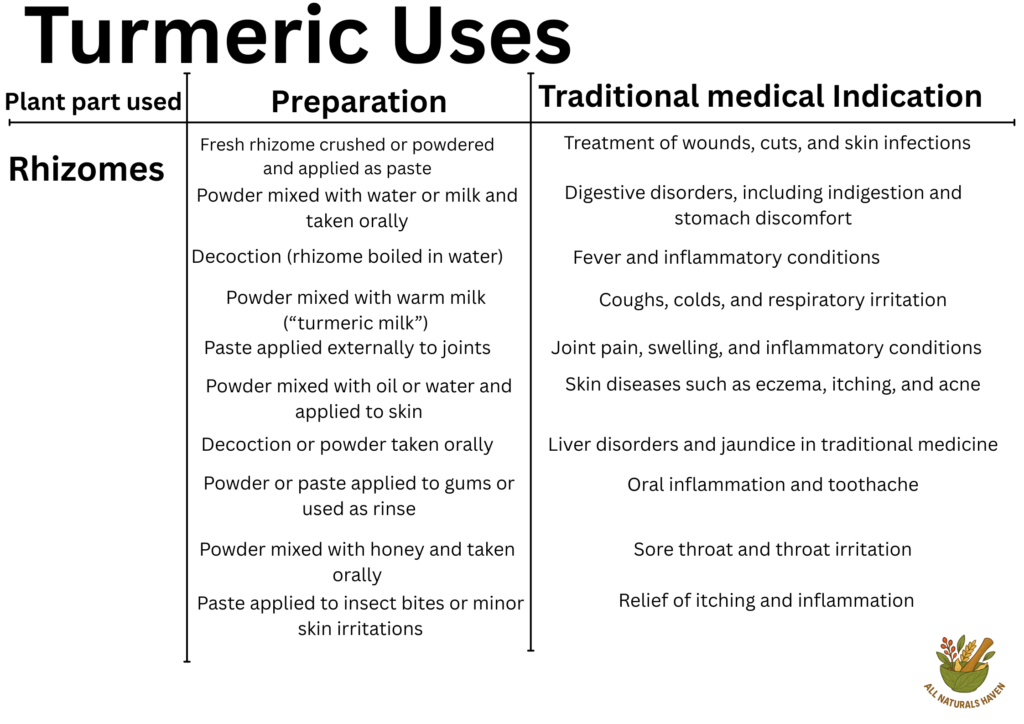
Traditional uses
Turmeric was used and is still used as a spice to garnish dishes like stews and sauces. It was used as a carminative in indigestion, flatulence, gallbladder support, liver obstructions, and jaundice. The paste and/or oral consumption was used to soothe swelling, while the smoke was used in cases of lung congestion. The poultice made of lime, turmeric, and salt was used on skin injuries.
The paste was used to improve completion, while the powder was used to regulate blood sugar ‘mudhumeha’ and promote blood flow, hence its application in promoting menses.
Clinical uses and Research
Osteoarthritis: A clinical study with people suffering from knee osteoarthritis with administration of rhizome extract was able to alleviate symptoms. The isolated curcuminoids suppressed inflammatory modulators like NF-Kb, cyclooxygenases, and lipoxygenase to improve pain and swelling. It was noted to have an almost similar effect as ibuprofen 500 mg. ( Hidayat 2024)
Major depressive disorder: The rhizome extract, when administered to people with depression, was able to modulate the neurotransmitters serotonin and dopamine while improving BDNF levels. This significantly reduced feelings of sadness, and its efficacy in this trial was comparable to that of fluoxetine.
Prediabetes: In prediabetics, the root rhizome extract was able to improve beta pancreatic cell function and reduce development of insulin resistance. No one developed type 2 diabetes after 9 months of use.
Precancerous Lesions (Colorectal): The rhizome powder acted by reducing the levels of prostaglandins and modulating aberrant crypt foci (ACF) at a dose of 4 grams daily. This dose was able to reduce precancerous lesions.
In vivo uses and Research
Hepatoprotection: In a study where ethanolic rhizome extract was administered to CCI₄-induced injury in rats, turmerones and curcumin were isolated to have antioxidant activity. This was through increasing and enhancing levels of antioxidants like SOD/CAT and reducing lipid peroxidation in the liver. There was protection against damage and liver fibrosis.
Alzheimer’s disease: In transgenic mice with Alzheimer’s, rhizome extract enriched with curcumin showed neuroprotection via crossing the blood-brain barrier to inhibit amyloid beta aggregation and plaque formation.
Diabetic wounds: In diabetic rats, aqueous rhizomes promoted accelerated wound healing and faster epithelization. The polyphenols acted through upregulation of transforming growth factor and collagen deposition. ( Sidhu 2002)
In vitro uses and Research
Cancer: A study using methanolic extract on human breast cancer cell lines showed dose-dependent inhibition of cancer proliferation. This is via induction of apoptosis through the p53-dependent pathway and cell cycle arrest.
Neurostimulation: In a lab culture of neuronal stem cells treated with essential oil, the compound Ar-turmerone modulated neurogenesis. It acted by promoting the proliferation of neural stem cells and their differentiation into neurons.
Antibacterial: Methicillin-resistant Staphylococcus aureus culture was exposed to ethanolic root extract, and the result was eradication of the bacteria. The curcuminoids elicited the antibacterial action through inhibition of proteins essential for cell division. ( Maisa 2024)
Safety and Dosing profile of Turmeric
Forms and dosing
Fresh rhizomes – 1.5- 3 grams daily
Ground powder – 1-3 grams daily
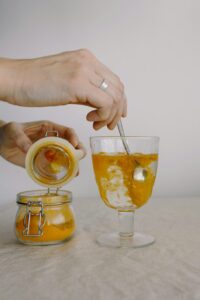
Golden milk – 1 teaspoon in hot water, then add milk.
Essential oils- essential oil blends 500mg twice daily
Tincture- 0.5- 0 1ml thrice a day
Fluid extracts- 30-90 drops
Teas/ Infusions- 1 -2 tablespoons boiled in around 200 ml of water, taken up to 3 times a day.
Paste- mix powder and honey and apply to skin.
Standardized capsules and tablets- 500-1500 mg daily in divided doses.
- Inflammatory joint pain-500-1500 daily
- Metabolic syndrome- 1000-1500 a day
- Dylipidemia/ cardiovascular- 500-1000 a day
- Gastrointestinal inflammation- 500mg twice daily
- Exercise-induced muscle soreness- 250 mg daily
/product/37/6153182/1.jpg?5227)
Side effects
- Yellow stools
- Diarrhea
- Nausea and bloating
- Acid reflux
- Kidney stones build up (high doses in predisposed individuals)
- Allergic reactions like contact dermatitis and hives
Interactions
- Blood thinners (warfarin, aspirin, heparin and clopidogrel) may increase the risk of bleeding
- Anti-Diabetes drugs (insulin, metformin, glyburide) may cause hypoglycemia
- Antihypertensives, like Amlodipine- may increase risk of hypotension
- Tacrolimus- increased levels may lead to kidney damage
- Concurrent long-term use of non-steroidal anti-inflammatory drugs like diclofenac and ibuprofen. The metabolic load may damage or weaken the liver.
Contraindications
- Diseases of the bile, like bile duct obstruction, as turmeric stimulates blood flow.
- Pregnancy and breastfeeding, as it has been reported to be a uterine stimulant.
- Anemia and blood disorders due to interaction with iron (binds to iron) and a mild blood-thinning effect.
- Stop two weeks before surgery
NB: Do not exceed 2000 mg daily intake, and don’t use it consecutively beyond 6 months; to be safe, you can use it in culinary dishes. As a medical extract, use as directed by a physician usually following a cyclic routine (8 weeks on supplement, break 2 weeks then continue)
Turmeric Description and composition
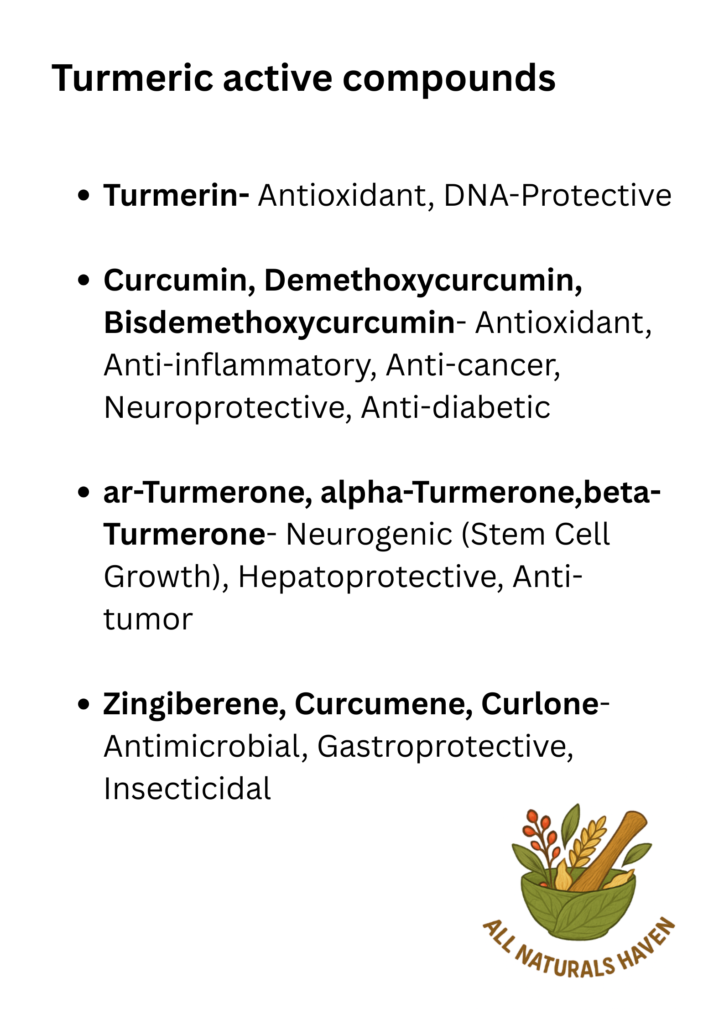
Phenolics—curcuminoids, terpene essential oils like turmerones and zingiberene, and polysaccharides like ukanon A, B, C, and D. Proteins, resin, alkaloids, and sterols are also important constituents.
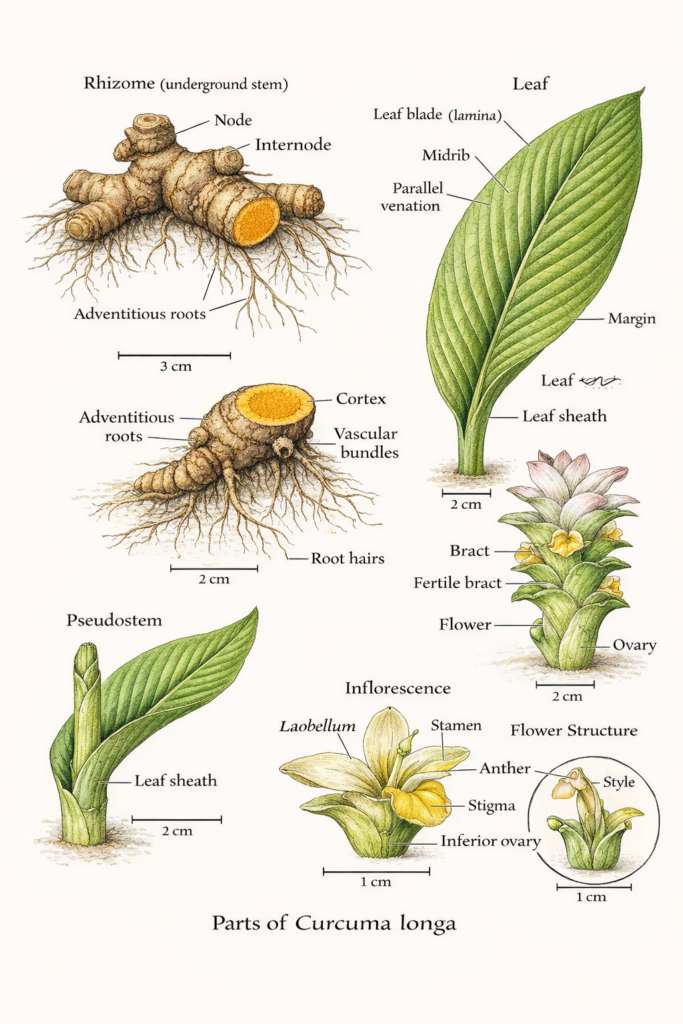
The rhizome is big and ovate with branching cylindrical fingers with a brownish and scaly exterior. The inside is orange to yellowish. The pseudostems are tightly overlapping leaves, which are green and fleshy. The leaves are large, spear-shaped, and green. Its flowers are inflorescence, small, yellow, and two-lipped and grow on a bract.
Turmeric Cultivation
The plant is propagated from cut rhizomes with viable buds. It is implanted at the start of a rainy season and takes about 7-10 months to grow. The plants are spaced 30 centimeters apart and up to 10 centimeters deep. It thrives in loose organic soil with good drainage. Be sure to fertilize and water it well, as turmeric loves rich soils. It is resilient.
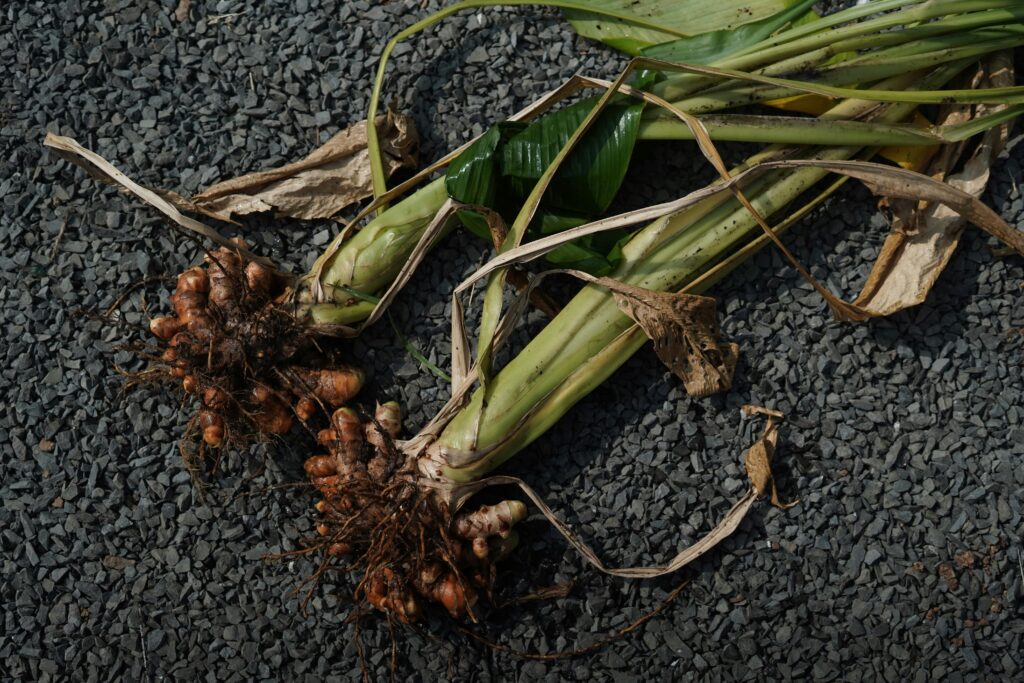
When the leaves turn yellow and dry out, accompanied by the stem falling over, it becomes the perfect time to harvest turmeric. Use garden shovels to dig out the entire clump carefully. Wash the rhizomes carefully but thoroughly. It can be stored in a refrigerator or frozen for up to 6 months. It can also be boiled in water for 45 minutes to cure it, then dried and ground into powder. The powder is stored in jars.
REFERENCES
Sanmukhani J, Satodia V, Trivedi J, Patel T, Tiwari D, Panchal B, Goel A, Tripathi CB. Efficacy and safety of curcumin in major depressive disorder: a randomized controlled trial. Phytother Res. 2014 Apr;28(4):579-85. doi: 10.1002/ptr.5025. Epub 2013 Jul 6. Erratum in: Phytother Res. 2024 May;38(5):2594. doi: 10.1002/ptr.8142. PMID: 23832433.
Chuengsamarn S, Rattanamongkolgul S, Luechapudiporn R, Phisalaphong C, Jirawatnotai S. Curcumin extract for prevention of type 2 diabetes. Diabetes Care. 2012 Nov;35(11):2121-7. doi: 10.2337/dc12-0116. Epub 2012 Jul 6. PMID: 22773702; PMCID: PMC3476912.
Carroll, R. E., Benya, R. V., Turgeon, D. K., Vareed, S., Neuman, M., Rodriguez, L., … Meyskens, F. L. (2011). Phase IIa Clinical Trial of Curcumin for the Prevention of Colorectal Neoplasia. Cancer Prevention Research, 4, 354–364. https://doi.org/10.1158/1940-6207.capr-10-0098
Lee HY, Kim SW, Lee GH, Choi MK, Jung HW, Kim YJ, Kwon HJ, Chae HJ. Turmeric extract and its active compound, curcumin, protect against chronic CCl4-induced liver damage by enhancing antioxidation. BMC Complement Altern Med. 2016 Aug 26;16(1):316. doi: 10.1186/s12906-016-1307-6. PMID: 27561811; PMCID: PMC5000414.
Yang F, Lim GP, Begum AN, Ubeda OJ, Simmons MR, Ambegaokar SS, Chen PP, Kayed R, Glabe CG, Frautschy SA, Cole GM. Curcumin inhibits formation of amyloid beta oligomers and fibrils, binds plaques, and reduces amyloid in vivo. J Biol Chem. 2005 Feb 18;280(7):5892-901. doi: 10.1074/jbc.M404751200. Epub 2004 Dec 7. PMID: 15590663.
Talib WH, Al-Hadid SA, Ali MBW, Al-Yasari IH, Ali MRA. Role of curcumin in regulating p53 in breast cancer: an overview of the mechanism of action. Breast Cancer (Dove Med Press). 2018 Nov 29;10:207-217. doi: 10.2147/BCTT.S167812. PMID: 30568488; PMCID: PMC6276637.
Hucklenbroich J, Klein R, Neumaier B, Graf R, Fink GR, Schroeter M, Rueger MA. Aromatic-turmerone induces neural stem cell proliferation in vitro and in vivo. Stem Cell Res Ther. 2014 Sep 26;5(4):100. doi: 10.1186/scrt500. PMID: 25928248; PMCID: PMC4180255.
Leave a Reply