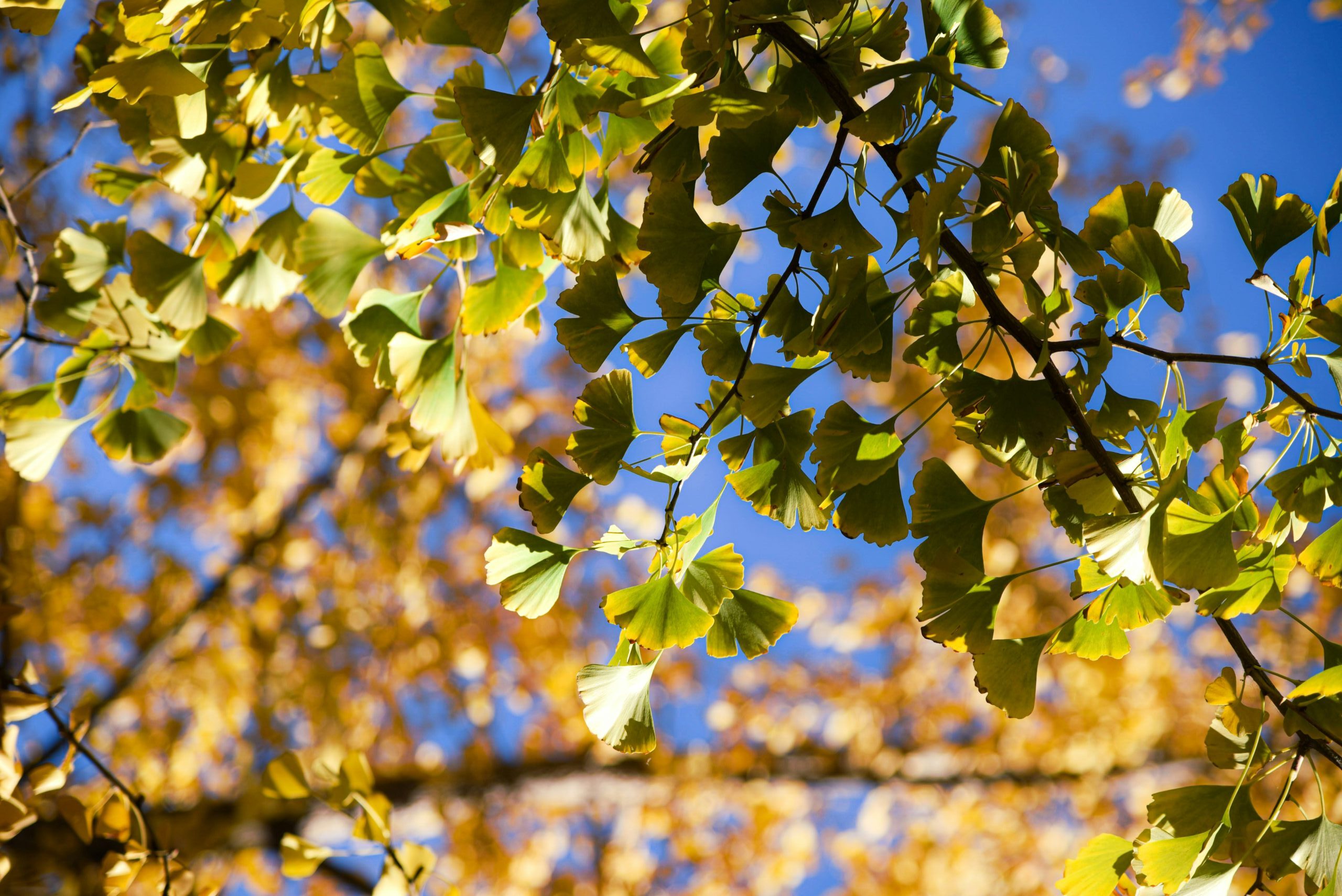
Ginkgo biloba is a common memory-boosting herb also known as the maidenhair tree, fossil tree, baiu, icho, and silver apricot. It belongs to the family Ginkgoaceae and is native to south, central, and east China. It is currently cultivated in parts of France (Bordeaux), the United States (Carolina), Germany, and Japan (in the wild).
Ginkgo biloga is used in the following ways:
- Improve cognition and memory
- Improves physical mobility in peripheral artery disease.
- Aids in tinnitus and vertigo
- Used to support treatment of anxiety and schizophrenia
- Aids in stroke recovery
Jump to section
Medical Uses and ethnopharmacological profile of Ginkgo biloba
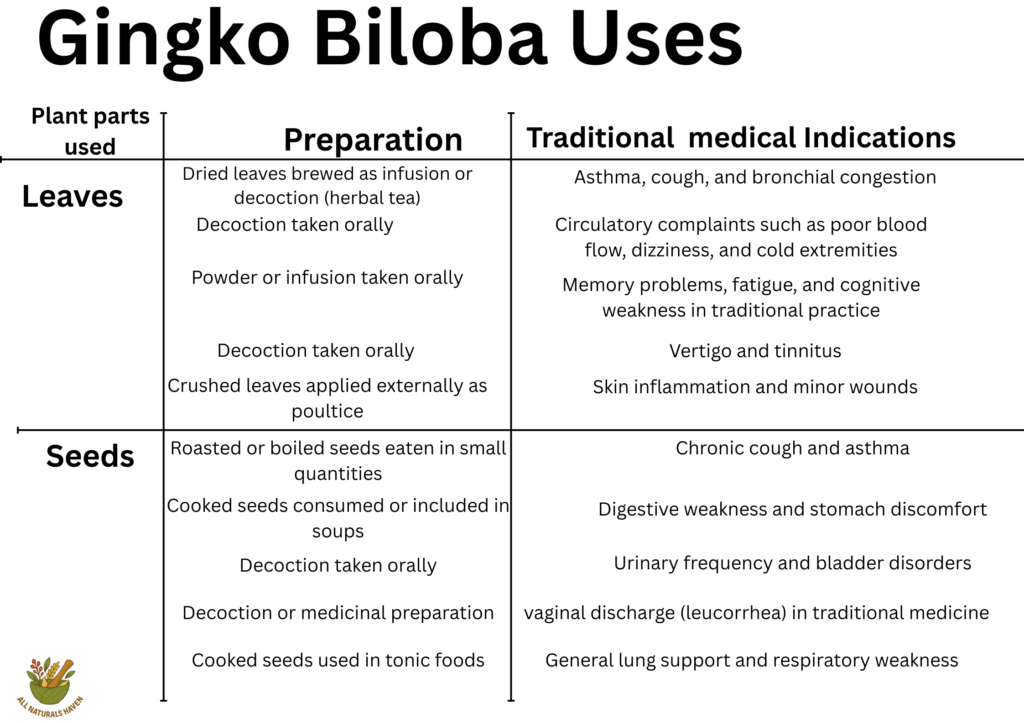
Traditional uses
The leaves and seeds were used in respiratory conditions like coughs, bronchitis, and expelling excess mucus. Roasted seeds were also used as a digestive aid. It was also used to alleviate symptoms of bladder/urinary issues. The plant was also used to boost blood circulation and support mental clarity. Topical preparations were used on the skin for abscesses, sores, and ulcers.
Clinical Uses and Research
Dementia: Leaf acetone/water dry extracts rich in flavones (kaempferol/quercetin) at a dose of 240 mg/kg in divided doses for 22-26 weeks were able to improve cognition. This was through the restoration of mitochondrial function by reducing its viscosity and allowing for enhanced microperfusion.
Vertigo and Tinnitus: Standard extracts in film-coated tablets rich in ginkgolides A, B, and C were able to alleviate neurosensory symptoms, restoring balance and promoting hearing. This was through the action of improving blood flow and reducing ischemic damage by inhibiting platelet activating factor with a dose of 120 mg twice daily for 12-24 weeks.
Cardiovascular health: patients with peripheral artery disease recorded an improvement in blood flow after taking standardized ginkgo extract. This was via reduction of blood viscosity and stimulation of nitric oxide leading to vasodilation and reduction in platelet formation. In turn, there was increased blood flow to peripheral organs like limbs. ( Saskia 2013).
Skin rejuvenation: Volunteers used topical standardized ginkgo cream over two weeks, and there was recorded improvement in skin texture and tautness. Ginkgo has a vasodilatory effect through nitric oxide stimulation, which increases microcapillary circulation of the skin vessels. This simple action boosts nutrient circulation to non-visible wounds and small tears as well as aging skin.
In vivo uses and Research
Obesity/type 2 diabetes: Ginkgo biloba extract was given orally to obese mice for 14 days, and there was a significant reduction in body fat as well as a reduction in food intake. It was noted that there was anti-inflammatory action in the fat cells that ultimately was linked to the reversal of insulin resistance. This also led to improved insulin signaling, thus pointing to applications in controlling hyperglycemia.
Hepatic protection: In a study involving uranium-induced organ toxicity in albino mice, biloba extract showed a dose-dependent reduction in elevated levels of markers like creatinine and AST levels. This is thought to be through the restoration of natural antioxidants like glutathione that scavenge for free radicals.
Wound healing: Rats given gingko extract at a dose of 50 mg/kg body weight showed faster healing and recovery. The compound hydrypyroline was isolated to act by promoting growth of new blood vessels and increasing collagen content in skin wounds. ( Bairy K. 2001)
In vitro uses and Research
Bone health: In a study of bone marrow stem cells, ginkgo biloba extract was able to promote osteogenesis via overexpressing osteogenic genes like BMP-2 and Runx2 that promote differentiation of stem cells into osteoblasts.
Antiviral: In studies against Zika and herpes 1 viruses in host cells, gingko extract rich in ginkgolic acid effectively inhibited viral fusion into the cells, thus inhibiting cell penetration and entry. ( Borenstein 2020).
Anti-cancer: Ginkgo bioflavonoids, when exposed to cervical cancer cell lines, induced programmed cell death by arresting the cell cycle at the G2/M phase via activation of a special protein (caspase-3) that oversees the dismantling of cancer cells.
Safety and Dosing Profile of ginkgo biloba
Forms and Dosing
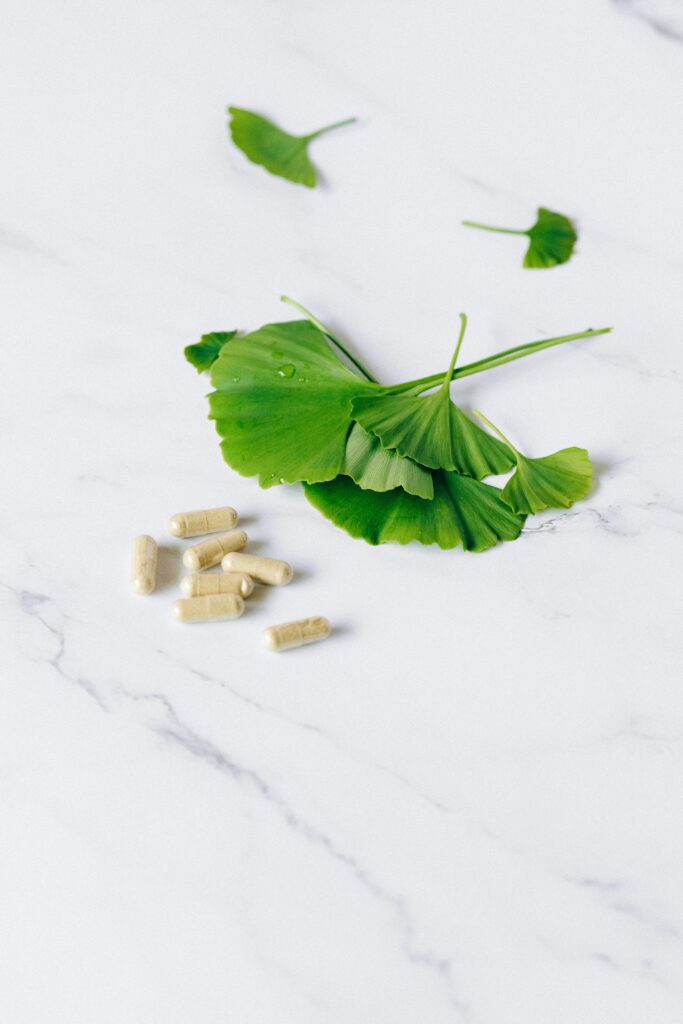
- Standardized capsules and tablets– 80 to 240 mg daily in divided doses depending on indication.
- Tinctures- (1:5) is used 2- 5 mls thrice a day and 0.5-1 ml thrice a day for concentrated preparations (1:1)
- Teas/infusions: taken up to thrice a day.
- Intravenous infusions(clinical)– specific calculation for patients
- Dried powder– 1- 2 grams
Dementia/cognitive impairement- 120 mg twice or 240 mg once a day
Peripheral artery disease- 120-240 mg a day
Tinnitus- 120-240 mg a day
Anxiety disorders- 240-480 mg a day
Interactions
- Anticoagulants (enoxaparin/warfarin)—ginkgo may increase bleeding and bruising.
- Anticonvulsants (phenytoin)—gingko may reduce the action of anticonvulsants.
- Antidepressants (SSRIs, MAOIs) may put one at risk of developing serotonin syndrome.
- Antidiabetics (metformin) have the effect of fluctuating insulin secretion and metabolism.
Side effects
- Ginkgo headache
- Nausea, diarrhea and abdominal cramping
- Dizziness
- Heart palpitations
- Skin allergies (while handling whole products)
- Seizures (rare) caused by ginkgotoxins
Contraindications
- Bleeding disorders
- Epilepsy/seizures and biloba lowers seizure thresholds
- Pregnancy and breastfeeding
- Two weeks to surgery.
Ginkgo biloba Description and composition
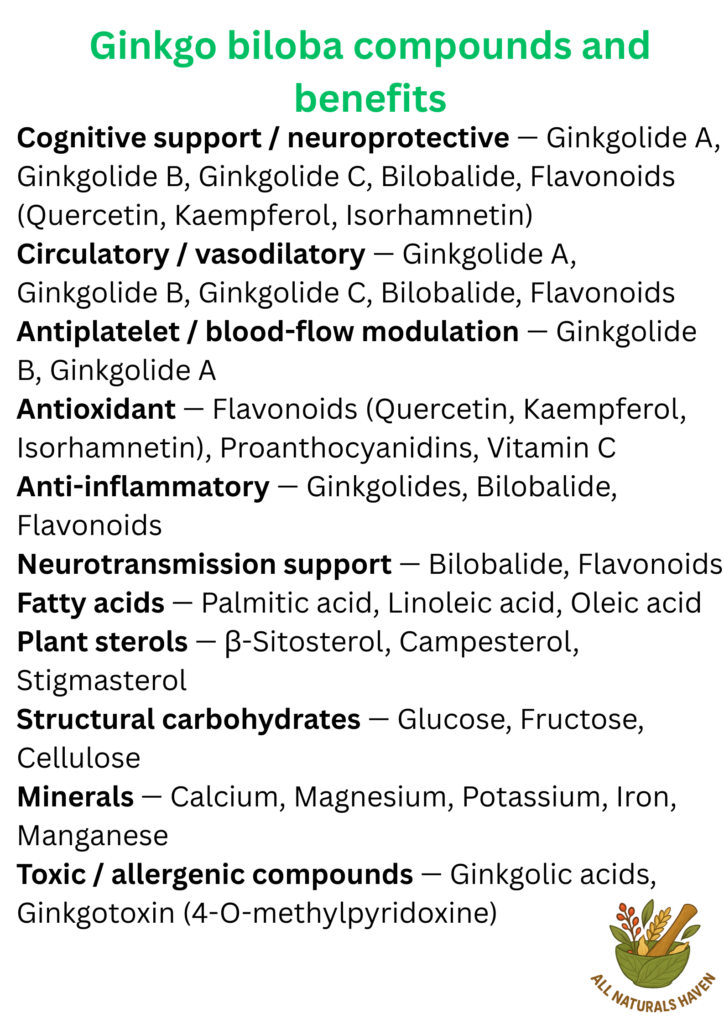
Ginkgo biloba contains trilactone terpenes like ginkgolides A, B, and C and bilobalides, which are the main active ingredients. Other compounds are flavonoids and glycosides like quercetin, kaempferol, isorhamnetin, and rutin; flavones like ginkgetin, sciadopitysin, and bilobetin; and organic acids like ginkgolic, shikimic, vanillic, and ascorbic acid. It also contains carotenoids, polyprenols, ginkgotoxins, and proanthocyanidins.
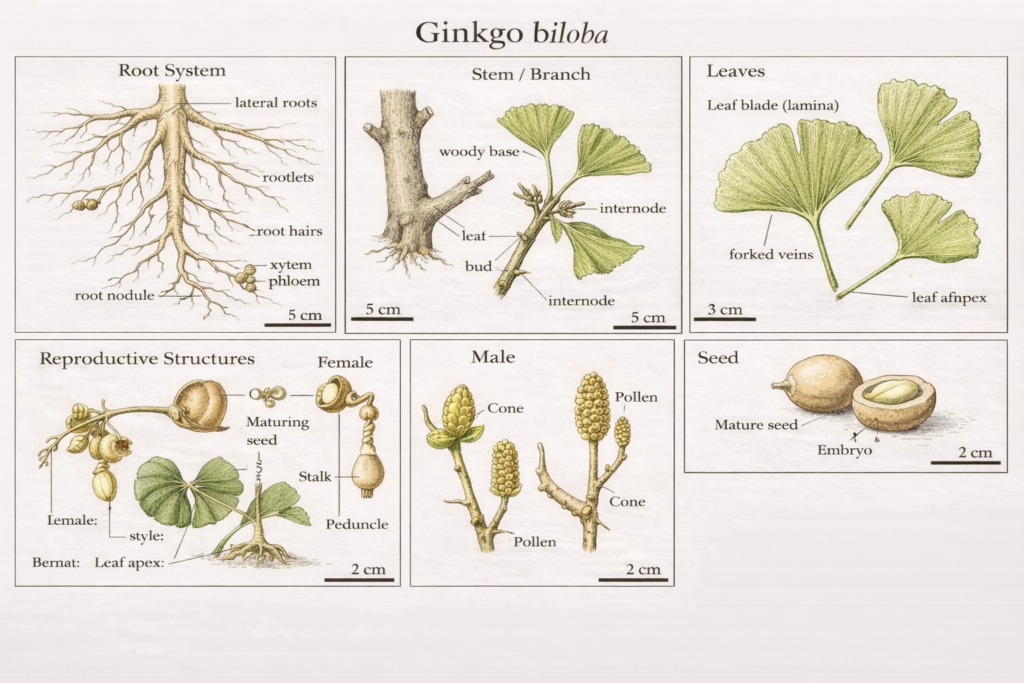
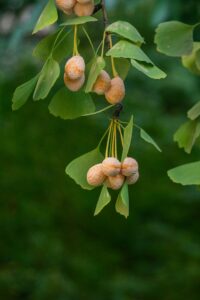
The leaves are 5 to 10 centimeters and flabellate in shape, divided into two lobes. It has a smooth, leathery texture with shades of bright green to golden yellow. The mature bark is dark grey with a stringy texture. It has a deep, widespread taproot, while the stem has long shoots and short nubs where the leaves and reproductive organs of the plant are clustered. The pollen develops into female drupe fruits that hang from stalks with a fleshy and pulpy outer coat that smells like butyric acid upon decay.
Ginkgo biloba Cultivation
The plant is propagated from a male graft sapling. It requires partial shade in well-drained sandy soils of pH 5-7. They are planted 30-50 ft apart and require regular watering for at least the first to second year of growth. They are ready for harvesting when the leaves are deep green or yellow before they fall, depending on the compounds targeted for harvesting. Harvest by picking the leaves from the ‘spur’ shoots.
Wash and air dry in a well-ventilated room. The whole leaves are stored in airtight jars; crushing is not recommended until they are ready for use/being commercially processed. If harvesting seeds, wear gloves to avoid rashes caused by the urushiol compound in the seed. The nuts are never to be eaten raw.
REFERENCES
Tan MS, Yu JT, Tan CC, Wang HF, Meng XF, Wang C, Jiang T, Zhu XC, Tan L. Efficacy and adverse effects of ginkgo biloba for cognitive impairment and dementia: a systematic review and meta-analysis. J Alzheimers Dis. 2015;43(2):589-603. doi: 10.3233/JAD-140837. PMID: 25114079.
Sokolova, Larysa & Hoerr, Robert & Mishchenko, Tamara. (2014). Treatment of Vertigo: A Randomized, Double-Blind Trial Comparing Efficacy and Safety of Ginkgo biloba Extract EGb 761 and Betahistine. International journal of otolaryngology. 2014. 682439. 10.1155/2014/682439.
Leelapornpisid, P., Lourith, N., & Chuarienthong, P. (2010). Clinical efficacy comparison of anti-wrinkle cosmetics containing herbal flavonoids. International Journal of Cosmetic Science, 32(2), 99–106. https://doi.org/10.1111/j.1468-2494.2010.00522.x
Hirata BK, Banin RM, Dornellas AP, de Andrade IS, Zemdegs JC, Caperuto LC, Oyama LM, Ribeiro EB, Telles MM. Ginkgo biloba extract improves insulin signaling and attenuates inflammation in retroperitoneal adipose tissue depot of obese rats. Mediators Inflamm. 2015;2015:419106. doi: 10.1155/2015/419106. Epub 2015 Apr 16. PMID: 25960614; PMCID: PMC4415619.
Yapar K, Cavuşoğlu K, Oruç E, Yalçin E. Protective role of Ginkgo biloba against hepatotoxicity and nephrotoxicity in uranium-treated mice. J Med Food. 2010 Feb;13(1):179-88. doi: 10.1089/jmf.2009.0028. PMID: 20136453.
Gu Q, Chen C, Zhang Z, Wu Z, Fan X, Zhang Z, Di W, Shi L. Ginkgo biloba extract promotes osteogenic differentiation of human bone marrow mesenchymal stem cells in a pathway involving Wnt/β-catenin signaling. Pharmacol Res. 2015 Jul;97:70-8. doi: 10.1016/j.phrs.2015.04.004. Epub 2015 Apr 23. PMID: 25917209.
Baliño P, Gómez-Cadenas A, López-Malo D, Romero FJ, Muriach M. Is There A Role for Abscisic Acid, A Proven Anti-Inflammatory Agent, in the Treatment of Ischemic Retinopathies? Antioxidants (Basel). 2019 Apr 17;8(4):104. doi: 10.3390/antiox8040104. PMID: 30999583; PMCID: PMC6523110.
Leave a Reply