
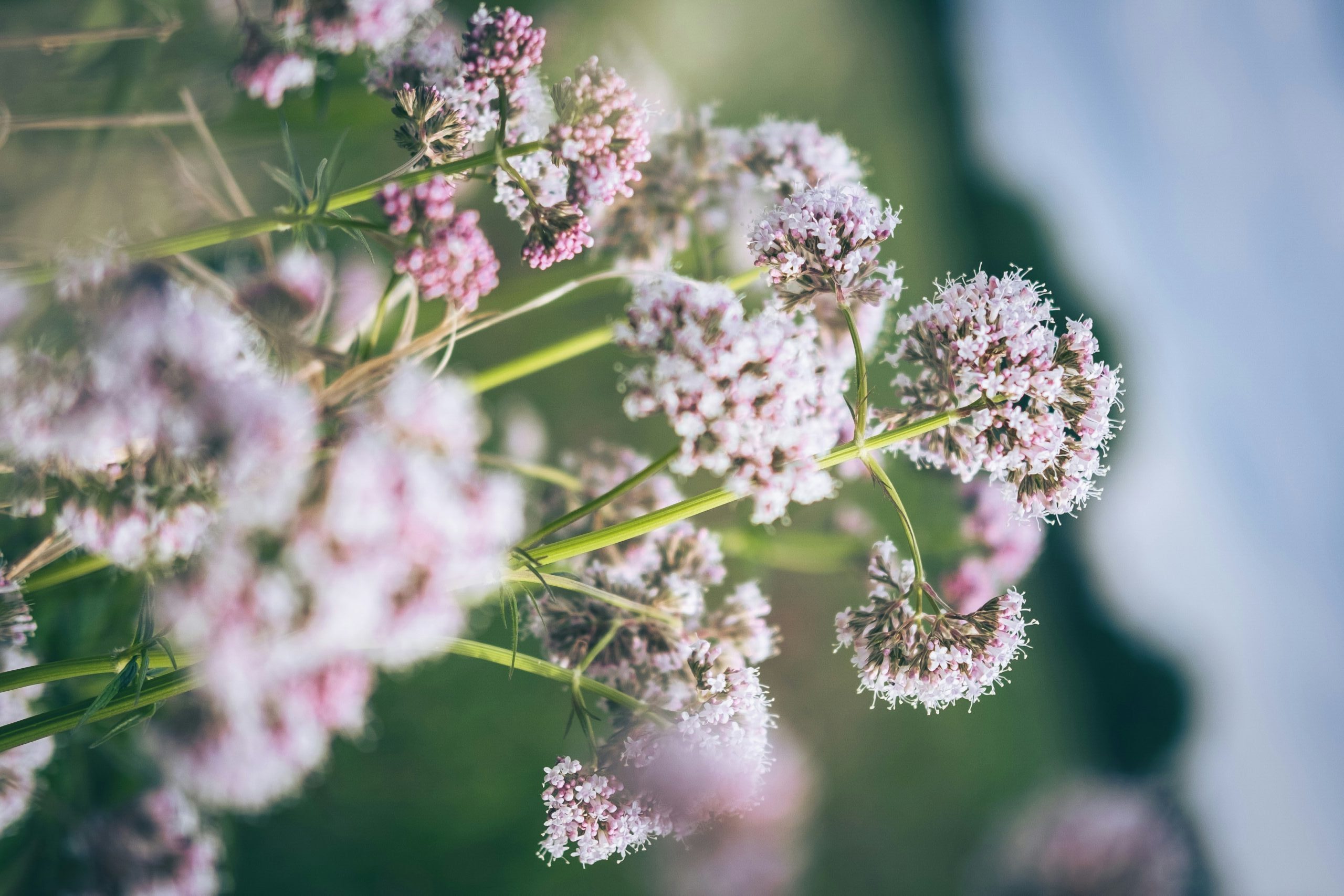
Valerian, also known as garden valerian, heliotrope, all-heal, setwall, and vandal root, is an herb belonging to the family Caprifoliaceae. It is native to Europe and North Asia in damp temperate environments. It is currently grown in Germany, France, Belgium, Poland, Ukraine, Canada, China, parts of Japan, and Australia.
Valerian has found various uses as follows:
- Improving sleep quality and managing insomnia
- Relieving symptoms of anxiety, stress and compulsive behaviors
- Relieving menstrual pain
- Improving symptoms of restless leg syndrome
- Alleviating symptoms of menopause like hot flashes
Jump to section
- Medical Uses and ethnopharmacological profile
- Safety and Dosing profile
- Valerian description and composition
- Valerian cultivation, harvesting and storage
Medical Uses and ethnopharmacological profile of Valerian
Traditional Uses
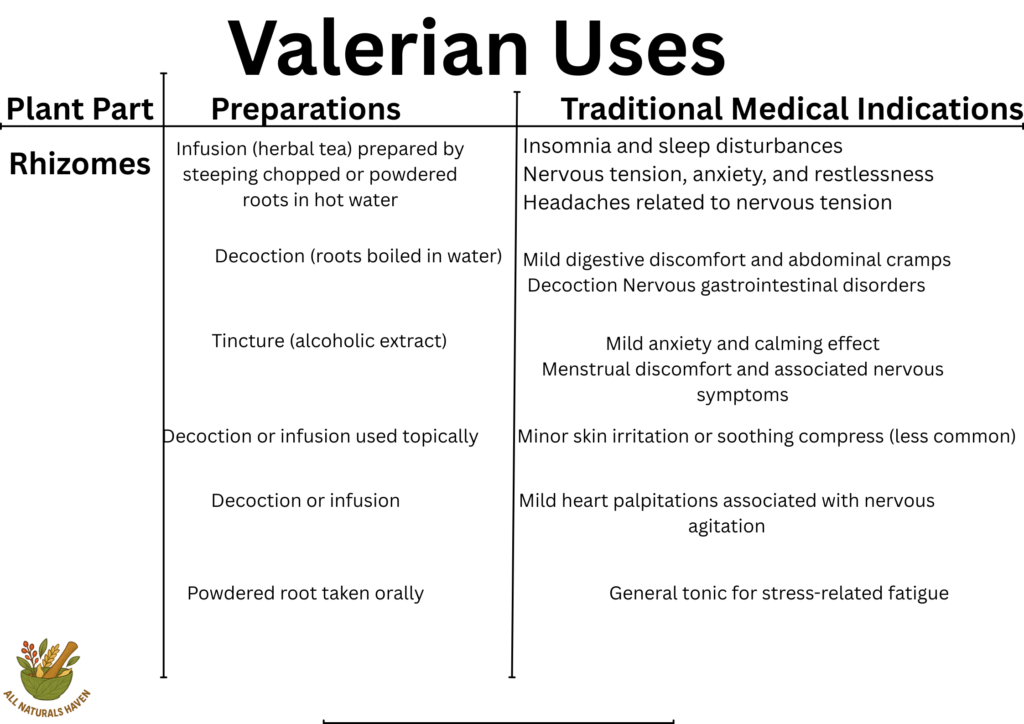
It was used as a diuretic, especially in liver disorders, to manage insomnia by promoting sleep; and as an antispasmodic agent in trembling lips, falling sickness, cramps, and heart palpitations. It was used in wound care and to treat colic and cough. It was also used to treat PTSD (shell shock) after World War 1, hysteria, and as an emmenagogue in women.
Clinical Uses and Research
Generalized anxiety disorder: Root puff extract at a 150 mg daily dose for 4 weeks reduced Hamilton anxiety scores with comparable activity to diazepam at 2.5 mg. It acted as an anxiolytic by regulation of the serotonin receptor and modulation of the HPA axis. This was through the action of valerate and dihydrovalerate.
Acute social stress: Standardized root extract at doses of 600 and 900 mg blunted blood pressure and heart rate spikes during stressful tasks. Volatile compounds and valerianic acid sympathetic suppression and attenuation of the HPA axis.
Obsessive-compulsive disorder: Aqueous/ethanolic extract administered at 760 mg daily for 8 weeks achieved a decrease in the Yale-Brown Obsessive Compulsive Scale score by up to 45%. Valerenic acids acted via inhibition of glutamate.
Insomnia: Root aqueous/ethanolic extract (70% V/V) at a single dose of 400 mg or 600 mg for 28 days achieved a 37% reduction in sleep latency comparable to oxazepam 6 mg, as affirmed by an increase in Garsia sleep scores. Valerenic acids increased levels of synaptic GABA by inhibiting its reuptake or preventing its endogenous breakdown.
Primary dysmenorrhea: Root powder extract given at 255 mg thrice daily for 3 days at the start of menstruation recorded a decrease in pain intensity scores. Valeranone acted by antagonizing L-type calcium channels in uterine smooth muscles, inhibiting the action of prostaglandin, thus acting as a spasmolytic. (Mirabi 2011)
In postmenopausal women, a root 2-piece capsule taken as 530 mg twice daily for 8 weeks reduced the frequency and severity of hot flashes. Phytoestrogens and valerianic acid elicited a thermoregulatory action via modulation of the serotonin receptors.
In Vivo Uses and Research
Anticonvulsant: In a mouse model, root essential oil at an oral dose of 50-199 mg/kg delayed the onset of picrotoxin-induced seizures and reduced seizure-related mortality. Valtrate and valerenone modulated voltage-gated channels to stabilize neuronal membranes. (Sridharan 2015)
ADHD: In rats with ADHD, root ethanol/aqueous (70%) administered at 6-12 mg/kg for one week achieved a reduction in locomotor activity and exploratory restlessness and improved focus. Valerenal and valerenic acid altered dopamine and norepinephrine turnover in the prefrontal cortex.
Depression: In a mouse model, root dichloromethane extract given between 10 and 20 mg/kg for 14 days elicited a reduction in immobility time during forced swim tests. Sesquiterpenoids increased brain-derived neurotrophic factor levels in the hippocampus.
In Vitro Uses and Research
Antimicrobial: In S. aureus, C. albicans, Bacillus subtilis, and Microsporum canis, research, when exposed to crude methanolic extract, witnessed microbe inhibition. Terpenes and essential oils caused cell leakages and eventually death through altering bacterial/ergosterol membrane permeability. (Udgire 2011)
Safety and Dosing Profile of Valerian
Forms and Dosing
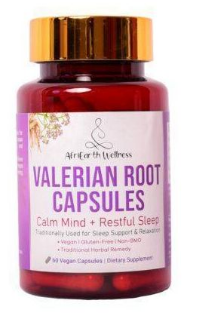
Capsules and tablets: 400-600mg
Tincture: (1:1/1:5) 2-4 ml
Infusion/tea: 2-3 grams in 150-250 ml up to thrice a day
Powders: 2-9 grams dried root
Baths : 100 grams root in bath
- Sleep improvement- 300-600 mg daily
- Anxiety- 400-600mg up to thrice a day or 100 mg single dose (preoperative anxiety)
- Menopause- 225 mg thrice a day
- Dysmenorrhea- 255- 375 up to thrice a day in cycles
- Post-surgery cognition- 530 mg twice a day
- Restless leg syndrome- 800 mg nightly
- OCD symptoms- 850 mg a day
- Mood and fatigue in cancer patients(adjunct)- 450 mg at night
Note: The maximum upper limit in a day is 1800, not to be exceeded daily. Valerian should not be taken consistently for more than 4 weeks.
Interactions
- Sedatives and opioids- may lead to excessive drowsiness
- Anesthesia- may prolong effects
- Statins and certain antifungals/antihistamines- may increase bioavailability
- Do not mix with passionflower, skullcap, or St. John’s wort.
Side effects
- Hangover-like effects (headaches, dizziness)
- Nausea, cramping and diarrhea
- Paradoxical restlessness, insomnia or anxiety
- Vivid dream or night tremors
Contraindications
- Pregnancy and lactation
- Children under 3 years
- People with liver disease
- 2 weeks before surgery
Valerian Description and Composition
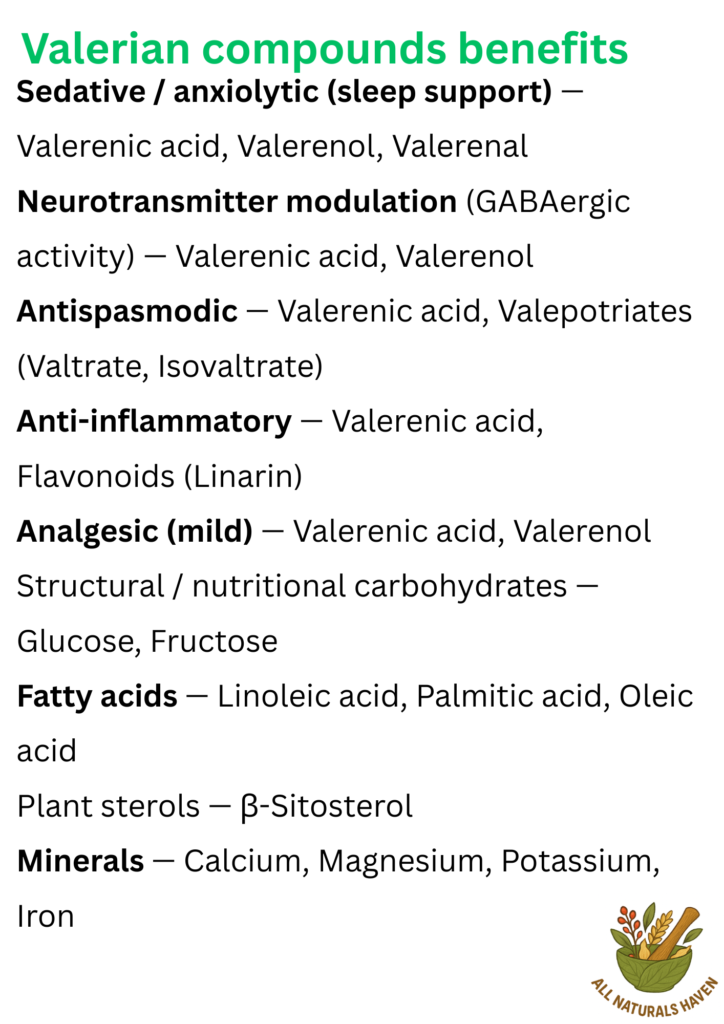
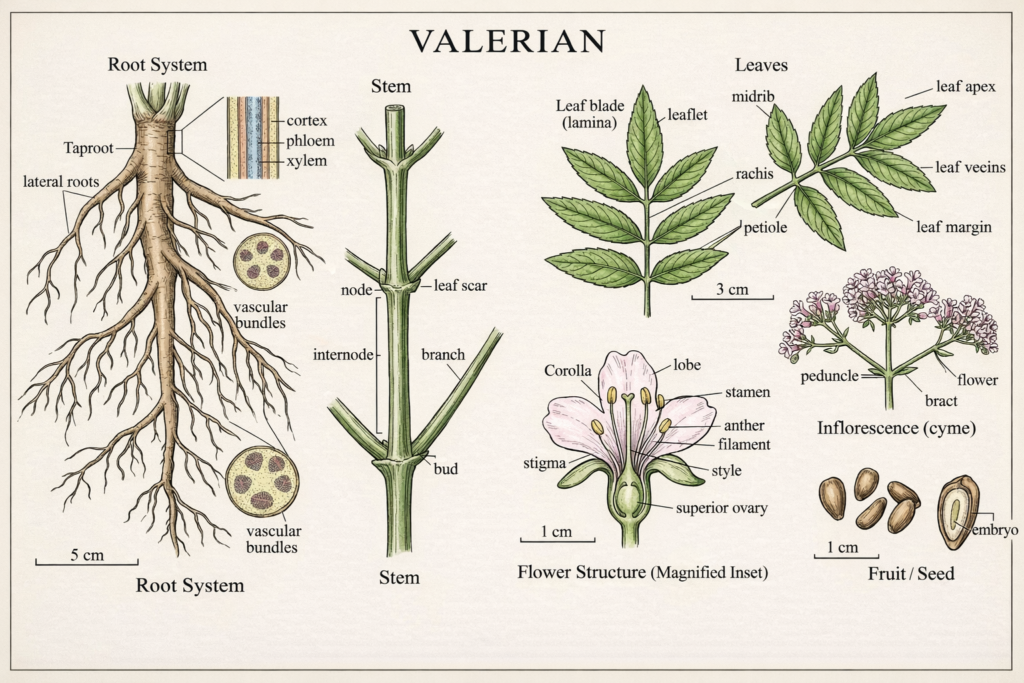
Compounds found in valerian are sesquiterpenes (valeric acid), iridoids (valepotriates), volatile oils (bornyl acetate, valeranone), alkaloids (actinidine, valerene), and amino acids.
Valerian leaves are a bushy rosette of 6 to 10 pairs that are pinnate with a lance shape. The flowers are cymes at the pinnacle of the stem, which are tiny and trumpet-shaped. They are pale, pinkish, or whitish in appearance. It has an achene fruit with seeds attached to the pappus. The rhizomes are short, thick, and vertical with roots that are yellowish and fleshy. It is firm and juicy and ages as thin, brittle, and wrinkled.
Valerian Cultivation
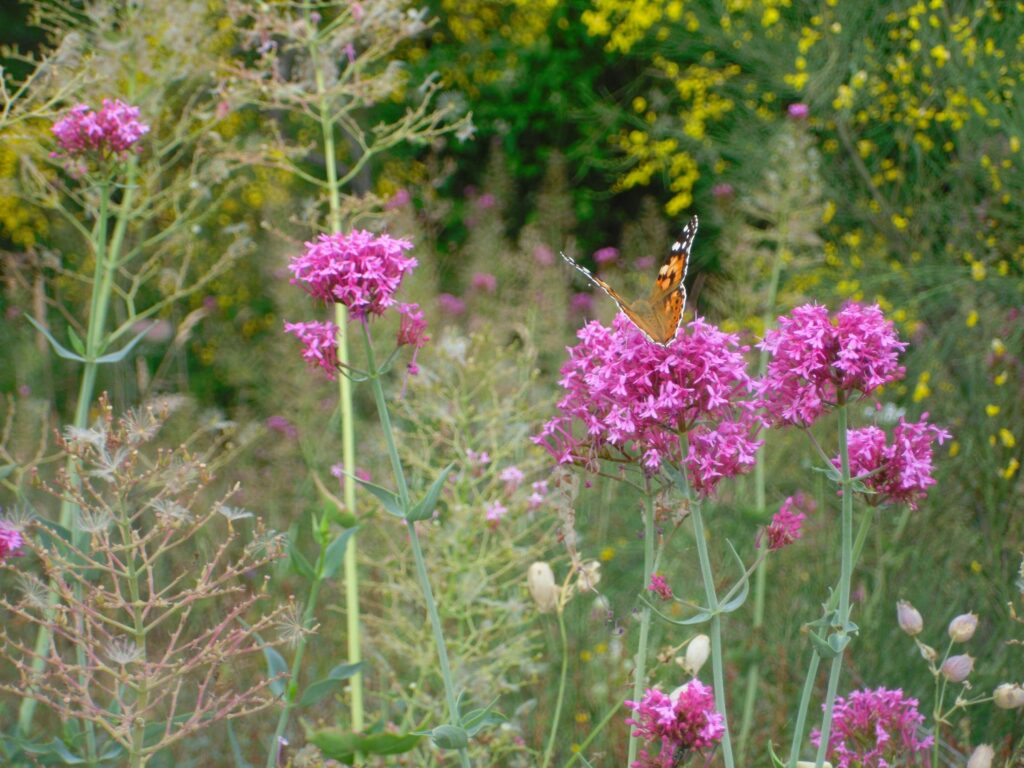
The plant is propagated by seeds that are sown directly into the soil, lightly on the soil surface, 12-24 inches apart. It thrives in rich, heavy, moist soils with full sun to partial shade. In the second year, pinch the flower stalk to redirect energy to the rhizomes. Harvesting is done in autumn of the second year. Dig up the entire root ball, shake the dirt, and wash thoroughly.
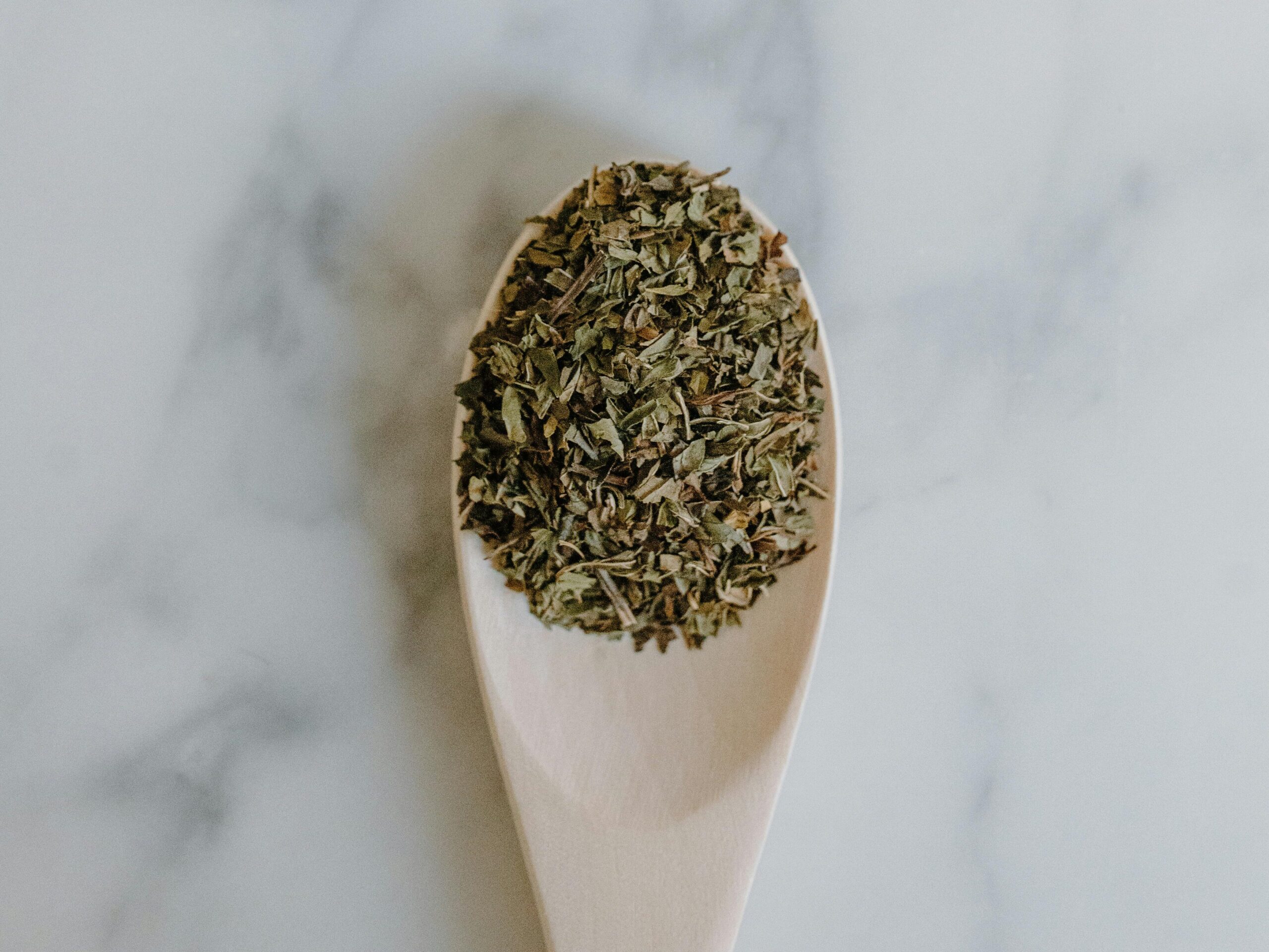
Dry the harvest in a cool and well-ventilated shade. It can also be dried using a dehydrator at temperatures of 35-40 degrees Celsius. Once dry, it is stored in airtight glass jars away from sunlight. It can last 18 months.
REFERENCES
Andreatini R, Sartori VA, Seabra ML, Leite JR. Effect of valepotriates (valerian extract) in generalized anxiety disorder: a randomized placebo-controlled pilot study. Phytother Res. 2002 Nov;16(7):650-4. doi: 10.1002/ptr.1027. PMID: 12410546.
Cropley M, Cave Z, Ellis J, Middleton RW. Effect of kava and valerian on human physiological and psychological responses to mental stress assessed under laboratory conditions. Phytother Res. 2002 Feb;16(1):23-7. doi: 10.1002/ptr.1002. PMID: 11807960.
Pakseresht S, Boostani H, Sayyah M. Extract of valerian root (Valeriana officinalis L.) vs. placebo in treatment of obsessive-compulsive disorder: a randomized double-blind study. J Complement Integr Med. 2011 Oct 11;8. doi: 10.2202/1553-3840.1465. PMID: 22718671.
Bent S, Padula A, Moore D …Valerian for Sleep: A Systematic Review and Meta-AnalysisThe American Journal of Medicine, 119, 1005-1012
Jenabi E, Shobeiri F, Hazavehei SMM, Roshanaei G. The effect of Valerian on the severity and frequency of hot flashes: A triple-blind randomized clinical trial. Women Health. 2018 Mar;58(3):297-304. doi: 10.1080/03630242.2017.1296058. Epub 2017 Mar 17. PMID: 28278010.
Sahu S, Ray K, Yogendra Kumar MS, Gupta S, Kauser H, Kumar S, Mishra K, Panjwani U. Valeriana wallichii root extract improves sleep quality and modulates brain monoamine level in rats. Phytomedicine. 2012 Jul 15;19(10):924-9. doi: 10.1016/j.phymed.2012.05.005. Epub 2012 Jul 4. PMID: 22766307.
Subhan, F., Karim, N., Gilani, A.H. and Sewell, R.D.E. (2010), Terpenoid content of Valeriana wallichii extracts and antidepressant-like response profiles. Phytother. Res., 24: 686-691. https://doi.org/10.1002/ptr.2980
Leave a Reply