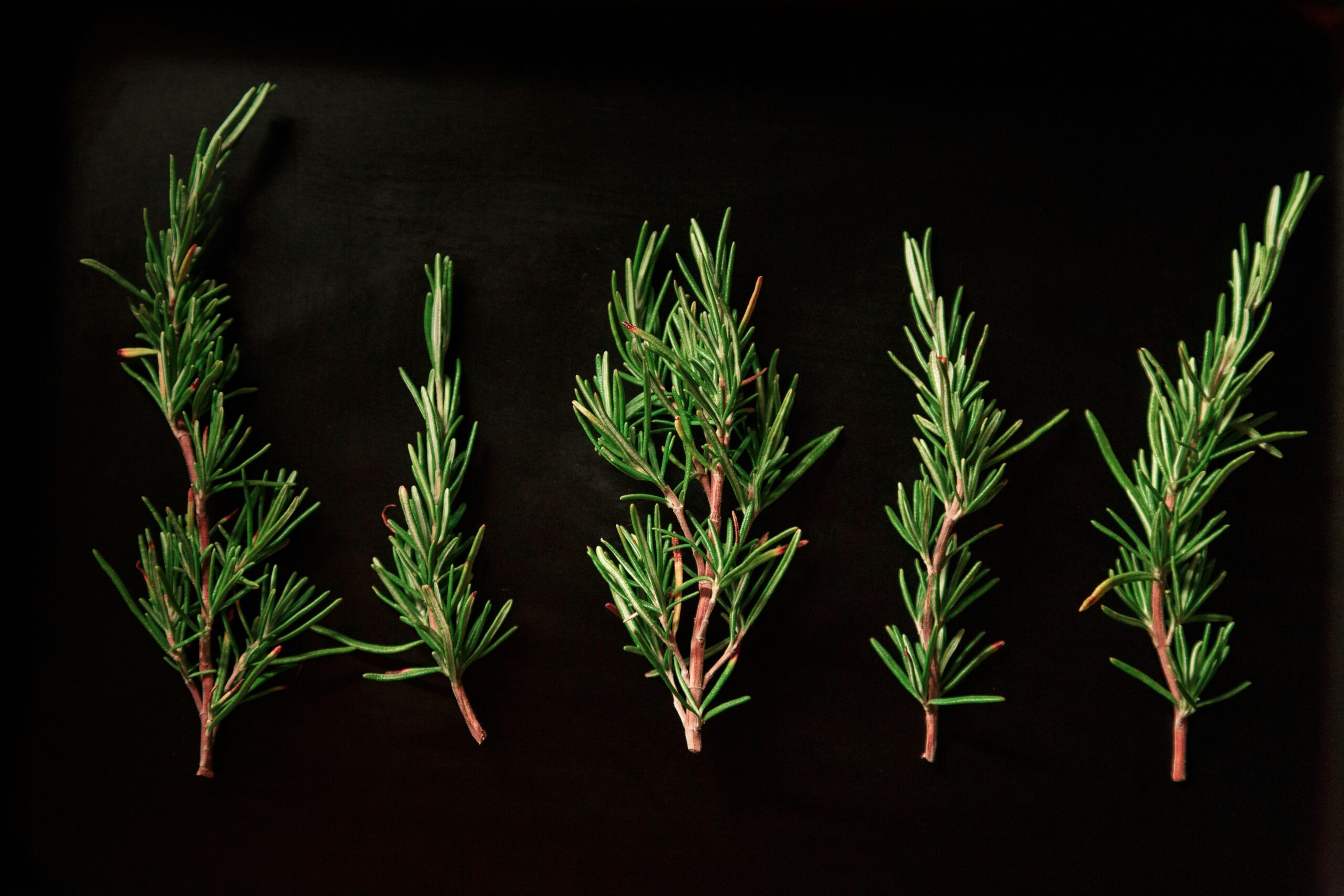
Rosemary, also known as anthos, polar plant, or compass weed, belongs to the family Lamiaceae. It is native to South Europe, North Africa, and West Asia in parts with rocky, well-draining soils and intense sun and mild, wet winters. It is currently cultivated in France, Spain, Italy, Tunisia, Morocco, California, and parts of Mexico.
Rosemary has been used for the following issues:
- Improving cognitive performance and memory
- Boosting hair growth in alopecia
- Lowering blood glucose levels
- Helps in calming down symptoms of anxiety and mild depression
- Reducing total cholesterol levels
- Reduction of fatigue and muscle soreness as a topical application
- Reduced symptoms of opiate withdrawal
Jump to section
Medical Uses and ethnopharmacological profile of Rosemary
Traditional Uses
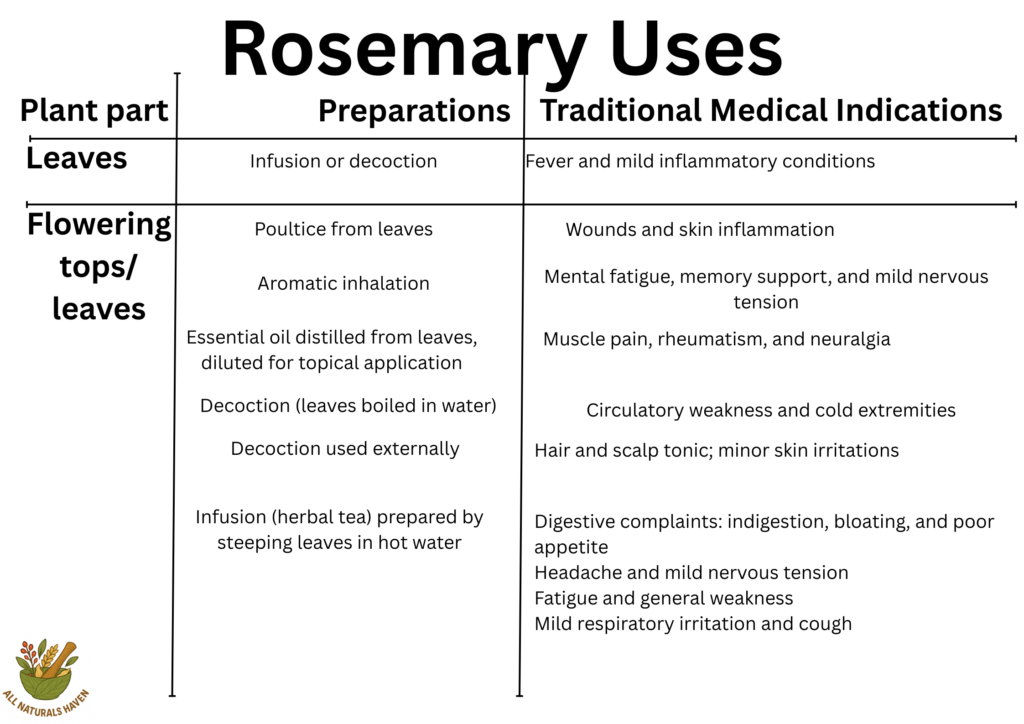
It was used as a cognitive boost in stimulating alertness, concentration, and memory and elevating mood. It was also used as a cholagogue and carminative. In inhalation, rosemary was used to alleviate symptoms of cold, flu, and bronchitis. The oil and rubs were used to alleviate joint pain. The plant itself was used to purify air and slow down the progression of disease.
Clinical Uses and Research
Fatigue: In working-age men, leaf hydroalcoholic extract over a course of 4 weeks reduced mental fatigue and increased vigor scores. Phenolic diterpenes acted via mitochondrial protection, which reduced oxidative damage to neural and muscular cells.
Androgenic alopecia: Leaf essential oil extract applied twice daily for 6 months showed activity comparable to minoxidil (2%) but with less scalp itching. 1-8 cineol and camphor induced vasodilation, which increased microcirculation to the scalp and also inhibited DHT binding to androgen receptors.
Stress and anxiety: In university students, leaf extract oral capsules administered as 500 mg twice daily for 1 month decreased anxiety and stress scores and improved sleep quality and perspective memory. Rosmarinic acid and flavonoids acted by modulation of the HPA axis, which reduced the level of oxidative stress in the hippocampus.
In healthy adults, standardized leaf extract given at 500 mg daily of diterpenes and rosmarinic acid enhanced antioxidant defense to scavenge free radicals and modulated heart variability rate. (Tremea 2024)
Memory and performance: In elderly adults, leaf-dried powder extract at a single dose of 750, 1500, 3000, and 6000 mg improved memory, but at 6000 there was impairment. This was due to the action of rosmarinic acid that inhibited the acetylcholinesterase enzyme, boosting the level of acetylcholine.
In healthy adults using rosemary oil in aromatherapy as diffused in a room where a cognitive task was being carried out, there was a recorded improvement in speed and accuracy of performance. 1,8-cineole via the lungs was able to act on the dopaminergic system.
Type 2 diabetes and dyslipidemia: Dried powder leaf extract at doses of 2, 5, and 10 grams daily for 4 weeks exhibited a decrease in blood glucose, low-density lipoproteins, and triglycerides depending on the dose. Carsomol acted via PPAR-y activation, enhancing insulin sensitivity and modulating lipid metabolism.
In Vivo Uses and Research
Obesity model: In rats, standard leaf extract (40% carsonic acid) administered at 0.5 w/w in diet for 64 days decreased body weight gain and increased fecal fiber and fat excretion while altering the short fatty acid chain profile. This was through the inhibition of beta-glucosidase enzymes.
Antitoxin: In CCl₄-induced toxicity in albino rats, leaf ethanolic extract at a dose of 200-400 mg/kg body weight showed nephroprotection and hepatoprotection with a decrease in serum urea and creatinine liver markers. The phenolic and terpene compounds induced phase 2 enzymes by stimulating GST/GPX and also inhibiting phase 1 CYP450 to prevent toxic metabolite formation.
Neuropathic pain: In streptozocin-induced diabetic rats, leaf ethanol/water extract administered daily orally witnessed a decrease in hyperalgesia and improved motor coordination. Ursolic and rosmarinic acid elicited anti-apoptotic effects via caspase 3 activation and reducing the ratio of BAX to BCL2 in nerve tissue. (Bahram 2019)
In Vitro Uses and Research
Anticancer: In human cancer cell lines, carbon dioxide extracts inhibited cell proliferation. Carsonic acid was able to upregulate p21 and p53 tumor-suppression genes.
Antibacterial: In S. aureus and E. coli, leaves, essential oil, and ethanolic extract worked in synergy with ciprofloxacin to eradicate bacteria. Pinene, borneol, and verbenone destroyed bacterial membrane permeability by disruption of the lipid bilayer. (Milyuhina 2021)
Photoaging: In UVB-irradiated human skin fibroblasts, leaf standardized extract showed anti-aging effects and preserved collagen integrity alongside reducing DNA damage in skin cells. Luteolin, apigenin, and rosmarinic acid inhibited matrix metalloproteinases, preventing collagen breakdown.
Safety and Dosing profile of Rosemary
Forms and Dosing
Fresh or dried sprigs- 1-3 grams
Infusion/tea– 2- 3 cups
Capsules and tablets– 200- 3000mg
Essential oils
Tinctures (1:5)– 2,5 mls thrice
Cream and ointments
- Cognitive perfomance- 300-600 mg a day/1-3 drops of essential oil
- Support in mood and anxiety- 300-600 mg a day/2-4 grams dried leaves
- Dyspepsia/bloating- 2-4 grams (per cup) thrice daily/2-4 ml a day
- Hair growth- 1-2% diluted oil applied to scalp once daily
- Pain releif- 5-10% diluted oil, 2 or 3 times a day
Note: The maximum dosing for rosemary is 1200 mg a day and 12 grams for dried leaf.
Interactions
- Anticoagulants- may increase risk of bruising or bleeding
- ACE inhibitors and Diuretics- may reduce effectiveness of medication
- Lithium- may increase toxicity
- Diabetes medication- may increase risk of hypoglycemia.
- Iron- may reduce absorption.
Side effects
- Cramps, vomiting, and diarrhea
- Topical dermatitis
- Proteinuria
- Photosensitivity
- Uterine contractions
- Nephrotoxicity in high doses (seizures etc.)
Contraindications
- Pregnancy and breastfeeding (emmenagogue effect)
- Epilepsy
- Kidney diseases
- Iron deficiency anaemia
- Before surgery
Rosemary Description and composition
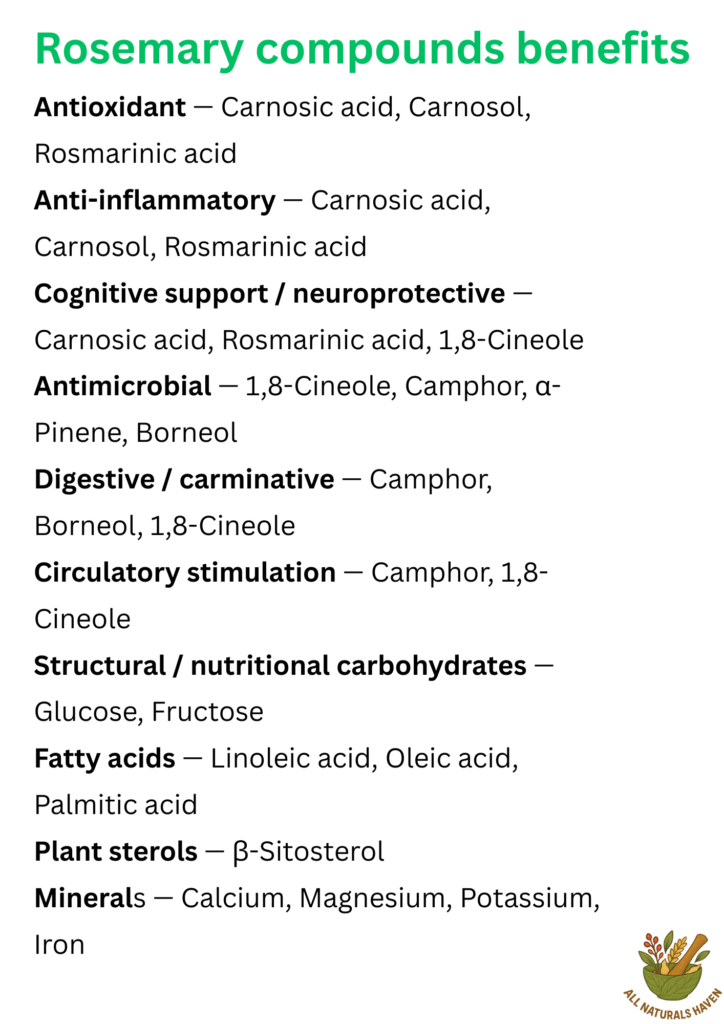
The compounds in rosemary are volatile essential oils (eucalyptol, camphor, pinene, camphene, and borneol); phenolic diterpenes (carnosic acid, carnosol, and rosmanol); phenolic acids and flavonoids (rosmarinic acid, caffeic acid, luteolin, and apigenin); and triterpenes (ursolic acid and oleanolic acid).
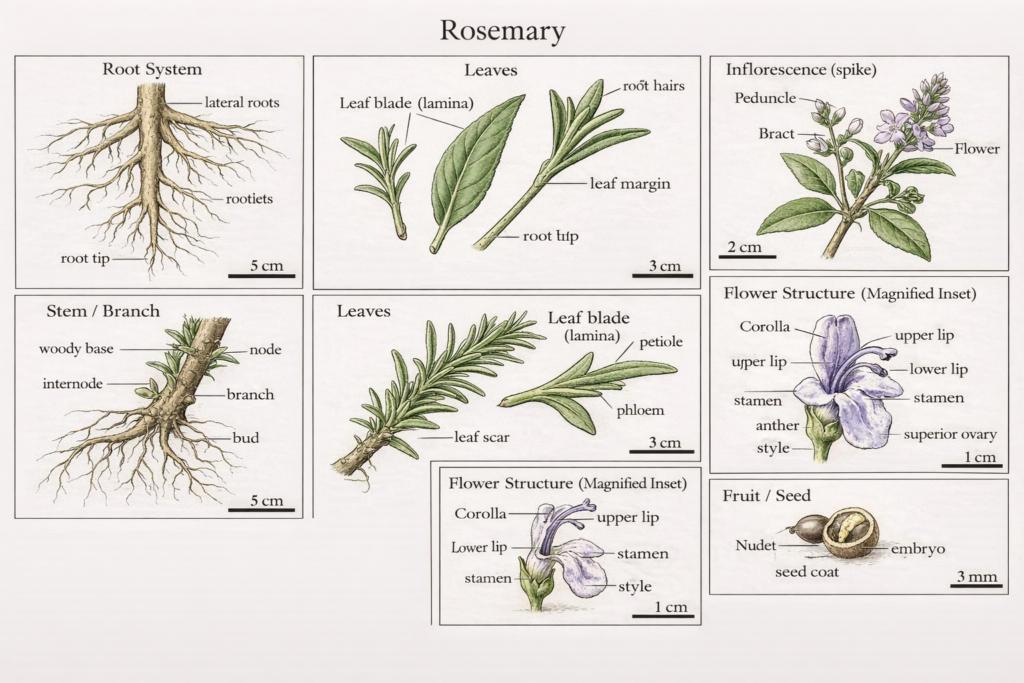
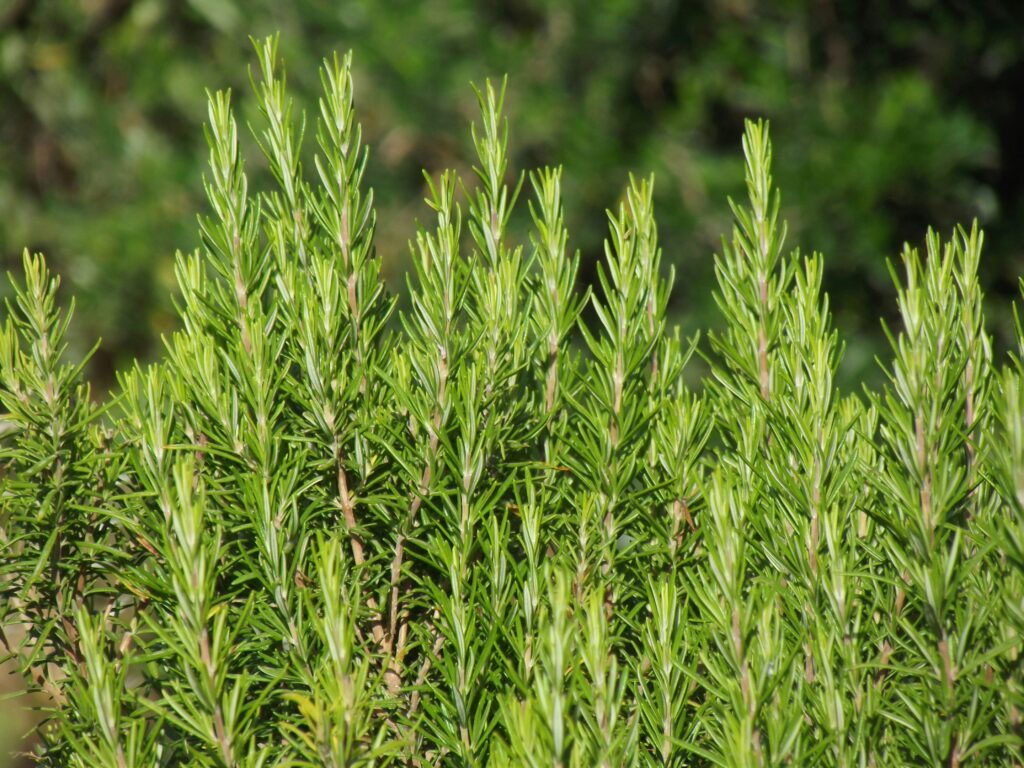
The plant leaves are linear, narrow, and dark green with short, wiry ridges on the underside. Its flowers are bilabiate with two long and curved stamens. It has pale blue or lavender petals. The fruit and seed is a nutlet that is small and dry and found at the base of the calyx. The stems are thick, brown, and woody with shredded-looking bark when mature. Its roots are fibrous and shallow, spreading out in the soil.
Rosemary Cultivation
Rosemary is propagated via cuttings or nursery plants. It thrives in well-drained sandy or loamy soils planted 2-3 feet apart. It requires 6-8 hours of sunlight and deep but infrequent watering. The plant is ready for harvesting just before the plant begins to flower, as this is when the levels of oils are highest. Harvesting is done all year round by 2-4 inches of the stem. Never harvest more than a third of the plant at once.
Place in bundles and air-dry hanging upside down for around 2 weeks. This can then be stored in airtight glass containers. It can be refrigerated for 2 weeks when fresh sprigs are wrapped in damp paper towels and preserved in a Ziplock bag.
REFERENCES
O.V. Filiptsova, L.V. Gazzavi-Rogozina, et al. 2018. The effect of the essential oils of lavender and rosemary on the human short-term memory,
Alexandria Journal of Medicine, Volume 54, Issue 1, 2018, Pages 41-44, ISSN 2090-5068, https://doi.org/10.1016/j.ajme.2017.05.004 (https://www.sciencedirect.com/science/article/pii/S2090506816301944)
Panahi Y, Taghizadeh M, Marzony ET, Sahebkar A. Rosemary oil vs minoxidil 2% for the treatment of androgenetic alopecia: a randomized comparative trial. Skinmed. 2015 Jan-Feb;13(1):15-21. PMID: 25842469.
Nematolahi P, Mehrabani M, Karami-Mohajeri S, Dabaghzadeh F. Effects of Rosmarinus officinalis L. on memory performance, anxiety, depression, and sleep quality in university students: A randomized clinical trial. Complement Ther Clin Pract. 2018 Feb;30:24-28. doi: 10.1016/j.ctcp.2017.11.00 4. Epub 2017 Nov 13. PMID: 29389474.
Pengelly A, Snow J, Mills SY, Scholey A, Wesnes K, Butler LR. Short-Term Study on the Effects of Rosemary on Cognitive Function in an Elderly Population. Journal of Medicinal Food. 2012;15(1):10-17. doi:10.1089/jmf.2011.0005
Moss M, Oliver L. Plasma 1,8-cineole correlates with cognitive performance following exposure to rosemary essential oil aroma. Therapeutic Advances in Psychopharmacology. 2012;2(3):103-113. doi:10.1177/2045125312436573
Louay Labban, Usama El-Sayed Mustafa, Yasser Mahmoud Ibrahim,
published by International Journal of Clinical Medicine, Vol.5 No.6, 2014. “The Effects of Rosemary (Rosmarinus officinalis) Leaves Powder on Glucose Level, Lipid Profile and Lipid Perodoxation“
Hassani FV, Shirani K, Hosseinzadeh H. Rosemary (Rosmarinus officinalis) as a potential therapeutic plant in metabolic syndrome: a review. Naunyn Schmiedebergs Arch Pharmacol. 2016 Sep;389(9):931-49. doi: 10.1007/s00210-016-1256-0. Epub 2016 May 13. PMID: 27178264.
Rašković A, Milanović I, Pavlović N, Ćebović T, Vukmirović S, Mikov M. Antioxidant activity of rosemary (Rosmarinus officinalis L.) essential oil and its hepatoprotective potential. BMC Complement Altern Med. 2014 Jul 7;14:225. doi: 10.1186/1472-6882-14-225. PMID: 25002023; PMCID: PMC4227022.
Đilas, S., Knez, Ž., Četojević-Simin, D., Tumbas, V., Škerget, M., Čanadanović-Brunet, J. and Ćetković, G. (2012), In vitro antioxidant and antiproliferative activity of three rosemary (Rosmarinus officinalis L.) extract formulations. International Journal of Food Science & Technology, 47: 2052-2062. https://doi.org/10.1111/j.1365-2621.2012.03069.x
Sánchez-Marzo, N., Pérez-Sánchez, A., Barrajón-Catalán, E., Castillo, J., Herranz-López, M., & Micol, V. (2020). Rosemary Diterpenes and Flavanone Aglycones Provide Improved Genoprotection against UV-Induced DNA Damage in a Human Skin Cell Model. Antioxidants, 9(3), 255. https://doi.org/10.3390/antiox9030255
Leave a Reply