
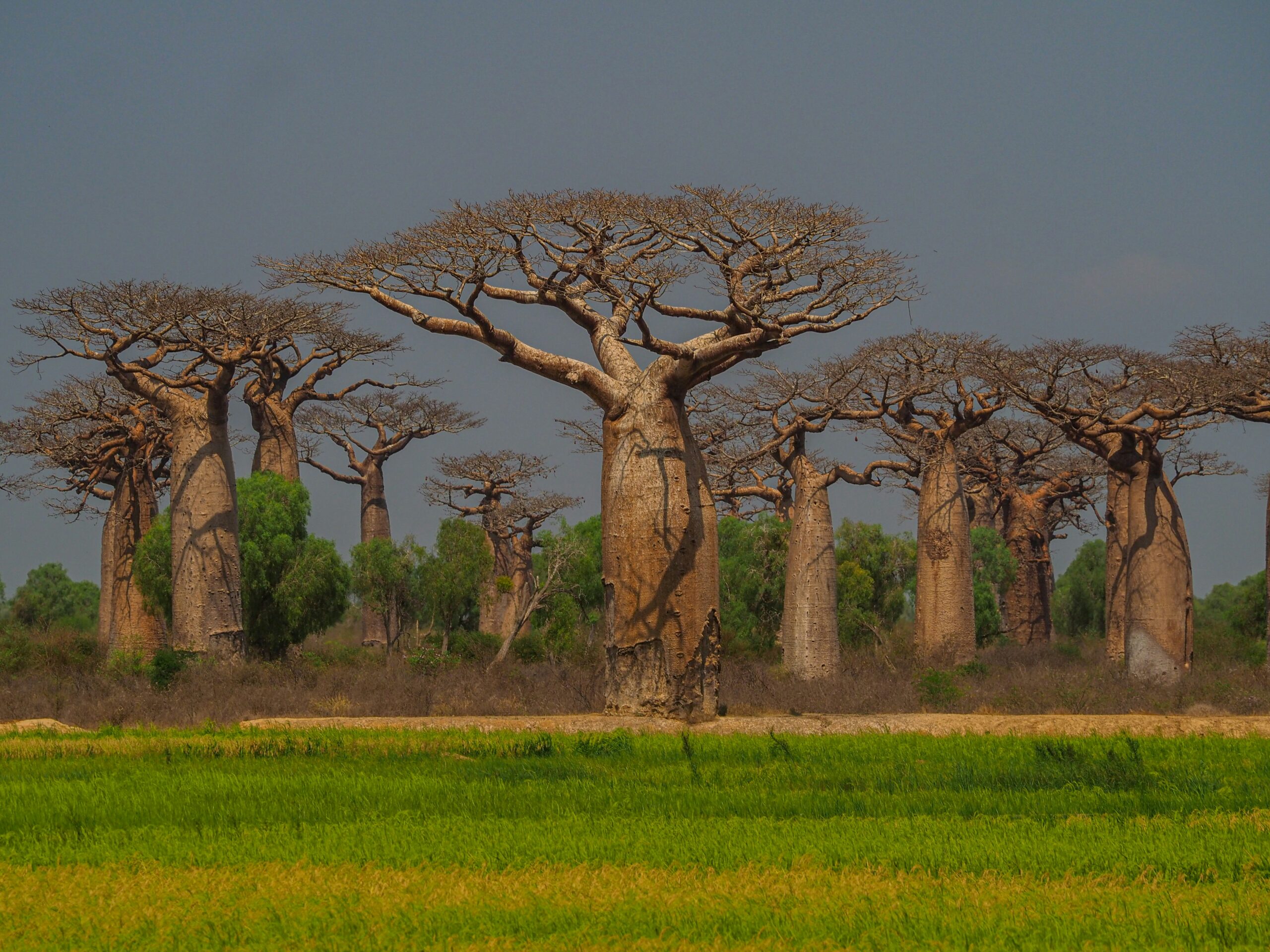
Baobab, also known as the upside-down tree, monkey bread tree, and dead rat tree, is an herbal plant belonging to the family Malvaceae. It is native to Africa, Madagascar, and Australia (other subspecies). It is currently cultivated in India, Sri Lanka, St. Croix, Barbados, Florida, Oman, and Yemen. It has a popular name as ‘the chemist tree’ because all of its parts are medicinally useful.
Baobab uses are as follows:
- In glycemic control via promotion of insulin sensitivity
- As a pre and probiotic to the gut’s normal flora
- Enhancing immune
- Encouraging iron absorption due to its high vitamin C content
- Appetite suppression and weight management
Jump to section
Medical uses and ethnopharmacological profile of Baobab
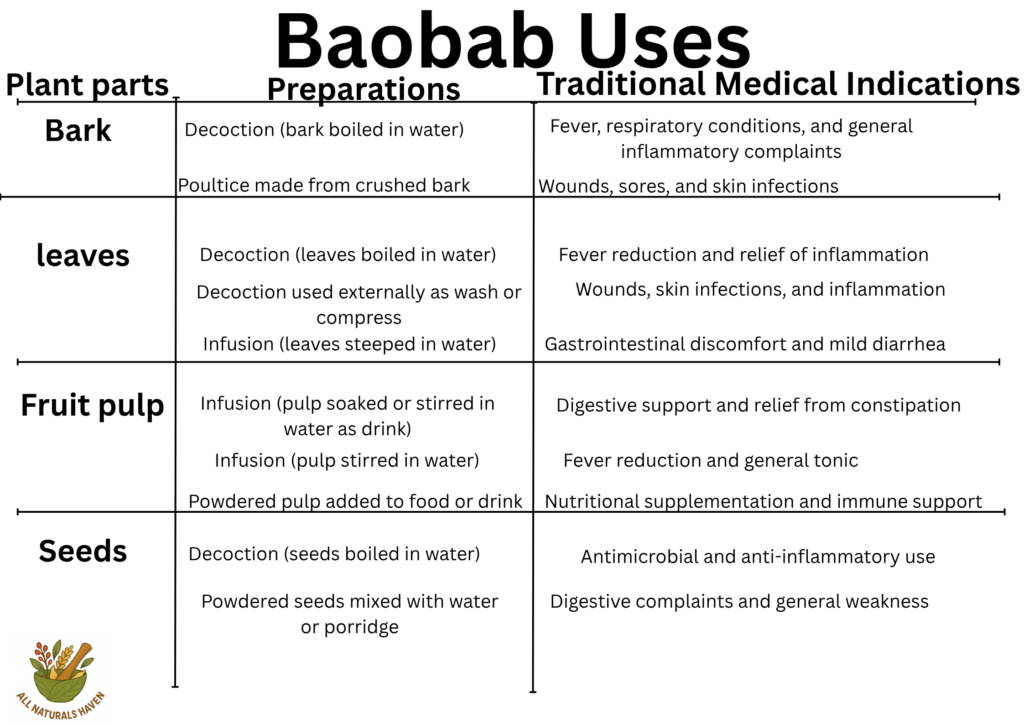
Traditional Uses
The leaves were used in the treatment of malaria and associated fevers, managing coughs and blocked respiratory airways, and allergic reactions. The poultice from leaves is used in the management of insect bites, sores, and inflamed eyes. The bark is used in wound healing in a wash preparation. The pulp is used in rehydration, as an immune tonic, and in managing symptoms of dysentery-like diarrhea.
The seeds and roots are used as a mouthwash, in tooth pain and gingivitis, in postpartum recovery and boosting milk production, and in eczema/psoriasis skin conditions.
Clinical Uses and Research
Antioxidant: A bark aqueous decoction of 500 ml, when taken by adults, achieved 100% inhibition of lipid peroxidation in higher concentrations. Adansonin and tannins were identified to act by scavenging nitric oxide and superoxide.
Glycemic control: In healthy adults, fruit pulp aqueous extract given as a single dose post-oral glucose tolerance test achieved a decrease in postprandial glycemic index and maximum glucose concentration. Polyphenols acted via inhibition of the enzymes amylase and glucosidase.
In another study, using aqueous (18.5 g) or baked (37 g) pulp extract also elicited a decrease in glycemic response. This was noted to be via binding to start, hence reducing the ratio of digestible starch fractions and sugars. Tiliroside, catechin, and quercetin were isolated to be the active compounds.
Acne and eczema: In adults with active skin conditions like acne, using a seed oil topical preparation applied twice daily reduced acne-related inflammation and soothed eczema. Omega fatty acids present acted by restoring the stratum corneum and reducing trans-epidermal water loss. (Komane 2017)
Dietary control: Fruit pulp powder put in a smoothie (15 grams in 250 ml) reduced the subjective feeling of hunger. Dietary fibers (pectin mucilage) slowed gastric emptying, hence modulating appetite-regulating hormones with a persistent feeling of ‘fullness.’
Obesity: In obese adults, fruit pulp powder at 16 grams daily for 45 days resulted in a boost in gut health and a decrease in systematic inflammation alongside a decrease in lipid profile. Vitamin C and soluble fibers modulated gut microbiota and intestinal barrier permeability.
Iron levels: In school children, pulp powder in beverages taken over a course of 3 months elicited a 22% improvement in hemoglobin and reduction in ferritin depletion compared to the placebo group. Vitamin C and citric acid increased the solubility of non-heme iron. (Atosana 2024)
In Vivo Uses and Research
Hepatoprotection: In a rat model, methanolic fruit extract at 100 and 200 mg/kg daily for 21 days reduced AST, ALP, and ALT enzyme levels compared to silymarin. Triterpenoids and flavonoids stabilized hepatic membranes and reduced CCL4-induced lipid peroxidation.
Antipyretic: Aqueous fruit pulp extract given at a dose of 400 – 800 mg orally decreased body temperature efficacy. Adansonin and saponins acted via inhibiting prostaglandin synthesis in the hypothalamus.
Antimalarial: In a mouse model, the stem/bark ethyl acetate fraction administered at 200 and 400 mg/kg for 5 days showed dose-dependent clearance of the parasite and managed accompanying symptoms. Alkaloids and phenolic acids inhibited Plasmodium berghei schizogony in blood.
Anti-inflammatory: In Wistar rats, the leaves’ hydroethanolic extract given orally as 10 mg/kg elicited a 50% decrease in edema at 3 to 5 hours with comparable efficacy to aspirin. Quercetin and kaempferol inhibited carrageenan-induced paw edema via cytokine suppression. ( Senne 2025)
Hypertension: In rats, pulp in hexane extract given at 400 mg/kg daily lowered blood pressure and prevented weight gain. Phytosterols and potassium triggered the reduction of serum sodium/chloride concentrations and also normalized creatinine levels. ( Richard 2021)
Antibacterial: In rat models, stem/bark ethanolic extract at 5 and 9 mg/kg was successful in treating Klebsiella pneumoniae-induced pneumonia. Tannins and saponins inhibited bacterial ATPase/H⁺ protein pumps and membrane leakage.
Safety and Dosing profile of Baobab
Forms and Dosing
Powder- 10-20 grams
Powdered pulp– 5-15 grams a day in beverage
Capsules tablets and gummies- 500-1500 mg in split doses
Oils– 2-3 drops on skin as needed
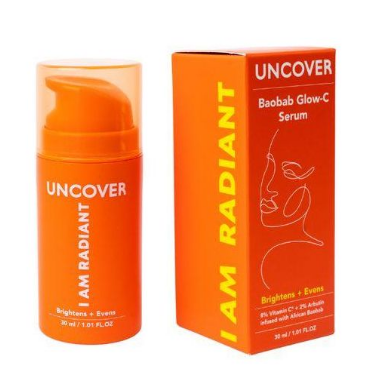
Serum and hydrosol–
Dried leaves– 5-10 grams
Infusions/teas– 10-20 grams in water a day
- Antioxidant: 15 grams a day (as pulp)
- Post-meal blood glucose reduction: 18 grams of pulp
Interactions
- Diabetic medication- may induce hypoglycemia
- ACE inhibitors/ Diuretics- may increase risk of hyperkalemia
- Levothyroxine, digoxin, antidepressants- may interfere with absorption
- Calcium and zinc- reduce absorption
- Iron and vitamin C- increase absorption.
Side effects
- Gas and bloating
- Cramping
- Laxative effect
- Health rhythm sensitivity
- Hypoglycemia
- Cross-reactive allergy
Contraindications
- Diverticulitis, Ulcerative colitis, Crohn’s diseases
- Pregnancy (seeds have a uterine contraction capacity)
- Chronic kidney disease
- Iron deficiency anemia
Baobab Description and composition
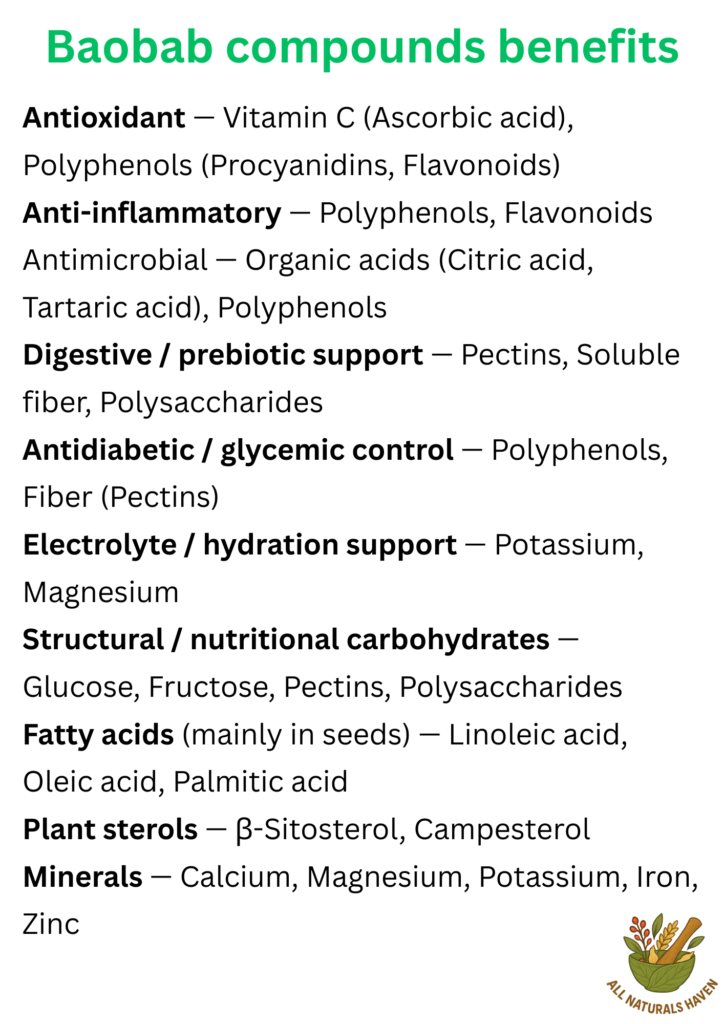
The compounds in baobab are quercetin, rutin, kaempferol, tiliroside, tannins and saponins, triterpenoids, alkaloids (adansonin), fatty acids (oleic and linoleic), minerals, and vitamins (A, B2, B1, calcium, potassium, iron, and magnesium).
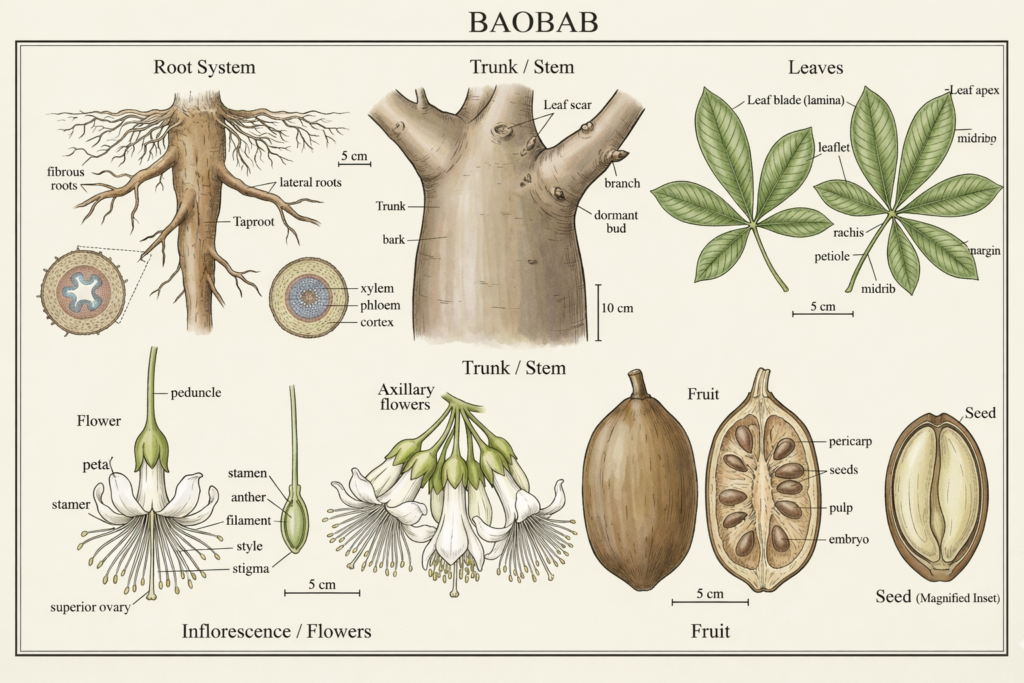
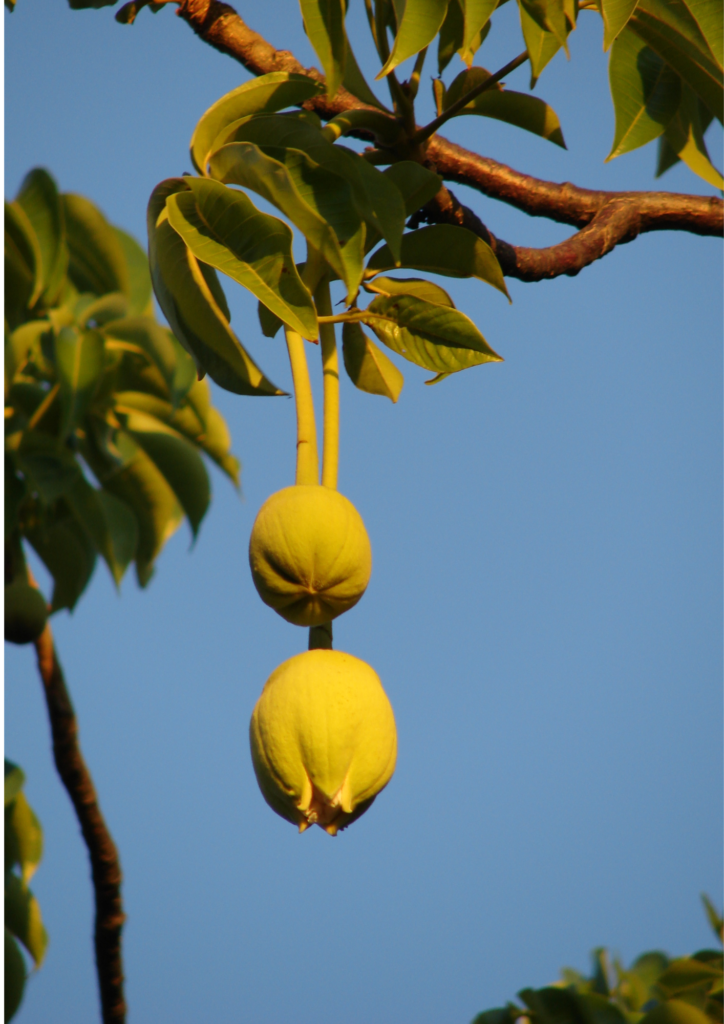
The plant’s leaves are palmate with a distinct 5-7 finger-like structure. The fruit has a hard, woody outer shell that is covered in soft, velvet-like hairs with a greenish-yellowish color. The inside is covered with a creamy pulp and long reddish-brown strings wrapped around the pulp. The flowers are white and waxy. Its roots are thick and tuberous when young, and its old trunk is hollow, grey, smooth, and thick.
Baobab Cultivation
Baobab is propagated by seeds, but tree cuttings can also be used. The seeds are first scarified and soaked in hot water for 24-48 hours until they swell. It thrives well in a well-draining mix of sandy and loamy soils with exposure to full sun. It takes roughly 15-20 years to fruit and be mature. It is ready for harvesting when the plant looks ‘dead.’
The fruit should be harvested when the outer shell is brown, hard, and brittle; the leaves during the early rainy season; and the bark when it turns grey, and only small strips are taken from the bark for fiber. Whole pods harvested are dried in a cool elevated place. Leaves are shade-dried and then ground into powder. The crushed powder is stored in airtight glass jars or sealed foil.
REFERENCES
Asogwa, Ifeyinwa & Ajibola, Ibrahim & Agbaka, Johnpaul. (2021). African baobab: Its role in enhancing nutrition, health, and the environment. Trees Forests and People. 3. 10.1016/j.tfp.2020.100043.
Rita, Keyla & Bernardo, Alexandra & Silva, Maria & Brito, José & de mesquita, Maria & Pintão, Ana & Moncada, Margarida. (2022). Adansonia digitata L. (Baobab Fruit) Effect on Postprandial Glycemia in Healthy Adults: A Randomized Controlled Trial. Nutrients. 14. 398. 10.3390/nu14020398.
Coe, Shelly & Clegg, Miriam & Armengol, Mar & Ryan, Lisa. (2013). The polyphenol-rich baobab fruit (Adansonia digitata L.) reduces starch digestion and glycemic response in humans. Nutrition research (New York, N.Y.). 33. 888-96. 10.1016/j.nutres.2013.08.002.
Garvey R, Clegg M, Coe S. The acute effects of baobab fruit ( Adansonia digitata) on satiety in healthy adults. Nutr Health. 2017 Jun;23(2):83-86. doi: 10.1177/0260106017704361. Epub 2017 Apr 17. PMID: 28413912.
Riedel S, de Buys K, Tshivhase AM, Mendham AE, Venter P, Hoosen F, et al. (2025) Effects of Baobab fruit powder on gut and cardiometabolic health in obesity—Protocol for a randomised placebo-controlled trial. PLoS One 20(8): e0328774. https://doi.org/10.1371/journal.pone.0328774
Abdulwaliyu, I., Arekemase, S.O., Batari, M.L. et al. Nutritional and pharmacological attributes of baobab fruit pulp. Food Prod Process and Nutr 6, 98 (2024). https://doi.org/10.1186/s43014-024-00283-z
Mukhtar, Zulaiha. (2019). Antioxidant and Antipyretic activities of Adasonia digitata (African Baobab) fruit, leaves and bark extract.
Belay WY, Gurmu AE, Wubneh ZB. Antimalarial Activity of Solvent Fractions of the Stem Bark of Periploca linearifolia Quart.-Dill. & A.Rich. (Asclepiadaceae) Against Plasmodium berghei in Mice. J Exp Pharmacol. 2022 Jan 11;14:7-15. doi: 10.2147/JEP.S328954. PMID: 35046734; PMCID: PMC8761000.
@article{Matsuete2025EthanolEF, title={Ethanol Extract From the Stem Bark of Adansonia digitata L. (Baobab) Displays Therapeutic Potential Against Klebsiella pneumoniae Infection}, author={Germaine Takongmo Matsuete and Benjamin Tangue Talom and Stephen Lacmata Tamekou and Justine Odelonne Kenfack and Jean-De-Dieu Tamokou}, journal={Cureus}, year={2025}, volume={17}, url={https://api.semanticscholar.org/CorpusID:280547838} }
Leave a Reply