
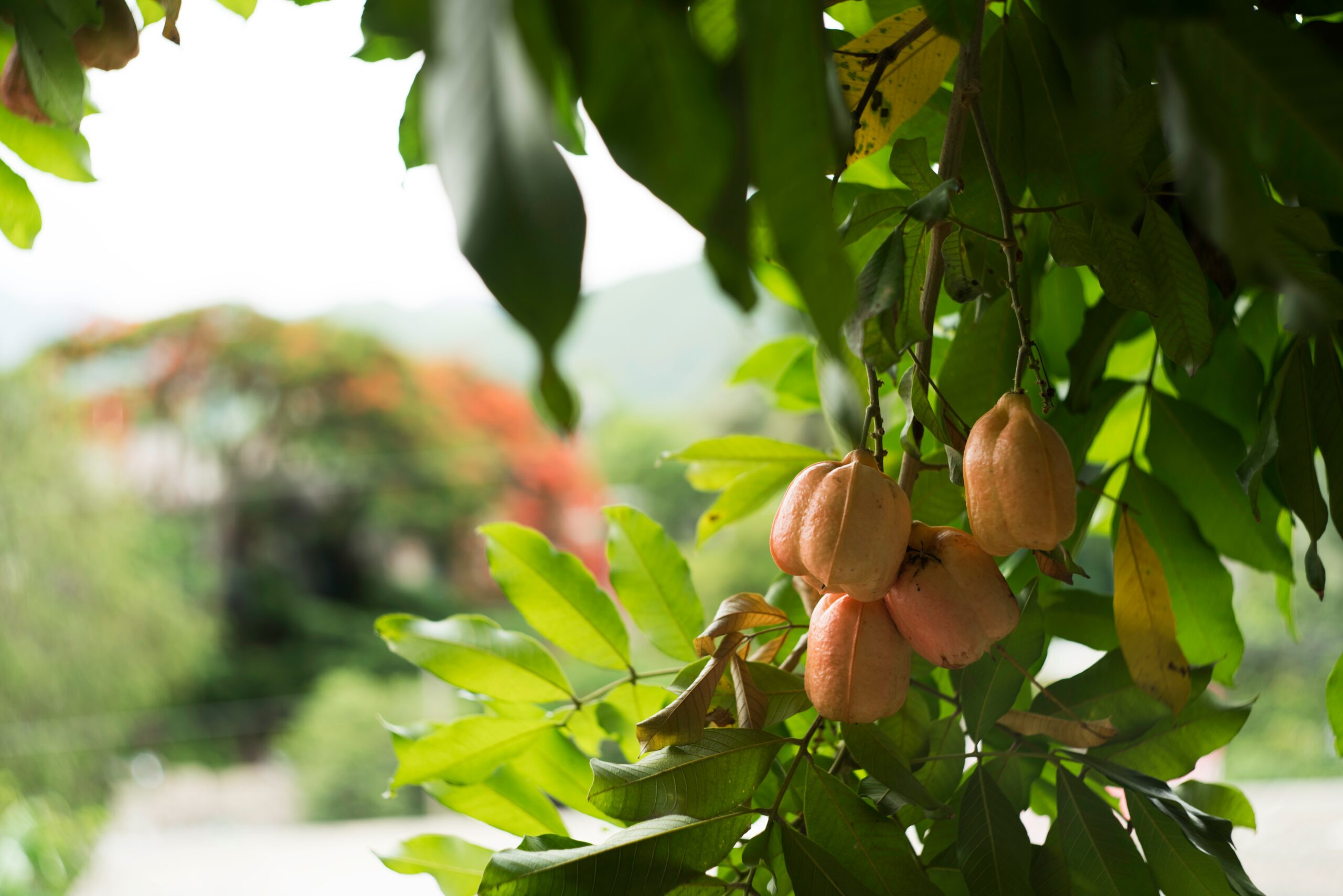
Ackee, also called breadfruit or gwanja kusa in some dialects, has been eaten by boiling or sautéing its aril in Jamaica for centuries. If unripe, it is toxic and induces severe hypoglycemia with convulsions and may even lead to death. This is due to the hypoglycin A and B content in unripe fruits.
Ackee uses have been listed in the image below.

Jump to: Medicinal Uses and ethnopharmacological profile
Ackee Description
Acee is also grown in Ghana, Cameroon, Gabon, Benin, and Nigeria. The fruit is ovoid or pear-shaped and is green when unripe, turning red to orange-yellow when ripe. The fruits’ red pods split open upon maturity. They contain 3 black seeds coated in an aril. It contains phenolic compounds, saponins, glycosides, tannins, minerals (calcium, phosphorous, iron, magnesium), vitamin C, fiber, proteins, lipids, and carbohydrates.
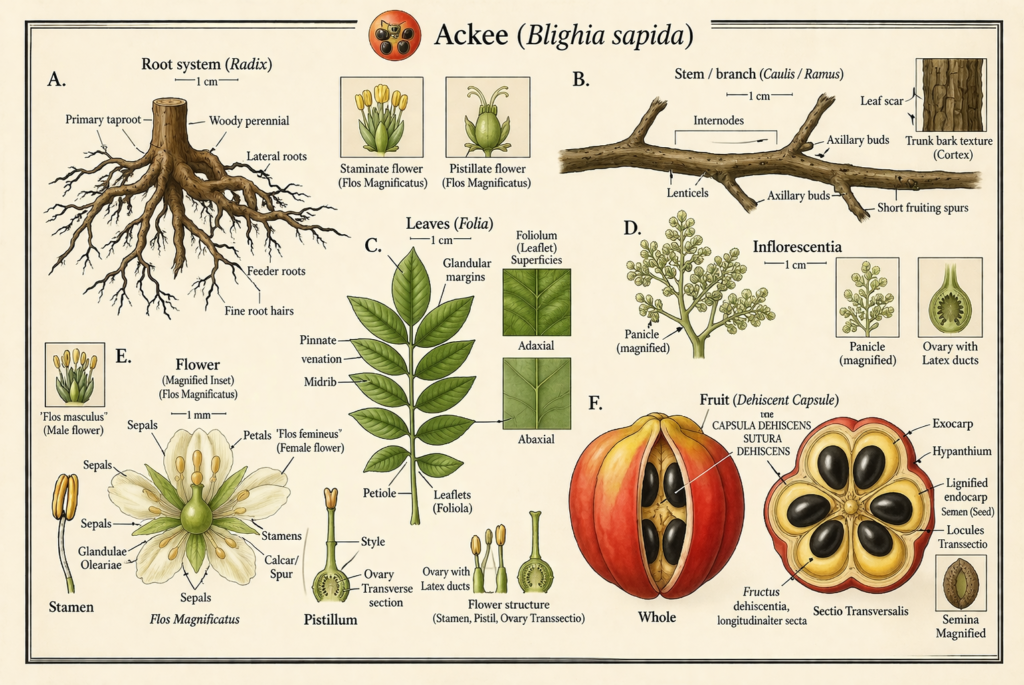
Ackee (tree) medicinal uses and ethnopharmacological profile
Traditional uses
Traditionally, it was used to make soap. It was also used medicinally to aid in the management of conjunctivitis, headache, migraine, and diarrhea. Other traditional uses include the management of dysentery, yellow fever, burns, and wounds.
Clinical Uses and Research
Analgesic properties– observed in mice, the aqueous extract elicited analgesia with a dose of 250-500 mg/kg. It pointed towards a peripheral analgesic response, nodding to the inhibition of peripheral nociceptive mediators. Other compounds like chlorogenic acid are known to block the pain and inflammation pathway via cyclooxygenase and lipoxygenase inhibition and dampening.
Antioxidant properties– There has been reported increased activity with animal models on the antioxidant enzyme systems, i.e., glutathione peroxide, with the administration of ackee. It also exerts a direct neutralization on radicals and modulates oxidative stress markers through phenolic compounds.
Antiparasitic properties– ethanolic stem extract (200-800 mg/kg) was effective as a prophylactic against chloroquine-resistant Plasmodium berghei in mice. The phenolics, flavonoids, and saponins are speculated to act by interfering with the parasite’s ability to establish pathogenicity or enhancing the host immune system. Otegbade 2016
Antidiabetic properties– ethanolic extract reduced fasting blood glucose in a diabetic rat model. At doses of 50, 100, and 150 mg/kg, the extract improved dyslipidemia associated with diabetes and normalized failing hematological markers. It is speculated to work through enhancing insulin signaling and protecting pancreatic beta cells from oxidative damage. Ojo 2020
Antimicrobial potential– In vitro testing with ethanol, methanol, and aqueous extracts on Staphylococcus aureus, Escherichia coli, and Salmonella typhi showed notable inhibition of bacterial growth. Saponin in the extract acted by disrupting microbial membranes through its surfactant properties.
Cytoprotective potential– In vitro assays on MTT cancer cell lines (breast, liver) exhibited protection from oxidative stress in normal cells. The compound triterpenoids was believed to act by induction of apoptosis in malignant cells.
Antidiarrheal potential– ethanol or aqueous extracts in in vivo rodent studies at 100-400 mg/kg body weight exhibited reduction in intestine motility and the intensity and frequency of diarrhea episodes. Flavonoids were linked to this through their ability to inhibit prostaglandins and relax the smooth muscles, inducing slow motility.

NB- Hypoglycemia caused by ackee can mask the effects of beta blockers like atenolol and metoprolol; hence, the two should be avoided or taken with caution.
REFERENCES
Olayinka JN, Ozolua RI, Akhigbemen AM. Phytochemical screening of aqueous leaf extract of Blighia sapida K.D. Koenig (Sapindaceae) and its analgesic property in mice. J Ethnopharmacol. 2021 Jun 12;273:113977. doi: 10.1016/j.jep.2021.113977. Epub 2021 Feb 27. PMID: 33652110.
Barnaby AG, Clarke J, Warren D, Duffus K. Free Radical Scavenging Capacity, Carotenoid Content, and NMR Characterization of Blighia sapida Aril Oil. J Lipids. 2018 Aug 13;2018:1762342. doi: 10.1155/2018/1762342. PMID: 30186635; PMCID: PMC6110014.
Sinmisola A, Oluwasesan BM, Chukwuemeka AP. Blighia sapida K.D. Koenig: A review on its phytochemistry, pharmacological and nutritional properties. J Ethnopharmacol. 2019 May 10;235:446-459. doi: 10.1016/j.jep.2019.01.017. Epub 2019 Jan 24. PMID: 30685434.
Leave a Reply