
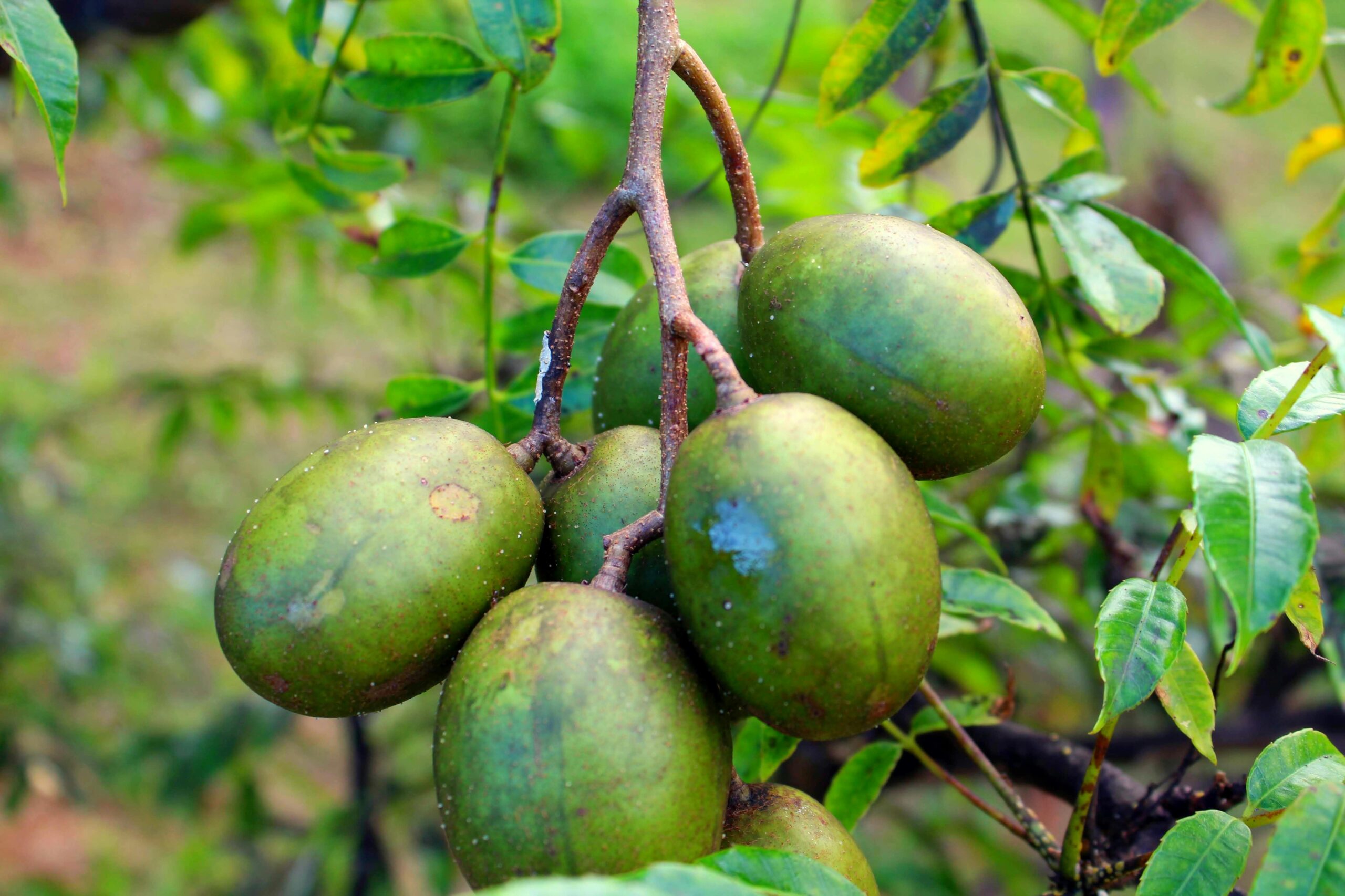
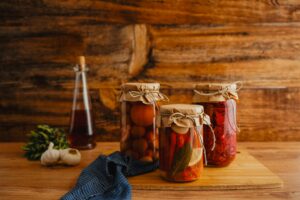
Ambarella, also called golden apple or June plum, is a fruit that is eaten raw. The fruit can also be made into flavorings for sauces, soups, and stews. A common delicacy in Sri Lanka, the fruit is soaked in vinegar and chili with other spices to make acharu. It contains vitamin C, phenols, fructose, ethanol, acetic acid, ethyl acetate, hexanol, ethyl butanoate, and limonene.
Ambarella is native to Indonesia and Malaysia. It is cultivated in Jamaica, Panama, Haiti, Liberia, Brazil, and Trinidad. The fruit is oblong or oval-shaped with a size of between 6 and 8 centimeters and up to 10 in large varieties. The outer skin is thin and smooth and is green when unripe but yellow when it ripens. The pulp inside is fibrous with a tangy and sweet taste.
Traditional uses of Ambarella
Traditionally, the leaves are made into tea and used to relieve coughs, sore throats, and colds. The barks are used for diarrhea and digestive discomforts. Leaves and bark are used on the skin to aid in healing sores and mouth ulcers.
Benefits and pharmacological profile of Ambarela
Antioxidant effect– fruit and leaf methanolic extracts exhibited scavenging activities against superoxides and DPPH. The extract also acted by disrupting oxidative chain reactions through the reducing potential of phenolics and flavonoids. Islam 2013
Anti-inflammatory effect– ethanol extracts showed anti-inflammatory activity in rats by reducing edema and accompanying symptoms like redness and tenderness. The saponins are believed to achieve this through reducing vascular permeability and reducing exudate formation. Flavonoid, on the other hand, works by inhibiting release of pain mediators like histamine and serotonin at the injury site. Hasibuan 2021
Laxative effect– in vitro studies witnessed a change in intestinal mobility linked to the flavonoid rutin that aids in bowel movement and relief of constipation. Fernandes 2024
Antimicrobial effects– Methanolic extracts had activity against bacteria in vitro through phenolic compounds that disrupt microbial membranes and also interfere with bacterial metabolism, leading to microorganism destruction. Ahmed 2013
Anticancer potential– In an animal model with a dose of 450 mg/kg administered for 15 days, there was a significant reduction in tumor size in the animals tested. Aqueous extracts rich in flavonoids were speculated to act through reduction of the glycoprotein CD133 that is linked to cancer progression. Santos 2023
DNA protection potential– In mice models, ethanolic extracts administered at 500, 1000 0r 1500 mg/kg orally showed reduced DNA damage induced by B[a]P/CP in the bone marrow and blood. Polyphenols like rutin were believed to induce this effect through enhancing endogenous defense systems and combating free radicals that lead to DNA damage. Araujo 2019
Antidiabetic potential– Methanol leaf extract in in vitro and silico studies reduced post-meal glucose spikes. The compounds spiraeoside, isoquercetin, and Androsterone were isolated to have this activity through the inhibition of enzymes that prevent carbohydrate transformation into absorbable sugars.
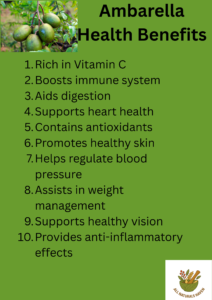
Ambarella provides general nutritional supplementation of minerals and vitamins like Vitamins C, B1, B2, and B3; carotenoids; potassium; phosphorous; and iron that contribute to boosting the immune system as a whole.
NB-Ambarella remains widely unexplored; hence, it is advisable to limit usage to eating it as a fruit for its nutrients.
Leave a Reply