
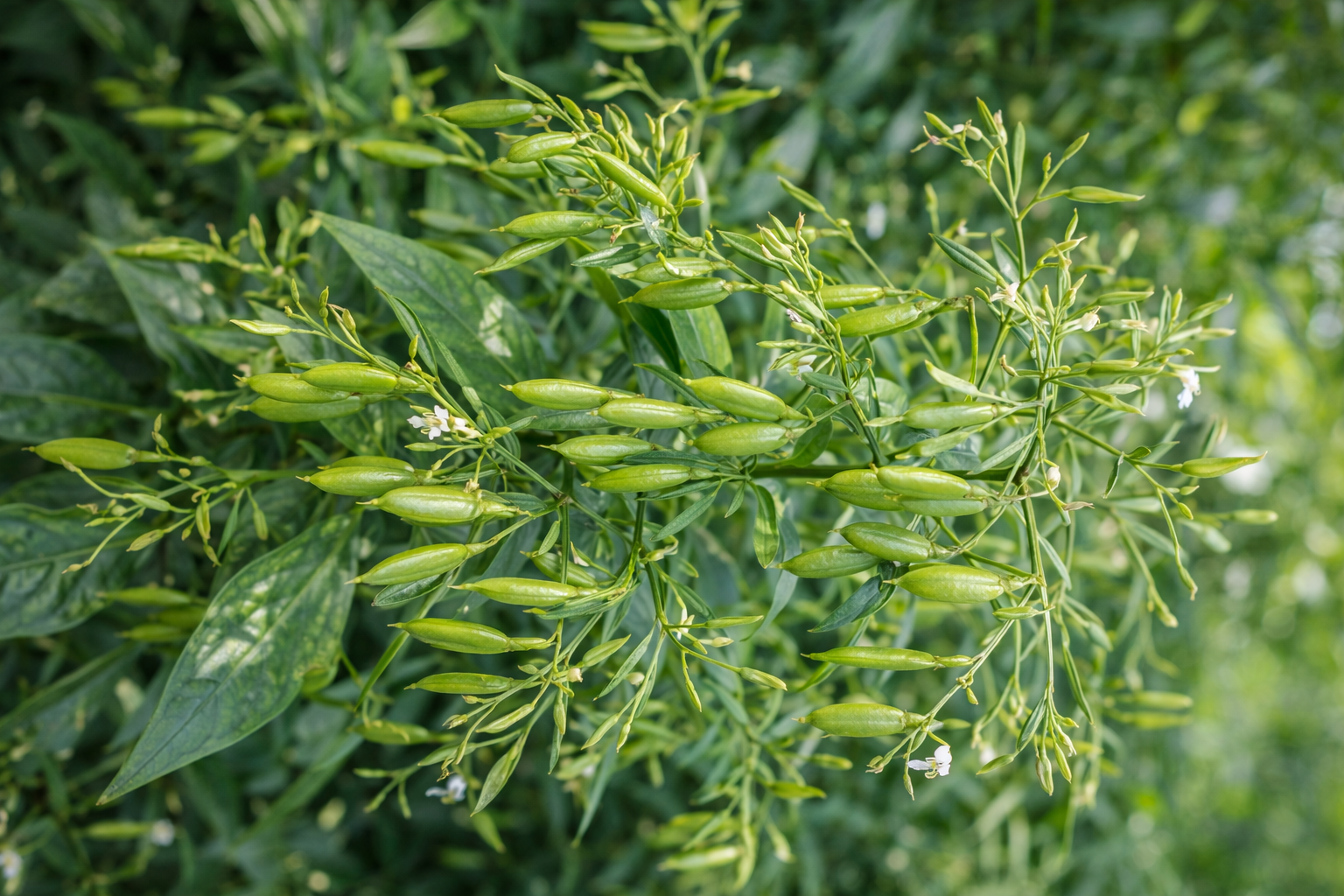
Andrographis is a bitter-tasting herb that was traditionally used as an antipyretic agent. It is valued in Unani, Ayurvedic, and Siddha medicine, and in Scandinavian countries, a solution of Andrographis called Kan Jang has been used as an immunostimulant.
Andrographis is useful in:
- Alleviating sore throats and flu symptoms like cough
- Improving ulcerative colitis
- Reducing pain especially in knee osteoarthritis
- Managing fever and symptoms of tonsilitis
Jump to Section
Medical uses and ethnopharmacological profile of andrographis
Traditional uses
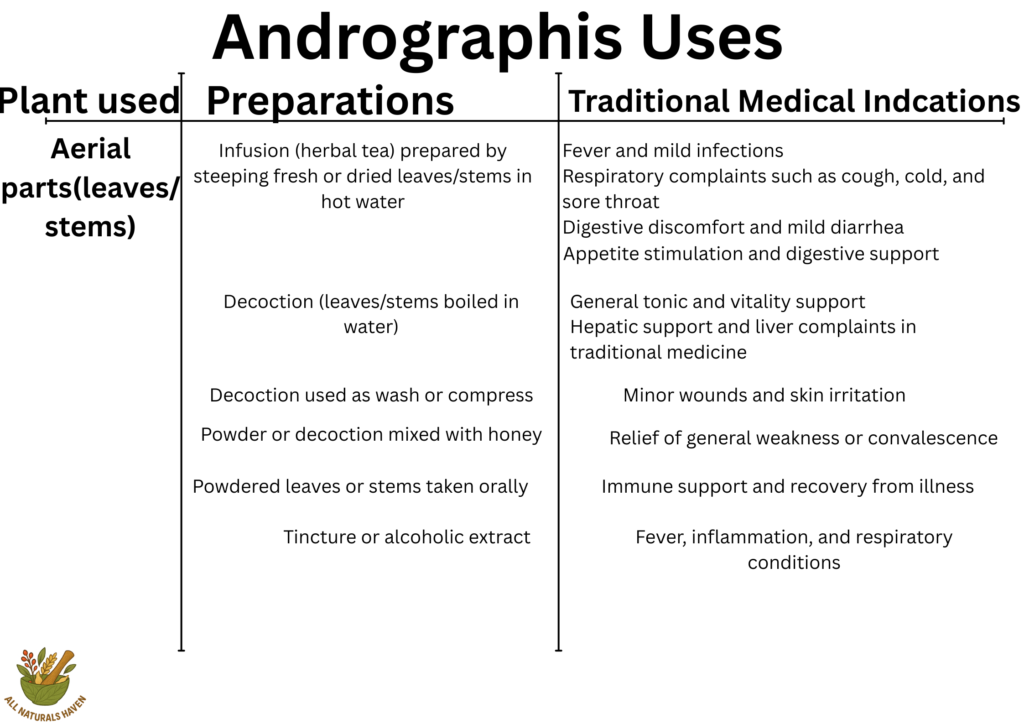
Andrographis has been used as an immunostimulant and antipyretic and to dispel toxins from the body and treat digestive system disorders like diarrhea and irritable bowel syndrome. Its infusions are used as a gargle and to treat symptoms of airway congestion, urinary tract infections, and chronic wounds.
Clinical uses and Research
Anti-inflammatory profile- It prevents and reduces cytokine and uric acid levels, which in turn combats inflammation in human trials. It may alleviate symptoms of gout. In rheumatoid arthritis, 30 mg taken thrice daily for 14 days alleviated swelling and tenderness. Raphael burgos 2009.
In other studies, 1200-1800 mg in three divided doses over 8 weeks showed the same efficacy as mesalamine.
Antifatigue profile– In a human trial, a 12-month pilot study, a twice-daily dosing of 170 mg reduced fatigue in patients with relapsing multiple sclerosis up to 44% in comparison with the placebo group. Andrographolides were isolated to have the effects of T cell modulation, thus reducing metabolic load on the body. Bertoglio 2016
Hypertriglyceridemia profile. In a phase 2 randomized human trial, a 120 mg dose for 8 weeks improved triglyceride levels compared to gemfibrozil. This was via downregulation of the sterol regulatory element binding proteins.
Stimulation of immune profile. In a randomized trial of university students, a 100 mg twice-daily regimen of Andrographis extract showed improved immune function, including increased lymphocytes and CD3+ AND CD4+ T cells.
Alcohol use disorder profile- In vivo studies in alcoholic rats: andrographolide extract reduced voluntary alcohol consumption at high doses. It works through cue-induced alcohol-seeking behavior at doses of 150-450 g daily.
Boosting cognitive function profile– In vivo data show use of andrographolide extract as able to prevent the increase in AChE, BChE, and MAO in the hippocampus, thus eliciting an improvement in memory and cognitive functions.
Anticancer properties– In animal studies, andrographolide extract was responsible for alleviating the progression of cancer through the proposed mechanism of induced chemokine activity and induction of apoptosis.
Contraception– In animal studies, male rats treated with leaf decoction for 8 weeks resulted in a dose-dependent decrease in sperm counts, mobility, and viability, hence a possible application as a contraceptive.
Safety and Dosing profile of Andrographis
Forms and Dosing
Andrographis can be taken as
Powdered dry herb– leaves and stems dried and crushed.
Teas– 2 teaspoons of powder boiled in about 200 ml of water.
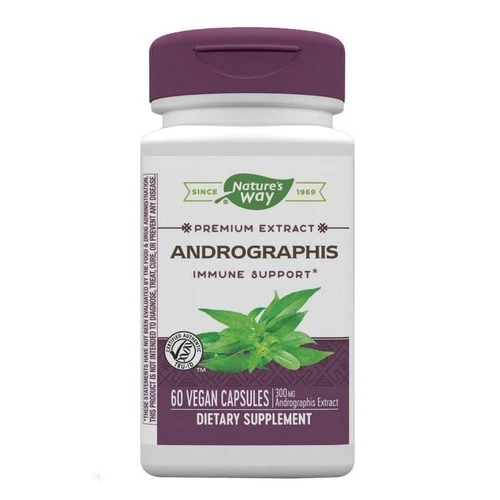
Capsules/tablets– powder compressed into a tablet mostly for clinical studies
Tinctures– dissolved in ethanol in a ratio of 1:3/5 (extract to ethanol)
- Dried herbs are recommended at 3-6 grams per day, but not daily, at least thrice a week.
- Tinctures can be taken up to 5 ml a day, but not daily.
- 90 mg daily in rheumatoid arthritis
- 60 mg daily for the common cold
- 180-360 mg for pharyngotonsillitis
- 120 mg a day for hypertriglyceridemia
- 280-340 mg daily for multiple sclerosis
- 1200-1800 mg thrice daily for 8 weeks in ulcerative colitis
- 100 mg twice daily for 30 days in immunostimulation.
Side effects And Interactions
Side effects of andrographis in high or prolonged doses include:
- Bitter taste
- Allergic reactions
- Headache
- Reduced sex drive
- Renal toxicity
Use with caution with anticoagulants and antiplatelets, as it may increase the risk of bleeding. Could also antagonize immunosuppressants due to its immunostimulatory effect.
NB—Avoid use in pregnancy and breastfeeding since there has been reports of miscarriage
Andrographis description and composition
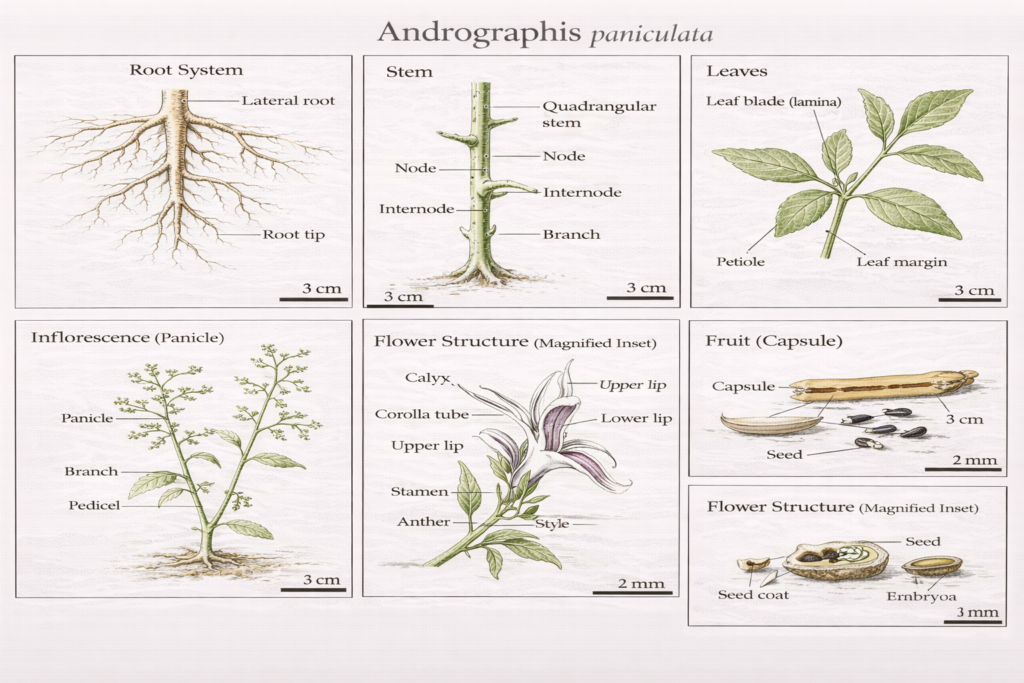
Andrographis, also called false waterwillow, alui, chuan xin lian, and mahatita, among others, belongs to the family Acanthaceae. Its medicinally relevant species include A. paniculata and A. explicata. It is native to India in areas like Myanmar and Sri Lanka. It is also found in China and Southeast Asia.
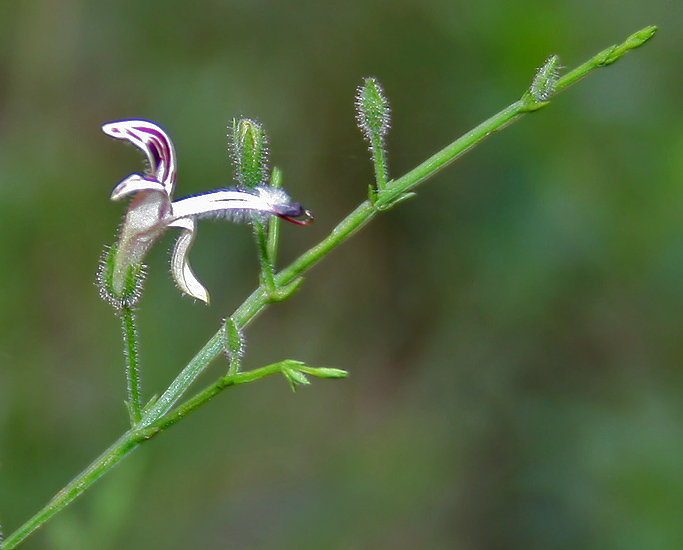
Andrographis has yellowish-brown seeds that develop inside slender capsules. Its flowers are small, tubular-like, and white with purplish-rose spots and appear to be flared at the mouth. The leaves stretch out in opposite directions and are long, pointed, and smooth with a greenish color. It possesses a pale taproot that dives into the soil. The stems are square with angles on new growth enlarged at the nodes.
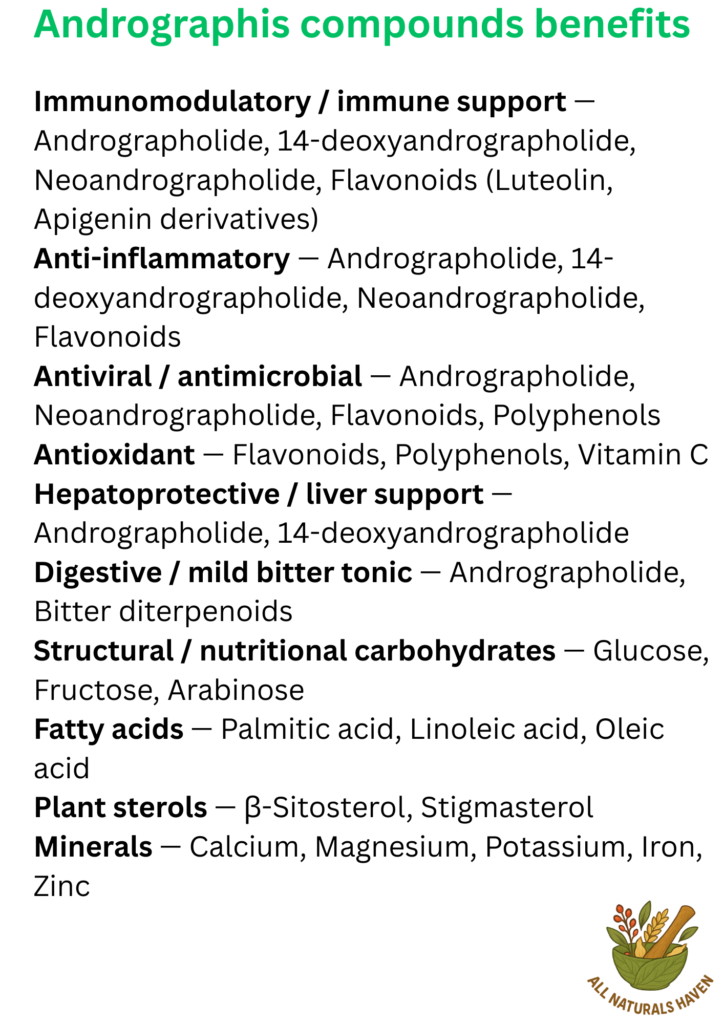
Andrographis contains diterpene lactones, flavonoids, luteolin, apigenin, phenolic acids like ferulic and caffeic acid, and andrographolides.
Andrographis cultivation
Andrographis thrives in humid climates with temperatures of around 25–32 degrees Celsius. It does well in loamy or sandy loamy soil with a slightly acidic to neutral pH of 6-7 and with organic matter. Propagation is done by seeds and is sown near the surface, spaced about 20-30 centimeters apart. Moderate watering should be done to maintain moisture content, but do not overwater the plant.
Harvesting is done by cutting the upper part of the plant (the leaves and stems) about 10 centimeters above the ground. Wash the produce well, and dry it in the shade. Once dry, store in airtight jars away from sunlight. Andrographis is best stored as a dried whole and not as powders; powders degrade faster.
REFERENCES
Sandborn WJ, Targan SR, Byers VS, Rutty DA, Mu H, Zhang X, Tang T. Andrographis paniculata extract (HMPL-004) for active ulcerative colitis. Am J Gastroenterol. 2013 Jan;108(1):90-8. doi: 10.1038/ajg.2012.340. Epub 2012 Oct 9. PMID: 23044768; PMCID: PMC3538174.
Phunikhom, Kutcharin & Md, Kovit & Aromdee, Chantana & Phd, Tarinee & Sattayasai, Jintana. (2015). Effect of Andrographis paniculata Extract on Triglyceride Levels of the Patients with Hypertriglyceridemia: A Randomized Controlled Trial. Journal of the medical association of Thailand. 98. 41-47.
Rajanna M, Bharathi B, Shivakumar BR, Deepak M, Prashanth D, Prabakaran D, Vijayabhaskar T, Arun B. Immunomodulatory effects of Andrographis paniculata extract in healthy adults – An open-label study. J Ayurveda Integr Med. 2021 Jul-Sep;12(3):529-534. doi: 10.1016/j.jaim.2021.06.004. Epub 2021 Aug 8. PMID: 34376353; PMCID: PMC8377179.
Adedayo, Bukola & Jesubowale, Oluwapelumi & Adebayo, Adeniyi & Oboh, Ganiyu. (2020). Effect of Andrographis paniculata leaves extract on neurobehavioral and biochemical indices in scopolamine-induced amnesic rats. Journal of Food Biochemistry. 45. e13280. 10.1111/jfbc.13280.
Zhou J, Zhang S, Ong CN, Shen HM. Critical role of pro-apoptotic Bcl-2 family members in andrographolide-induced apoptosis in human cancer cells. Biochem Pharmacol. 2006 Jul 14;72(2):132-44. doi: 10.1016/j.bcp.2006.04.019. Epub 2006 Apr 29. PMID: 16740251.
Ogundola AF, Akhigbe RE, Saka WA, Adeniyi AO, Adeshina OS, Babalola DO, Akhigbe TM. Contraceptive potential of Andrographis paniculata is via androgen suppression and not induction of oxidative stress in male Wistar rats. Tissue Cell. 2021 Dec;73:101632. doi: 10.1016/j.tice.2021.101632. Epub 2021 Aug 25. PMID: 34479074.
Leave a Reply