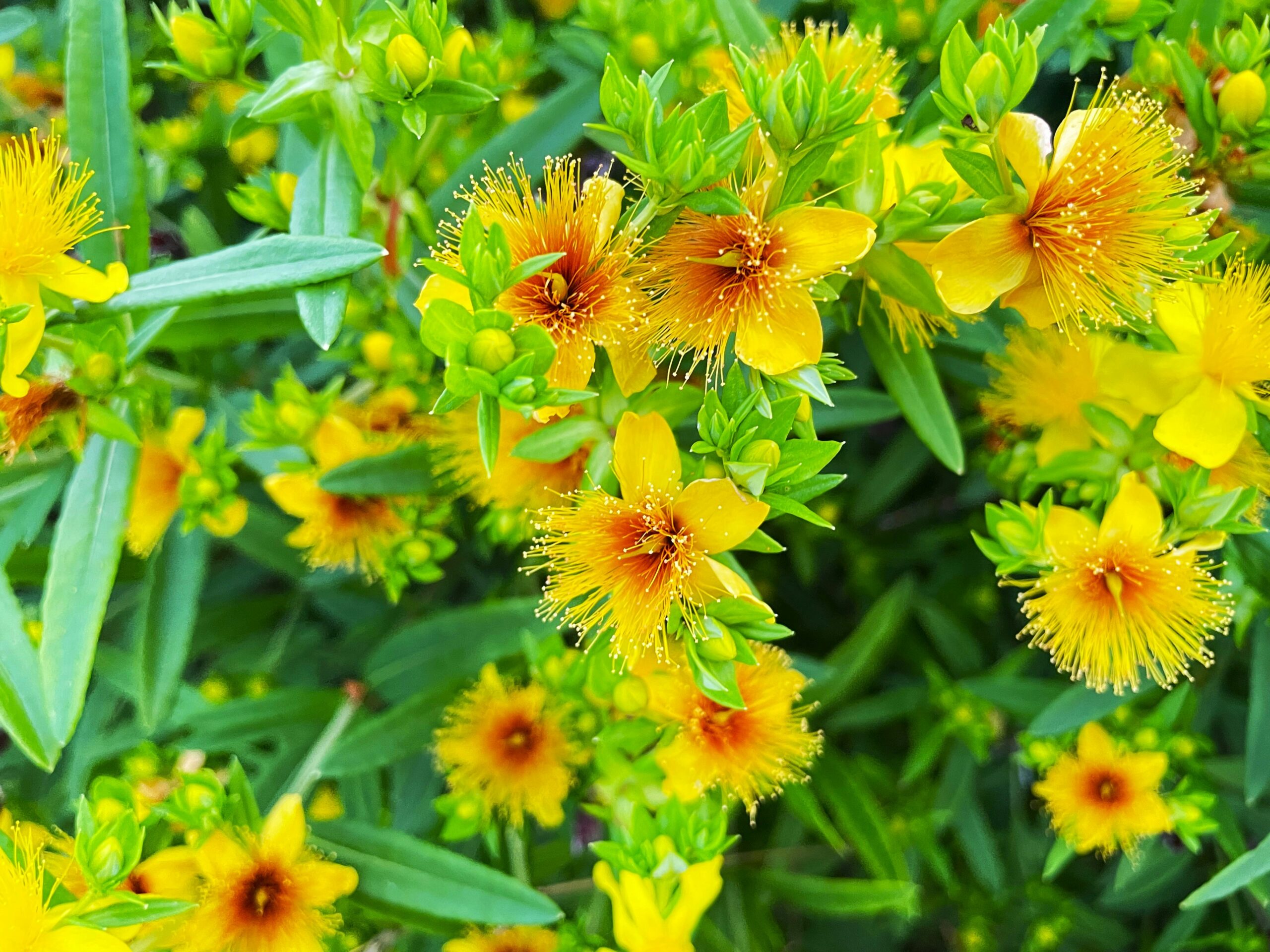
St. John’s wort, also known as goatweed, Tipton’s weed, or Klamath weed, is an herb belonging to the family Hypericaceae. It is native to North Africa, Europe, and West Asia. It is currently cultivated in North America, Canada, Australia, New Zealand, and China. It was used in some ancient communities to drive away evil spirits.
St. John’s Wort is used in:
- Depressive disorders
- Alleviating menopausal symptoms
- Topically in wound healing
- Dealing with psychosomatic symptoms
Jump to section
- Medical uses and ethnopharmacology
- Safety and dosing profile
- Description and Composition
- Cultivation, harvesting and storage
Medical uses and ethnopharmacological profile of St. John’s wort
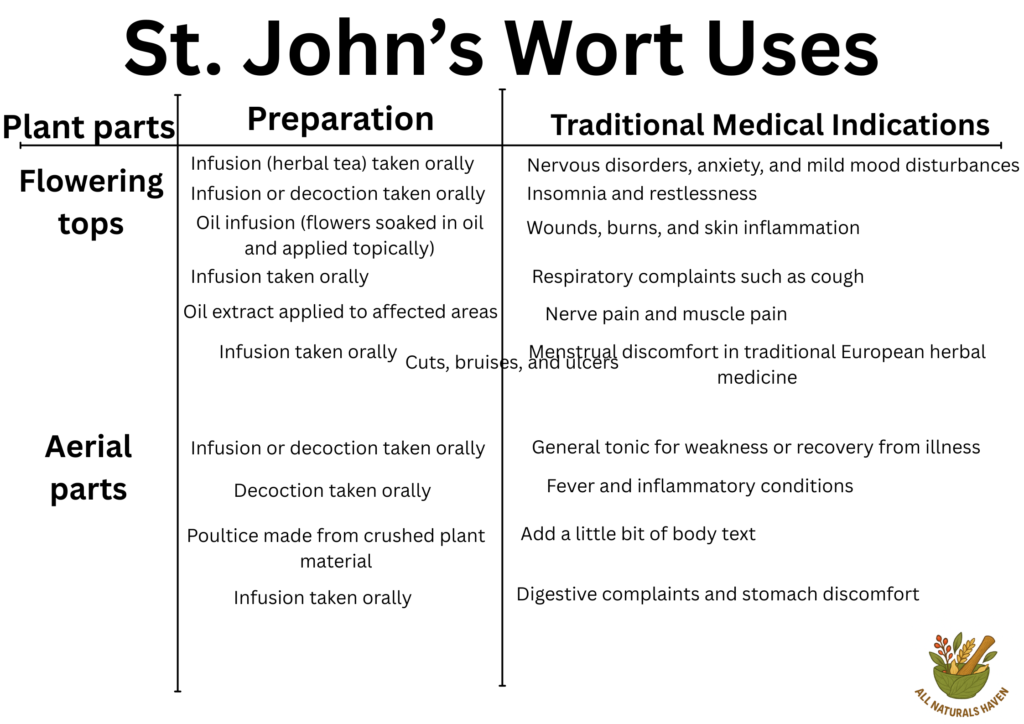
Traditional Uses
The poultice was used in wound healing (injuries, burns, scalds, neuralgia, and sciatica) to soothe skin and prevent scarring. It acted as a digestive aid in the relief of conditions like gastritis, as a diuretic for kidney stones, and for bladder irritations. In the airways it was used to clear congested airways and alleviate chronic coughs. In menstruation, it was used to alleviate symptoms of dysmenorrhea. In small doses it was used to manage enuresis, anxiety, and melancholy.
Clinical Uses and Research
Major depressive disorder: hydroalcoholic extracts of flowering plant tops administered to people with depression at a dose of 300 mg thrice daily for 6 weeks elicited a 50% reduction in Hamilton depression cases. The compounds hypericin and hyperforin showed nonselective inhibition of dopamine and SNRI by increasing intracellular sodium concentrations. ( szegedi 2005)
In another study with moderate depression, ethanolic extract at a dose of 250 mg twice daily acted by inhibiting monoamine oxidase inhibitors with comparable, though milder, action to imipramine but with fewer side effects. (EMA journal 2018)
Plaque-type psoriasis: In participants with bilateral psoriasis, 5% ointment from leaves/flowers applied twice daily for 4 weeks was able to decrease plaque thickness, erythema, and scaling. This was due to inhibition of inflammatory cytokines and reduction of T-cell infiltration of skin lesions.
Psychosomatic disorders: A standardized extract at a dose of 300 mg twice daily for 6 weeks decreased the frequency of unexplained pain and fatigue in a small, limited study. This was through the modulation of GABA and L-glutamate intake and stabilizing CNS responses to physical distress.
Menopausal symptoms: In women between 45 and 65 years, a standardized extract at 90 mg daily for 12 weeks improved or halted psychological and physiological symptoms like hot flushes. The flavonoids/mild phytoestrogens acted by stabilizing mood-related neurotransmitters affected by estrogen decline.
ADHD: In a small study with participants aged 14-16 years, a standardized extract at a dose of 300-900 mg daily improved hyperactivity and attention scores comparable to atomoxetine. The compound hyperforin increased synaptic levels of dopamine and norepinephrine in the prefrontal cortex.
In Vivo uses and Research
Wound healing: Topical application of flowery shoot ointments or macerates on rats was able to decrease wound closure time and increase tensile tissue growth. The compound flavonoids and hyperforin stimulate fibroblast proliferation and enhance the deposition of collagen in the dermis.
Neuroprotection: Standardized lowering of tops at 100 mg/kg body weight orally in a rat model normalized catalepsy and prevented dopaminergic neuronic death in the substantia nigra. The compound quercetin and hyperforin reduced oxidative stress and reduced cell apoptosis.
Neuropathic pain: Dried extract at a dose of 30-60 mg in a mouse model elicited marked relief from both mechanical and thermal hyperalgesia without any sedation effects. Hypericin acted by downregulating protein kinase C isoforms in the spinal cord. (Nicoletta 2010)
In Vitro Uses and Research
Anticancer: The ethanol extract of flowering parts showed the inhibitory action of AMPK/mTOR signaling while also activating the apoptotic mitochondrial pathway. This led to an increase in pro-apoptotic proteins while reducing MCT-T cell proliferation. (You 2020)
Anti-inflammatory: Standardized hyperforin extract showed direct inhibition of Mpegs-1 without affecting COX-1, thus blocking the inflammatory activity of prostaglandin 2 formation.
Antiviral: A purified fraction from flowers rich in hypericin showed potent inactivation of the HIV and influenza A viruses. This was through the action of inhibiting reverse transcriptase enzymes and disruption of viral envelopes.
Safety and Dosing Profile of St. Johns Wort
Forms and Dosing
Standardized capsules and tablets– 250-1200 a day
Liquid tinctures (1:5)– 2-4 mls thrice daily
Herbal infusions– teas taken up to 3 times daily
Topical oil applications– applied thrice daily
Creams and salves– applied up to thrice daily
Powders– 1-2 teaspoons
- Mild to moderate depression- 300 mg thrice daily or 600 mg twice a day
- Anxiety associated with depression- 900-1200 mg a day
- Pre-menstrual symptoms- 300 mg thrice a day

Interactions
St. John’s Wort decreases the effectiveness of the following drugs:
- Oral contraceptives
- Anticoagulants
- Antiretrovirals (protease inhibitors like indinavir and non-nucleoside reverse transcriptase inhibitors like nevirapine)
- Heart medications like digoxin
- Anticonvulsants (phenobarbitone, phenytoin, carbamazepine)
- Chemotherapy like docetaxel
- Statins like atorvastatin
The herb potentiates the effects of the following drugs and may lead to dangerous blood levels:
- Antidepressants (SSRI, SNRIs, MAOIs)
- Triptans
- Dextromethorphan
- Photosensitizing drugs like amiodarone
Side effects
- Nausea and stomach upset
- Diarrhea
- Allergies like rash, hives and photosensitivity
- Dizziness
- Sedation and fatigue
- Restlessness
- Potential decrease in libido
- Paresthesia
Contraindications
- Bipolar disorder, schizophrenia, and major depressive disorder.
- Pregnancy and breastfeeding
- Children under 12 years
St. John’s wort Description and composition
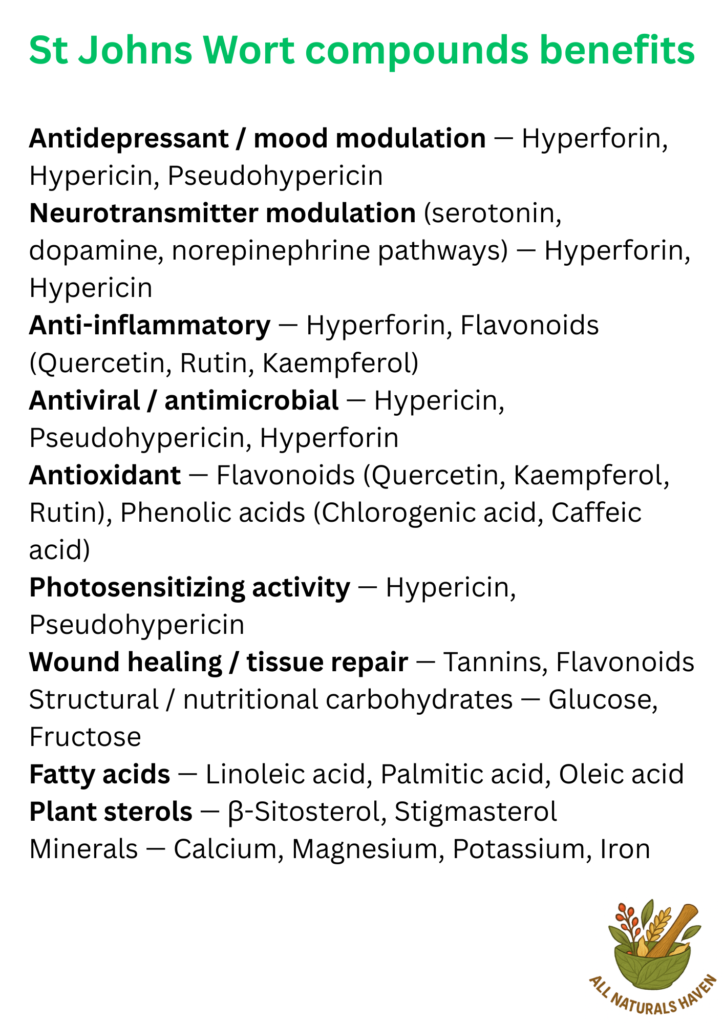
The active compounds in St. John’s wort include naphthodianthrones, phloroglucinols, flavonoids and polyphenols (rutin, quercetin, and biflovanes), proanthocyanidins, phenolics (ferulic and caffeoylquinic acid), and essential volatile oils like pinene, germacrene D, and nonane. It also contains xanthones, tannins, and phytosterols.
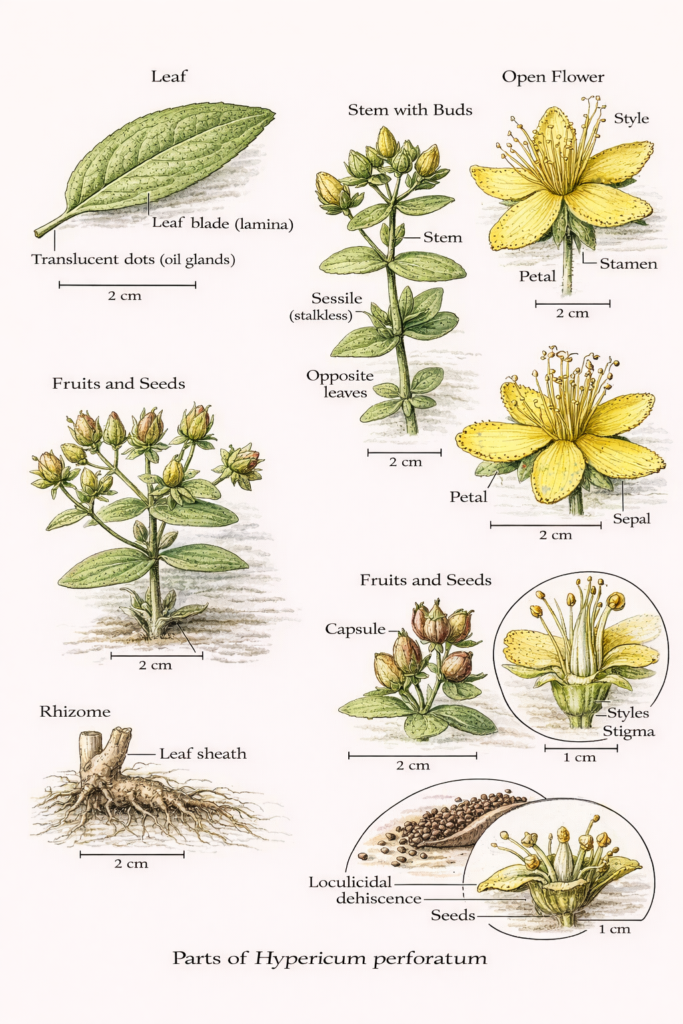
The flowers are terminal clusters with a yellow color; the edges of the petals have tiny black dots. Its leaves are oblong and linear with a distinct appearance of ‘many poked holes’ and also attach directly to the stem. The stem is woody and two-ridged with a reddish maroon color. The fruit are three-chambered capsules containing many seeds, which are brownish to blackish and cylindrical in shape with a slightly pitted surface.
St. John’s Wort Cultivation
This plant can be propagated through seedlings, cuttings, and root divisions. Seeds are sown loosely into the soil because they require light in order to germinate. They are spaces 18-24 inches apart. The cuttings to be transplanted are done before the plant flowers. Goat weed thrives in well-drained loamy or sandy soils with a pH of 5.5-7.0 and in the presence of full sunlight.
The plant is ready for harvesting when you squeeze the yellow buds in between fingers and it leaves a red or purple stain on the skin, usually when it is early to mid-bloom. Harvesting is done on a sunny morning after the dew has evaporated. Collect the aerial parts of the plant, like flowers, buds, and top young leaves (approximately 6 inches). The produce is dried in shades and stored in airtight amber glass containers. This can last up to 18 months.
REFERENCES
Najafizade, Parvane & Hashemian, Farshad & Mansouri, P. & Farshi, Susan & Surmaghi, Mohammadhossein & Chalangari, Reza. (2012). The evaluation of the clinical effect of topical St Johns wort (Hypericum perforatum L.) in plaque type psoriasis vulgaris: A pilot study. The Australasian journal of dermatology. 53. 131-5. 10.1111/j.1440-0960.2012.00877.x.
Volz, HP., Murck, H., Kasper, S. et al. St John’s wort extract (LI 160) in somatoform disorders: results of a placebo-controlled trial. Psychopharmacology 164, 294–300 (2002). https://doi.org/10.1007/s00213-002-1171-6
Grube, B., Walper, A., & Wheatley, D. (1999). St. John’s Wort extract: efficacy for menopausal symptoms of psychological origin. Advances in Therapy, 16(4), 177–186. https://pubmed.ncbi.nlm.nih.gov/10623319/
Niederhofer, Helmut. (2010). St. John’s wort may improve some symptoms of attention-deficit hyperactivity disorder. Natural product research. 24. 203-5. 10.1080/14786410802076259.
Yadollah-Damavandi S, Chavoshi-Nejad M, Jangholi E, Nekouyian N, Hosseini S, Seifaee A, Rafiee S, Karimi H, Ashkani-Esfahani S, Parsa Y, Mohsenikia M. Topical Hypericum perforatum Improves Tissue Regeneration in Full-Thickness Excisional Wounds in Diabetic Rat Model. Evid Based Complement Alternat Med. 2015;2015:245328. doi: 10.1155/2015/245328. Epub 2015 Aug 31. PMID: 26417372; PMCID: PMC4568368.
Gómez del Rio MA, Sánchez-Reus MI, Iglesias I, Pozo MA, García-Arencibia M, Fernández-Ruiz J, García-García L, Delgado M, Benedí J. Neuroprotective Properties of Standardized Extracts of Hypericum perforatum on Rotenone Model of Parkinson’s Disease. CNS Neurol Disord Drug Targets. 2013 Aug;12(5):665-79. doi: 10.2174/1871527311312050013. PMID: 23469842.
Koeberle, Andreas & Rossi, Antonietta & Bauer, Julia & Dehm, Friederike & Verotta, Luisella & Northoff, Hinnak & Sautebin, Lidia & Werz, Oliver. (2011). Hyperforin, an Anti-Inflammatory Constituent from St. John’s Wort, Inhibits Microsomal Prostaglandin E2 Synthase-1 and Suppresses Prostaglandin E2 Formation in vivo. Frontiers in Pharmacology. 2. 7. 10.3389/fphar.2011.00007.
Lavie G, Mazur Y, Lavie D, Prince AM, Pascual D, Liebes L, Levin B, Meruelo D. Hypericin as an inactivator of infectious viruses in blood components. Transfusion. 1995 May;35(5):392-400. doi: 10.1046/j.1537-2995.1995.35595259149.x. PMID: 7740610.
Leave a Reply