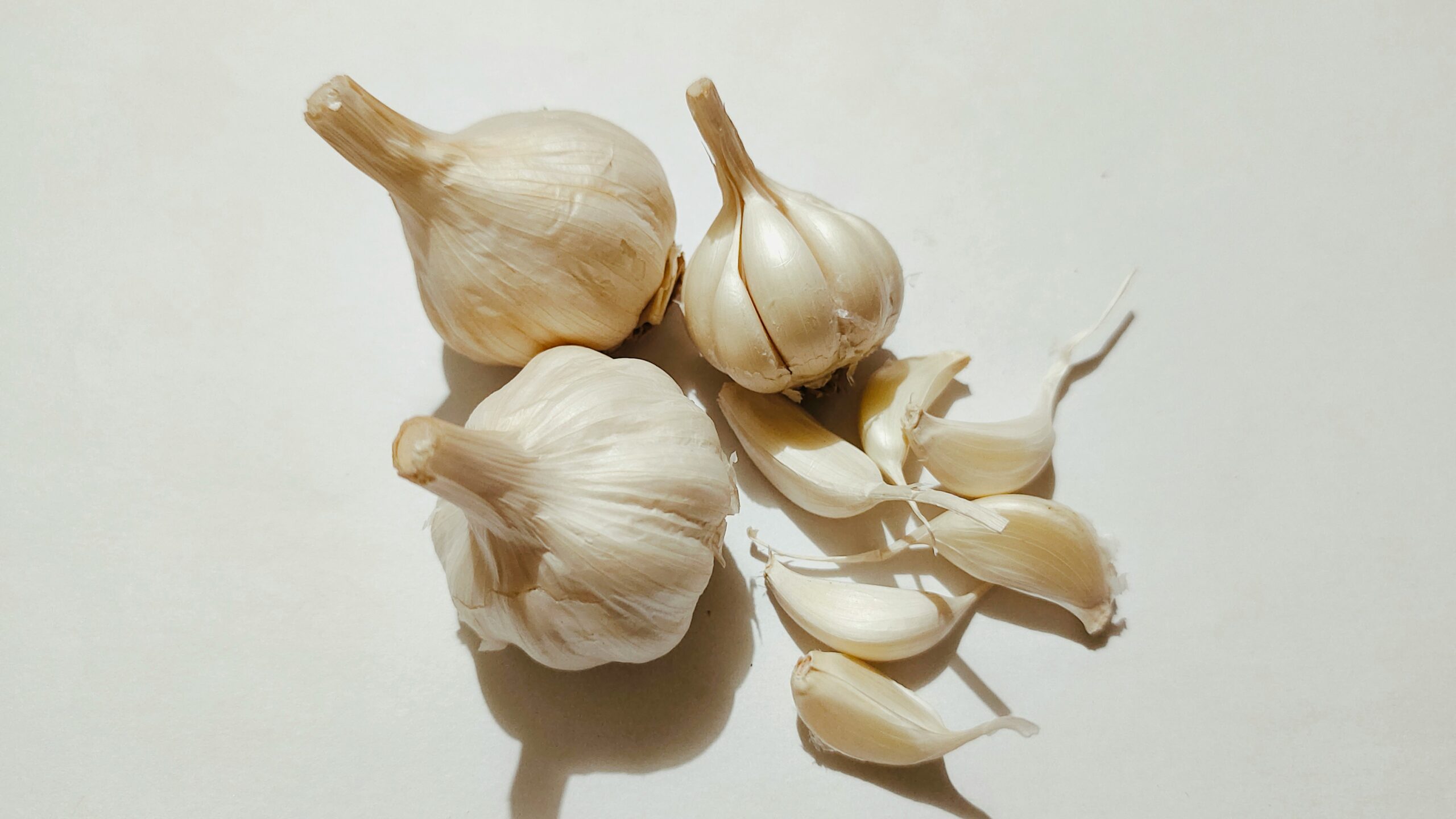
Garlic, also commonly known as kitungu saumu, stinking rose, or poor man’s treacle, is a common culinary spice found in most home kitchens. It belongs to the family Amaryllidaceae and is native to Central Asia and northeastern Iran. It is currently cultivated in China, India, Spain, parts of the United States (California), Egypt, and South Korea. It is found as either a hard neck or a soft neck.
Garlic can be used as follows:
- Reduce blood pressure and arterial stiffness
- Lower total bad cholesterol in the body
- Support the immune system
- Reduce fasting blood sugar
- Improve exercise tolerance
- Reduce toxin levels in blood (lead).
Jump to section
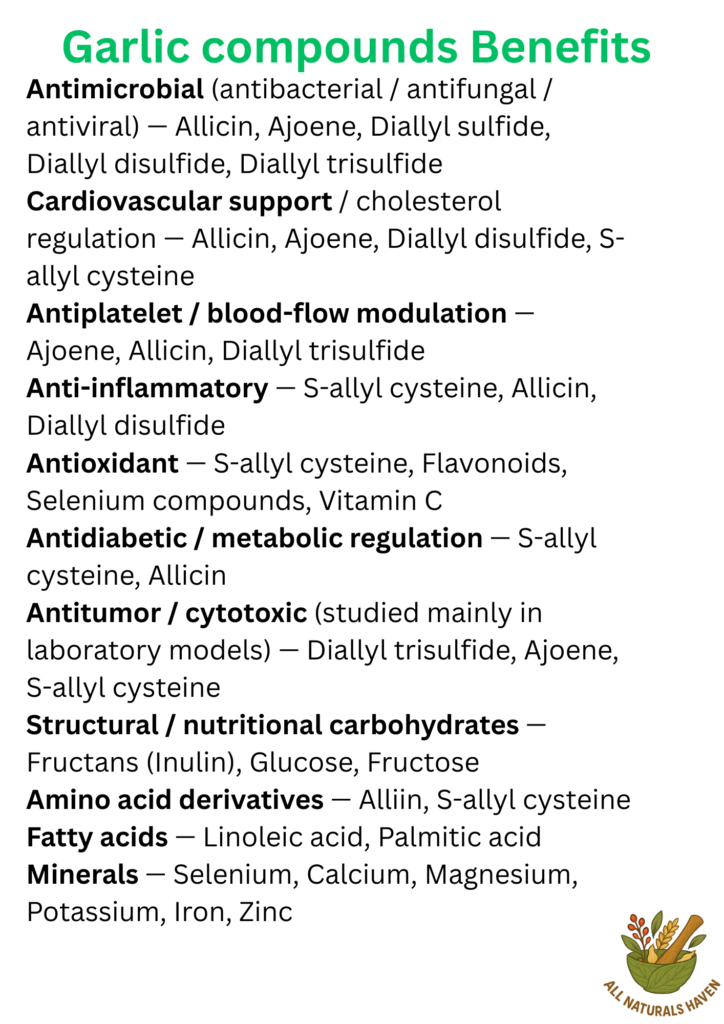
Medical uses and ethnopharmacological profile of Garlic
Traditional uses
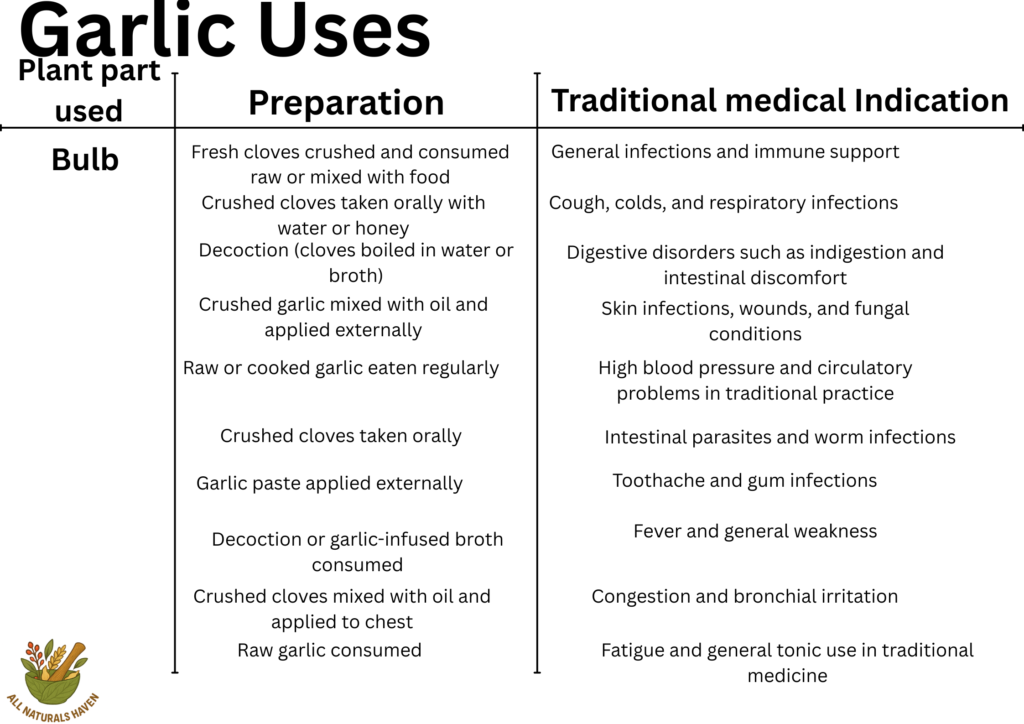
It was given to athletes to improve stamina and also as a common battlefield wound antiseptic to prevent wound gangrene. It was also used as a vermifuge and a heart tonic for ‘vata’ disorders, and ‘da suan’ was used to eliminate food stagnation in the belly and counteract toxins. It was also used in pulmonary issues like regulating mucus secretions as an expectorant.
Clinical uses and Research
Anti-hypertension: In adults with hypertension, a 600-1200 dose of bulb extract elicited an average reduction of systolic and diastolic blood pressure. This was through the action of S-allyl cysteine that stimulated nitric oxide releases, thus having a vasodilatory effect.
Hyperlipidemia: In a clinical trial, standardized extract from bulb powder administered at doses of 600-900 mg once daily for 8-12 weeks was able to reduce cholesterol by 7-10%. This was through the action of alliin broken down to allicin that inhibited the enzyme HMG CoA responsible for the synthesis of cholesterol, hence reducing levels of synthesized cholesterol. ( Adler Aj 1997)
Immune support: In volunteers administered with 2.56 grams of bulb extract for 90 days, there was recorded a 61% reduction in the number of days with cold and flu symptoms like headache and runny nose. This was through the action of water-soluble polyphenols that increased the proliferation of natural killer cells in the body.
Oral and pancreatic precancerous lesions: In research with participants suffering from oral submucous fibrosis, topical/systemic allicin-rich extract at a dose of 900 mg daily showed improvement in flexibility of mouth opening, reduction in burning mouth sensations, and generally improved the quality of life. Allicin acted by decreasing levels of tumor necrosis factor alpha protein activity and also inhibiting collagen cross-linking.
Glycemic control: In patients with type 2 diabetes mellitus, garlic powder tablets (used as an adjunct to metformin) at a dose of 600-1500 mg daily for 12-24 weeks was able to significantly reduce fasting blood sugars and Hb1A c. Allicin and S-allyl cysteine acted by enhancing insulin secretion from pancreatic beta cells. It was also suspected to inhibit the glycation of proteins.
In Vivo uses and Research
Antitoxin: In rats with lead-induced toxicity, bulb aqueous extract at 100 mg/kg daily for 4 weeks was able to reduce levels of lead in tissues and blood. The sulfhydryl groups acted through chelation of heavy metals as well as reducing the oxidative stress on the liver and kidneys. ( Senapti 2001)
Atherosclerosis: Raw garlic bulb juice fed to diabetic rats at 250 mg/kg for 8 weeks elicited a decrease in serum glucose levels, triglycerides, and cholesterol. The compound S-methyl cysteine was thought to act via increasing both insulin secretion and sensitivity.
Type 2 diabetes: Bulb oil extract at 5 mg/kg thrice a week decreased atherosclerotic plaque area in the aorta. Diaryl trisulfide was isolated as the compound that inhibited lipid accumulation and vascular muscle cell proliferation.
In Vitro Uses and Research
Anti-tumor: The isolated colorectal cancer cell lining when exposed to bulb oil soluble extract showed a dose-dependent inhibition of cancer cell stability and proliferation. This was due to the action of ajoene and diallyl sulfide that induces programmed cell death through reactive oxygen species. (Zhou 2020)
Antibacterial: In methicillin-resistant Staphylococcus aureus, freshly crushed juice rich in allicin was able to inhibit bacterial activity. It acted via reacting with thiol groups of bacterial enzymes.
Neuroprotection: In hippocampal neurons of rats, bulb extract protects against amyloid beta-induced neurotoxicity. This was through the scavenging of superoxide radicals and inhibition of NF-kB activation by the compound S-allyl cysteine.
Safety And Dosing profile of Garlic
Forms and Dosing
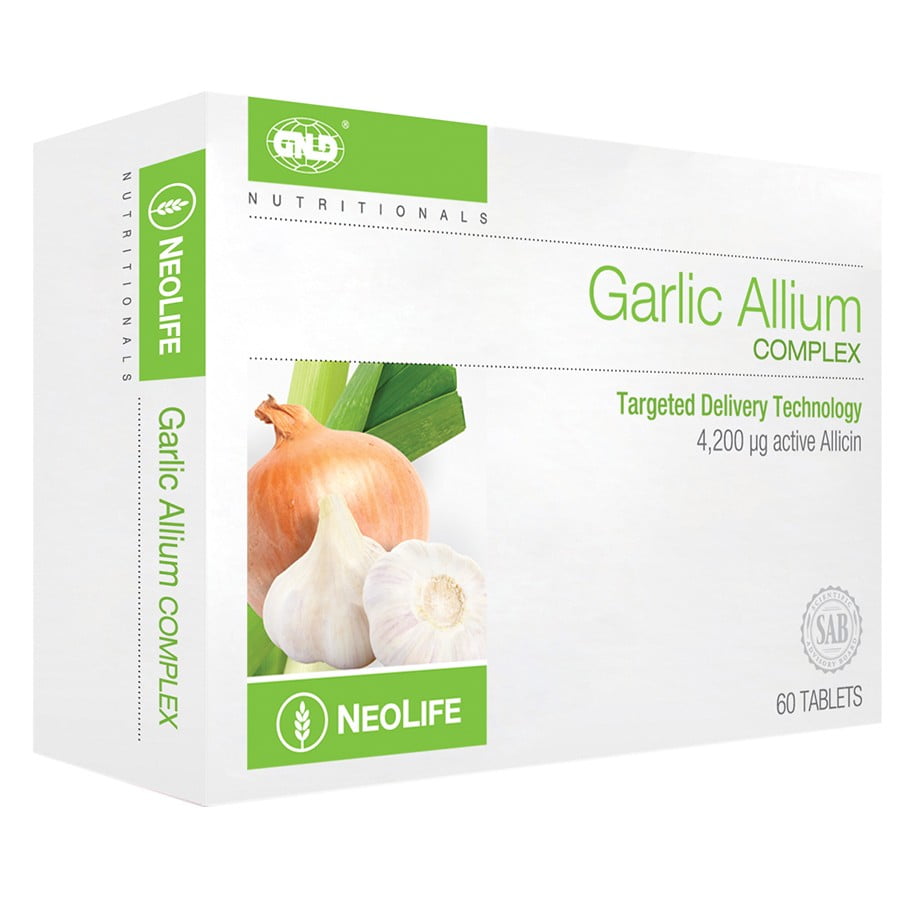
Fresh garlic– 2-5 grams daily
Powdered garlic– 2-5 grams
Aged extract– 600-2400 mg a day
Garic oil – 2- 5 drops of highly concentrated oil.
Poultice – applied to skin
Standardized capsules and tablets– 600-1200 mg in divided doses.
- Hyperlipidemia-600-1200 mg a day
- Hypertension- 600-900mg a day
- Artherosclerosis- 1.2-2.4 grams a day
- Common cold- 180 mg a day
Interactions
- Antihypertensives (lisinopril, losartan, amlodipine)- may lead to risk of hypotension
- Blood thinners- may lead to risk of excessive bleeding
- Antiviral protease inhibitors, like saquinavir, reduce drug concentrations, hence efficiency.
- Antidiabetic- may be used as an adjunct, as it may cause hypoglycemia
- Immunosuppressants, like cyclosporine- may alter the bioavailability and effectiveness of the drug
Side effects
- Heartburn and acid reflux
- Abdominal cramping and pain
- Bad breath
- Bloating and flatulence
- Contact dermatitis
- Acantholysis (rare)
Contraindications
- Peptic ulcers and gastritis
- Irritable bowel syndrome
- Hypotension
- Long contact period for crushed garlic poultice or paste
Garlic Description and composition
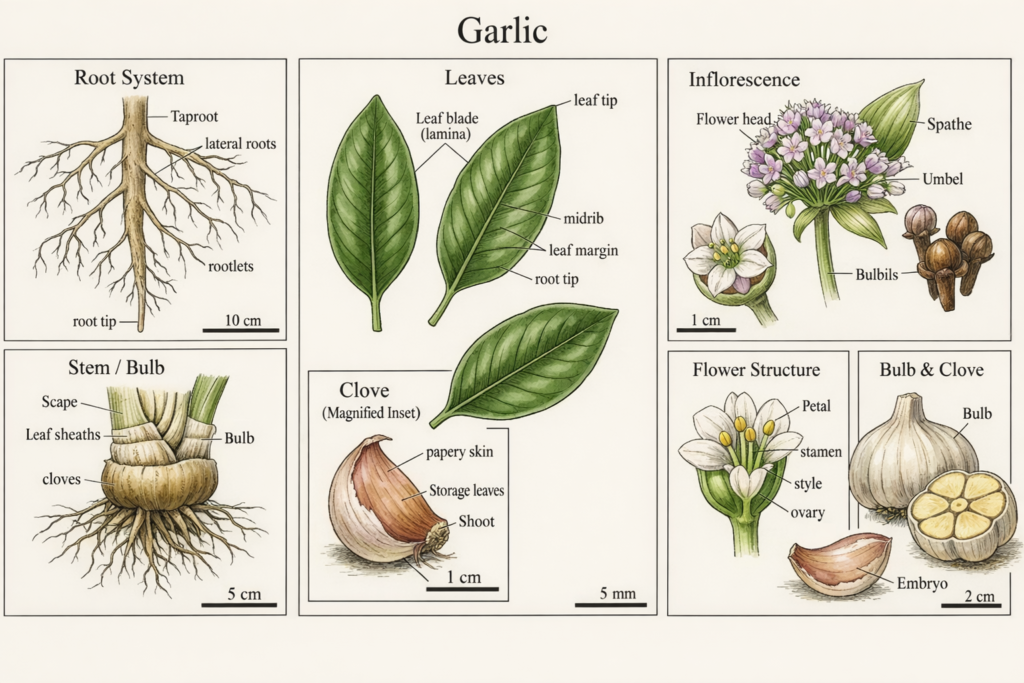
Garlic contains compounds like alliin (metabolized in the body into allicin); sulphuric compounds like S-allyl cysteine and S-allyl mercaptocysteine; saponins (steroidal), phenolic compounds (caffeic, ferulic, and p-coumaric acids), minerals (selenium, manganese, and germanium), and vitamins (pantothenic acid, B6, and C). It also contains ajoene, vinyldithiins, allixin, alkaloids, tannins, carbohydrates, and proteins.
The leaves are green with a leathery and fibrous feel. It is V-shaped. The cloves are the fleshy part with a heart (the central green sprout) and have a crescent shape. The inside is creamy white to pale ivory yellow in color. The bulb houses between 8 and 20 cloves and is white and covered with thin papery sheaths. The roots are white and oval. They are also fragile, non-woody, and fibrous.
Garlic Cultivation
Garlic is propagated via cloves. Before planting, the seeds undergo vernalization through cold storage for 4-8 weeks to later on trigger bulb differentiation (though not all species). It is planted with the blunt end pointing downwards and the apex facing upwards, 5-8 centimeters deep and 15-30 centimeters apart. It thrives in well-drained friable soils of pH 6-7 with full sun. Watering should be stopped 2-3 weeks before harvesting.
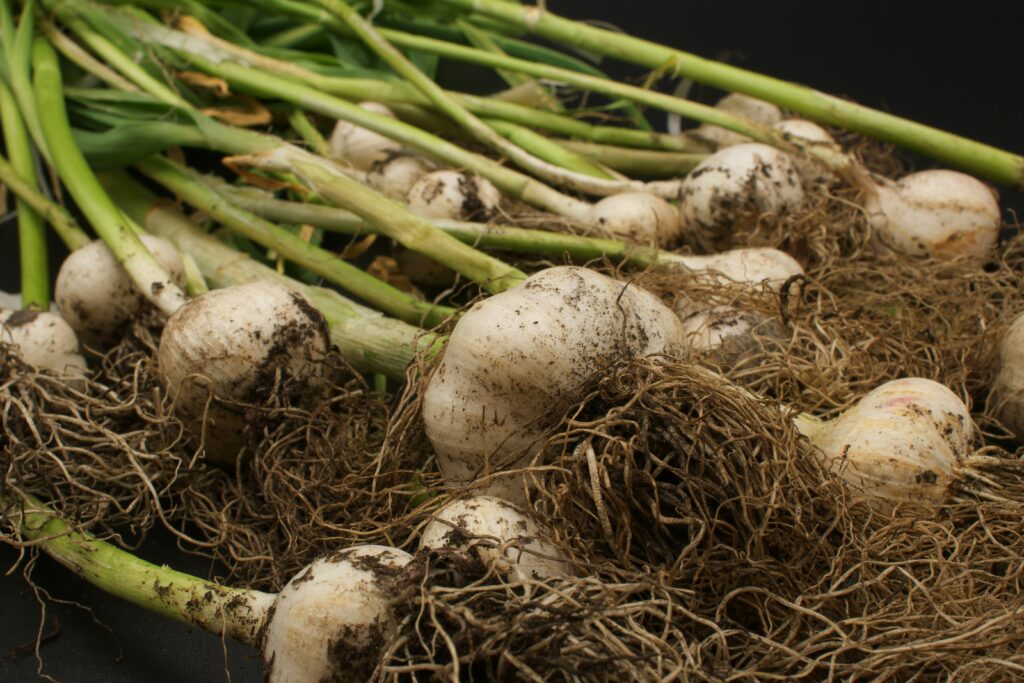
Harvesting is ideal when the bottom leaves turn brown while the upper leaves are still maintaining the original green color. Use a garden fork to loosen the soil to expose the bulb. Lift it out slowly and gently; do not pull it by the stem. Once harvested, do not expose to prolonged periods of sun, as it can sunscald the cloves.
Cure the harvest by shade-drying in well-ventilated areas for around 4 weeks until the skin is papery and the neck is constricted. The roots are then trimmed and the stalks cut off. Store in breathable paper bags, and only peeled ones can be stored in airtight containers.
REFERENCES
RIED, K. (2020). Garlic lowers blood pressure in hypertensive subjects, improves arterial stiffness and gut microbiota: A review and meta-analysis. Experimental and Therapeutic Medicine, 19(2), 1472–1478. https://doi.org/10.3892/etm.2019.8374
Nantz, Meri & Rowe, Cheryl & Muller, Catherine & Creasy, Rebecca & Stanilka, Joy & Percival, Susan. (2012). Supplementation with aged garlic extract improves both NK and γδ-T cell function and reduces the severity of cold and flu symptoms: A randomized, double-blind, placebo-controlled nutrition intervention. Clinical nutrition (Edinburgh, Scotland). 31. 337-44. 10.1016/j.clnu.2011.11.019.
Kawasaki H, Nussbaum G. Therapeutic potential of garlic, aged garlic extract and garlic‑derived compounds on pancreatic cancer (Review). Biomed Rep. 2025 Jan 27;22(3):54. doi: 10.3892/br.2025.1932. PMID: 39926043; PMCID: PMC11803370.
Sasi M, Kumar S, Kumar M, Thapa S, Prajapati U, Tak Y, Changan S, Saurabh V, Kumari S, Kumar A, Hasan M, Chandran D, Radha, Bangar SP, Dhumal S, Senapathy M, Thiyagarajan A, Alhariri A, Dey A, Singh S, Prakash S, Pandiselvam R, Mekhemar M. Garlic (Allium sativum L.) Bioactives and Its Role in Alleviating Oral Pathologies. Antioxidants (Basel). 2021 Nov 21;10(11):1847. doi: 10.3390/antiox10111847. PMID: 34829718; PMCID: PMC8614839.
Zhao X, Cheng T, Xia H, Yang Y, Wang S. Effects of Garlic on Glucose Parameters and Lipid Profile: A Systematic Review and Meta-Analysis on Randomized Controlled Trials. Nutrients. 2024 May 29;16(11):1692. doi: 10.3390/nu16111692. PMID: 38892625; PMCID: PMC11174586.
Khalid Rahman, Gordon M. Lowe, et al. 2006. Garlic and Cardiovascular Disease: A Critical Review, The Journal of Nutrition, Volume 136, Issue 3, 2006, Pages 736S-740S, ISSN 0022-3166, https://doi.org/10.1093/jn/136.3.736S.
(https://www.sciencedirect.com/science/article/pii/S0022316622081330)
Sanie-Jahromi F, Zia Z, Afarid M. A review on the effect of garlic on diabetes, BDNF, and VEGF as a potential treatment for diabetic retinopathy. Chin Med. 2023 Feb 17;18(1):18. doi: 10.1186/s13020-023-00725-9. PMID: 36803536; PMCID: PMC9936729.
Ankri S, Mirelman D. Antimicrobial properties of allicin from garlic. Microbes Infect. 1999 Feb;1(2):125-9. doi: 10.1016/s1286-4579(99)80003-3. PMID: 10594976.
Mathew B, Biju R. Neuroprotective effects of garlic a review. Libyan J Med. 2008 Mar 1;3(1):23-33. doi: 10.4176/071110. PMID: 21499478; PMCID: PMC3074326.
Leave a Reply