
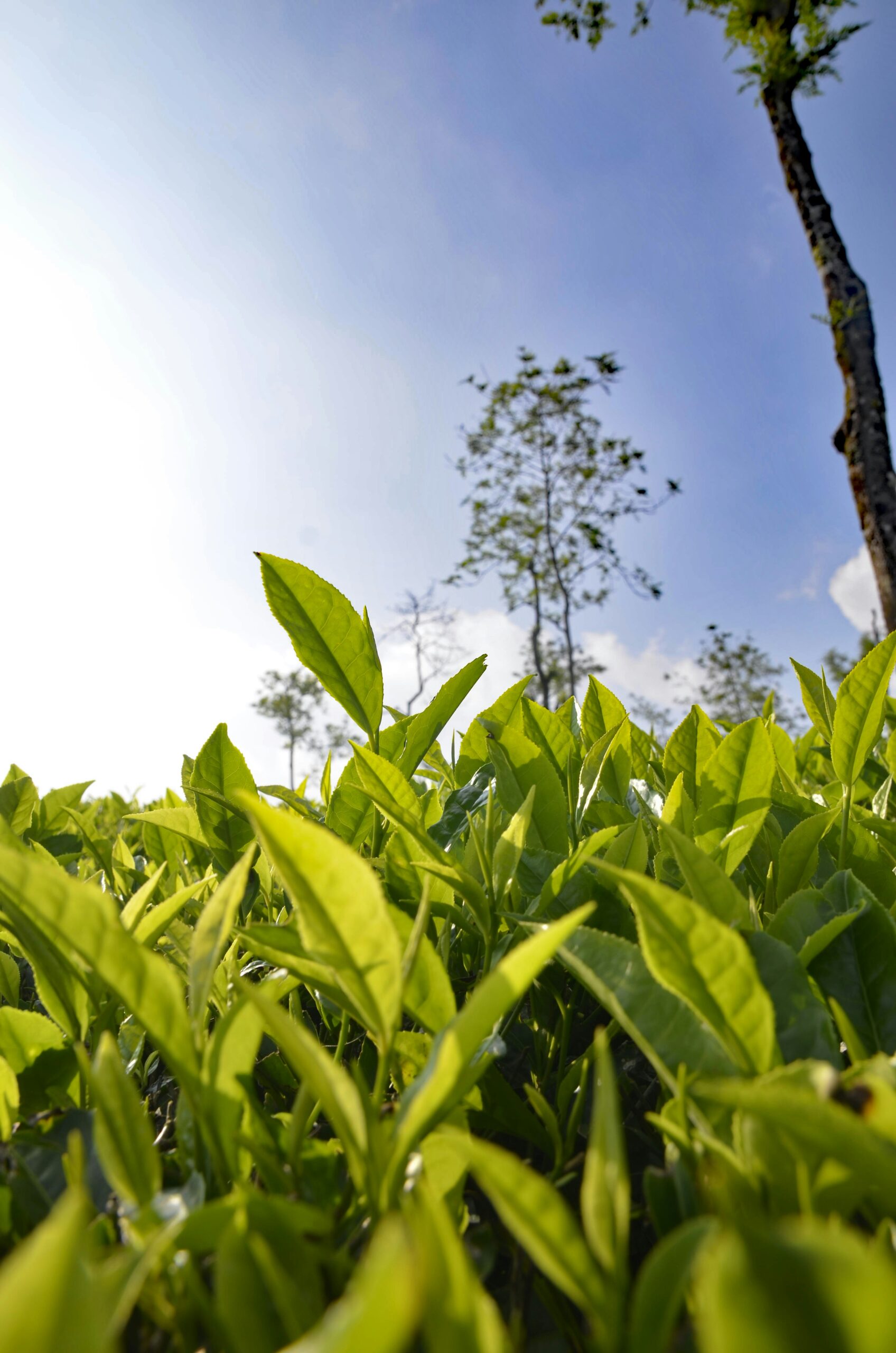
Green tea is a common herbal preparation that primarily comes from the leaves of the Camellia sinensis plant. It is commonly referred to as a tea plant/shrub or Chinese tea. The plant belongs to the family Theaceae and is native to southwest China, northern Myanmar, northeastern India, Laos, and Vietnam. It is currently cultivated in Japan and Kenya.
Green is used as follows:
- Improves heart health via improving endothelial function and reducing systolic pressure
- Lowering of bad (LDL) cholesterol levels
- Reducing fasting blood sugar levels
- Improve cognitive performance, attention and memory
- Induce a calming and alert effect
- In reducing belly fat and body mass index
Jump to section
Medical Uses and ethnopharmacological profile of green tea plant
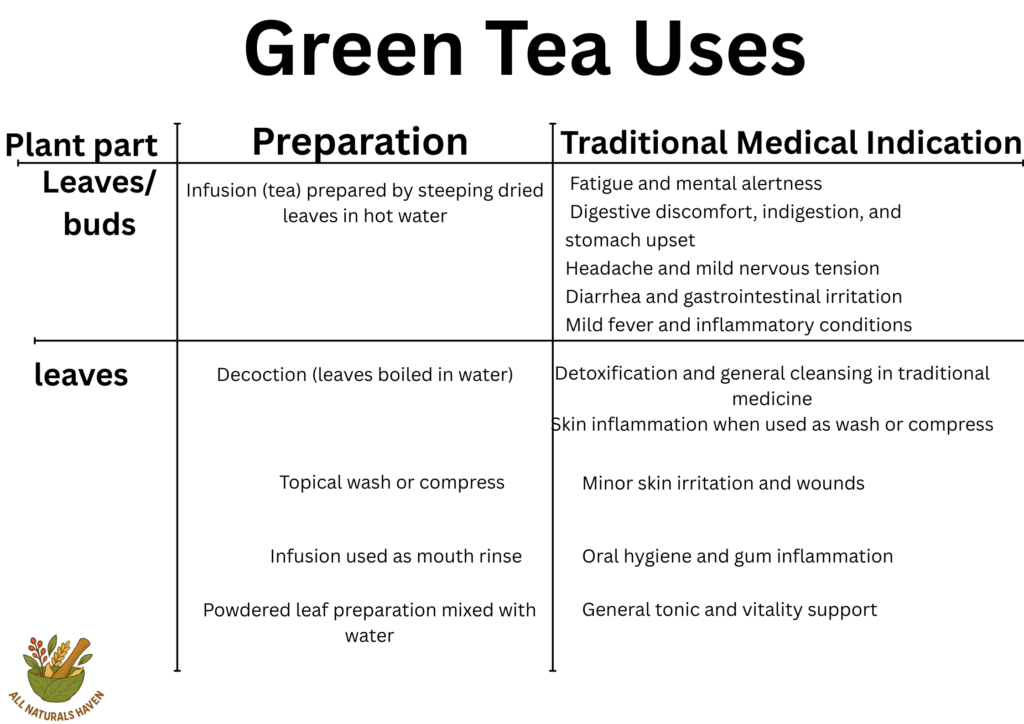
Traditional Uses
It was used in managing red eyes, dizziness, foggy memory to promote ‘detoxification.’ It was also used to promote urination and offset edema. Other uses were as a stimulant and heart tonic to manage diarrhea and excessive sweating. Its poultice was used in wounds to promote healing and as an eye compress, while its aqueous extract was used as a mouthwash.

Clinical Uses and Research
Obese adults: Standardized capsules at a dose of 500-1000 mg daily elicited a decrease in BMI index, waist circumference, and visceral fat. Caffeine and ECGE compounds inhibited catechol-o-methyltransferases, increasing norepinephrine and successfully stimulating fat oxidation.
Prediabetes: Brewed green tea taken in 4-6 cups daily for 12 weeks showed significant reduction in fasting blood sugars and HbA1c levels in long-term users. Polyphenols and L-theanine improved insulin sensitivity and modulated the expression of GLUT-4 in the muscle tissue. (Kai Liu 2013)
Pre-cancerous oral lesions: Oral/topical green tea extract at a dose of 500-100 mg and local application exhibited a high response in lesion shrinking, potentially preserving the progression of oral cancer. The polyphenols acted via induction of apoptosis and suppression of matrix metalloproteinases.
Hyperlipidemia: Brewed tea and standardized extract taken as 2-5 cups and 400-800 mg daily were able to reduce total cholesterol and increase liver low-density lipoprotein complexes. This was via inhibition of cholesterol absorption in the gut and upregulation of liver low-density protein receptors by the compound catechin.
Postmenopausal syndrome: Decaffeinated capsules at a dose of 843 mg daily for 12 months showed a decrease in mammographic density in younger postmenopausal women. High-dose EGCG triggered epigenetic modulation and inhibition of tumor-mediated signaling pathways.
Hypertension: In hypertensive adults a beverage enriched with green tea extract given at 200-600 mg a day showed a modest but consistent decrease in systolic and diastolic pressure. The flavonoids increased the bioavailability of nitric oxide, which in turn improved vasodilation.
In Vivo uses and Research
Neuroprotection: In a murine mouse model, pure leaf extract at a dose of 2-6 mg/kg decreased neuronal death and increased task memory. EGCG acted via inhibition of the reduction of amyloid beta plaque accumulation. (Rezai 2005)
Dermatology: In photoaging mice, seed/leaf extract at an oral dose of 10-20 mg/kg increased collagen and elastin content while reducing UV-induced wrinkle formation. Saponin and EGCG are MMR-3 collagen-degrading enzymes, thus inducing an antioxidant effect.
Life span: In an experiment with fruit flies, leaf extract at 10 mg/ml supplied in food increased the longevity and delayed age-related decline in body movement. EGCG and L-theanine activated stress resistance genes and total body iron chelation.
In Vitro Uses and Research
Antibacterial: In MRSA/H. PYLORI, leaf aqueous extract disrupted cell membranes and inhibited the DNA gyrase via the activity of catechins/tannins. It showed synergism with other antibiotics. (Meremae 2025)
Antiviral: In influenza, HIV-1, and SARS-CoV-2, leaf extract competitively inhibited viral entry and bound to the spike proteins or hemagglutinin to prevent viral attachment and entry.
Safety and Dosing Profile of Green Tea plant
Forms and Dosing
Lose leaf/tea bags for infusion and teas– 3-5 ups a day
Matcha– 1-2 (more potent)
Bottled ready to drink beverage
Tablets and capsules– 250-1000 mg
Tinctures– 1-30 drops up to thrice a day
Ointments– Applied twice or thrice a day
Powders-
- Cardiovascular boost- 250-500 mg a day/beverage up to 5 cups a day
- Glycemic control- 300-500 mg a day/ up to 4 cups of beverage a day
- Weight loss- 300-800 mg a day (in combination with caffeine)
- Cognitive perfomance-1-3 cups beverage
- Non-alcoholic fatty liver- 500-1000 mg of extract a day
Note: the threshold is 800 mg a day, not to be taken daily, as high doses can lead to liver toxicity.
Interactions
- Iron and folic acid- may decrease absorption and levels
- Blood thinners- may reduce drug effectiveness and raise risk of clots
- Beta blockers (carvedilol) – may decrease efficiency
- Bortezomib- may neutralizes effects of the chemotherapy
- Stimulants (pseudoephedrine) may increase jitters and palpitations
- Lithium- may decrease drug levels
- Cimetidine and ciprofloxacin – may increase the effects of green tea.
Side effects
- Nausea and headache
- Diarrhea and stomach pain
- Anxiety and insomnia
- Teeth staining
- Increase in kidney stones
Contraindications
- Iron deficiency anemia
- Anxiety/sleep disorders
- Gastric ulcers
- Liver or kidney diseases
- Glaucoma
- Pregnancy and breastfeeding
Green Tea Plant Description and composition
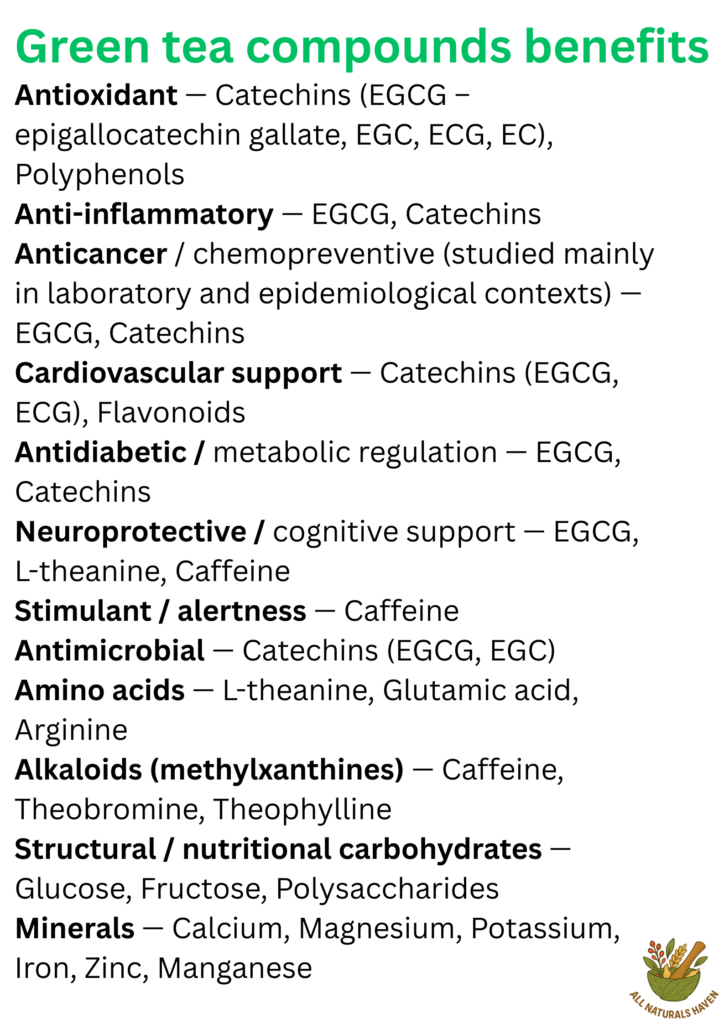
Compounds found in green tea are polyphenols (catechins and flavonoids (quercetin, myricetin), phenolics (gallic acid and chlorogenic acid), alkaloids (caffeine, theobromine, and theophylline), amino acids, volatile aldehydes, and vitamins (A and B) and minerals (magnesium and potassium).
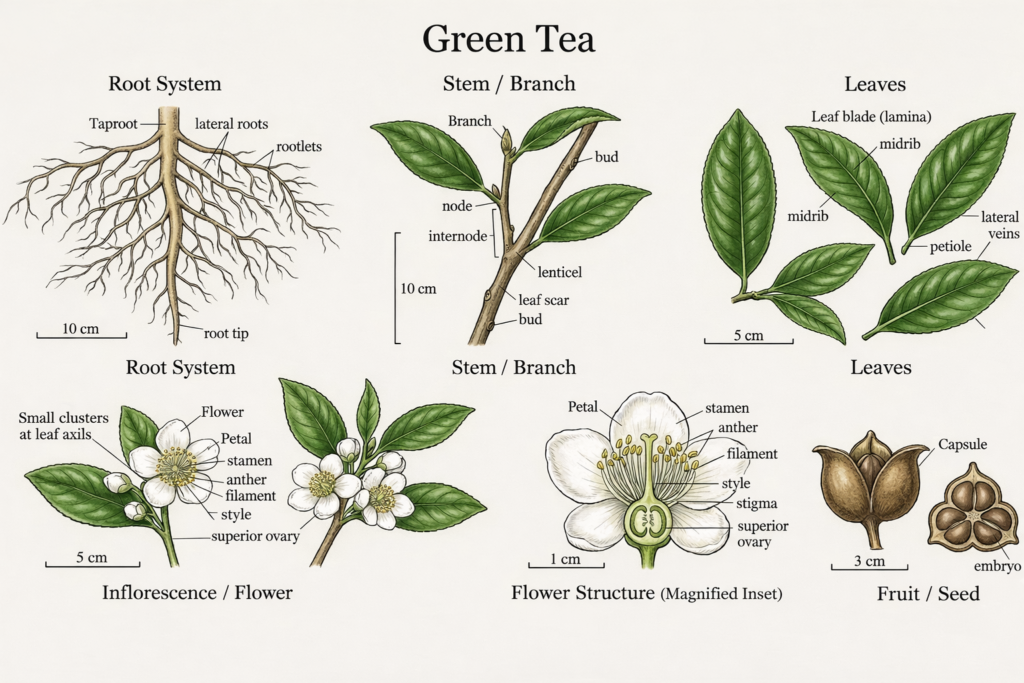
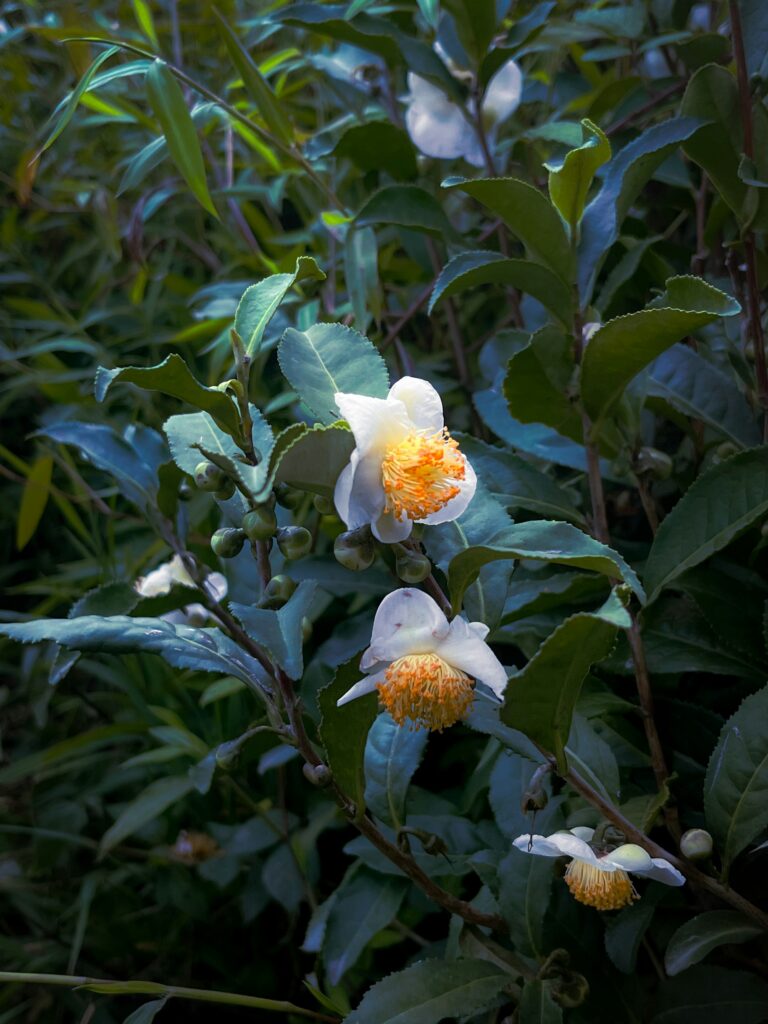
The leaves are dark green, leathery, and pubescent on the underside. It has serrated edges with a lance or elliptical shape. The flowers are small and white with a yellow center and waxy petals. The fruits are a thick-walled capsule, green in color, containing 1-3 brown spherical seeds rich in tea oil. The terminal buds are small silver and unopened leaves at the tip of the shoot. It is multi-stemmed, with the stem being greyish-white and woody when unpruned.
Green Tea Plant Cultivation
The plant is propagated through cuttings and seed to maintain genetic diversity. It thrives in well-draining soils of pH 4.5-5.5 and a spacing of 1 meter apart. It takes roughly 3-5 years for the plant to mature. The parts harvested are the young and tender growth at the tip of the branch, two leaves, and a bud. This is done through handpicking.
The harvest is then spread out to lose moisture and quickly heated (steamed or pan-fried) to prevent oxidation of the remaining green tea. It is then rolled into different shapes to release oils. It is stored in airtight containers until further processing is needed.
REFERENCES
Hursel, Rick & Viechtbauer, Wolfgang & Westerterp-Plantenga, M.S.. (2009). Effects of green tea on weight loss and weight maintenance. A meta-analysis. International journal of obesity (2005). 33. 956-61. 10.1038/ijo.2009.135.
Tsao AS, Liu D, Martin J, Tang XM, Lee JJ, El-Naggar AK, Wistuba I, Culotta KS, Mao L, Gillenwater A, Sagesaka YM, Hong WK, Papadimitrakopoulou V. Phase II randomized, placebo-controlled trial of green tea extract in patients with high-risk oral premalignant lesions. Cancer Prev Res (Phila). 2009 Nov;2(11):931-41. doi: 10.1158/1940-6207.CAPR-09-0121. PMID: 19892663; PMCID: PMC4243312.
Xin-Xin Zheng, Yan-Lu Xu, et al 2011.Green tea intake lowers fasting serum total and LDL cholesterol in adults: a meta-analysis of 14 randomized controlled trials1234,The American Journal of Clinical Nutrition,Volume 94, Issue 2,
2011,Pages 601-610,ISSN 0002-9165,https://doi.org/10.3945/ajcn.110.010926.
(https://www.sciencedirect.com/science/article/pii/S0002916523023699)
Samavat H, Ursin G, Emory TH, Lee E, Wang R, Torkelson CJ, Dostal AM, Swenson K, Le CT, Yang CS, Yu MC, Yee D, Wu AH, Yuan JM, Kurzer MS. A Randomized Controlled Trial of Green Tea Extract Supplementation and Mammographic Density in Postmenopausal Women at Increased Risk of Breast Cancer. Cancer Prev Res (Phila). 2017 Dec;10(12):710-718. doi: 10.1158/1940-6207.CAPR-17-0187. Epub 2017 Sep 13. PMID: 28904061; PMCID: PMC7337967.
Peng, Xiaoli & Zhou, Rui & Wang, Bin & Yu, Xiaoping & Yang, Xiaohong & Liu, Kai & Mi, Mantian. (2014). Effect of green tea consumption on blood pressure: A meta-analysis of 13 randomized controlled trials. Scientific reports. 4. 6251. 10.1038/srep06251.
Di Sotto A, Gullì M, Percaccio E, Vitalone A, Mazzanti G, Di Giacomo S. Efficacy and Safety of Oral Green Tea Preparations in Skin Ailments: A Systematic Review of Clinical Studies. Nutrients. 2022 Jul 30;14(15):3149. doi: 10.3390/nu14153149. PMID: 35956325; PMCID: PMC9370301.
Prasanth, M. I., Sivamaruthi, B. S., Chaiyasut, C., & Tencomnao, T. (2019). A Review of the Role of Green Tea (Camellia sinensis) in Antiphotoaging, Stress Resistance, Neuroprotection, and Autophagy. Nutrients, 11(2), 474. https://doi.org/10.3390/nu11020474
Henss L, Auste A, Schürmann C, Schmidt C, von Rhein C, Mühlebach MD, Schnierle BS. The green tea catechin epigallocatechin gallate inhibits SARS-CoV-2 infection. J Gen Virol. 2021 Apr;102(4):001574. doi: 10.1099/jgv.0.001574. PMID: 33830908; PMCID: PMC8290267.
Leave a Reply