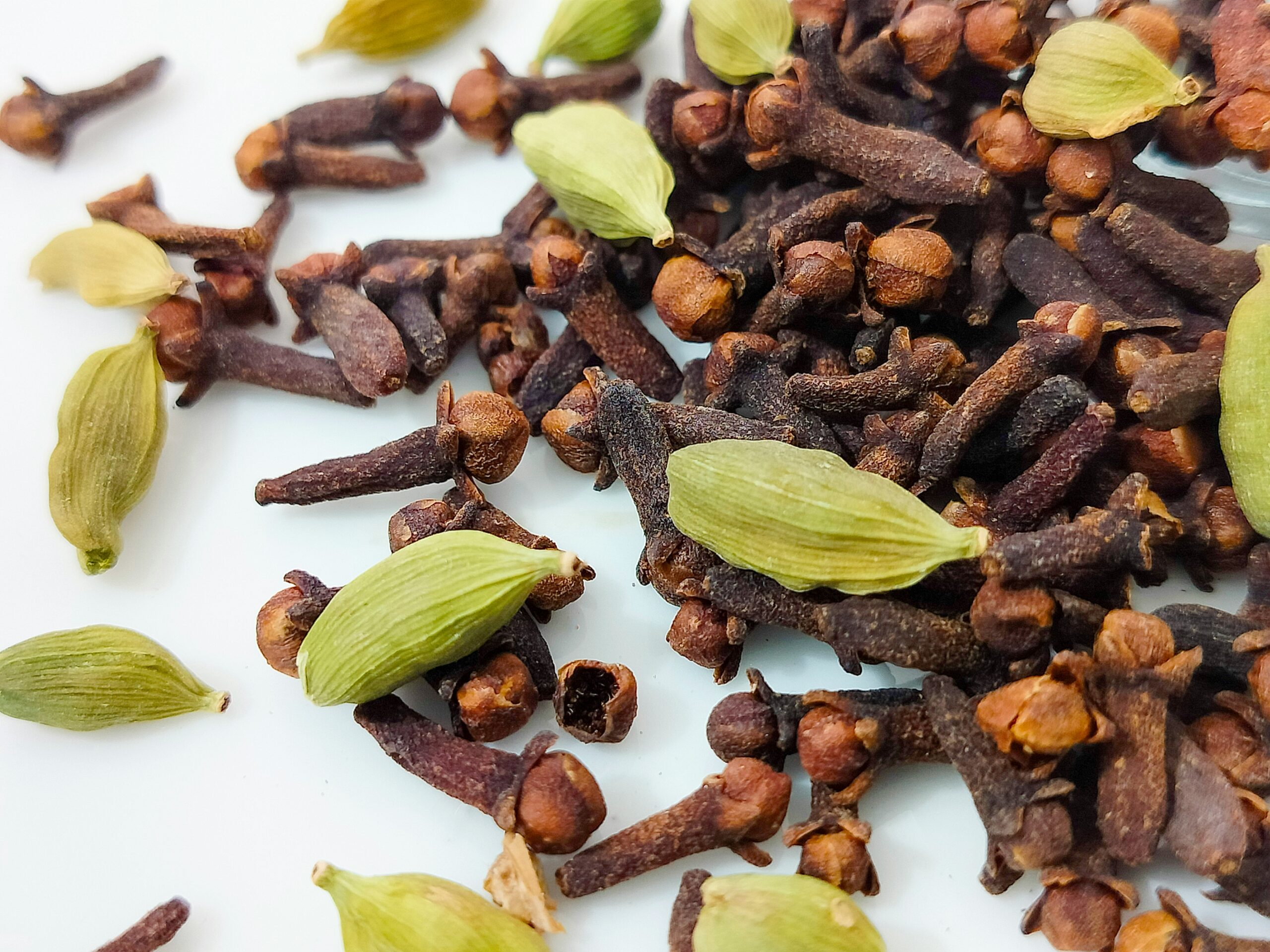
Clove, also commonly known as Ding xiang, clavo de olor, girofle, and laung, is a common herb widely used in culinary dishes as well as for chewing for oral health. It belongs to the family Myrtaceae, and it is native to Maluku, Ternate, and Tidore. It is currently cultivated in Tanzania, Zanzibar, India, Pemba Island, Malaysia, and Brazil.
Uses of cloves are as follows:
- In relief of toothache, pain in ‘dry socket,’ plaque and gingivitis
- As a topical dental anesthetic
- Control and reduction of blood sugars
- Has antiplatelet activity contributing towards cardiovascular health.
- Lowers bad cholesterol (LDL)
- Aids in physical recovery by preventing inflammatory damage to muscles
- In alleviating symptoms of anal fissure
- As a mosquitoe repellent
Jump to section
Medical Uses and Ethnopharmacological Profile of Cloves
Traditional Uses
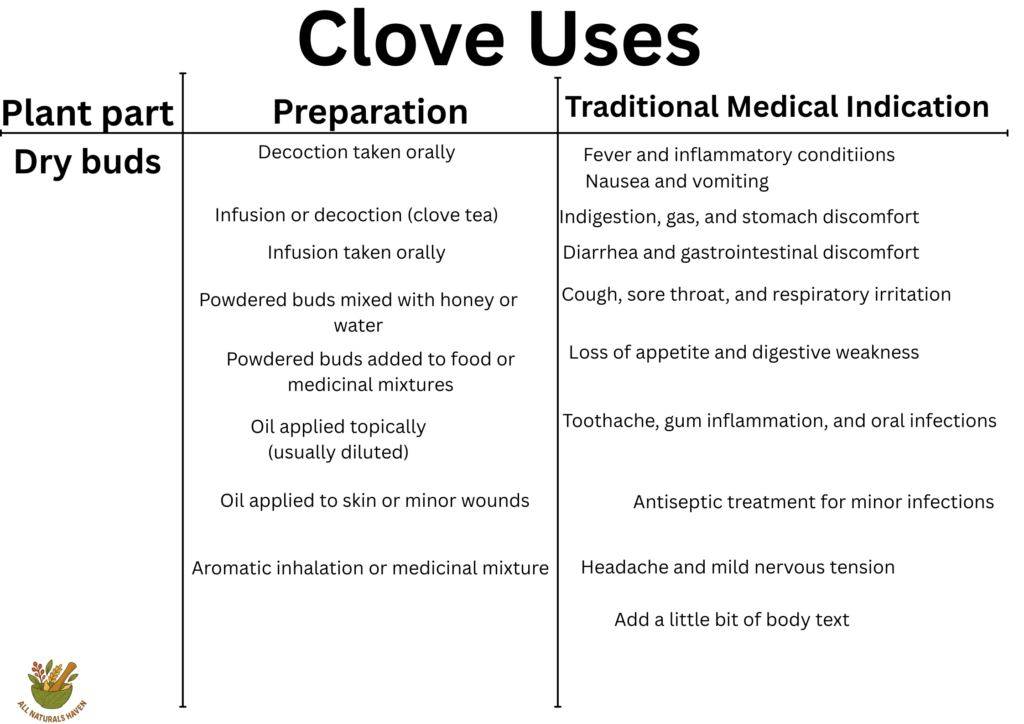
It was used in the alleviation of toothache, halitosis, and general gum health. It was applied as a carminative in flatulence/gas and as an emetic. In respiratory conditions, cloves were used as an expectorant to relieve congestion. The oil was used in massage to ease joint pains and improve mobility. On the skin, it was applied as an antiseptic wash.
Clinical Uses and Research
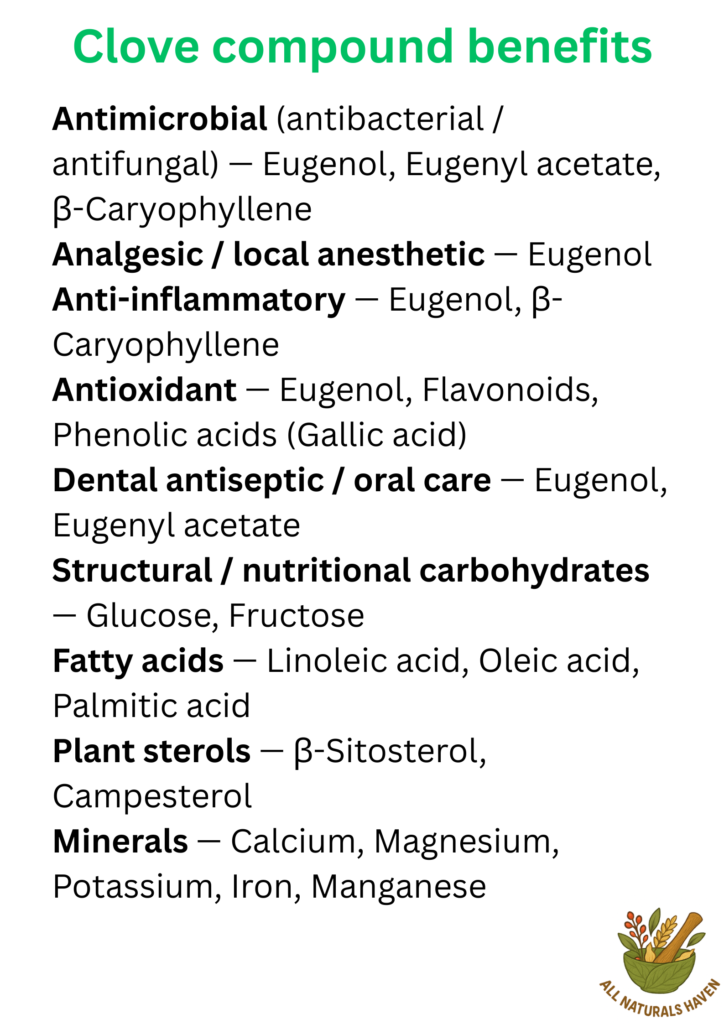
Oral microbiome: In patients with gingivitis, flower bud essential oil mouthwash with a concentration of 0.5 used twice daily achieved a reduction in Streptococcus mutans colonies and plaque index score. Eugenol and beta-caryophyllene disrupted the bacterial cell membrane and also inhibited biofilm/quorum sensing. (Kothiwale 2014)
Muscle recovery: In healthy adults, flower bud ethanolic extract given at 500 mg/kg achieved a reduction in muscle damage markers and oxidative stress. This was via the action of beta-caryophyllene and eugenol, which inhibited NOX and IL-8 while also increasing antioxidant capacity through elevated levels of SOD.
Liver health: In adults with fatty liver disease, distilled essential oil/1.5 g of dried clove powder was able to improve liver enzyme profiles (AST/ALT) as well as reduce oxidative stress. Polyphenols acted by decreasing lipid peroxidation and restoring glutathione levels, which scavenged for free radicals.
Type 2 diabetes: In people with hyperglycemia, flower bud water-soluble extract at a dose of 250 mg daily for 30 days revealed a decrease in postprandial blood glucose levels. Gallic acid and acetyl eugenol acted via activating PPAR-γ receptors and inhibition of the enzymes glucosidase and amylase.
Dental analgesia: In patients with dental pain, flower bud essential oil applied as a topical gel or liquid drops exhibited rapid reduction in localized pain. This was through the action of eugenol that blocked voltage-gated sodium channels.
In Vivo Uses and Research
Gastric health: In an animal model, a flower aqueous extract of 100-250 mg/kg elicited protection of the gastric mucosa via thwarting gastric ulcer formation. Eugenol/flavonoids acted by stimulating the synthesis of gastric mucus, which acts as a protectant for the gastric wall lining.
Anti- convulsant: In a mouse model, flower bud essential oil at 0.025 and 0.1 mg/kg administered intraperitoneally achieved a decrease in mortality rate and convulsions. This was via eugenol, which potentiates the effects of GABA neurotransmitters, which in turn inhibited brain signals.
Antidepressant/Anxiolytic: In a mice forced swim test, flower bud hydroalcoholic extract at an oral dose of 10-30 mg/kg reduced the mice’s immobility time. Polyphenols/eugenol acted by inhibiting MAO A and B receptors. (Mamun 2025)
In Vitro Uses and Research
Antiviral: In herpes virus, aqueous ethanolic extract rich in eugeniin inhibited viral DNA polymerase and prevented attachment and entry into host cells. It showed synergism with acyclovir.
Antimicrobial/antifungal: In methicillin-resistant Staphylococcus aureus and Candida albicans, flower buds rich in acetyl eugenol eradicated staphylococci/candida. This was through the action of permeabilizing the cytoplasmic membrane, causing leakages of cell constituents and subsequently death, and inhibiting ergosterol synthesis, disrupting cell wall integrity. (Pinto 2009)
Anticancer: In human breast cancer lines, flower bud ethyl acetate extract rich in oleanolic acid and eugenol downregulated Bcl-2 and upregulated caspases-3, thus exhibiting apoptosis. (Liu 2013)
Safety and Dosing profile for cloves
Forms and Dosing
Whole dried buds
Ground clove powder– 1-2 grams
Clove essential oil– 1-6 drops in another carrier oil
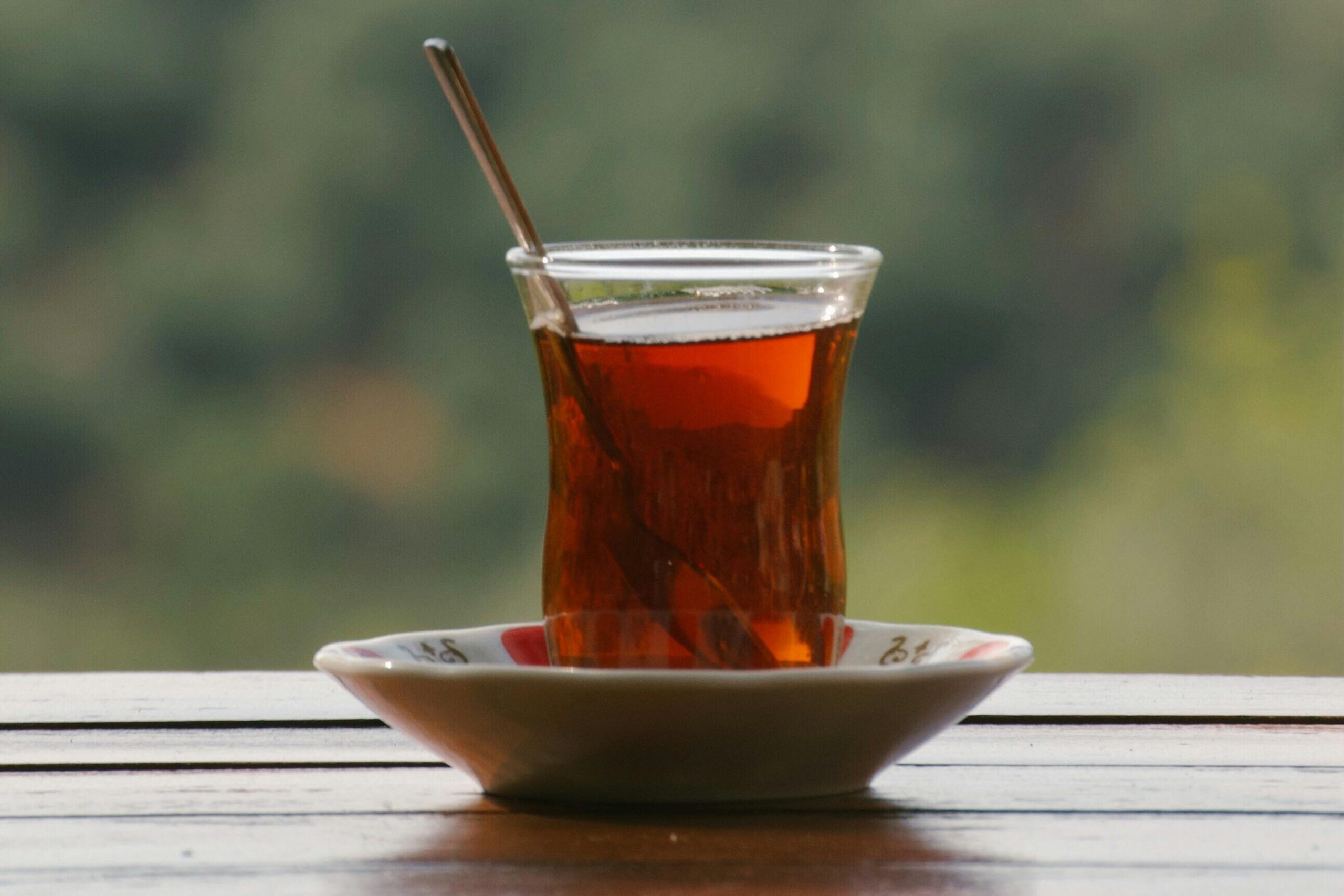
Infusions/teas– 1-3 cups a day
Clove water and hydrosols– twice
Capsules and tablets– 500-3000mg
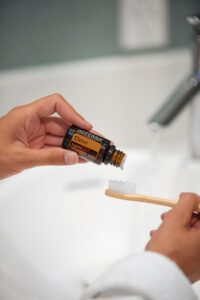
- Dental pain- 1/2 drops of clove oil diluted in carrier oil, 4 times a day
- Antimicrobial application- 0.05-0.2 % eugenol solution in mouth rinses twice/thrice a day
- Gastrointestinal doscomfort- 0.5-1 gram per day
Note: The safe upper limit a day is 2-3 grams. oil can cause liver toxicity in children; hence, regulate consumption
Interactions
- Blood thinners- may increase bleeding risk through additive effect
- Diabetes medication- may lead to hypoglycemia
- Acetaminophen- may increase load to the liver in high amounts
- CNS depressants- in high doses it may lead to drowsiness and lethargy
Side effects
- Local tissue irritation
- Heartburn and nausea
- Diarrhea
- Hepatotoxicity, metabolic acidosis and seizures in high doses
Contraindications
- Children below 12 years
- Pregnancy and breastfeeding
- Bleeding disorders
- Known allergy/cross-allergy with balsam of Peru
- Preexisting peptic ulcers
- Surgery within 2 weeks
Clove Description and composition
Cloves contain phenylpropanoids (eugenol), terpenoids (caryophyllene and limonene), and phenolic acids (gallic and salicylic acid, caffeic and ferulic acid). Flavonoids (quercetin, apigenin, and biflorin), volatile esters and ketones (methyl amine ketones and benzyl aldehyde), lipids and sterols (stigmasterol and oleic acid), and tannins (causuaricitin and syzyginins A and B).
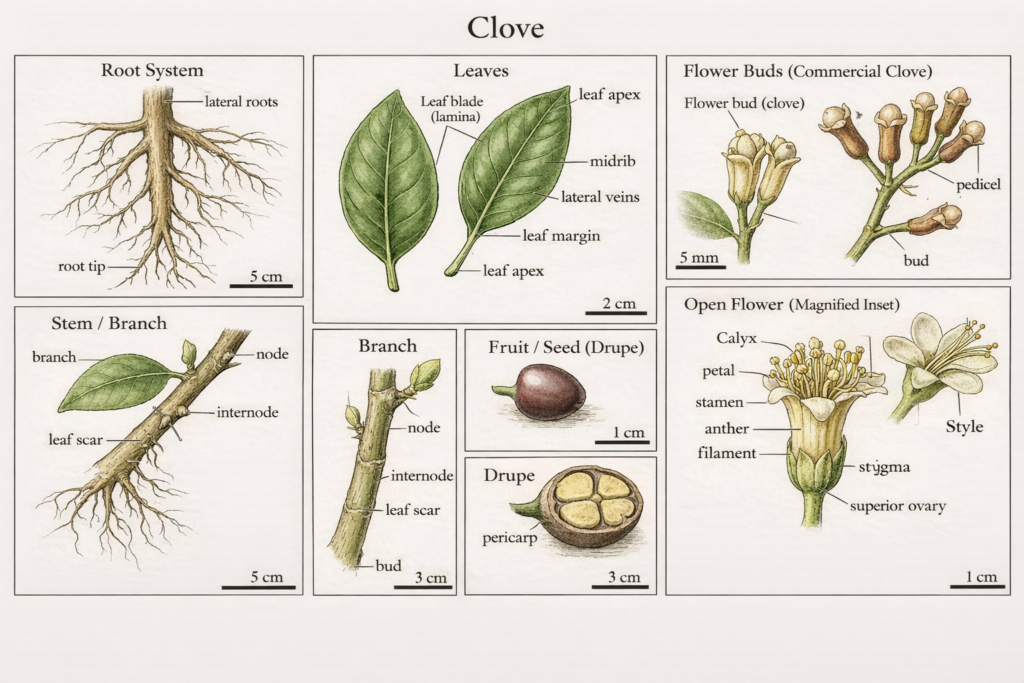
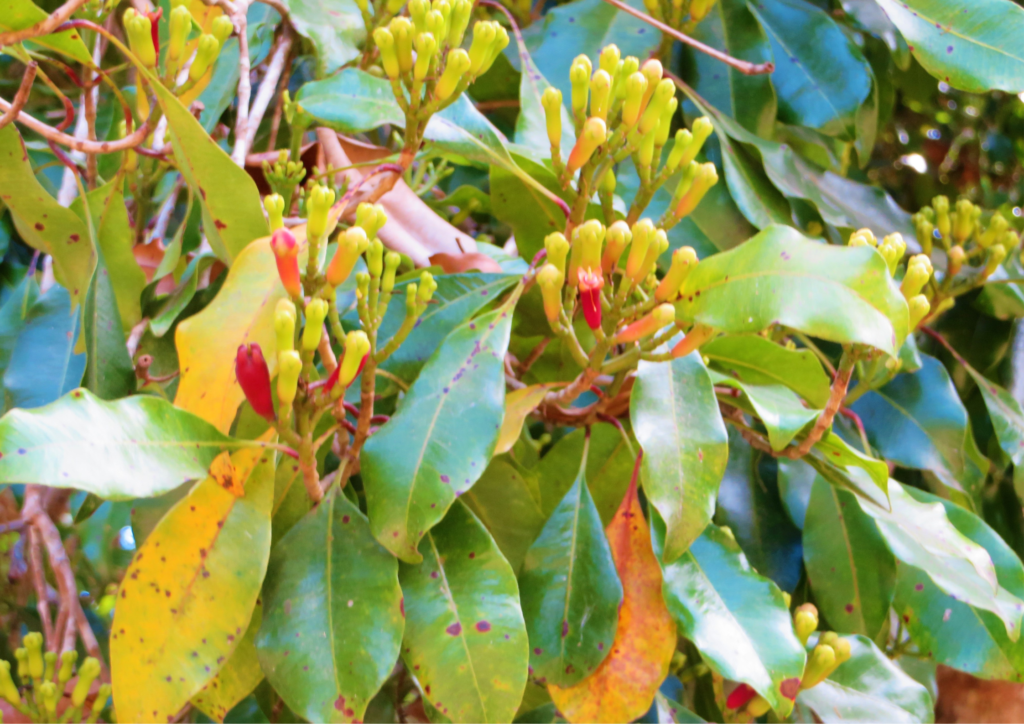
The leaves are conical/elliptic in shape with tiny translucent oil glands and glossy dark green in color. The flower has a bud with a long cylindrical hypanthium terminating in spreading sepals that are thick with a small ball of 4 unopened petals. The fruits are fleshy, one-seeded drupes that are oblong with shades of green, dark purple, or beetroot red. The pedicels are woody and brownish and branched, and the bark is smooth and greyish and pyramidal/conical in shape.
Cloves Cultivation
Cloves thrive in hot, humid tropical areas and are propagated by seeds. Fresh seeds are soaked first for 24 hours. It thrives in rich, loamy, well-draining soils with a pH of 4.5-7.0. It takes 15-20 years to be harvested for productivity even though it starts yielding from years 4-7. When the green buds turn bright yellow/pinkish but before the flower buds open is the peak harvesting time. Harvesting is simply through handpicking, twice a year following the rainy season.
The harvested buds are then sun-dried for roughly a week. Storage is in airtight containers in a cool, dark, and dry place, preferably away from other foods.
REFERENCES
Ratna Ningrum, Tyas & Wardhani, Riska & Sugihartini, Nining. (2025). Antioxidant and antiinflammatory of clove extract (Syzigium aromaticum) in skeletal muscle damage. Pharmaciana. 15. 164-174. 10.12928/pharmaciana.v15i1.29657.
Ali S, Prasad R, Mahmood A, Routray I, Shinkafi TS, Sahin K, , Kucuk O. Eugenol-rich Fraction of <italic>Syzygium aromaticum</italic> (Clove) Reverses Biochemical and Histopathological Changes in Liver Cirrhosis and Inhibits Hepatic Cell Proliferation. J Cancer Prev 2014;19:288-300. https://doi.org/10.15430/JCP.2014.19.4.288
Mohan R, Jose S, Mulakkal J, Karpinsky-Semper D, Swick AG, Krishnakumar IM. Water-soluble polyphenol-rich clove extract lowers pre- and post-prandial blood glucose levels in healthy and prediabetic volunteers: an open label pilot study. BMC Complement Altern Med. 2019 May 7;19(1):99. doi: 10.1186/s12906-019-2507-7. PMID: 31064377; PMCID: PMC6503551.
Alqareer A, Alyahya A, Andersson L. The effect of clove and benzocaine versus placebo as topical anesthetics. J Dent. 2006 Nov;34(10):747-50. doi: 10.1016/j.jdent.2006.01.009. Epub 2006 Mar 13. PMID: 16530911.
Santin, J.R., Lemos, M., Klein-Júnior, L.C. et al. Gastroprotective activity of essential oil of the Syzygium aromaticum and its major component eugenol in different animal models. Naunyn-Schmied Arch Pharmacol 383, 149–158 (2011). https://doi.org/10.1007/s00210-010-0582-x
Galal, Azza & Abdellatief, Suhair. (2015). Neuropharmacological studies on Syzygium aromaticum (clove) essential oil. international journal of pharma science. 5. 1013-1018.
Kurokawa M, Hozumi T, Basnet P, Nakano M, Kadota S, Namba T, Kawana T, Shiraki K. Purification and characterization of eugeniin as an anti-herpesvirus compound from Geum japonicum and Syzygium aromaticum. J Pharmacol Exp Ther. 1998 Feb;284(2):728-35. PMID: 9454821.
Leave a Reply