
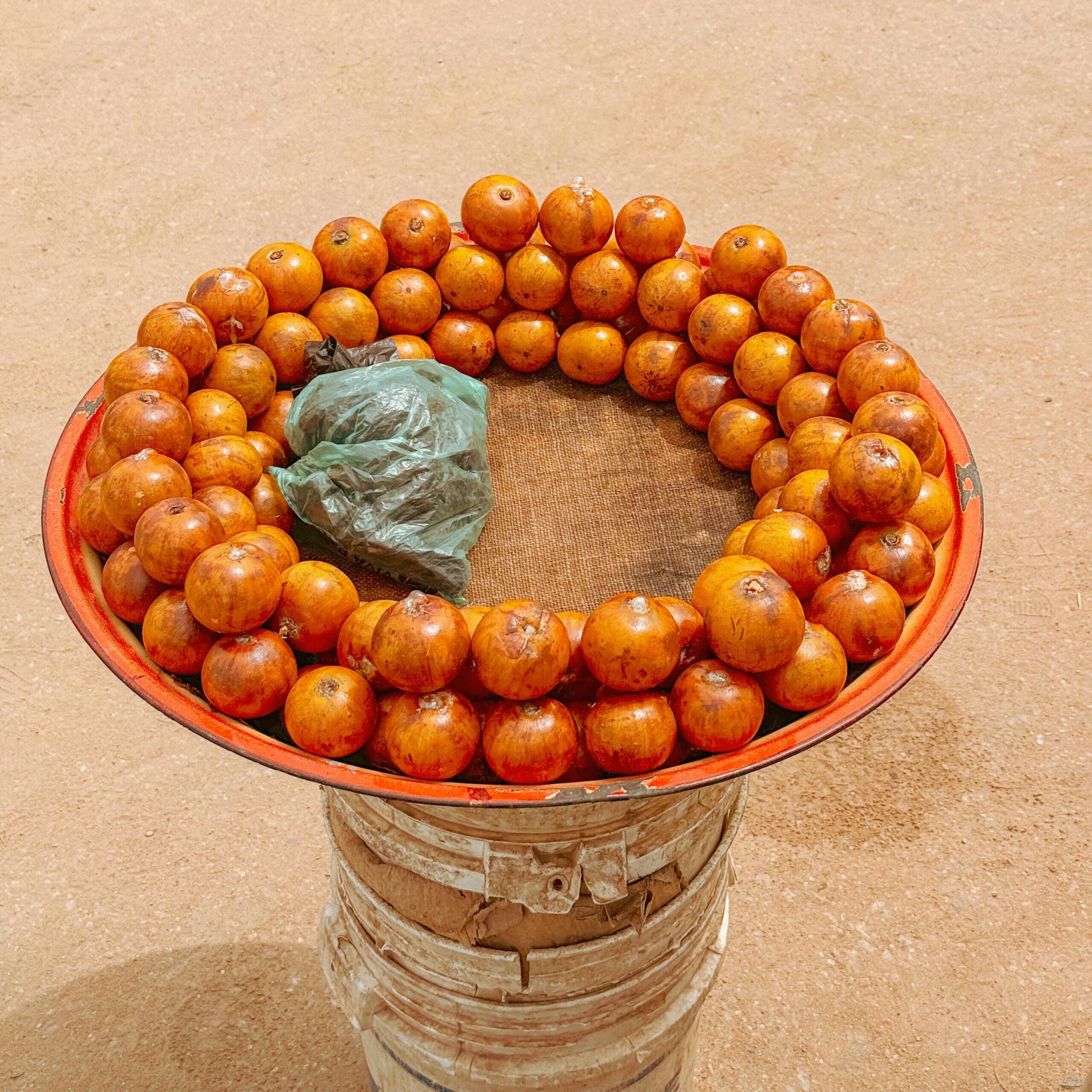
The African star apple, also called Udara/white star apple, is native to West Africa and is especially common in Nigeria, Ghana, Benin, Côte d’Ivoire, and some parts of Uganda. It contains vitamins C, B1, B2, B3, B6, and E; zinc; potassium; calcium; iron; phosphorous; proteins; fat; fiber; flavonoids; and carbohydrates.
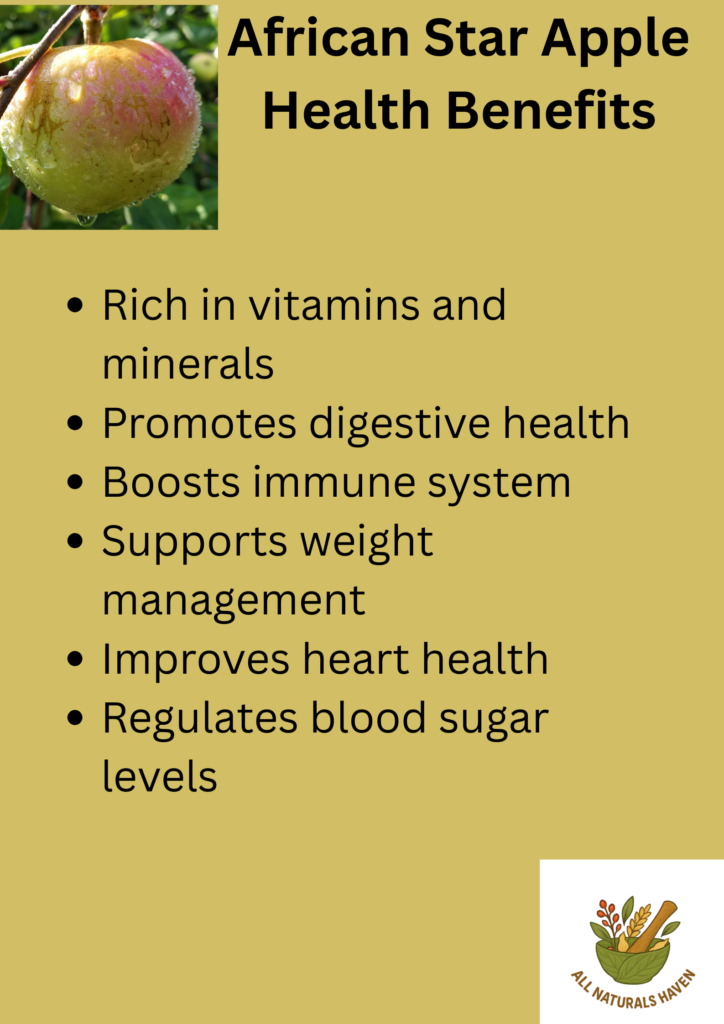
African star apple uses are listed in the photo below.
Jump to: Medicinal Uses and ethnopharmacological profile
African Star Apple Description
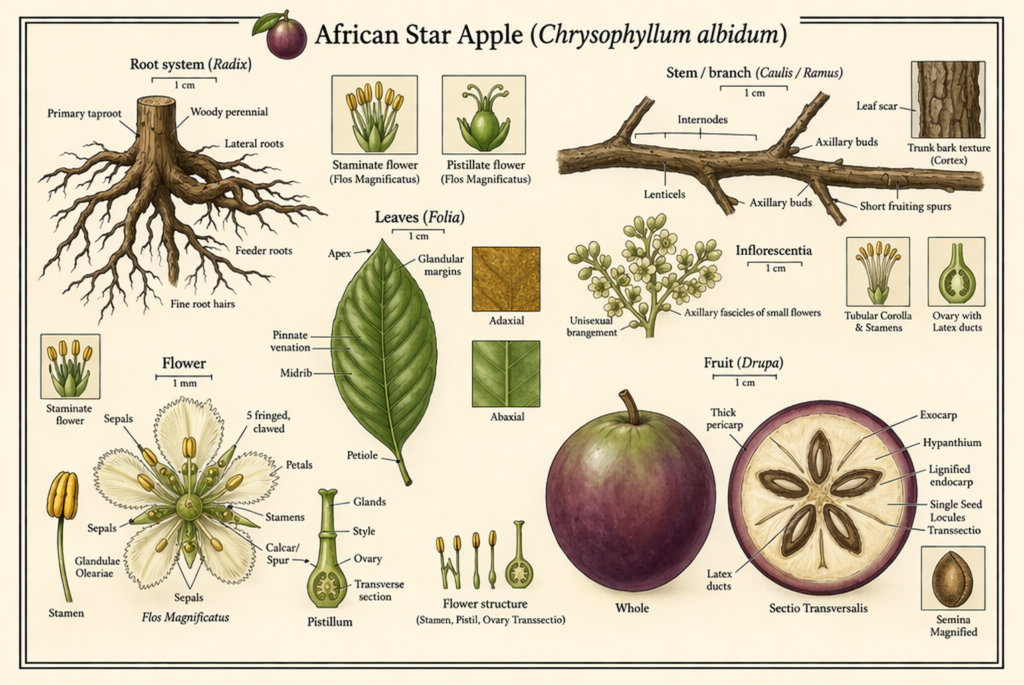
The fruit is small, about 4 centimeters in diameter. They are round or oval and green when unripe but change to orange or golden brown when mature. The pulp is slightly fibrous and mucilaginous with a yellowish to orange color. It contains 3—5 seeds in each fruit that is housed in a seed coat. When ripe, it has a mild sweet taste with a slight acidic aftertaste.
African star apple (tree) medicinal uses and ethnopharmacological profile
Traditional uses
In traditional African communities, the unripe pulp was used to soothe mouth dryness and reduce thirst. Decoctions from the bark were used as astringents, killing worms, malaria, anemia, and yellow fever, and for managing gastrointestinal discomforts. Seeds are crushed and made into oils for topical application to curb skin dryness and inflammation. The leaves were sometimes rubbed onto the skin to soothe irritation.
Clinical Uses and Research
Management of diarrhea- its high fiber and pectin content allows it to slow down digestion and intestinal movement, thus alleviating diarrhea. Houessou 2012
Anti-inflammatory uses- methanolic extracts containing flavonoids and fatty acids elicited an anti-inflammatory response by mediation of COX and LOX and membrane stabilization in vitro and in rodent studies.
Antioxidant activity– phenolic and flavonoid contents have a strong free radical scavenging effect as proven in animal models through eliciting protective effects in oxidative stress. Adeshina 2011
Wound healing antibacterial properties– ethanol extracts from seed oils and leaves containing saponins and tannins have shown hemostatic properties and some activity against gram-negative and positive bacteria. They act by denaturing proteins of these bacteria, inhibiting bacterial enzymes that assist in bacterial metabolism, and inducing oxidative stress.
Mineral and vitamin supplementation that serves to boost immunity. It contains zinc, which is a cofactor for various immune cells. Its magnesium content aids in calming down inflammatory responses by maintaining normal lymphocyte proliferation.
It aids in digestive issues. Its high fiber and pulpy content allows for proper digestion and bowel movement. This discourages discomforts like constipation and abdominal cramps.
It supports weight management– It serves as a natural snack and dessert, which provides a good filler material that promotes a feeling of fullness. The polyphenols often bind free lipids in the gut, thus promoting their excretion rather than absorption.
When consumed at high concentrations as a fruit, it may induce heartburn with associated abdominal discomforts like mild diarrhea, but it is a rare occurrence.
NB: Research on African star apples is limited, but in rat models, high doses of butanolic extract induced toxicity of the liver and kidney, marked by increased liver enzymes and kidney markers like creatinine. It also showed effects on fertility, with seed and bark extract reducing testosterone levels, sperm count, and motility.
REFERENCES
Ajayi AM, Chidebe EO, Ben-Azu B, Umukoro S. Chrysophyllum albidum (African star apple) fruit-supplemented diet enhances cognitive functions and attenuates lipopolysaccharide-induced memory impairment, oxidative stress, and release of proinflammatory cytokines. Nutrire. 2020;45(2):20. doi: 10.1186/s41110-020-00123-3. Epub 2020 Aug 26. PMID: 38624427; PMCID: PMC7448960.
Akinpelu DA, Odewade JO, Aiyegoro OA, Ashafa AO, Akinpelu OF, Agunbiade MO. Biocidal effects of stem bark extract of Chrysophyllum albidium G. Don on vancomycin-resistant Staphylococcus aureus. BMC Complement Altern Med. 2016 Mar 22;16:105. doi: 10.1186/s12906-016-1080-6. PMID: 27004526; PMCID: PMC4802705.
Leave a Reply