Agrimony is an herb with a long history of medicinal use, starting with the Greeks, who used it to treat eye ailments, to the Anglo-Saxons, who used it with milk to improve erectile performance. In China, the extract guan chang fu fang was used in the management of cancer. Its name originates from the Greek word “argemone,” which points to plants that heal cataracts of the eye.
Agrimony is useful in:
- Acting as an antioxidant especially in the liver
- Boosting the levels of good cholesterol in the body
- Helps in improving body mass index scores
Jump to section
- Medical uses and ethnopharmacological profile
- Safety and dosing profile
- Agrimony description and composition
- Agrimony cultivation, harvesting and storage
Medical uses and ethnopharmacological profile of Agrimony
Traditional uses
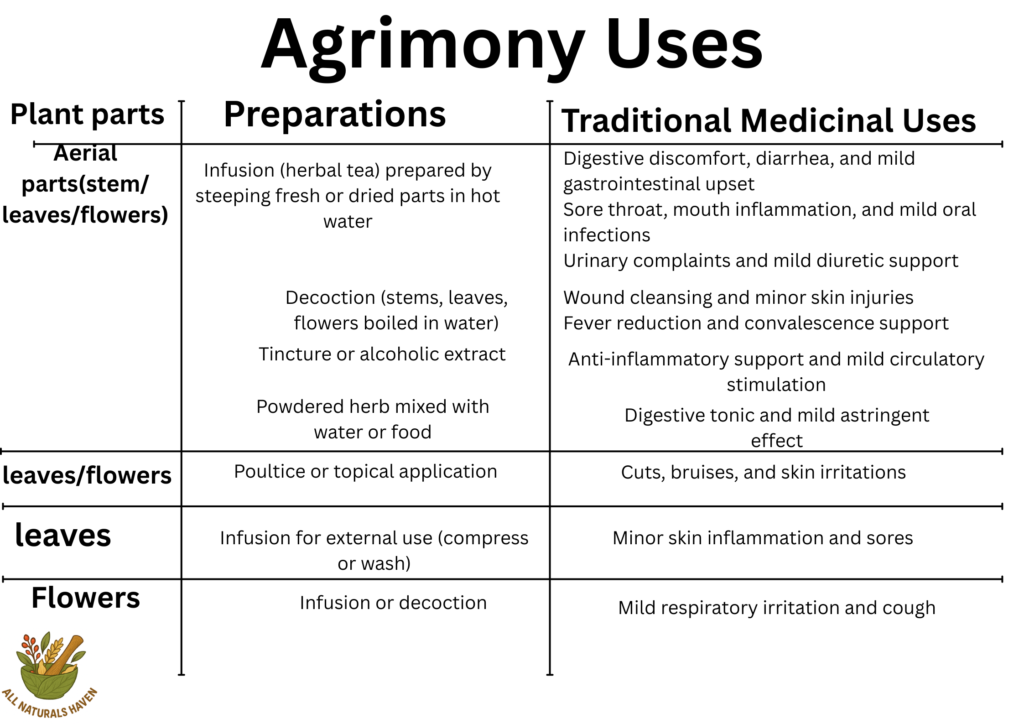
Agrimony has been traditionally used as a remedy for sore throat, wound healing, catarrh, bleeding, tuberculosis, and skin diseases such as leprosy. It was also used for foot baths for tired feet and made into brews for diarrhea and disorders of the kidneys, gall bladder, and liver. It was also used as an astringent, dye, and flavoring agent.
Clinical Uses and Research
Anti-inflammatory and antioxidant- clinical data from the consumption of agrimony tea for one month in healthy volunteers elicited a reduced level of interleukin-6 (inflammation marker) and increased plasma total antioxidant capacity.
Hepatoprotective effects– In human clinical trials, a tea water extract of 1 gram boiled in 200 ml of water elicited a hepatoprotective effect due to suppression of oxidative stress and TLR-mediated inflammatory signaling.
As an analgesic: Ethanolic extract (200 mg/kg for 7 days) improves mechanical, thermal, and cold allodynia hyperalgesia as effectively as gabapentin (100 mg/kg) in cisplatin-induced neuropathic rat models. Compounds of interest were agrimoniin, quercetin, apigenin, and ursolic acid, believed to act through inhibition of cyclooxygenase enzymes and affinity towards GABA-A receptors.
Antidiabetic properties– In rats, aqueous extracts elicited reduced insulin levels and insulin resistance with improved liver weight. This was via potent inhibition of the enzymes glucosidase and amylase, as well as stimulating release and uptake of insulin. Majernik 2016
Anticancer properties– The extract Guan chang fu fang was found to inhibit and induce apoptosis as well as downregulate chemotherapeutic resistance genes either alone or in combination with 5-fluorouracil in vitro. Lin Liu 2014
Antiviral activity- Aqueous ethanolic extract (of 50%) inhibited replication of the SARS-CoV-2 virus in Vero cells in vitro.
As an antibacterial agent- an aqueous extract was proven to have activity against Escherichia isolates and Listeria monocytogenes in vitro. The aqueous extract from aerial parts exhibited activity against cholera when used at doses above the traditional medical dose (10 mg/ml). In other studies, the ethanolic crude extract had activity against Staphylococcus aureus.
Safety and Dosing profile of Agrimony
Forms and Dosing
Agrimony can be taken as
Powders– dried and crushed
Capsules– powered forms compressed into a capsule or tablet
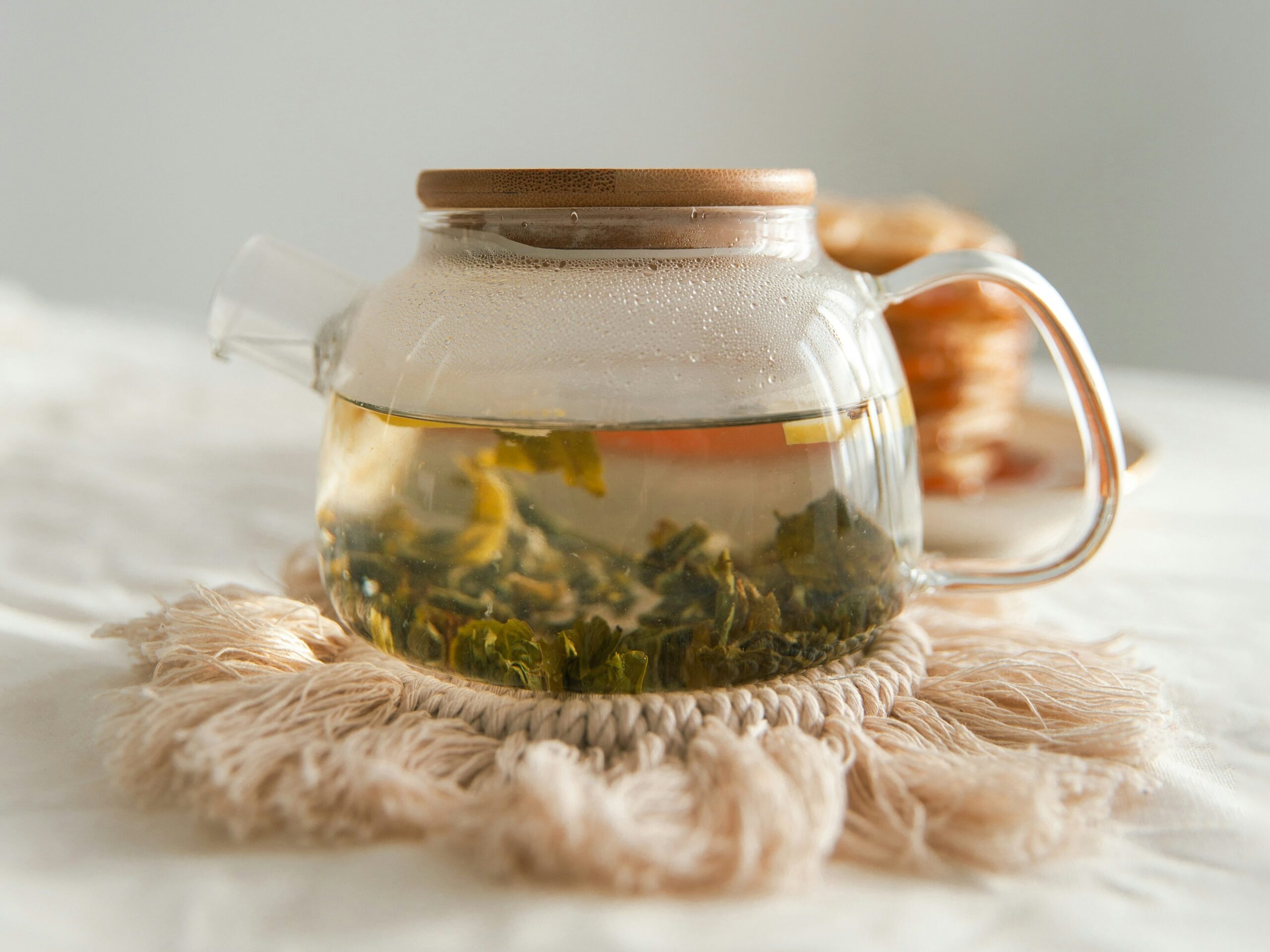
Tea– 1 gram of powder into 200 ml of water consumed twice daily
- 3-6 grams tea in diarrhea/gastric discomfort
- 4.5-10 gram daily in diabetes (adjunct)
- 160 mg daily in metabolic support
- 10%-20% decoction wash/compress thrice daily in wounds
- 1-3 grams per gargle preparation several times a day in sore throat/pharyngitis

Side Effects and Interactions
Side effects upon excessive consumption include:
- Constipation
- Exacerbate dry mucosa or skin
- Reduce nutrient absorption.
Take with care together with iron supplements and thyroid medication, as it may reduce their absorption.
Use with caution with antidiabetics, as it has some blood sugar-lowering effects.
NB-Avoid use in pregnancy
Agrimony description and composition
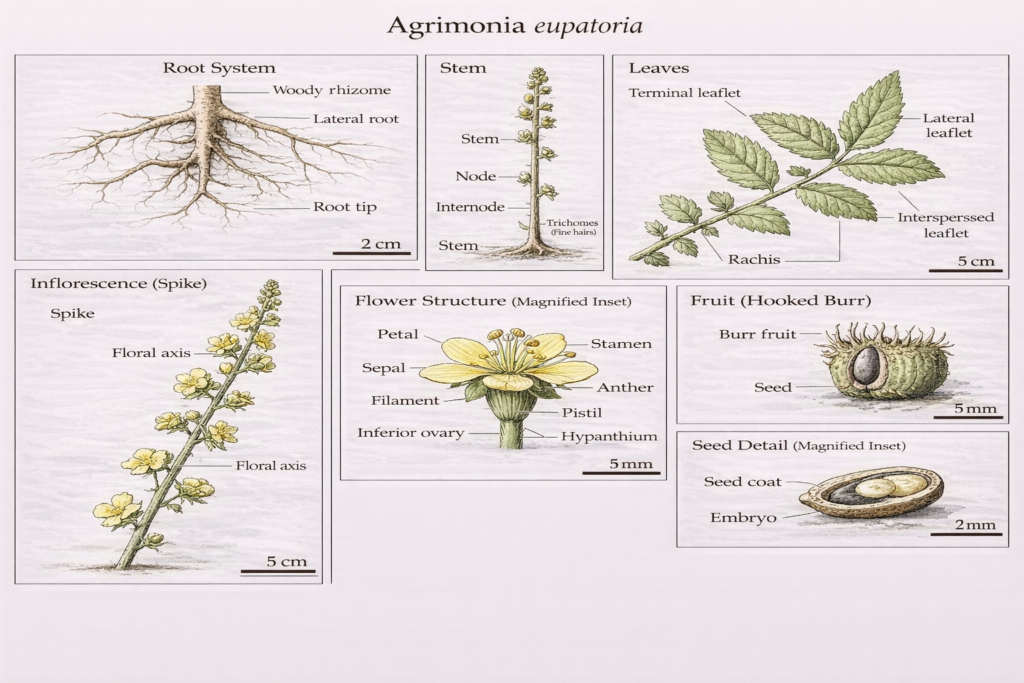
Agrimony, also called liverwort, cocklebur, stickwort, or Guan Chang Fu Fang, belongs to the family Rosaceae. Medicinally relevant species include A. pilosa ledeb, A. procera, and A. eupatoria. It is native to Africa and temperate regions of the Northern Hemisphere of Europe, Asia, and North America. Eastern and southwestern Asia also grow agrimony.
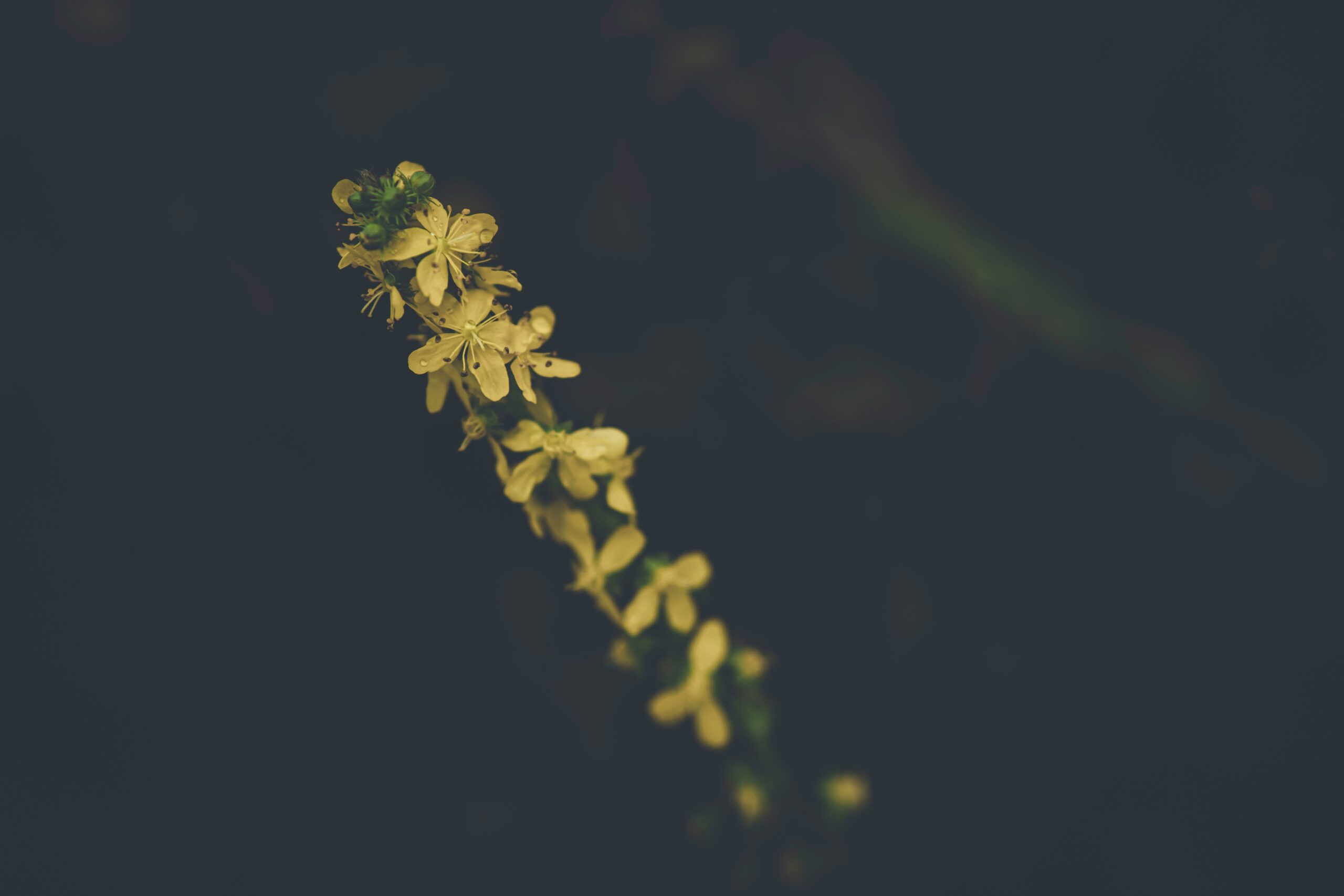
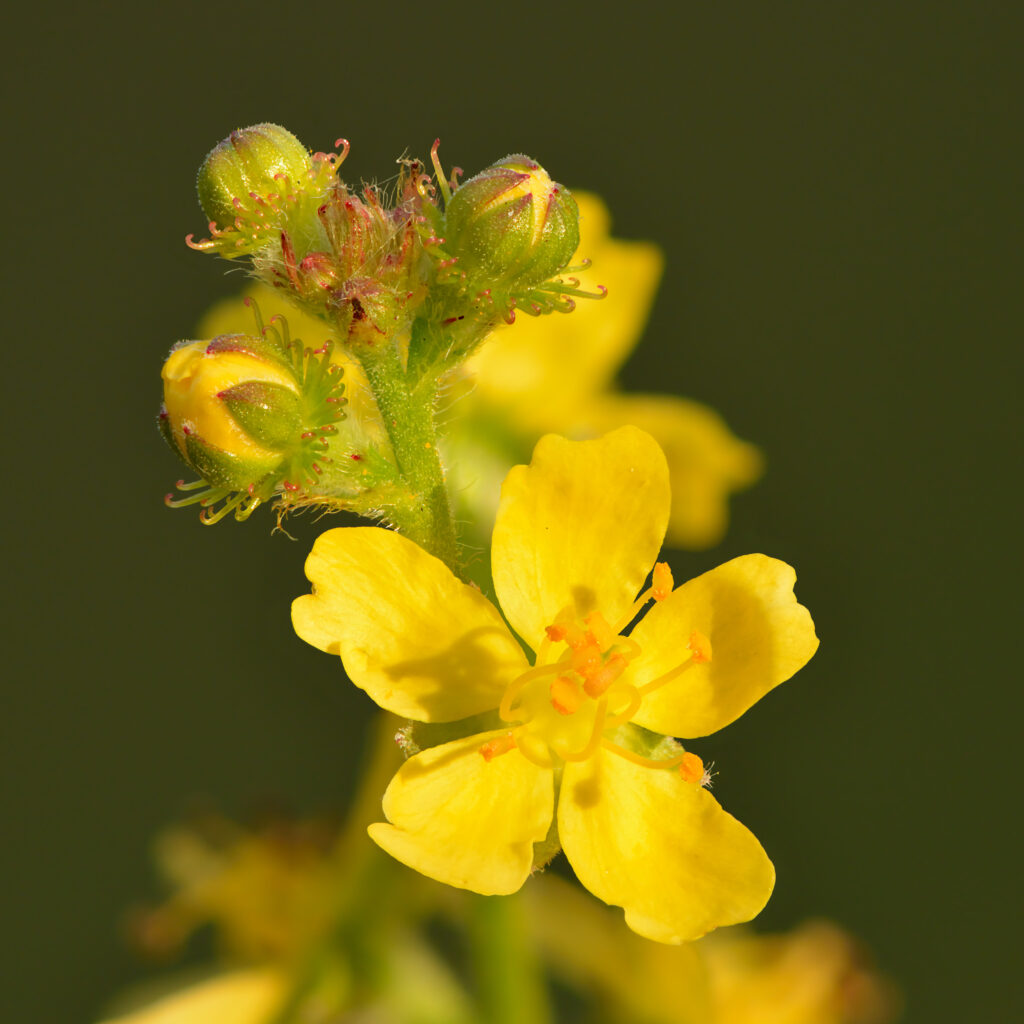
The flowers, which gather in vertical clusters, are star-shaped and yellow in color. The leaves are arranged in pairs along the stalk and give off a feathery appearance. The soft underside of the leaves is hairy and appears shimmery. The fruits grow at the top of the stem in a long terminal spike, forming burr-like fruits with hooked bristles. The stems are slender and upward, whereas the roots, which are fibrous in nature, spread sideways and are shallow.
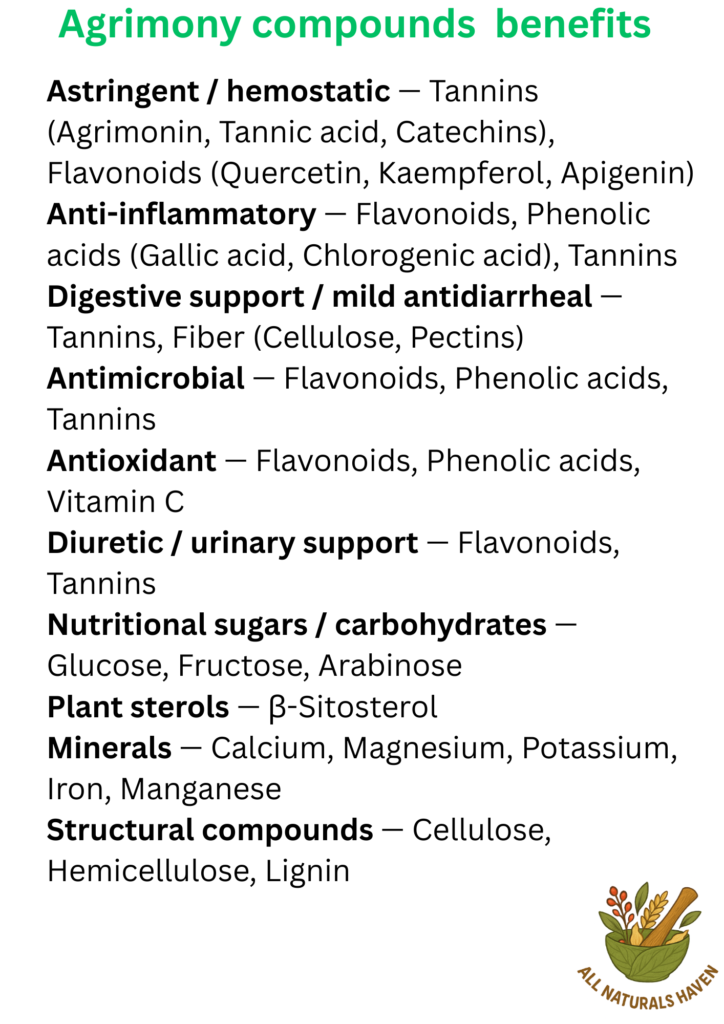
Agrimony contains organic acids B1, K1 and C; argiminioglide; palmitic acid; stearic acid; phytosterols; ursolic acid; ellagitannins; and trace gallantoins.
Agrimony cultivation
Agrimony does well in well-drained loamy soils with moderate organic matter. It requires a neutral to slightly alkaline soil pH. It thrives best in full sun but survives in partial shade as well. Agrimony is propagated through seeds, which need a cold period to break dormancy. Water moderately but consistently until well germinated. Agrimony is drought resistant.
When harvesting, cut the upper stems and leaves with shears. For the roots, dig and chop off. Wash the harvest collected and dry it in well-ventilated and shady areas, taking care to avoid sunlight. Once dry, store in airtight jars. Avoid retaining or exposing to moisture content, as this will encourage growth of mold and spoilage.
REFERENCES
TY – JOURAU – Ivanova, DianaAU – Vankova, DeyanaAU – Nashar, MilkaPY – 2012/10/18SP -T1 – Agrimonia eupatoria tea consumption in relation to markers of inflammation, oxidative status and lipid metabolism in healthy subjects VL – 119DO – 10.3109/13813455.2012.729844JO – Archives of physiology and biochemistry
ER –
Kuczmannová A, Balažová A, Račanská E, Kameníková M, Fialová S, Majerník J, Nagy M, Gál P, Mučaji P. Agrimonia eupatoria L. and Cynara cardunculus L. Water Infusions: Comparison of Anti-Diabetic Activities. Molecules. 2016 Apr 28;21(5):564. doi: 10.3390/molecules21050564. PMID: 27136516; PMCID: PMC6273028.
Lee KH, Rhee KH. ANTI-NOCICEPTIVE EFFECT OF AGRIMONIA EUPATORIA EXTRACT ON A CISPLATIN-INDUCED NEUROPATHIC MODEL. Afr J Tradit Complement Altern Med. 2016 Aug 12;13(5):139-144. doi: 10.21010/ajtcam.v13i5.18. PMID: 28487904; PMCID: PMC5416632.
Yeong-Geun Lee, Kyung Won Kang and Woojae Hong et al. Potent antiviral activity of Agrimonia pilosa, Galla rhois, and their components against SARS-CoV-2. Bioorg. Med. Chem. 2021. Vol. 45:116329-116329. DOI: 10.1016/j.bmc.2021.116329
McMurray RL, Ball MEE, Tunney MM, Corcionivoschi N, Situ C. Antibacterial Activity of Four Plant Extracts Extracted from Traditional Chinese Medicinal Plants against Listeria monocytogenes, Escherichia coli, and Salmonella enterica subsp. enterica serovar Enteritidis. Microorganisms. 2020 Jun 26;8(6):962. doi: 10.3390/microorganisms8060962. PMID: 32604894; PMCID: PMC7355567.
Mouro, C., Dunne, C. P., & Gouveia, I. C. (2021). Designing New Antibacterial Wound Dressings: Development of a Dual Layer Cotton Material Coated with Poly(Vinyl Alcohol)_Chitosan Nanofibers Incorporating Agrimonia eupatoria L. Extract. Molecules, 26(1), 83. https://doi.org/10.3390/molecules26010083
Leave a Reply