
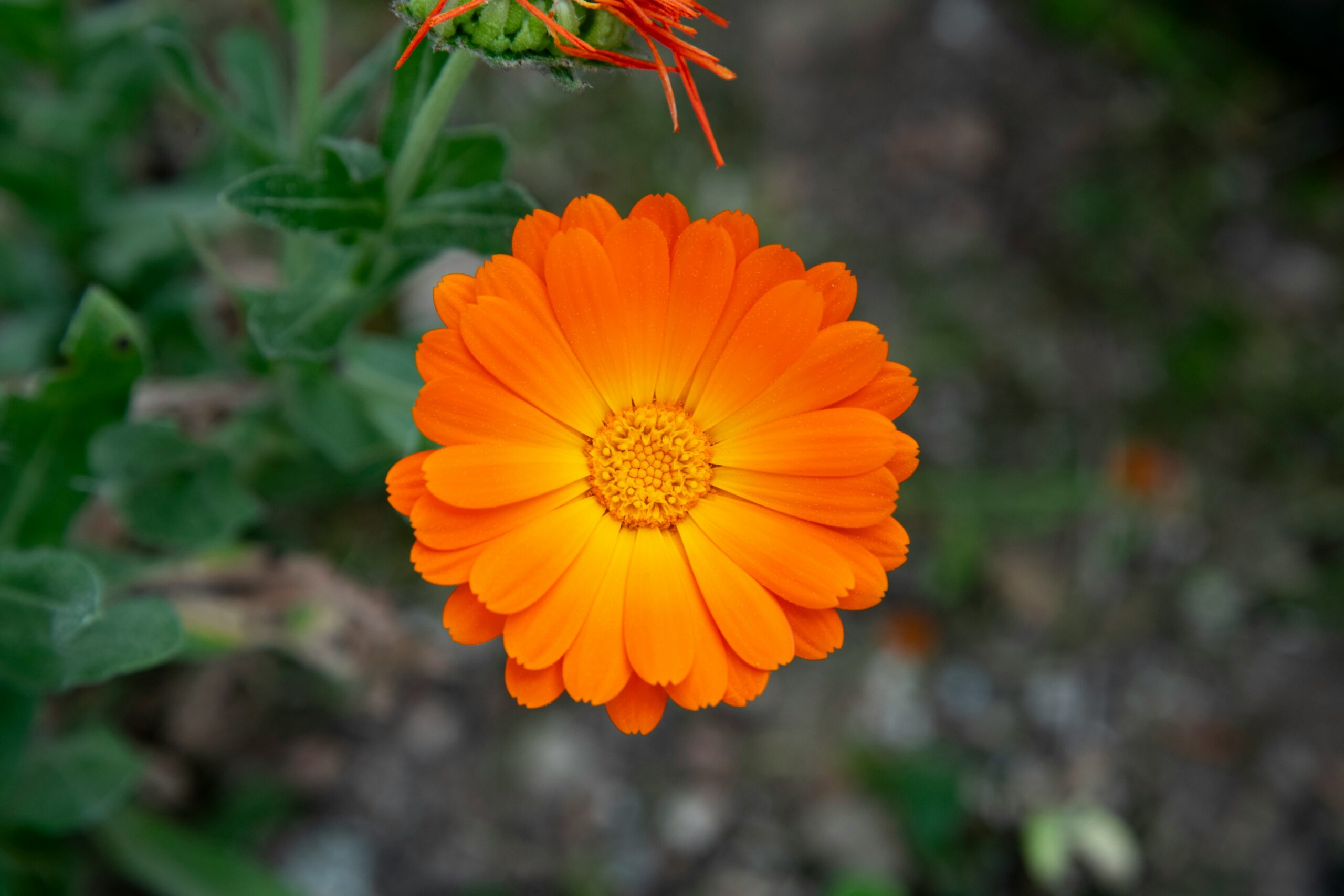
Calendula is a short-lived perennial herb belonging to the family Asteraceae. It is also called pot marigold or garden/English/Mary marigold. It is native to southern Europe, Italy, Greece, and North Africa. It is currently cultivated in North America and Canada, the United Kingdom, the Balkans, India, Australia, and New Zealand.
Calendula is used in the following ways:
- In wounds like diaper rash, venous leg ulcers, and episiotomy recovery.
- Reducing inflammation in patients undergoing radiation therapy
- In vaginal candidiasis (yeast infection)
- In oral health aganst plaque and gingivitis
- Ear drops for pain and infections
Jump to section
Medical Uses and ethnoparmacological profile of Calendula
Traditional Uses
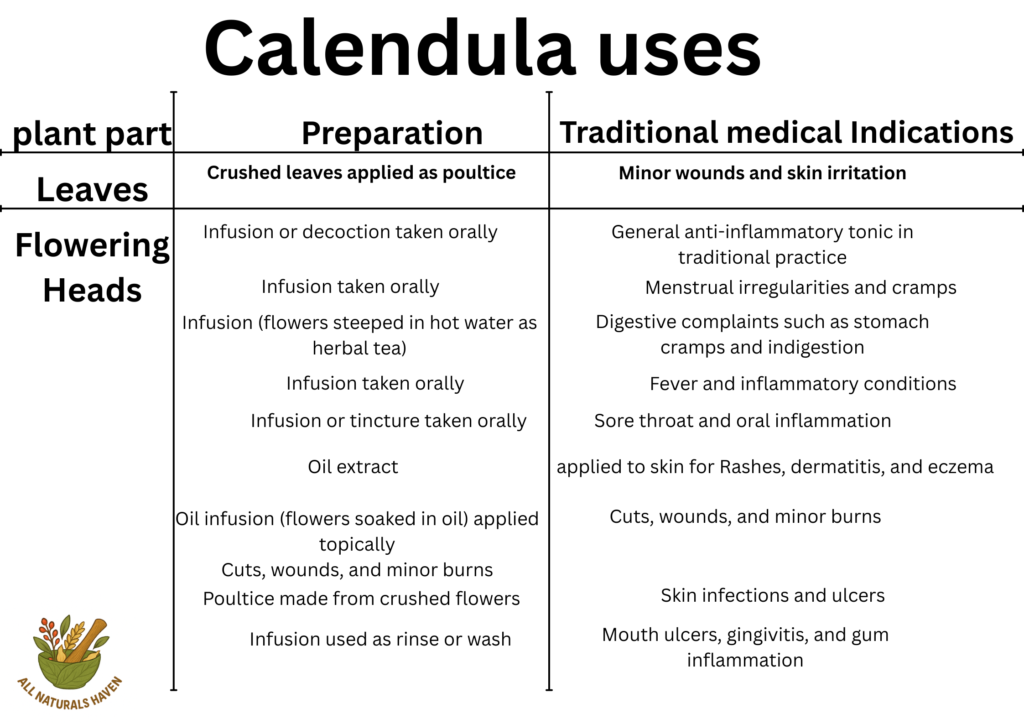
It was used as a vulnerary (used on wounds to avoid putrefaction and to solder wound edges). In the digestive tract, it was used as a cholagogue to stimulate bile flow and cleanse the liver and for soothing gastritis by coating the stomach walls. The compress and/or calendula tea were used on swollen lymph nodes around the neck, groin, or armpit area. It was also used as a post-illness tonic.
Clinical Uses and Research
Mask-induced acne: In adults with acne, a hydroalcoholic flower extract serum (licorice/snail filtrate and calendula) applied twice daily for 12 weeks reduced inflammatory acne lesions compared to the placebo group. It worked well as an adjuvant to stimulate new blood vessel growth and fibroblast migration that aided skin healing of tiny tears caused by mask friction.
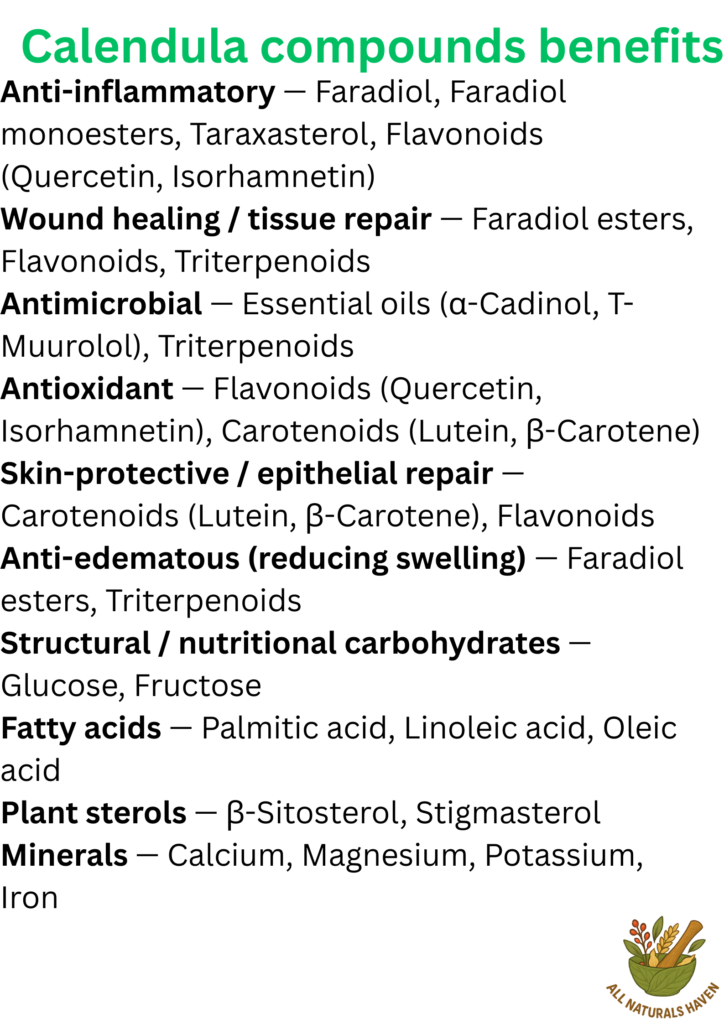
It also exhibited mild antibacterial and anti-inflammatory properties. Identified compounds were faradiol ester, calendulosides, quercetin, and luteolin.
Venous Leg Ulcer: Flower hydroglycolic extract given twice daily for 30 weeks exhibited a 72% complete healing in the treatment group and a 4 times faster healing velocity. Triterpenes, saponins, and flavonoids stimulated angiogenesis and collagen synthesis, thus reducing proinflammatory cytokines. (Buzi 2016)
Vaginal candidiasis: In women with yeast infections, a flower 5% calendula vaginal cream at a dose of 5 grams intravaginally for 7 nights showed efficacy comparable to clotrimazole in clearing the infection as well as reducing itching and discharge. Essential oils and calendulosides disrupted fungal cell membranes and also inhibited NF-kB to reduce inflammation.
Pain in post-breast cancer operation: During radiation therapy, in patients with radiation dermatitis, Flower 10% ointment applied twice daily throughout radiation lowered pain scores with action comparable to trolamine and also reduced grade 2+ dermatitis. This was through the action of fradiols and carotenoids that inhibited the synthesis of prostaglandins and cyclooxygenase synthesis to reduce pain and inflammation while also scavenging for free radicals, inducing an antioxidant effect.
Wound healing (2nd degree burns): The flower’s oral ethanol extract at a dose of 2 grams daily for 15 days improved wound contraction and healing from day 7 as compared to the control group. The compounds quercetin and isohamnetin improved blood flow to injured tissue and accelerated epithelization and fibroblast migration.
In Vivo Uses and Research
Hepatoprotective: In Wistar rats with liver damage, flower ethanolic extract at a dose of 250-500 mg/kg orally for 15 days showed reduction in AST/ALT/ALP levels and reversal of liver tissue necrosis. Flavonoids and phenolics acted by scavenging free radicals and enhancing the levels of antioxidant enzymes like CAT.
Anxiety/sedation: In a male mice model, flower ethanolic extract given at a dose of 100-200 mg/kg orally increased sleep duration and reduced locomotor activity, exhibiting mild sedative effects. This was via potential modulation of GABA activity suspected to be induced by volatile flavonoids. (Shivasharan 2013)
Hyperlipidemia: In Wistar rats, standardized flower extract at an oral dose of 250 mg/kg for 4 weeks reduced levels of triglycerides and low-density lipoproteins while increasing the levels of high-density lipoproteins. Lutein inhibited pancreatic lipase, thus modulating lipid metabolism and reducing the uptake of fats from the intestines.
In Vitro Uses and Research
Antibacterial: In cultures of S. aureus and E. coli, flower essential oil and methanolic extract worked against both gram-negative and gram-positive (moderately) bacteria. Cardinol, terpenoids, and saponins inhibited the respiratory enzymes in the microbes, thus causing their death.
UV protection: In human keratinocytes, the flower carotenoid fraction prevented UV-induced DNA damage and lipid peroxidation on the skin. Lutein, beta carotene, and zeaxanthin scavenged reactive oxygen species generated by UVB radiation. (Abdullah 2016)
Anticancer: In melanoma cells, flower methanolic extract showed inhibition of cancer cell proliferation with selectivity. Calenduloids induced cell cycle arrest at the G2/M phase.
Safety and Dosing profile of Calendula
Forms and Dosing
Infused oils– applied 2-3 times daily
Salves and balms– applied 2-3 times daily
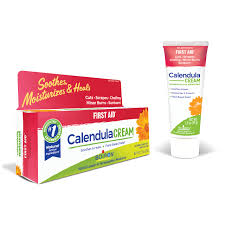
Creams and lotions– applied 2-3 times daily
Toners and serums– applied twice daily
Poultices
Tea– 1-3 cups daily
Powders– 1-2 grams
Tinctures (1:5)– 1-2 mls thrice daily
Fresh petals
- Radiation dermatitis- 10% ointment applied thrice a day
- Venous leg ulcers- 7-10% ointment three times a day
- Oral mucositis- 2% as a mouthwash up to 4 times a day
- Inflammatory skin conditions- 2-5% cream thrice a day
Note: If being consumed internally, do not exceed 3 grams a day, and it should not be taken chronically without breaks.
Interactions
If ingested (because topical application is encouraged over ingestion), possible drug interactions include:
- CNS depressants- risk of drowsiness
- Anti-diabetics- risk of hypoglycemia
- Anti-hypertensives- risk of hypotension
Side effects
- Allergic reactions like contact dermatitis
- Nausea and diarrhea
- Early menstruation
- Excessive drowsiness in large amounts
Contraindications
- Known allergy
- Pregnancy and breastfeeding
- Puncture/deep wounds
- 2 weeks to surgery
Calendula Description and Composition
Compounds found in calendula include triterpenoids (faradiol, armidiol, taraxasterol, lupeol, and erythrodial), flavonoids (quercetin and isorhamnetin), carotenoids (lycopene, beta carotene, and flaxoxanthene), saponins (calendulosides), and essential oils (germacrene, cadinol, and muurol).
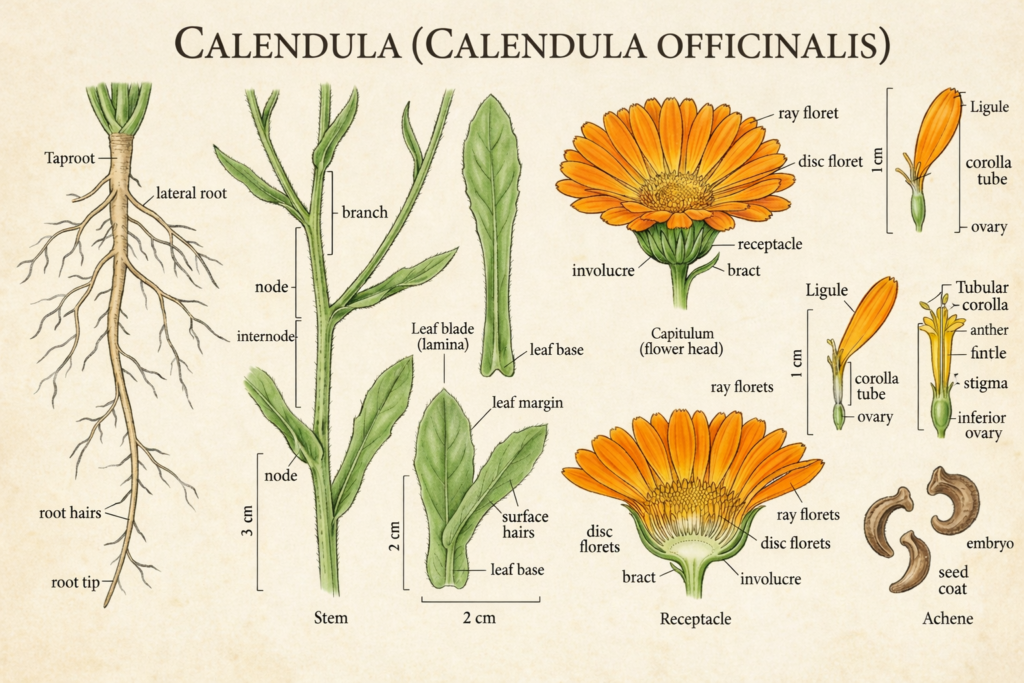
Its flowers are florets with center disk florets and a calyx covered with resins. It has a bright yellowish to orange color. The seeds are C-shaped, brown, corky, and curved. Its leaves are oblong up the stem and spatulate down the stem. It is hairy on both sides with smooth edges and widely spaced teeth. The stem is angular and branched, covered with sticky, succulent hair, while its root is a taproot system.
Calendula Cultivation
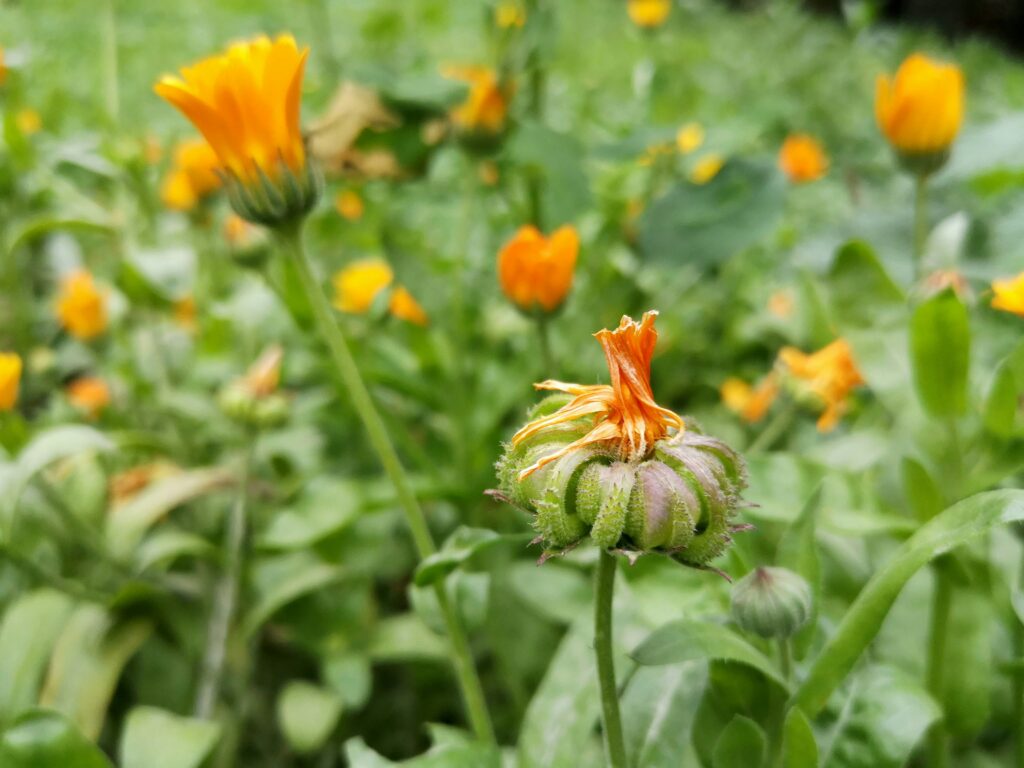
Calendula is propagated via seeds. The seeds are sown 24 weeks before spring or in fall in warmer climates at least 18 inches apart. It thrives in full sunlight and well-draining soils and takes around 15 days to sprout. The plant is ready for harvesting when the flowers are fully open but before they curl or go to seed. The best time to pick is in the morning after the dew has dried.
Harvest the flower plus the calyx. Keep harvesting regularly to promote continuous blooming of the plant. The harvest is shade-dried in a well-ventilated area. When the green base feels hard and brittle, the produce is ready. Keep in an airtight glass container in a cool, dark place. It can last 1 year under proper storage.
REFERENCES
Puaratanaarunkon T, Washrawirul C, Chuenboonngarm N, Noppakun N, Asawanonda P, Kumtornrut C. Efficacy and safety of a facial serum containing snail secretion filtrate, Calendula officinalis, and Glycyrrhiza glaba root extract in the treatment of maskne: A randomized placebo-controlled study. J Cosmet Dermatol. 2022 Oct;21(10):4470-4478. doi: 10.1111/jocd.15190. Epub 2022 Jul 27. PMID: 35763437.
Saffari E, Mohammad-Alizadeh-Charandabi S, Adibpour M, Mirghafourvand M, Javadzadeh Y. Comparing the effects of Calendula officinalis and clotrimazole on vaginal Candidiasis: A randomized controlled trial. Women Health. 2017 Nov-Dec;57(10):1145-1160. doi: 10.1080/03630242.2016.1263272. Epub 2016 Nov 23. PMID: 27880086.
Pommier P, Gomez F, Sunyach MP, D’Hombres A, Carrie C, Montbarbon X. Phase III randomized trial of Calendula officinalis compared with trolamine for the prevention of acute dermatitis during irradiation for breast cancer. J Clin Oncol. 2004 Apr 15;22(8):1447-53. doi: 10.1200/JCO.2004.07.063. PMID: 15084618.
Rezai S, Rahzani K, Hekmatpou D, Rostami A. Effect of oral Calendula officinalis on second-degree burn wound healing. Scars, Burns & Healing. 2023;9. doi:10.1177/20595131221134053
Preethi, Korengath & Kuttan, Ramadasan. (2009). Hepato and reno protective action of Calendula officinalis L. Flower extract. Indian journal of experimental biology. 47. 163-8.
Hernandez-Saavedra, Diego & Pérez Ramírez, Iza & Ramos-Gómez, Minerva & Mendoza-Díaz, Sandra & Reynoso-Camacho, Rosalía. (2016). Phytochemical characterization and effect of Calendula officinalis, Hypericum perforatum, and Salvia officinalis infusions on obesity-associated cardiovascular risk. Medicinal Chemistry Research. 25. 10.1007/s00044-015-1454-1.
Ruíz-Posadas, Lucero & Rodríguez-López†, Víctor & Jorge, Cadena-Iñiguez & Delgadillo-Martínez, Julián & Miguel-Chávez, Rubén & Salazar-Aguilar, Sandra & Valdez-Carrasco, Jorge. (2023). Antibacterial activity of the Calendula officinalis L. essential oil on Escherichia coli. Agro Productividad. 10.32854/agrop.v15i4.2520.
Jiménez-Medina, E., Garcia-Lora, A., Paco, L. et al. A new extract of the plant calendula officinalis produces a dual in vitroeffect: cytotoxic anti-tumor activity and lymphocyte activation. BMC Cancer 6, 119 (2006). https://doi.org/10.1186/1471-2407-6-119
Leave a Reply