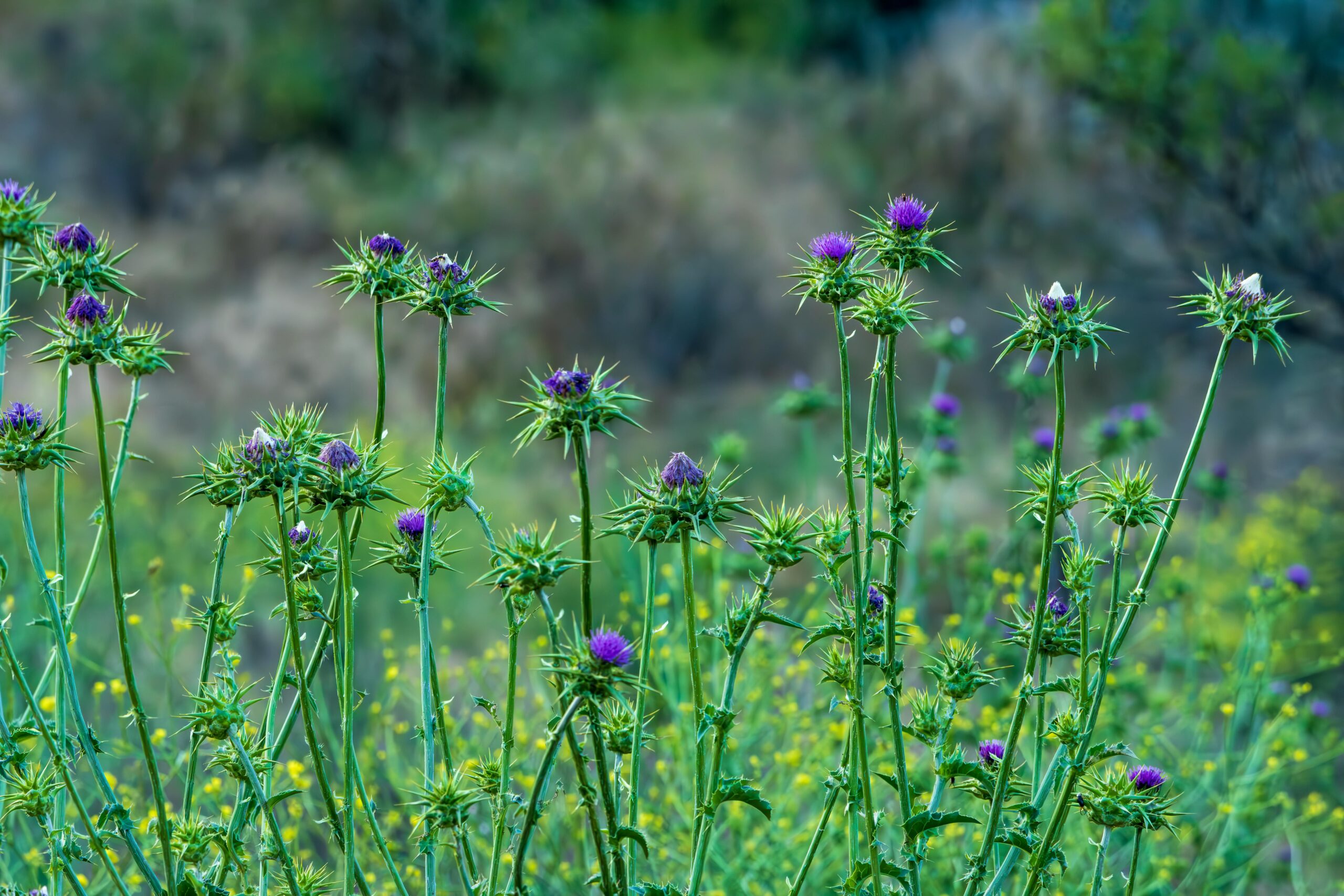
Milk thistle, also commonly known as Mary/variegated/Scottish thistle, is an herb belonging to the family Asteraceae. It is native to Mediterranean regions of Southern Europe, North Africa, and the Middle East. It is currently cultivated in the United Kingdom, North America, and South America. Its name is derived from its appearance of a milky white vein on its leaves and a flower that produces a thistle head.
Milk thistle can be used as follows:
- Liver function support
- In improving insulin resistance
- Neutralizing toxins of death mushroom poisoning
- In acne support
- In supporting lactation
Jump to section
- Medical uses and ethnopharmacological profile
- Safety and dosing profile
- Milk thistle description and composition
- Milk thistle cultivation, harvesting and storage
Medical uses and ethnopharmacological profile of Milk Thistle
Traditional uses
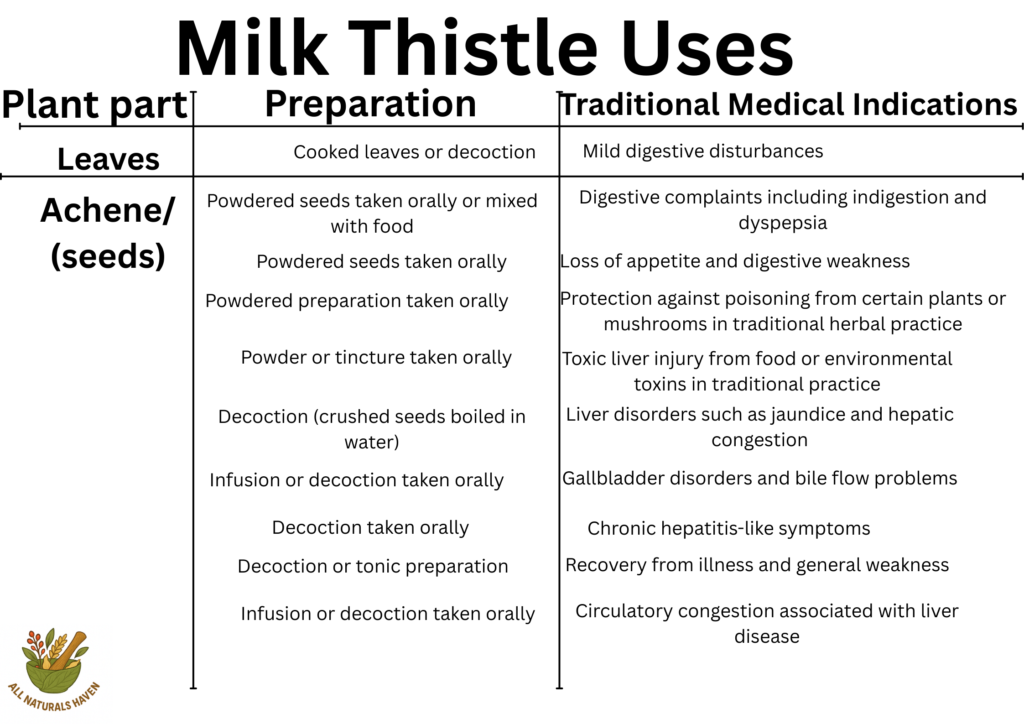
Used as a choleretic in stimulating biliary flow. It was also used to clear congested liver, kidney, and spleen congestion. It also had use in varicose veins and swellings. It was used in various female derangements, e.g., as an emmenagogue and in lactation to increase milk production. Traditionally, it was used as an antidote for mushroom (amanita phalloides) poisoning.
Clinical uses and Research
Mushroom poisoning: In people with amatoxin poisoning, seed-purified silibinin intravenous treatment at a loading dose of 5 mg/kg, followed by 20 mg/kg per day, exhibited prevention of liver failure if given within 48 hours and reduction in mortality rates. The compound silibinin competitively inhibited the OATP1B3 transporter, thus actively blocking entry of amatoxins into hepatocytes.
Metabolic syndrome/Diabetes: A standardized seed extract at a dose of 200 mg thrice daily for 4 months elicited a decrease in fasting blood glucose and HbA1c levels. Flavonolignans acted by mimicking PPAR-Y activation that induces an antioxidant-like effect on beta cells.
Non-alcoholic fatty liver disease: Oral seed extract at a dose of 140 ng thrice daily for 6 months exhibited a reduction in AST and ALT levels compared to the placebo group. The silymarin complex acted by decreasing lipid peroxidation and decreasing tumor necrosis factor as an antioxidant.
Alcoholic liver cirrhosis: Milk thistle purified capsules at a dose of 140 mg thrice daily for 41 days encourage liver regeneration and reduce liver-related mortality in long-term users. Silybin acted by simulating RNA polymerase 1 to increase ribosomal protein synthesis. (Mulrow 2000)
In vivo uses and Research
Iron overload: In gerbils, seed phospholipid complex at a dose of 100 mg/kg daily decreased hepatic concentration and decreased episodes of liver enzyme spikes. Silybin binds directly to excess iron and reduces iron-induced free radical damage. ( Masini 2000)
Alzheimer’s: In transgenic mice, Sibylin extract at a dose of 100-200 mg for 6 months increased behavioral memory performance and reduced plaque density in the hippocampus. Silybin A and B acted by inhibiting aggregation of amyloid beta plaques and reducing microglial activation.
Radiation exposure: Water-soluble seed extract administered at 70 mg/kg intraperitoneally accelerated the recovery of white blood cells post-radiation and increased the 30-day survival rate. Silymarin’s free radical scavenging capacity protected the blood-forming stem cells in bone marrow.
In vitro uses and Research
Human prostate adenocarcinoma: Standardized extract inhibited colony formation and DNA synthesis in cancer cell lines. Isosilybin B downregulated prostate-specific antigen and inhibited the epidermal growth factor receptor pathway.
Inflammatory response: In human monocytic cells silymyrin extract inhibited the activation of NF-kB, thus blocking cytokine production. ( Kim 2015)
Safety and Dosing Profile of Milk Thistle
Forms and Dosing
Capsules and tablets– 420-2100mg
Tinctures (4:5)– 9 mls
Ground seed powder– 12-15 grams
Infusions/Teas– 1-3 cups
Phytosomes– 240-360mg
- Liver disorders- 400-600 mg a day in divided doses
- Type 2 diabetes- 200 mg thrice daily
- Acute mushroom poisoning- 20-50 mg/kg a day
- General support- 200-400 mg a day
Note: The highest studied dose a day is 2100 mg a day; therefore, it should not be exceeded.

Interactions
- Blood thinners- may alter bioavalibality of warfarin
- Diabetes medication- may enhance hypoglycemia
- Immunosuppressants- may alter bioavailability of immunosuppressants
- Certain antifungals, statins, anti-anxiety medications, NSAIDs- may enhance levels, leading to possible toxicity
- Oral contraceptives- theoretically reduce efficacy of contraceptives
Side effects
- Diarrhea and mild cramping
- Gas and flatulence
- Allergies, both skin (contact dermatitis) and systemic (runny nose, watery eyes)
- Burning sensation in the mouth (when using tinctures)
Contraindication
- Hormone-sensitive conditions
- Known allergy
- Children under 12 years
- 2 weeks before surgery
- Under strict monitoring: diabetes, bile duct issues
Milk Thistle Description and composition
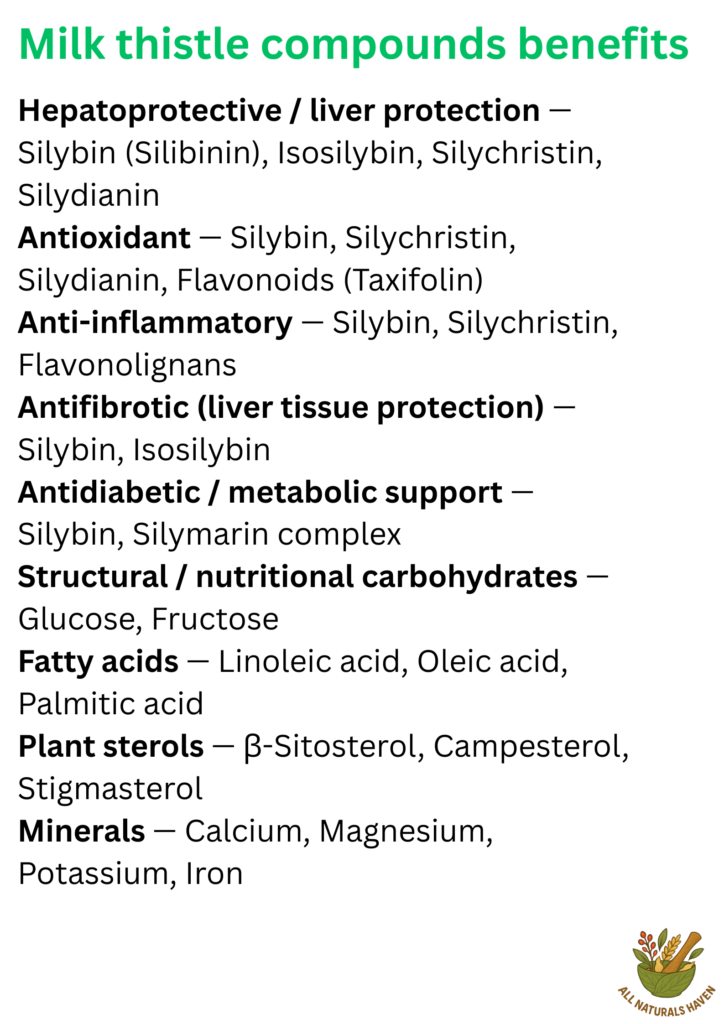
It has the compounds silymarin (silybin A and B), silychristin, silydianin, taxifolin, fatty acids (linoleic and palmitic acids), proteins, amino acids, polyphenols, and tocopherols.
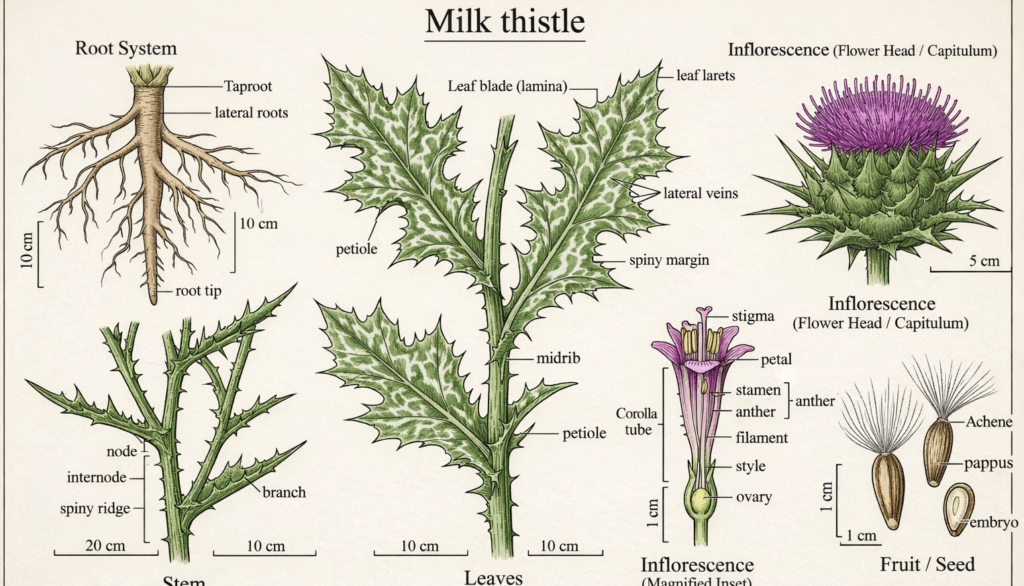
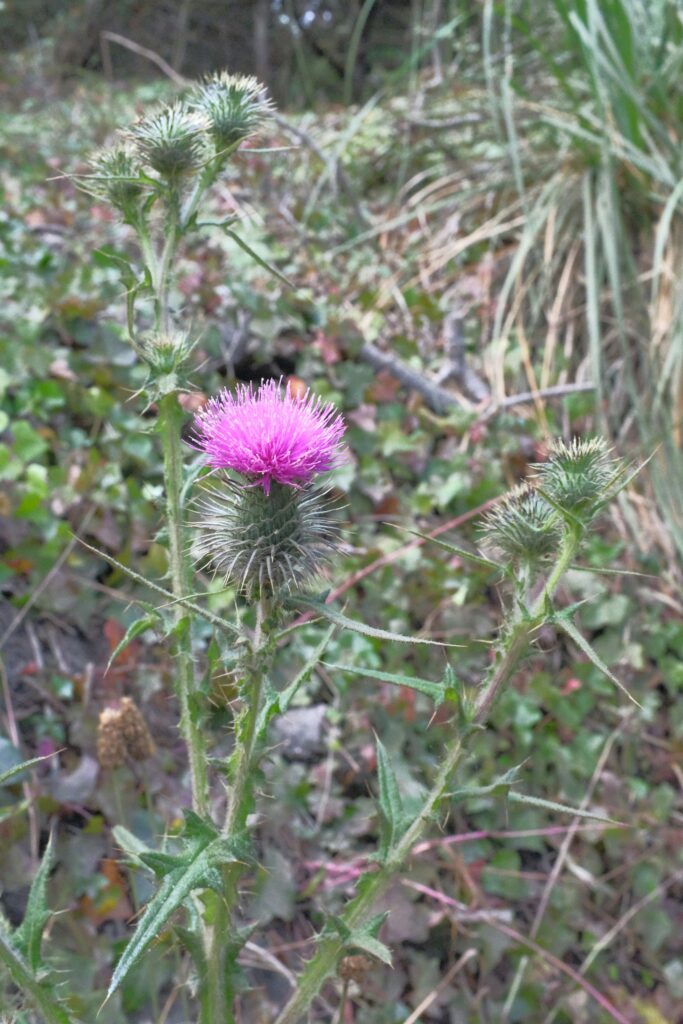
It has a thick taproot system with an erect, hollow, and slightly striated stem. The leaves are a dense rosette, which is flat on the ground. The edges have sharp yellow spines, and the leaves are oblong and deeply lobed with milky white marbling. The flower head is a globe with a deep purple to reddish-pink hue. It has an achene that is small, hard, and smooth with a mottled brown bark.
Milk Thistle Cultivation
The plant is propagated via seeds. They are sown in the early spring at a depth of about 1-2.5 centimeters, 18-24 inches apart. It thrives in well-drained soils of pH 6.5-7.2 and in full sun. It is ready for harvesting when the head is mostly dry and the white fluff is beginning to expand. Harvesting is done by snipping the flower head off with a bit of the attached stem.
The harvest is dried in a warm, well-ventilated area while hung upside down in paper bags. Once dry, the heads are rubbed carefully, or the bags are shaken to dislodge seeds. The seeds should be bone dry. Store in airtight jars in a cool, dry, and dark place. Whole seeds can last 1-2 years, while ground powder can only last 6 months.
REFERENCES
mitchell md, mph, s todd & Olson, K.. (2008). Intravenous silibinin for the management amatoxin poisoning: First usage in an American cohort. Clinical Toxicology. 46. 396-396.
Pferschy-Wenzig EM, Atanasov AG, Malainer C, Noha SM, Kunert O, Schuster D, Heiss EH, Oberlies NH, Wagner H, Bauer R, Dirsch VM. Identification of isosilybin a from milk thistle seeds as an agonist of peroxisome proliferator-activated receptor gamma. J Nat Prod. 2014 Apr 25;77(4):842-7. doi: 10.1021/np400943b. Epub 2014 Mar 5. PMID: 24597776; PMCID: PMC4003856.
Chantarojanasiri T. Silymarin treatment and reduction of liver enzyme levels in non-alcoholic fatty liver disease: a case report. Drugs Context. 2023 Apr 6;12:2023-1-4. doi: 10.7573/dic.2023-1-4. PMID: 37077770; PMCID: PMC10108664.
Dafeng Bai, Ge Jin, et al 2019-Natural silibinin modulates amyloid precursor protein processing and amyloid-β protein clearance in APP/PS1 mice. The Journal of Physiological Sciences, Volume 69, Issue 4, 2019, Pages 643-652, ISSN 1880-6546,https://doi.org/10.1007, 00682. (https://www.sciencedirect.com/science/article/pii/S1880654624004062)
Tiwari P, Kumar A, Ali M, Mishra KP. Radioprotection of plasmid and cellular DNA and Swiss mice by silibinin. Mutat Res. 2010 Jan;695(1-2):55-60. doi: 10.1016/j.mrgentox.2009.11.007. Epub 2009 Nov 27. PMID: 19945544.
Davis-Searles PR, Nakanishi Y, Kim NC, Graf TN, Oberlies NH, Wani MC, Wall ME, Agarwal R, Kroll DJ. Milk thistle and prostate cancer: differential effects of pure flavonolignans from Silybum marianum on antiproliferative end points in human prostate carcinoma cells. Cancer Res. 2005 May 15;65(10):4448-57. doi: 10.1158/0008-5472.CAN-04-4662. PMID: 15899838.
Leave a Reply