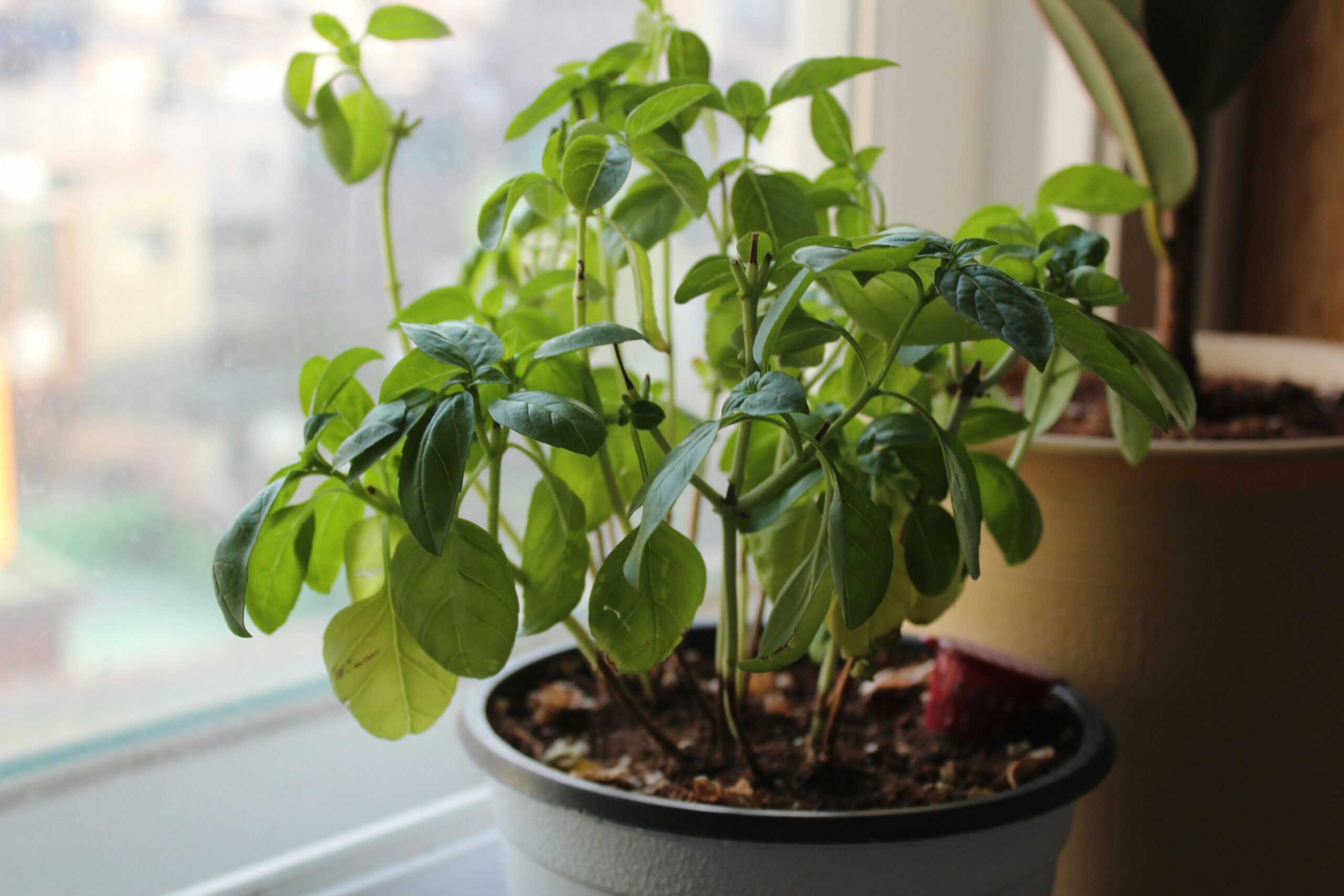
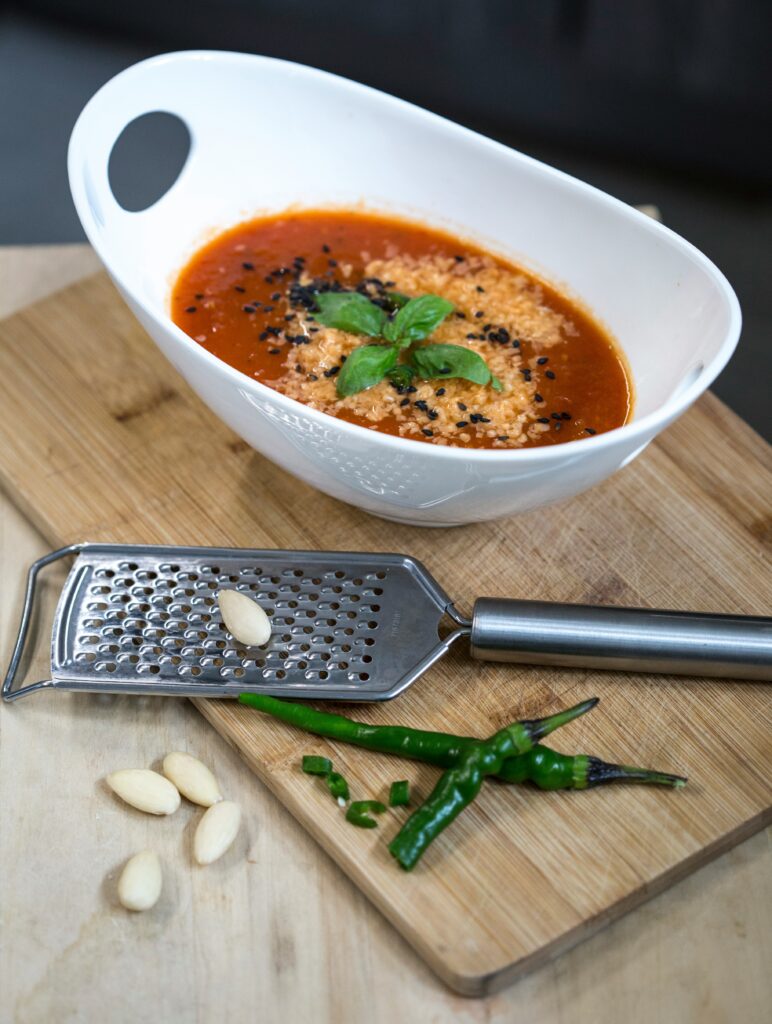
Basil is a common culinary herb used to garnish soups and stews. It belongs to the family Lamiaceae and is commonly called St. Joseph’s wort, tulsi, or royal herb. It is native to Central Africa, Southeast Asia, and India. Currently, it is cultivated in Italy, France, Morocco, and parts of the United States (California/New Jersey).
Basil is used as follows:
- Reducing fasting and post-meal glucose levels
- Reducing bad cholesterol while improving the profile of good cholesterol (HDL)
- Reducing anxiety and stress
- Improving attention and memory
- Boosting immunity
- Helps in asthmatics (reducing symptoms)
- In oral health to reduce plaque
Jump to section
Medical Uses and ethnopharmacological profile of Basil
Traditional Uses
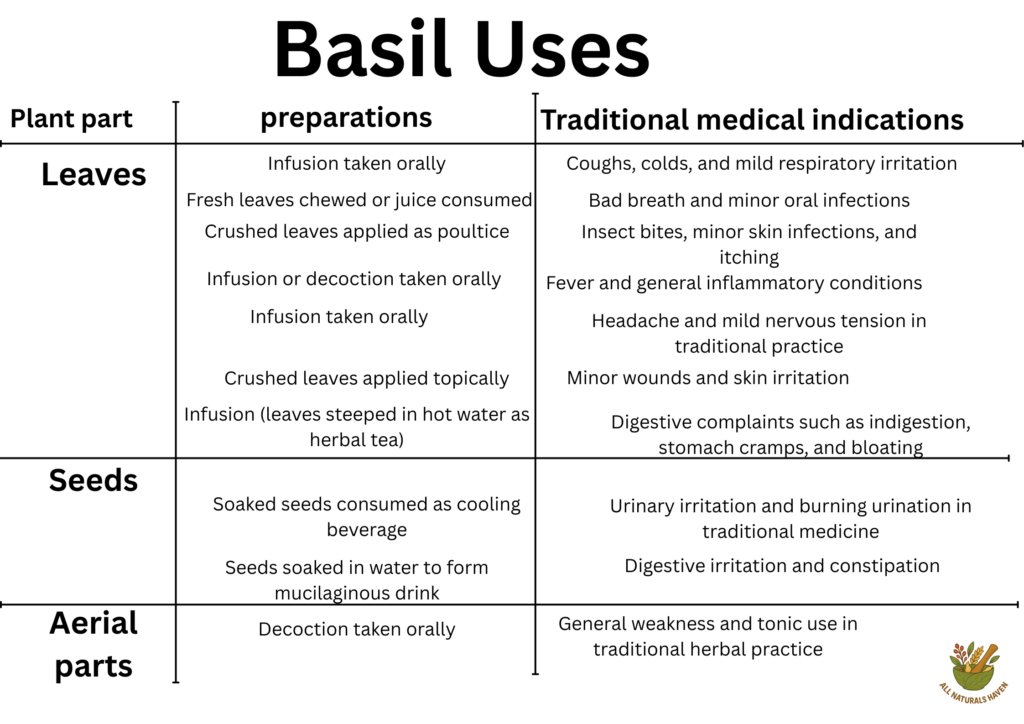
In ancient Egypt, it was one of the ingredients in an embalming preparation. Medicinally, it was used for fainting spells, fatigue, and headaches. It was also used in preparations that dealt with coughs and clearing the respiratory airway. It was applied as a digestive stimulant in improving appetite and dealing with gas and bloating. It was brewed as tea for use in controlling fevers and parasites.
In Rome, it was used as an aphrodisiac.
Clinical Uses and Research
Hyperlipidemia: In adults with metabolic syndrome, mucilaginous basil seeds given 30 grams daily elicited a decrease in total cholesterol levels and a mild reduction in triglycerides. Soluble fibers and alpha-linoleic acid were isolated to act through bile sequestration, binding to bile acid in the gut, hence forcing the liver to utilize more low-density lipoproteins.
Anxiety and stress: In a study involving adults struggling with insomnia and stress, holy basil leaf extract at a dose of 250 mg daily for 8 weeks achieved a 37% reduction in perceived stress and significantly improved sleep. This was identified as the action of ursolic, rosmarinic, and ocimarin acids via regulation of the HPA axis, effectively reducing cortisol levels.
Cognitive performance: In healthy adults, standardized leaf extract at a dose of 300 mg daily for 4 weeks was able to increase reaction time, reduce errors during task switching, and enhance short-term memory. The compound rosmarinic acid acted by inhibiting the enzyme acetylcholinesterase, thus increasing levels of acetylcholine in the brain and improving signaling.
Major depressive disorder: The hydroalcoholic leaf extract of sweet basil administered as 5 ml (500 mg) twice daily for 8 weeks decreased BDI and HAM-A scores in depressed adults. Linalool, eugenol, and rosmarinic acid were isolated to have the action of enhancing GABA transmission and BDNF levels.
Glycemic control: Encapsulated fresh leaf powder at a dose of 2.5 grams daily for 4 weeks showed a 17.6% decrease in fasting blood sugar and a 7.3% reduction in postprandial glucose. Orientin, anthocyanins, and eugenol were isolated to have the capacity to inhibit hepatic glucose generation as well as stimulate the release of insulin from pancreatic beta cells. (Anandhi 2023)
In Vivo Uses and Research
Neuroprotection: In a rat stroke-induced model, sweet basil hydroethanolic leaf extract, at an oral dose of 200 mg/kg, reduced cerebral dead tissue and elicited improved motor coordination post stroke. Flavonoids acted as antioxidants by increasing levels of superoxide dismutase and glutathione, which decreased lipid peroxidation in brain tissue. (CABI 2011)
Gastric ulcer protection: In ulcer-induced rats, aqueous and methanolic leaf extract at 100-400 mg/kg for 10 days showed a reduced ulcer index and gastric protection levels comparable to omeprazole. Eugenol acted by increasing the synthesis of gastric mucus and decreasing production of stomach acid via inhibition of type 2 histamine receptors.
Hypertension: In rats with spontaneous hypertension, aqueous extract at a dose of 100 mg/kg both orally and intravenously decreased pressure and was able to maintain both diastolic and systolic pressure without affecting heart rate. Vicenin-2 and rosmarinic acid prevented constriction of blood vessels.
In Vitro Uses and Research
Anticancer: Sweet basil essential oil, when applied to human breast and liver cancer cells, was able to inhibit cancer cell viability. Estragole and linalool were able to fragment sick cell DNA selectively and inhibit apoptosis via the caspase 3 pathway. (Perna 2022)
Antimicrobial: In resistant strains of S. aureus, E. coli, and P. aeruginosa, ethanolic leaf extract and essential oils showed eradication of foodborne pathogens. Methyl-chavicol and eugenol disrupted bacterial cell membrane permeability, causing leakage of cell constituents and death.
Antiviral: In herpes 1, adenovirus, and SARS-CoV-2 viruses, leaf extract rich in apigenin inhibited the cleavage of viral proteases without any toxicity to the host cell.
Safety and Dosing profile of Basil
Forms and Dosing
Fresh leaves- a handful (1-5 or more), raw or pounded
Dried leaves- a handful (1-3)
Herbal teas and infusions- 1-2 gram dissolved in water.
Sabja/tukmaria seeds- 10-20 grams soaked in water
Essential oils
Standardized capsules and tablets- 500-1200mg
Tinctures(1:5)- 2-5 ml thrice daily
Powders- 2-3 grams
- Generalized anxiety disorder- 300 mg twice a day
- Glucose controll- 250-500 mg twice daily
- Cardiovascular risk- 500mg twice daily
Interactions
- Antidiabetic medication- risk of hyperglycemia
- Antihypertensives- risk of hypotension
- Blood thinner- risk of increased bleeding
- Sedatives- risk of potentiating effects
Side effects
- Carcinogen concern due to estragole
- Allergic reaction, both skin and internal
- Nausea and vomiting
- Acid reflux and diarrhea
- Dizziness and sedation
- Tachycardia
- Seizures in extreme doses
Contraindications
- Two weeks before surgery
- Pregnancy and breastfeeding
- Bleeding disorders
Basil Description and Composition
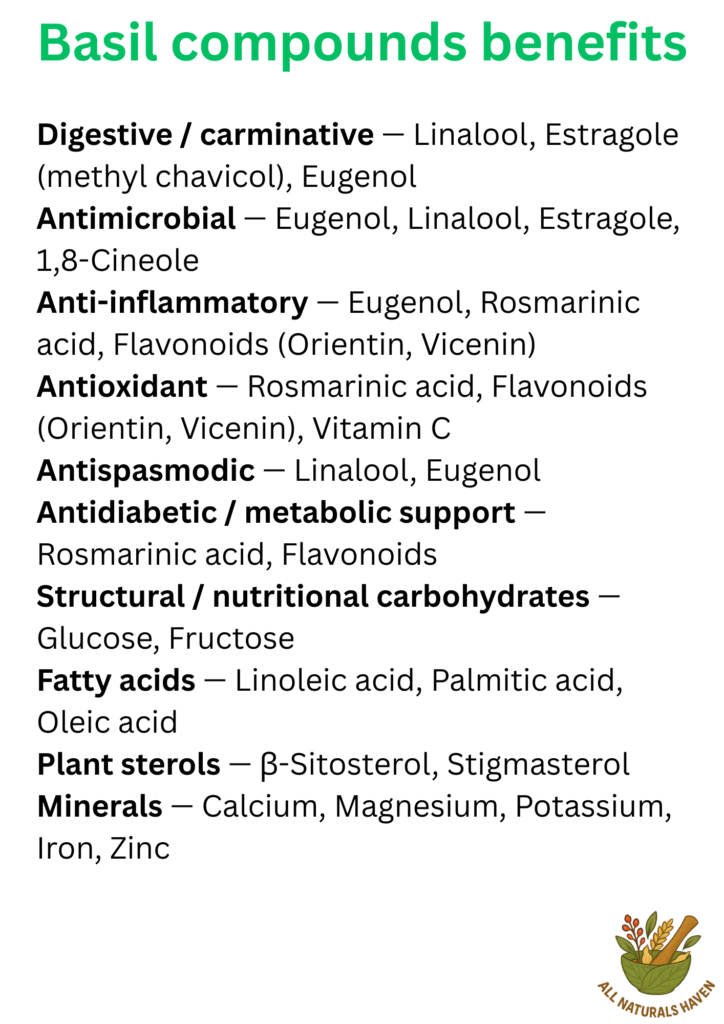
The active compounds found in basil include essential oils (linalool, limonene, eugenol, and estragole); phenolic acids and flavonoids (rosmarinic acid, orientin, and vicenin); anthocyanins; and vitamins and minerals like magnesium and vitamins A and K.
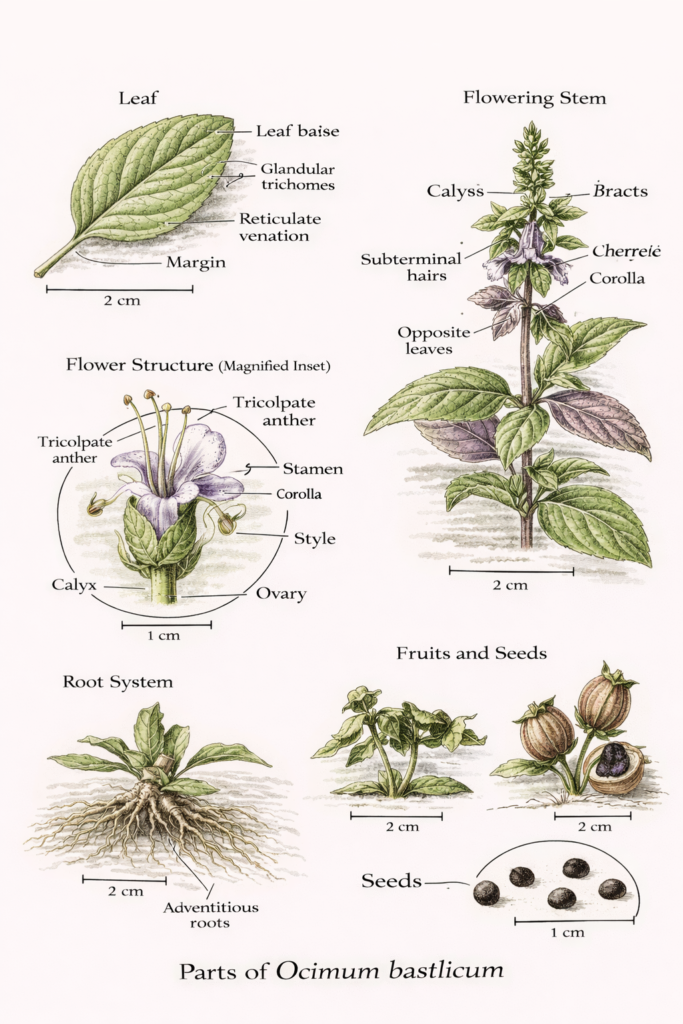
The leaves occur in pairs arranged at 90-degree angles and are ovate with smooth margins, turning from green to burgundy or purple when the plant is mature. The plant has a shallow, fibrous taproot system. The stem is square-shaped and is smooth or slightly hairy. Its flowers are two-lipped with terminal spikes and have a range of colors from white to pale pink and light violet. The fruits and seeds occur as nutlets that are oval and brownish to blackish in color.
Basil Cultivation
Basil is propagated by seeds that are sown directly into the warm soil at least 25-30 centimeters apart. The plant thrives in well-drained rich soils of pH 6-7.5 and sunlight exposure of between 6 and 8 hours daily. Once the plant is 15 centimeters tall, it is ready for harvesting. This is done from the top downwards by cutting the stem just above the node where two leaves are starting to grow.
Dry in a cool dark place and store whole leaves in airtight containers. Preservation can be done by placing stems with trimmed bottoms in a glass with an inch of water at room temperature, changed after every 7-10 days. It can also be blanched for roughly 3 seconds, dipped in icy water, and frozen. It can also be pulsed, then dipped into olive oil and frozen into sludge.
REFERENCES
Calderón Bravo H, Vera Céspedes N, Zura-Bravo L, Muñoz LA. Basil Seeds as a Novel Food, Source of Nutrients and Functional Ingredients with Beneficial Properties: A Review. Foods. 2021 Jun 24;10(7):1467. doi: 10.3390/foods10071467. PMID: 34202798; PMCID: PMC8303141.
Lopresti AL, Smith SJ, Metse AP and Drummond PD (2022) A randomized, double-blind, placebo-controlled trial investigating the effects of an Ocimum tenuiflorum (Holy Basil) extract (HolixerTM) on stress, mood, and sleep in adults experiencing stress. Front. Nutr. 9:965130. doi: 10.3389/fnut.2022.965130
Kusindarta DL, Wihadmadyatami H, Haryanto A (2016) Ocimum sanctum Linn. stimulate the expression of choline acetyltransferase on the human cerebral microvascular endothelial cells, Veterinary World, 9(12): 1348-1354.
Talaei, M., K.Zare, Y.Hashemi, et al. 2025. “Basil (Ocimum basilicum) to Alleviate Anxiety in Patients With Major Depressive Disorder: A Randomized Placebo-Controlled Clinical Trial.” Brain and Behavior15, no. 11: e70994. https://doi.org/10.1002/brb3.70994
Sa, Almatroodi & Alsahli, Mohammed & Almatroodi, Saleh & Alsahli, Mohammed & Almatroudi, Ahmad & Rahmani, Arshad. (2020). Ocimum sanctum: Role in Diseases Management Through Modulating Various Biological Activity. Pharmacognosy Journal. 12. 1198-205. 10.5530/pj.2020.12.168.
Imran, Hina & Sohail, Tehmina & Khan, Rashid & Iqbal, Wasif & Rahman, Maimoona. (2025). Assessment of Ethanolic Extract of Ocimum sanctum Whole Plant (OSWP) in EthanolInduced Gastric Mucosal Damage in Rats. Yemen Journal of Medicine. 04. 399-404. 10.63475/yjm.v4i2.0153.
Joshi, Dr. R. K.. (2014). Chemical composition and antimicrobial activity of the essential oil of Ocimum basilicum L. (sweet basil) from Western Ghats of North West Karnataka, India. Ancient Science of Life. 33. 151. 10.4103/0257-7941.144618.
Matondo, Aristote & Kilembe, Jason & Ngoyi, Etienne & Kabengele, Carlos & Kasiama, Giresse & Lengbiye, Emmanuel & Mbadiko Mutunda, Clement & Inkoto, Clement & Bongo, G.N. & Gbolo, B.Z. & Falanga Mawi, Clarisse & Mwanangombo, Domaine & Opota, Daniel & Tshibangu, Damien & Tshilanda, Dorothée & Ngbolua, Koto-Te-Nyiwa & Mpiana, Pius Tshimankinda. (2021). Oleanolic Acid, Ursolic Acid and Apigenin from Ocimum basilicum as Potential Inhibitors of the SARS-CoV-2 Main Protease: A Molecular Docking Study. International Journal of Pathogen Research. 6. 1-16. 10.9734/ijpr/2021/v6i230156.
Leave a Reply